How To Get Laundry Detergent Stains Out Of Clothes – Guide
To get laundry detergent stains out of clothes, first identify if the stain is powdery or sticky liquid residue. Pretreat the area with an enzyme- or oxygen-based formula on damp fabric, letting it sit for 10 minutes.
For powder stains, gently rub with dish soap and soak in warm water. Wash with the right detergent amount, avoid overload, and add an extra rinse cycle.
For delicate or dark fabrics, use gentle, color-safe products. Keep going to uncover expert tips and prevention strategies.
Key Takeaways
- Identify detergent stains as white or blue residue with a waxy texture caused by overuse or improper detergent type.
- Pretreat stains with enzyme-based or oxygen-based formulas on damp fabric and let sit for 10 minutes before washing.
- Soak liquid detergent stains in warm water, apply oxygen-based pretreatment, and add an extra rinse cycle during washing.
- Use household products like baking soda, white vinegar, dish soap, or rubbing alcohol to effectively remove detergent residues.
- Prevent stains by measuring detergent correctly, avoiding overload, using liquid detergent, and selecting the right water temperature.
How To Identify Different Types Of Laundry Detergent Stains
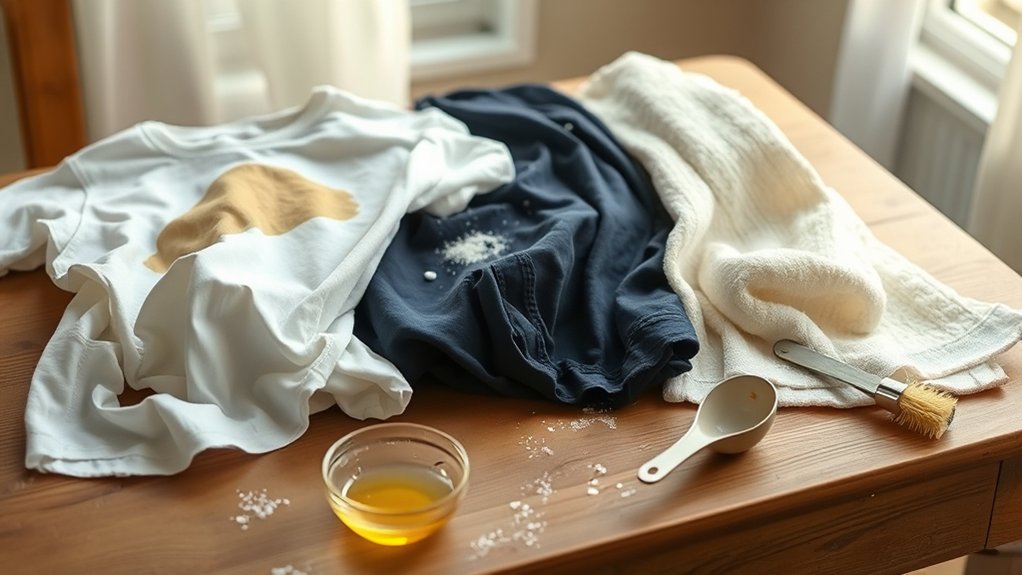
How can you tell which type of laundry detergent stain you’re dealing with?
Detergent stains often appear as white splotches or blue marks with a waxy finish or rough texture. Powder detergent typically leaves white streaks or residue, especially if it doesn’t dissolve fully in cold water.
Detergent stains show as white splotches or blue marks with a waxy, rough texture, often from undissolved powder.
Liquid detergent stains usually result from overuse, creating sticky, hard-to-remove patches on fabric.
Recognizing these differences helps you target effective stain removal methods. For example, white splotches from powder detergent require thorough rinsing, while sticky stains from liquid detergent demand pre-treatment.
Identifying the stain type early prevents setting the residue further, improving your chances of restoring clothes.
Understanding these signs guarantees you tackle detergent stains with precision and confidence every time.
What Causes Laundry Detergent Stains On Clothes
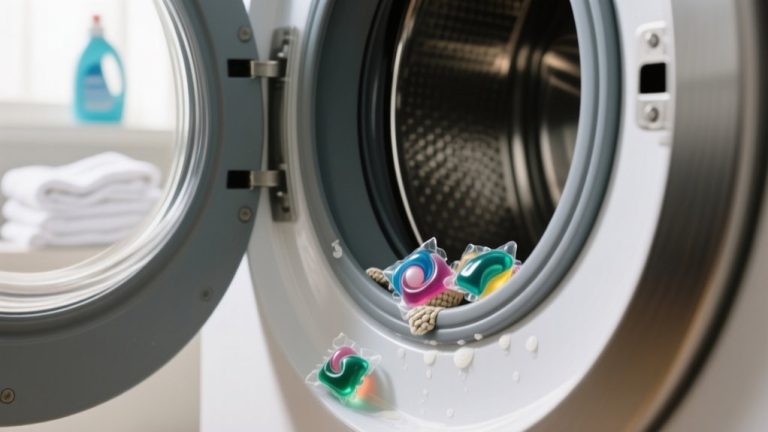
Although you might follow the washing instructions carefully, detergent stains can still appear on your clothes when the detergent doesn’t dissolve properly during the wash cycle. Improper dissolution often happens if you overuse detergent or use powdered detergent in cold water, causing detergent buildup.
Overloading your washing machine also restricts water flow, reducing detergent effectiveness and increasing stains. Using the wrong detergent type for your dispenser can cause clumping, leaving visible residue on fabric.
| Cause | Effect |
|---|---|
| Overuse of detergent | Sticky white streaks |
| Powdered detergent | Detergent buildup, stains |
| Overloading washing machine | Poor detergent dissolution |
Understanding these causes helps you prevent detergent stains and maintain your clothes’ appearance.
How To Pretreat Detergent Stains: A Step-By-Step Guide
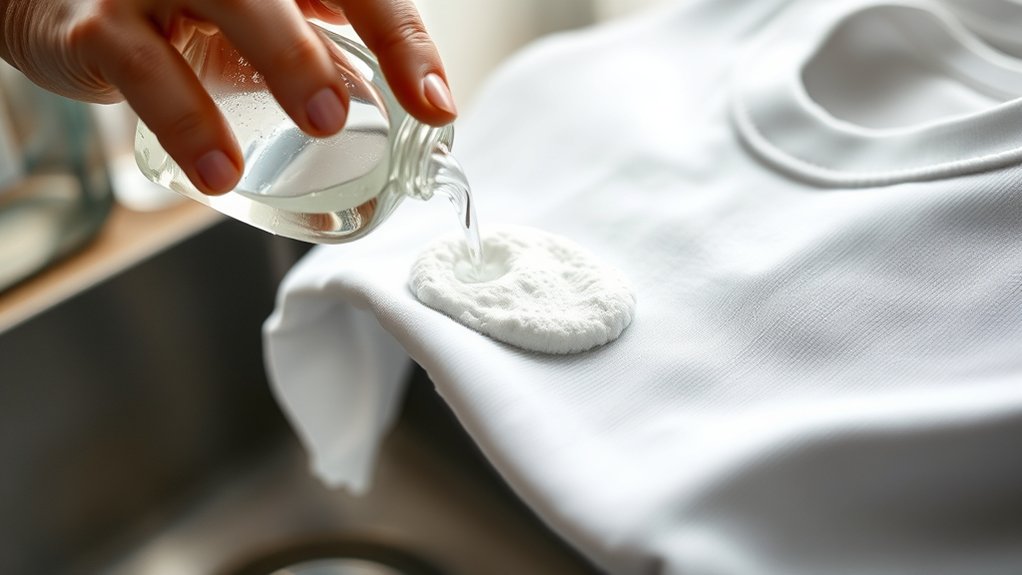
Start by picking the right pretreatment—enzyme-based or oxygen-based formulas usually work best on detergent stains.
Go ahead and apply it thoroughly to the dampened stain. Then, let it sit for at least 10 minutes so it can break down the residue effectively.
If the stain is still there after that, just rinse and repeat the process before washing.
This way, you can make sure the stain comes out completely.
Choose Appropriate Pretreatment
One effective way to tackle detergent stains is by choosing the right pretreatment method. Selecting the best pretreatment guarantees you effectively break down detergent stains without damaging the fabric. Here’s what to take into account:
For fresh stains, apply a small amount of liquid detergent directly onto the spot. Then gently rub the fabric to loosen residue.
If the stain is stubborn or dried, dampen the fabric with the warmest water allowed by the care label before applying pretreatment.
Use an oxygen-based or enzymatic stain remover for tougher detergent stains. But always test it on an inconspicuous area first to avoid fabric damage.
Choosing the appropriate pretreatment sets the foundation for successful stain removal every time.
Apply Pretreatment Correctly
When you apply pretreatment correctly, you greatly increase your chances of removing detergent stains completely.
Start by dampening the stained area with warm water to loosen the detergent residue.
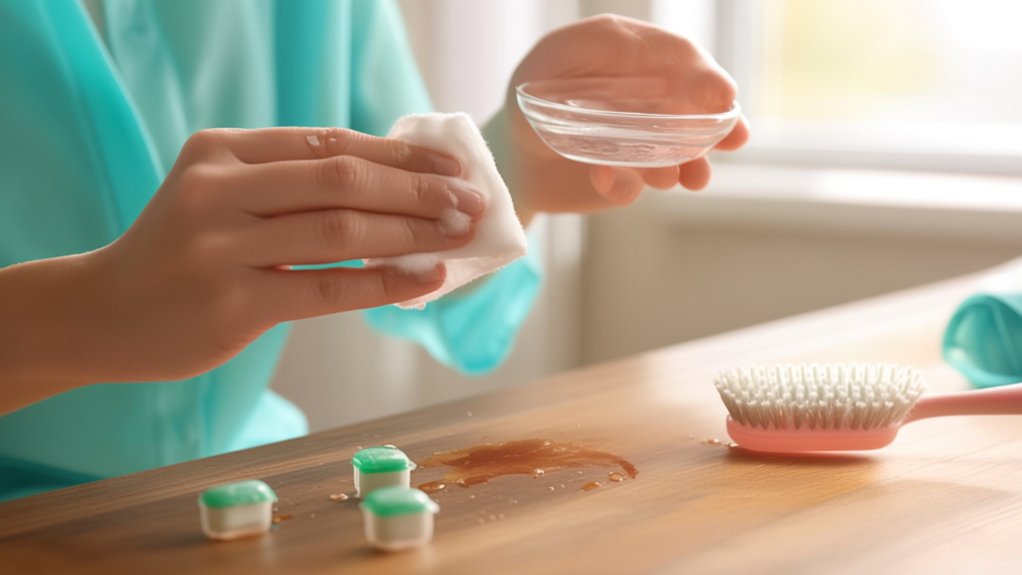
Then, apply an enzyme-based or oxygen-based pretreatment directly onto the stains, making sure it covers the entire affected spot. Let the pretreatment sit for at least 10 minutes; this waiting period allows it to break down detergent particles effectively.
Afterward, rinse the area thoroughly with warm water to remove the pretreatment before washing. If the stains persist, repeat the process to improve removal.
Remember, never dry the garment until the detergent stains are fully gone, as heat can set them permanently.
Applying pretreatment with care is essential for successful stain removal.
Rinse And Repeat
Although pretreating detergent stains can be effective, you’ll often need to rinse and repeat the process to fully remove stubborn residue.
Start by thoroughly rinsing the fabric with warm water to wash away loosened particles. If the stain persists, repeat the pretreatment to break down remaining detergent deposits.
Follow these steps to remove detergent stains efficiently:
- Dampen the stained fabric with warm water to soften the residue.
- Apply pretreatment solution directly onto the stain and let it sit for at least 10 minutes.
- Gently rub the fabric to help the pretreatment penetrate, then rinse with warm water.
Repeat as necessary before washing to verify the stain is completely gone and avoid setting it during drying.
Removing Liquid And Powder Detergent Stains From Fabrics
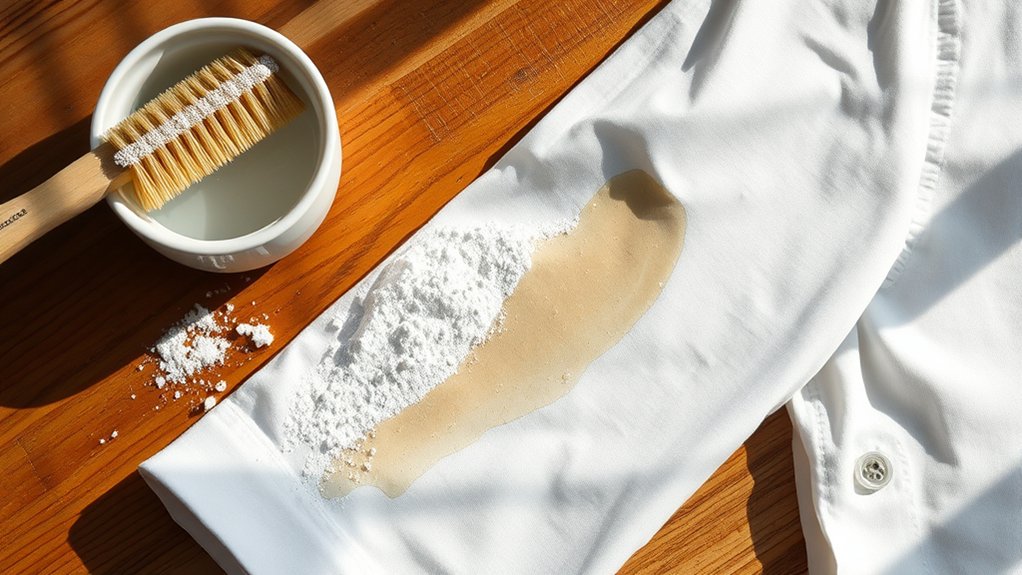
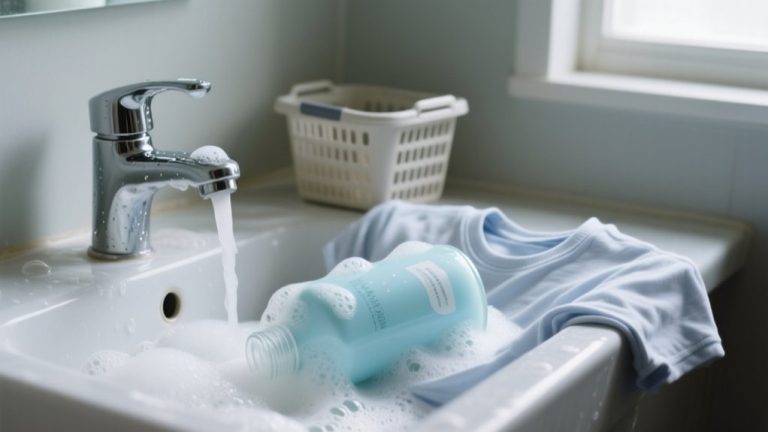
If you’re dealing with liquid detergent stains, a good first step is to soak the fabric in warm water.
Then, apply an oxygen-based pretreatment to help break down that waxy residue.
Now, when it comes to powder detergent stains, it’s all about dissolving the buildup with warm water.
You might also want to think about switching to liquid detergent to keep these stains from happening again.
Just remember, no matter which type of stain you’re treating, it’s important to repeat the treatment and rinse the fabric thoroughly before drying.
That way, you won’t risk setting the stain permanently.
Liquid Detergent Stain Removal
If you notice liquid detergent stains on your clothes, soak the fabric in warm or hot water and apply an oxygen-based pretreatment for the best chance at removing them. This method effectively breaks down the stains and lifts detergent residue.
To remove stains caused by liquid detergent, follow these steps:
- Soak the stained area in warm or hot water to loosen the residue.
- Apply an oxygen-based pretreatment directly on the stain and let it sit according to the product instructions.
- Wash the garment using the correct amount of detergent and add an extra rinse cycle to guarantee all detergent residue is fully removed.
Using the right detergent quantity and rinse settings helps prevent buildup and keeps your clothes clean and stain-free.
Powder Detergent Stain Treatment
Liquid detergent stains respond well to warm water soaking and oxygen-based pretreatment, but powder detergent stains require a slightly different approach.
To tackle powder detergent stains, always use the correct dosage to prevent residue buildup caused by undissolved detergent.
Consider switching to a liquid form, which dissolves better in cold water and reduces staining risks. If powder detergent stains persist, gently rub the affected area with dish soap to break down the residue before washing.
During the wash, adding an extra rinse cycle helps flush out any remaining detergent particles.
While oxygen-based pretreatment is ideal for liquid stains, with powder stains, focusing on proper dosage and complete dissolution is your best defense to keep clothes clean and free from detergent stains.
Repeat And Rinse Techniques
Three key steps will help you fully remove detergent stains from your fabrics: soaking, rinsing, and repeating as needed.
To effectively remove detergent stains, you need to:
- Soak the affected area in warm water and apply a pretreatment, especially oxygen-based for liquid detergent stains.
- Use thorough rinsing during washing, preferably on a gentle cycle with ample water, to dissolve and flush out residues.
- Repeat the process if stains persist, soaking and rinsing again until completely lifted.
Always avoid drying your garments before the stain is gone, as heat can set it permanently.
Removing Fabric Softener And Detergent Residue Stains
Why do fabric softener and detergent residue stains appear as waxy or rough patches on your clothes? These detergent stains often result from overusing products or improper washing techniques.
To remove stains effectively, soak the affected garments in warm water mixed with a small amount of dish soap. Gently rub the fabric before rinsing thoroughly.
If you’re dealing with powdered detergent stains, switch to liquid detergent to guarantee better dissolution in proper water temperatures. Adding an extra rinse cycle during washing helps eliminate any remaining residue, preventing future buildup.
Always check garment care labels to select the right washing temperature and cycle, which plays a vital role in avoiding these stubborn stains.
Following these steps assures your clothes stay clean and residue-free.
Best Household Products To Remove Detergent Stains
Anyone tackling detergent stains will find that several common household products can make removal easier and more effective.
Many common household items can simplify and improve the removal of detergent stains.
Here are three top options to help remove detergent stains:
1. Baking Soda and White Vinegar: Use baking soda as a pre-soak or add it to the wash cycle to lift buildup.
Then follow with white vinegar in the rinse cycle to dissolve residue, especially on whites.
2. Dish Soap: Apply Dish Soap directly to the stain and work it in with warm water.
This breaks down grease and detergent residue efficiently.
3. Rubbing Alcohol and Enzymatic Cleaners**: For stubborn stains, rubbing alcohol** can dissolve residue on darker fabrics (test first).
Enzymatic cleaners contain specific enzymes that break down detergent buildup when used as a pre-treatment before washing.
These household products provide effective, accessible solutions to remove detergent stains without damaging fabrics.
Tips For Preventing Detergent Stains In Future Laundry Loads
To prevent detergent stains from appearing on your clothes, you need to use the right amount of detergent and choose the appropriate type for your laundry. Always measure detergent to prevent overuse and opt for liquid detergents, which dissolve better and reduce residue.
Avoid overloading your washer to guarantee proper detergent distribution. Wash garments inside out to shield fabric from direct detergent contact.
Finally, select the appropriate water temperature since cold water can hinder detergent dissolution, causing stains.
| Tip | Reason |
|---|---|
| Measure detergent | Prevent overuse and residue |
| Use liquid detergents | Dissolve easily, reduce detergent stains |
| Don’t overload machine | Guarantee proper detergent distribution |
| Wash clothes inside out | Protect fabric, minimize staining |
Removing Detergent Stains From Dark And Delicate Fabrics
When you’re dealing with detergent stains on dark or delicate fabrics, it’s important to pick gentle, fabric-safe treatments that won’t cause any damage or discoloration.
For dark clothes, try using a color-safe oxygen-based stain remover.
And if you’re working with delicate materials like silk or lace, a mild soap solution is your best bet.
Before you get started, always test your chosen method on a hidden spot first.
This way, you can make sure it’s safe and won’t harm the fabric before you treat the stain directly.
Gentle Stain Removal
Many delicate and dark fabrics respond best to liquid detergents. These reduce the chance of residue buildup and staining compared to powders.
For effective gentle stain removal, follow these steps:
- Dampen the stained area with warm water and apply a small amount of liquid detergent. Gently rub the fabric together to loosen the stain without damaging fibers.
- Soak the fabric in cool water mixed with a few drops of dish soap for 30 minutes. This helps break down detergent residue while protecting the material.
- Rinse thoroughly with cool water to remove all detergent residue. Avoid warm water because it can set stains further.
Always perform a patch test on an inconspicuous area before treatment to verify fabric color and texture remain intact.
Fabric-Safe Treatment Methods
Although dark and delicate fabrics require extra care, you can effectively remove detergent stains by using fabric-safe methods. Start by choosing a liquid detergent to minimize visible residue.
Pre-treat detergent stains by mixing a small amount of dish soap with water and gently rubbing the fabric together. Always test this solution on a hidden spot first.
Next, soak the stained area in lukewarm water for about 30 minutes to help dissolve residue without damaging the fabric.
When washing, select a gentle cycle with cold water to protect fibers and prevent setting any remaining stains.
Following these steps guarantees you remove detergent stains while preserving the quality and appearance of your dark and delicate clothes.
When To Rewash Or Seek Professional Cleaning For Stubborn Stains
If detergent stains don’t disappear after two or three washes with the right treatments, it’s time to contemplate professional cleaning.
Rewashing can still help if you follow these guidelines:
- Always check the fabric care label before rewashing to prevent damage.
- Use a small amount of detergent or just water when you rewash to avoid worsening detergent stains.
- Avoid using heat, like a dryer, on stubborn stains, as it can set them permanently.
For particularly stubborn stains, apply a specialized stain remover or seek professional cleaning.
Professionals have the expertise and tools to effectively treat detergent stains that home methods can’t remove.
Knowing when to rewash and when to call in experts guarantees your clothes stay in great condition.
How To Maintain Your Clothes After Treating Detergent Stains
Once you’ve treated detergent stains, inspect your clothes carefully before drying to guarantee all residue is gone, since heat can permanently set any remaining marks.
To maintain your clothes, always use the correct amount of detergent based on load size and fabric type. Too much detergent can cause buildup and stains.
Regularly inspect garments during washing for any lingering detergent stains or grease, and rewash if needed. Clean your washing machine frequently to remove detergent residue that might transfer to your clothes.
Adding fabric softener or a bit of vinegar in the rinse cycle helps dissolve leftover detergent and keeps fabrics soft.
Finally, store detergent in a cool, dry place to preserve its effectiveness and prevent staining problems in future washes.
Frequently Asked Questions
Can Detergent Stains Cause Skin Irritation if Left Untreated?
Yes, detergent stains can cause skin irritation if you leave them untreated. The chemical residues trapped in the fabric may lead to redness, itching, or rashes, especially if you have sensitive skin.
You should rinse clothes thoroughly to remove detergent completely.
If you notice any irritation, stop using that detergent and try patch testing a small skin area before wearing the clothes again to avoid worsening symptoms.
Are Detergent Stains Harmful to Washing Machines?
Detergent stains are more like harmless freckles on your washing machine than serious threats. They don’t directly damage your machine, but they do hint at underlying issues like excess detergent or overloads.
If you don’t address this, the machine might develop buildup, reducing its efficiency over time.
To keep your washer in top shape, use the right detergent amount, avoid overloading, and clean the dispenser regularly.
How Long Can Detergent Stains Stay on Clothes Before They Become Permanent?
You’ve got roughly 24 to 48 hours before detergent stains start setting permanently on your clothes.
The longer you wait, the harder they become to remove, especially if heat from drying is involved.
To maximize your chances of success, treat the stain immediately and avoid drying the garment until you’re sure the stain’s gone.
Acting quickly is the key to keeping your clothes stain-free and looking their best.
Can Detergent Stains Be Removed From Upholstery or Carpets?
Absolutely, detergent stains can be coaxed out of upholstery or carpets. You just need to act quickly and gently blot the area with a clean cloth.
Use a warm water and mild dish soap solution to lift the residue, then rinse thoroughly to avoid attracting more dirt.
Always test your cleaning mix on a hidden spot first to keep your fabric looking its best.
With care, those pesky stains don’t have to stick around.
Is It Safe to Mix Different Stain Removers With Detergent Pretreatment?
It’s generally not safe to mix different stain removers with detergent pretreatment. You could cause harmful chemical reactions that damage your fabric.
Always check product labels for compatibility and do a patch test on a hidden area before combining products.
Using one stain remover at a time is best to avoid conflicts and guarantee effective treatment. Mixing can also make it harder to identify what’s actually working on your stains.
Conclusion
Think of laundry detergent stains like unexpected potholes on your favorite road. They can jolt your journey but don’t have to ruin it. With the right pretreatment and care, you’ll smooth out those bumps quickly.
Remember, even a small effort like pretreating stains immediately can reduce fabric damage by up to 70%. Stay proactive, and your clothes will stay fresh and vibrant, ready for every step you take.