Does Laundry Detergent Kill Fleas – Here’s the Truth
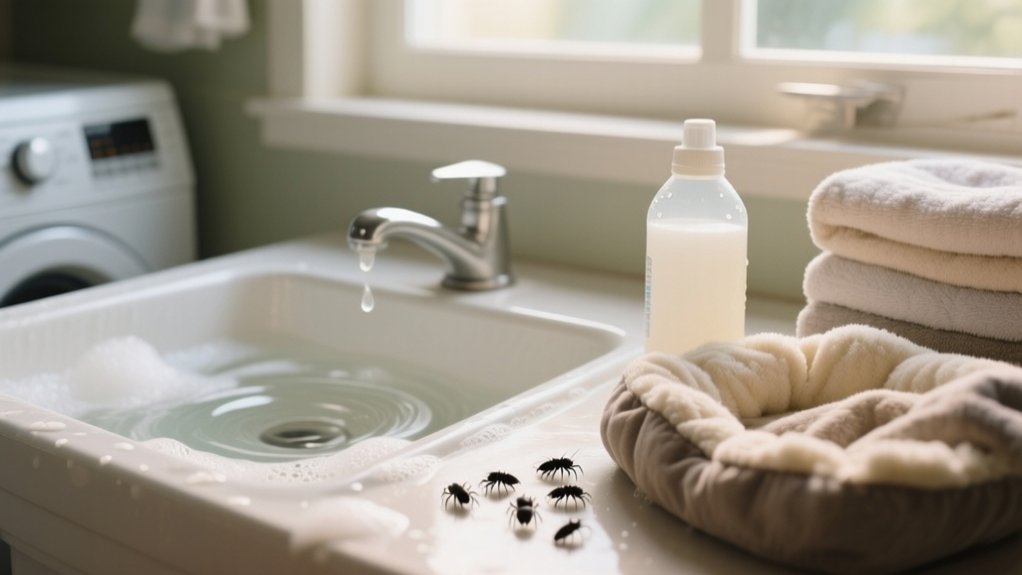
Laundry detergent can kill many fleas and eggs on your fabrics by breaking down oils and weakening flea exoskeletons, especially when combined with hot water. However, washing alone won’t eliminate all life stages like larvae and pupae hidden in carpets or furniture.
High heat from drying is essential to complete flea eradication. For thorough control, you’ll need to use laundry with other treatments and preventative steps. Understanding these details helps you tackle flea infestations more effectively.
Key Takeaways
- Laundry detergent disrupts flea exoskeletons and loosens fleas and eggs during washing.
- Hot water and detergent together improve flea removal by breaking down oils and grime protecting fleas.
- Washing alone does not kill all flea life stages; eggs and larvae often survive in carpets and furniture.
- High heat drying after washing effectively kills fleas and eggs, enhancing overall flea control.
- Combined with vacuuming and pet treatments, detergent use supports an integrated flea management approach.
How Laundry Detergent Loosens Fleas and Eggs From Fabrics
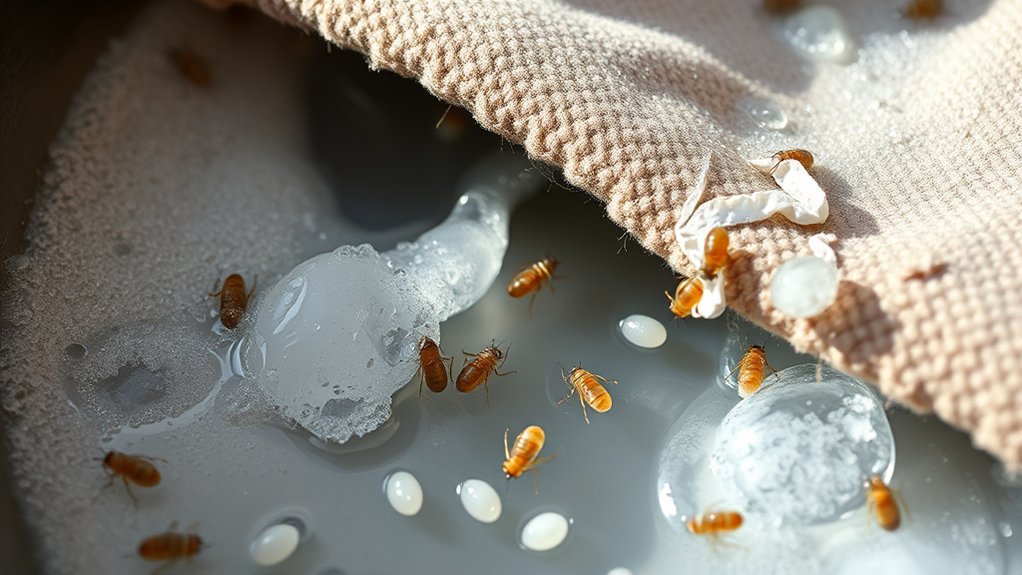
Laundry detergent breaks down oils and grime on fabrics, which helps loosen fleas and their eggs from the fibers. When you use laundry detergent, its chemical agents disrupt the exoskeleton of fleas, weakening their grip on the fabric. This action makes it easier to remove fleas and flea eggs during the wash cycle.
Hot water boosts the detergent’s effectiveness by improving penetration and increasing the chances of dislodging these pests. Plus, the heat from both washing and drying helps loosen and kill fleas since they’re sensitive to temperature changes.
Why Washing Alone Doesn’t Kill All Fleas and Eggs
Although washing clothes and bedding can eliminate many adult fleas and some eggs, it doesn’t eradicate all flea life stages because larvae and pupae often survive in environments like carpets and furniture.
Flea eggs and flea larvae frequently detach from hosts and embed themselves in areas laundry detergent can’t reach.
Flea eggs and larvae often settle in spots beyond the reach of laundry detergent.
Additionally, adult fleas may survive wash cycles if the water isn’t hot enough or detergent lacks effective surfactants.
While laundry detergent loosens and kills many fleas, it can’t address larvae or pupae hidden outside fabrics.
As a result, relying solely on washing won’t fully control an infestation.
You need to combine laundering with environmental measures like vacuuming and targeted treatments to disrupt the flea life cycle thoroughly and prevent reinfestation.
How to Know When Laundry Won’t Fix Your Flea Problem
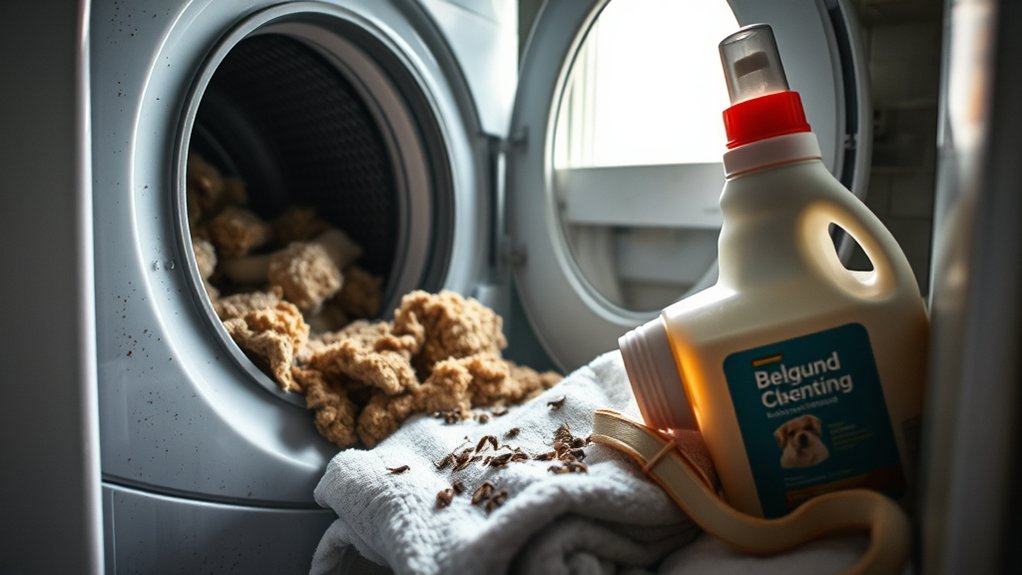
How can you tell when washing your clothes and bedding isn’t enough to solve a flea infestation? If adult fleas persist on your pet after laundering, the majority of the flea population likely lives in your home environment.
Laundry targets fleas on fabrics but misses eggs and larvae hiding in carpets, furniture, and crevices. A severe flea problem or irregular cleaning lets the flea population bounce back quickly.
You’ll need more than laundry to control all life stages and stop reinfestation.
| Indicator | Explanation |
|---|---|
| Adult fleas on pet | Suggests environmental infestation |
| Presence of flea eggs | Laundry doesn’t kill dormant eggs |
| Persistent flea bites | Indicates ongoing flea population growth |
| Severity of infestation | Severe cases require multi-faceted treatment |
How Drying Kills Fleas and Completes the Cleanup
Because washing alone may not eliminate all fleas, drying your clothes and bedding in a hot dryer plays an essential role in completing the cleanup. The intense heat from drying complements the action of laundry detergent by targeting fleas in all life stages, including eggs that often survive washing.
Drying guarantees that any resilient fleas are effectively killed, preventing reinfestation.
Key points about drying and flea control include:
- Drying uses sustained high temperatures to kill fleas thoroughly.
- It complements laundry detergent’s chemical action by adding heat stress.
- Fleas vulnerable to heat are eliminated even if they survive washing.
- Regular drying after washing maximizes flea population reduction.
How to Wash and Dry Fabrics to Kill Fleas Effectively

To effectively kill fleas at all life stages, you want to wash your fabrics in water that’s heated above 130°F (54°C). Temperature really matters here, working hand in hand with your detergent to get the job done.
Speaking of detergent, using one with surfactants helps break down fleas, but it’s the heat that really guarantees you’ll eliminate them.
Once you’ve washed your items, don’t stop there. Drying your fabrics on high heat for at least 30 minutes is the final step. This ensures any fleas and eggs that might’ve survived the wash are completely destroyed.
Washing Temperature Importance
Although washing fabrics might seem straightforward, maintaining a water temperature of at least 130°F is critical for killing fleas and their eggs effectively.
Hot water disrupts the flea life cycle by eliminating both adult fleas and resilient flea eggs. The washing temperature guarantees ideal conditions for detergent agents to work efficiently.
To maximize flea removal during laundry, you should:
- Use hot water at or above 130°F to guarantee flea eggs are destroyed
- Select detergents with strong cleaning agents to enhance elimination
- Rely on machine agitation to dislodge fleas from fabric fibers
- Wash pet bedding and infested fabrics regularly to reduce flea populations
Dryer Heat Effectiveness
Following the use of hot water and strong detergents to eliminate fleas during washing, drying fabrics at high temperatures further guarantees their destruction.
Dryer heat above 130°F is critical to killing fleas and their eggs, which can sometimes survive in water alone.
While laundry detergent disrupts the fleas’ protective outer layer and breaks surface tension, the additional heat from the dryer assures any remaining fleas don’t survive or re-establish.
To prevent fleas effectively, you should dry bedding, rugs, and clothing immediately after washing.
This combined approach using laundry detergent in hot water followed by thorough drying targets all flea life stages, reducing infestation risks.
Consistent washing and proper drying are essential steps to prevent fleas from persisting in your home environment.
When to Combine Laundry Detergent With Other Flea Treatments
When you’re dealing with a serious flea infestation, it really helps to combine laundry detergent with chemical treatments. This way, you’re tackling the problem on two fronts – your pets and their environment.
Try using detergent in hot water washes along with topical or oral flea medications. Doing this interrupts the flea life cycle from multiple angles.
Severe Infestation Scenarios
Since laundry detergent combined with hot water and dryer heat effectively kills many adult fleas, you might assume washing alone solves the problem. However, it often falls short in severe infestations.
Laundry detergent primarily targets adult fleas but may not eliminate eggs and larvae, which are vital stages in the flea life cycle.
In severe infestations, relying solely on laundry detergent won’t suffice. You should integrate additional measures such as:
- Treating pets with veterinarian-recommended flea control products
- Vacuuming carpets and furniture to remove hidden fleas and eggs
- Washing pet bedding and fabrics regularly with laundry detergent
- Considering professional pest control for thorough environment treatment
This multi-pronged approach guarantees you address all flea life cycle stages, improving control during severe infestations.
Combining Chemical Treatments
Although laundry detergent effectively eliminates many fleas through heat and agitation, you’ll achieve better results by combining it with other chemical treatments. Washing infested fabrics in hot water with enzyme-based detergent disrupts the flea life cycle by killing adults and larvae. Following this, drying on high heat eradicates any survivors.
To thoroughly control fleas, pair laundry detergent use with topical or oral flea treatments on pets, targeting all flea stages.
| Treatment Step | Purpose | Targeted Flea Stage |
|---|---|---|
| Hot Water + Detergent | Kill fleas via heat & surfactants | Adults, larvae |
| High Heat Drying | Eliminate residual fleas | Eggs, larvae |
| Topical/Oral Flea Treatments | Prevent infestation on pets | All flea life cycle stages |
This integrated approach maximizes flea elimination and prevents reinfestation.
Environmental Flea Control
To achieve effective environmental flea control, you should combine laundry detergent treatments with other flea management methods at critical points in the infestation cycle.
Laundry detergent, when used with hot water, breaks down flea protective barriers and eliminates fleas and flea dirt on bedding, rugs, and pet items. However, relying solely on washing won’t fully eradicate infestations.
Combine laundry detergent with these actions for ideal results:
- Vacuum thoroughly to remove loose fleas and flea dirt before washing.
- Treat pets with vet-recommended flea control products.
- Apply environmental insecticides targeting flea larvae and eggs.
- Regularly wash pet bedding and household fabrics in hot water with detergent.
This integrated approach increases the likelihood of getting rid of fleas permanently by disrupting their life cycle at multiple stages.
How to Prevent Fleas From Coming Back After Laundry
When you finish washing your items in hot water with detergent, you should immediately dry them on high heat for at least 30 minutes to kill any remaining fleas or eggs. This combination of laundry detergent and heat effectively eliminates infestations.
To prevent reinfestation, vacuum your home thoroughly before and after laundering to remove fleas and eggs from carpets and crevices. Store freshly cleaned items in airtight containers to avoid exposure to lingering fleas.
Furthermore, maintain a flea-free environment by regularly treating your pets with vet-approved flea preventatives.
These steps, combined with proper laundering, create a scientific and all-encompassing approach to controlling fleas and preventing their return after washing.
Frequently Asked Questions
Can Laundry Detergent Kill Fleas on Pets?
Laundry detergent can kill fleas on your pets when used with hot water, as heat and soap disrupt flea survival. The detergent breaks surface tension, drowning fleas, while agitation removes them from fur.
However, it may not eliminate all flea life stages, like larvae or pupae, on your pet.
You should combine laundry treatments with other flea control methods for effective, thorough flea management and to prevent reinfestation.
Are Natural Detergents Effective Against Fleas?
Natural detergents can be effective against fleas, but they’re not a silver bullet. While enzymes and surfactants in these detergents disrupt flea shells, killing some adults, they often miss eggs and larvae.
You’ll find essential oils offer some repellency, yet their impact alone is limited.
To truly control fleas, you should combine natural detergents with vacuuming and pet treatments, ensuring the products are safe and designed for pest control.
How Often Should I Wash Pet Bedding to Prevent Fleas?
You should wash your pet’s bedding at least once a week to effectively prevent fleas.
Washing every 3-4 days is even better if fleas are persistent. Use hot water to kill fleas and their eggs during all life stages.
Adding flea-specific detergent or vinegar increases efficacy. Regular vacuuming around the bedding further reduces flea presence.
Consistent cleaning disrupts the flea lifecycle and minimizes reinfestation risk.
Can Flea Eggs Survive in Cold Water Washing?
Flea eggs cling like tiny warriors, shielded against cold water’s gentle assault. So yes, they can survive cold water washing. Their protective shells act like armor, resisting the mild temperature and detergent’s effects.
To truly defeat these hidden enemies, you need hot water and high heat drying, breaking down their defenses and stopping any chance of hatching. Cold water alone leaves these resilient eggs intact, risking a future flea invasion.
Is Flea Shampoo Necessary if I Use Laundry Detergent?
Yes, flea shampoo is necessary even if you use laundry detergent.
Detergent helps kill fleas on clothing and bedding but doesn’t effectively eliminate fleas on your pet’s skin or soothe irritation.
Flea shampoos contain targeted insecticides and calming agents, providing direct treatment for your pet.
Using both detergent for washing fabrics and shampoo for your pet ensures thorough flea control and reduces the risk of reinfestation.
Conclusion
So, does laundry detergent kill fleas completely? Not quite. While it loosens fleas and eggs from your fabrics, washing alone won’t eliminate them all.
You need high heat from drying to truly kill these pests. Combining detergent with thorough washing, drying, and other flea treatments guarantees success.
Don’t rely on laundry alone, or you risk fleas making a comeback. Are you ready to tackle fleas with a complete, science-backed approach?