How To Sanitize Laundry Without Bleach – Simple Steps
You can sanitize your laundry without bleach by adding one cup of distilled white vinegar to the rinse cycle. This kills bacteria and neutralizes odors safely.
Boost cleaning by combining vinegar with baking soda or borax. You can also use hydrogen peroxide cautiously to avoid color fading.
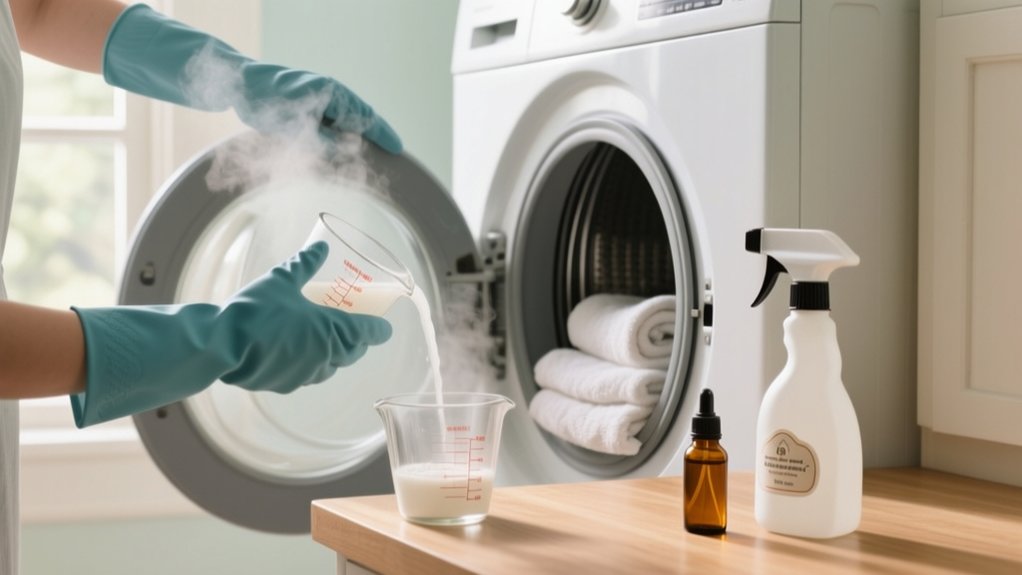
Utilize your washer’s sanitizing cycle with hot water or steam for deeper disinfection. Finish by drying clothes in sunlight to harness natural UV sanitization.
Discover more effective and fabric-safe methods to keep your laundry fresh and germ-free.
Key Takeaways
- Add distilled white vinegar or hydrogen peroxide to the wash cycle to naturally sanitize and deodorize laundry without bleach.
- Use the washing machine’s sanitizing cycle with hot water above 140°F for effective heat-based disinfection.
- Incorporate Lysol® Laundry Sanitizer in cold or warm water to kill 99.9% of bacteria on various fabrics safely.
- Dry clothes outdoors in sunlight to utilize natural UV rays for additional sanitizing and fabric brightening.
- Enhance freshness and antibacterial effects by adding essential oils like tea tree or lavender during washing or rinsing.
How To Sanitize Laundry Without Bleach
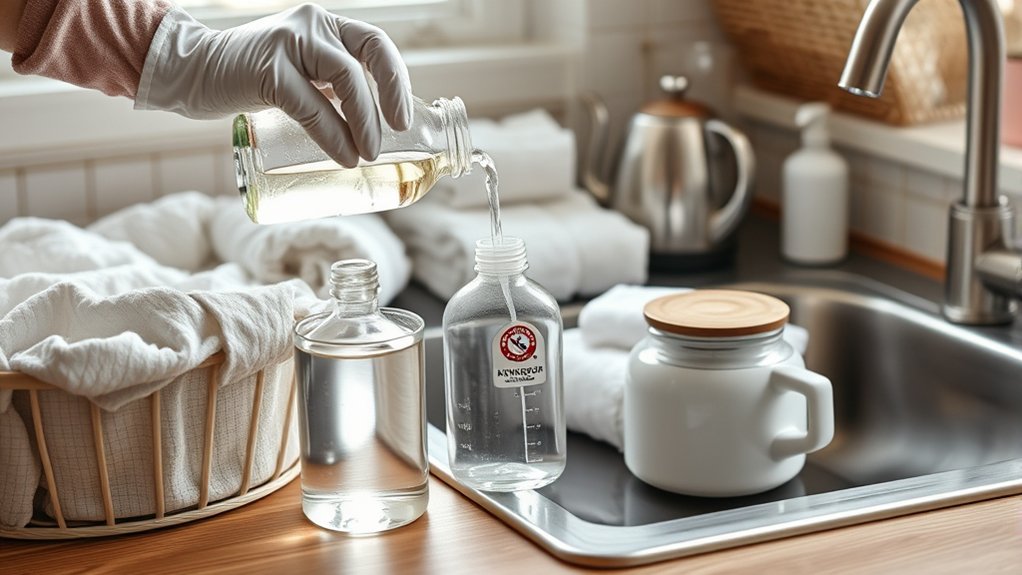
Although bleach is a common sanitizer, you can effectively disinfect your laundry without it by using alternatives like distilled white vinegar, hydrogen peroxide, or commercial sanitizers such as Lysol® Laundry Sanitizer.
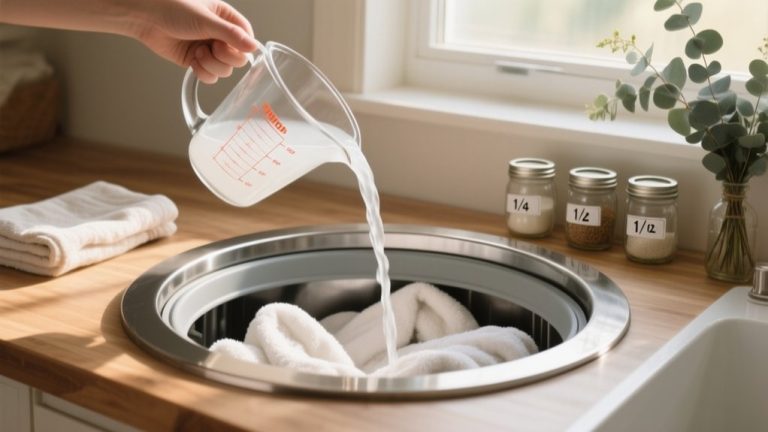
To learn how to sanitize laundry without bleach, add one cup of distilled white vinegar to the rinse cycle; it naturally deodorizes and softens fabrics while leveraging its sanitizing properties.
Alternatively, hydrogen peroxide at 3% concentration works well during the wash cycle but may bleach colored fabrics.
Lysol® Laundry Sanitizer kills 99.9% of bacteria, functioning in both standard and HE machines, even with cold water.
Using your washing machine’s sanitizing cycle enhances disinfecting surfaces by applying higher temperatures.
Moreover, drying clothes under sunlight utilizes UV rays as a natural sanitizer to further sanitize your clothes without chemicals.
Use White Vinegar To Sanitize Laundry Naturally
When you add one cup of distilled white vinegar to your laundry’s rinse cycle, you harness its acetic acid content to effectively kill bacteria and neutralize odors without relying on harsh chemicals. Unlike using bleach, white vinegar sanitizes laundry naturally while being safe for most colored fabrics.
It also softens clothes and helps maintain fabric vibrancy. For thorough sanitizing your laundry, consider a second rinse cycle with vinegar to guarantee all bacteria and odors are eliminated.
| Benefit | Mechanism | Fabric Impact |
|---|---|---|
| Kill bacteria | Acetic acid antimicrobial | Safe for colors |
| Neutralize odors | pH adjustment | Softens fabrics |
| Eco-friendly | Chemical-free | Prolongs fabric life |
| Avoids bleach usage | Natural alternative | Reduces allergens |
| Enhances rinse effect | Double rinse recommended | Maintains vibrancy |
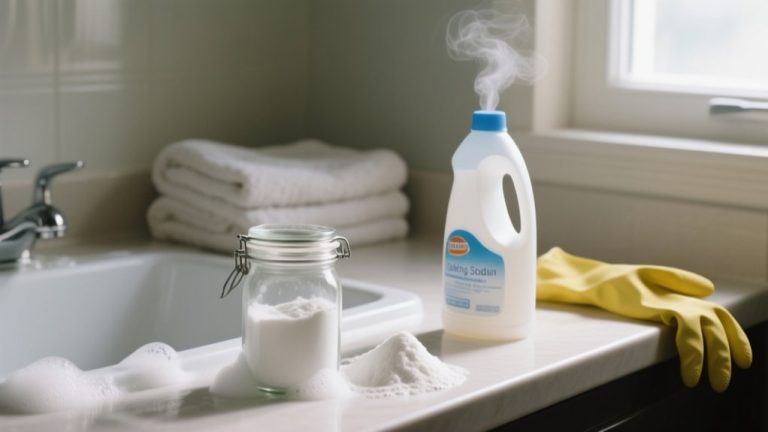
Boost Laundry Sanitizing With Baking Soda Or Borax
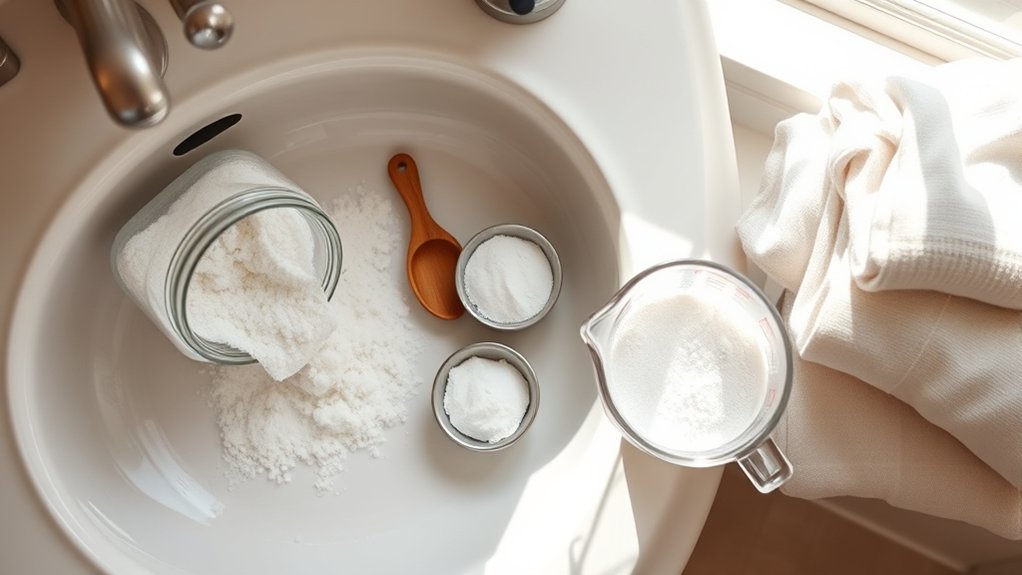
Adding half a cup of baking soda or borax to your wash cycle can greatly boost your laundry’s sanitizing power.
Baking soda acts as a natural deodorizer, neutralizing odors and softening fabrics while enhancing the effectiveness of your laundry detergent.
Baking soda naturally deodorizes, softens fabrics, and boosts your detergent’s cleaning power.
Borax, a naturally occurring mineral, not only helps remove tough stains but also functions as a mild disinfectant. This increases your wash’s ability to sanitize laundry.
Both substances work well with detergents to reduce bacteria and odors effectively.
Additionally, baking soda and borax are eco-friendly alternatives that are safe for sensitive skin and reduce chemical exposure.
For even greater sanitizing results, you can combine either with vinegar in the rinse cycle. This creates a powerful, natural disinfectant system without relying on harsh bleach products.
Sanitize Laundry Using Steam And Hot Water
Baking soda and borax effectively enhance your laundry’s sanitizing power, but combining these with heat-based methods further improves results.
To sanitize laundry using hot water, set your washing machine to a sanitizing cycle that maintains temperatures at or above 140°F. This heat level effectively kills most viruses and bacteria, ensuring thorough disinfection without bleach.
Moreover, steam from your dryer penetrates fabrics, sanitizing even delicate items that can’t withstand high water temperatures. Using steam alongside hot water washing maximizes microbial elimination and reduces allergens.
For best sanitization, select cycles that extend wash and rinse times while integrating steam or high heat.
This approach not only sanitizes laundry using hot water and steam but also promotes overall home health by minimizing contamination risks efficiently and safely.
Sanitize Laundry Safely With Hydrogen Peroxide
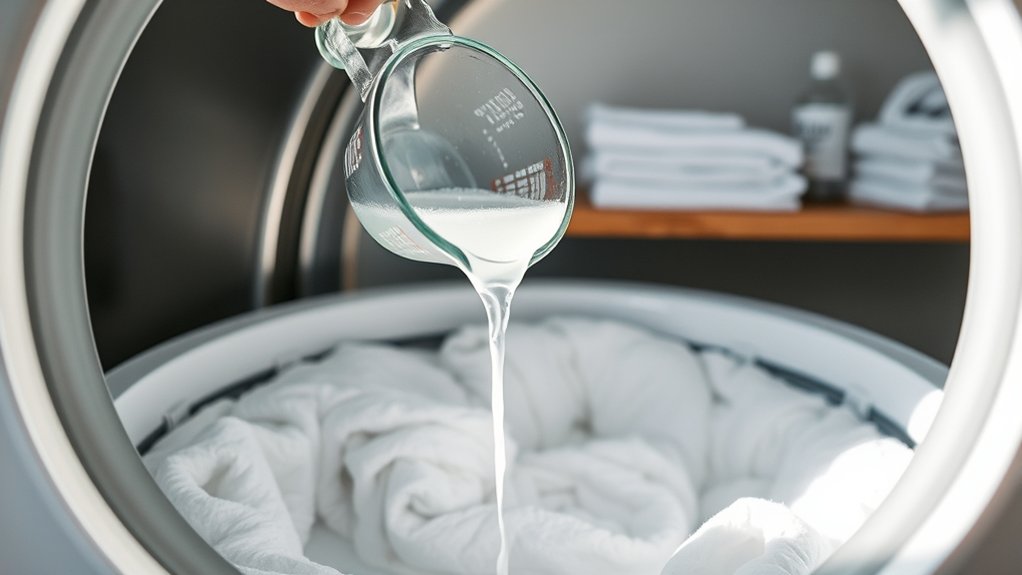
Although hydrogen peroxide is a powerful disinfectant, you should add one cup of 3% hydrogen peroxide to your washing machine during the wash cycle to effectively kill bacteria, viruses, and fungi.
To sanitize laundry safely with hydrogen peroxide, start by performing a patch test on colored fabrics, as it can bleach certain materials.
For best disinfection, extend the wash cycle to 30 minutes or longer. Combining hydrogen peroxide with a deep-cleaning detergent enhances its ability to disinfect and sanitize laundry thoroughly.
After washing, line dry your clothes outside to utilize sunlight, which amplifies hydrogen peroxide’s sanitizing effect through natural UV rays.
This method is safe to use when following instructions carefully, offering a reliable alternative to bleach for sanitizing laundry without damaging fabrics.
Freshen Laundry Naturally With Essential Oils
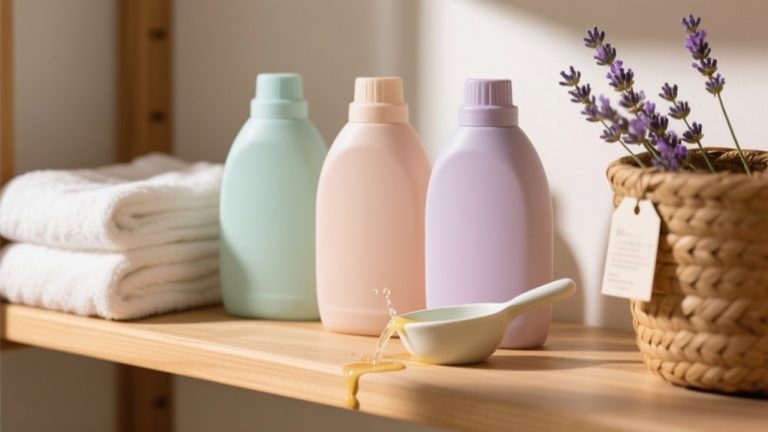
Building on methods that sanitize laundry without bleach, you can also freshen your clothes naturally by incorporating essential oils. Essential oils like tea tree and lavender have natural antimicrobial properties, making them effective to sanitize laundry while avoiding harsh chemicals.
Adding a few drops of essential oils to your wash eliminates odors and imparts a fresh scent. For enhanced disinfectant action, mix essential oils with vinegar during the rinse cycle; this combination maintains fabric softness while boosting sanitization.
Moreover, pairing essential oils with baking soda increases cleaning power and combats tough odors.
Using essential oils provides a scientifically supported, natural way to freshen laundry and achieve effective sanitization without bleach or synthetic additives.
Sanitize Laundry Naturally With Sunlight
Since sunlight emits ultraviolet (UV) rays that effectively kill bacteria and viruses, drying your laundry outdoors provides a natural way to sanitize fabrics. Sunlight acts as a natural disinfectant, targeting harmful microorganisms without harsh chemicals.
By line drying clothes in direct sunlight, you not only sanitize your laundry but also brighten whites and reduce odors. This eco-friendly method consumes no energy, making it both cost-effective and sustainable.
To maximize the sanitizing effect, expose items like pillows and shoes for several hours, ensuring thorough disinfection. Sunlight is especially beneficial for delicate or non-washable fabrics that can’t tolerate heat or water.
Incorporating sunlight into your routine helps you sanitize clothes naturally while supporting environmental health.
Choose The Right Sanitizing Method For Your Fabrics
You’ll want to pick a sanitizing method that works well with your fabric’s care needs. This way, you avoid any damage while still getting rid of bacteria effectively.
Think about natural options like distilled white vinegar or hydrogen peroxide. Just be sure to check if your fabric is colorfast and if the wash temperature is right for these methods.
For delicate items, steam can be a great choice.
Or you might try commercial sanitizers made specifically for different types of fabrics—they’re both safe and effective.
Fabric-Safe Sanitizing Options
Although bleach is a common sanitizer, several fabric-safe alternatives effectively disinfect your laundry without causing damage. You can add one cup of 3% hydrogen peroxide during the wash cycle to sanitize without bleaching.
Distilled white vinegar, used in the rinse cycle, not only sanitizes but also softens fabrics and eliminates odors.
Baking soda enhances cleaning power and removes tough stains safely on most materials.
For a natural approach, pine oil added during a second wash cycle offers sanitizing benefits, suitable mainly for minor contamination.
Furthermore, sunlight sanitization provides a chemical-free method; hanging clothes to dry under direct sunlight exposes them to UV rays that kill bacteria efficiently.
Selecting these options guarantees effective sanitizing tailored to your fabric’s safety requirements.
Temperature And Cycle Settings
When selecting temperature and cycle settings for sanitizing laundry, prioritize the warmest water safe for your fabric. Temperatures above 140°F effectively eliminate bacteria. Proper washing settings enhance sanitizing efficiency without damaging textiles.
Follow these guidelines:
- Choose the highest temperature your fabric care label allows to maximize bacterial elimination during washing.
- Select a long cycle, ideally between 30 minutes to 1.5 hours, to improve sanitizing outcomes.
- Use a washing machine’s dedicated sanitizer cycle if available, as it’s optimized for pathogen removal.
- For delicate fabrics, rely on dryer steam cycles to sanitize gently without compromising material integrity.
Natural Versus Chemical Methods
Since different fabrics respond uniquely to sanitizing agents, selecting the appropriate method is essential to maintain their integrity while ensuring effective bacterial elimination.
When sanitizing laundry without bleach, natural alternatives like hydrogen peroxide and white vinegar offer safe, effective options. Use one cup of either to reduce bacteria considerably, noting that hydrogen peroxide may bleach colors, so consider fabric safety carefully.
Chemical options, such as Lysol® Laundry Sanitizer, kill 99.9% of bacteria and suit diverse fabrics, including delicates and baby clothes, even in cold water.
Combine these methods with ideal washing techniques by selecting the warmest water safe for your fabrics and utilizing sanitizing or extra rinse cycles.
Finally, line drying in sunlight enhances sanitation through natural UV exposure, providing an eco-friendly finishing step.
Frequently Asked Questions
Can Sanitizing Laundry Without Bleach Remove Mold and Mildew?
Yes, you can effectively remove mold and mildew from laundry without bleach.
Using alternatives like distilled white vinegar or hydrogen peroxide disrupts mold spores because of their antimicrobial properties.
Washing your clothes in hot water (above 140°F) further enhances this process.
Also, extending the wash cycle and drying clothes in direct sunlight exposes fabrics to UV rays, which naturally kill mold and mildew.
This way, you ensure your laundry is thoroughly sanitized without using harsh chemicals.
How Often Should I Sanitize My Laundry for Best Results?
You should sanitize your laundry at least once a week, especially for high-contact or high-risk items like workout clothes, bedding, and pet blankets.
For households with vulnerable individuals or during illness outbreaks, sanitize immediately after exposure.
Items like kitchen towels and children’s clothes benefit from bi-weekly sanitizing.
Incorporating agents like vinegar or hydrogen peroxide during every wash cycle can improve hygiene and reduce sanitizing frequency while effectively minimizing germs and allergens.
Are These Natural Methods Safe for Baby Clothes?
Yes, these natural methods are safe for baby clothes. Studies show that distilled white vinegar kills up to 99% of bacteria, making it both effective and gentle for sensitive skin.
You can also use baking soda to remove odors and enhance cleaning without harsh chemicals. Just avoid hydrogen peroxide on colored fabrics, as it may bleach them.
Sunlight naturally disinfects by destroying bacteria through UV rays, ensuring your baby’s clothes stay clean and safe.
Can I Use These Methods With All Washing Machine Types?
Yes, you can use these natural sanitizing methods with all washing machine types, including standard and high-efficiency models.
Just follow your machine’s manufacturer guidelines and add sanitizers like vinegar or baking soda through the fabric softener compartment for even distribution.
Always select the warmest water temperature safe for your fabrics, as heat enhances sanitization.
Machines with sanitizing cycles further improve germ elimination, but confirm your chosen agent is safe for the fabrics you’re washing.
How Do These Alternatives Affect Fabric Colors and Patterns?
These alternatives affect fabric colors differently: hydrogen peroxide can bleach certain fabrics, so you should test it first on a small area.
White vinegar generally preserves colors and softens fabrics.
Sunlight naturally whitens but may fade colors if exposure is prolonged.
Pine oil is less likely to alter colors but offers limited sanitization.
Essential oils can freshen laundry but may discolor sensitive fabrics, so use them cautiously.
Conclusion
Sanitizing laundry without bleach is both effective and eco-friendly. Did you know that 60% of household bacteria can survive traditional washing? Using white vinegar, baking soda, steam, or hydrogen peroxide guarantees a deeper clean, reducing harmful microbes.
Adding essential oils or drying in sunlight further boosts freshness naturally. By choosing the right method for your fabrics, you’ll maintain hygiene safely while protecting your clothes and the environment.