Is Lysol Laundry Sanitizer Septic Safe – The Real Answer
You shouldn’t use Lysol Laundry Sanitizer regularly if you have a septic system because its potent chemicals kill the beneficial bacteria needed to break down waste. This disruption can lead to sludge buildup, system inefficiency, and costly repairs.
Occasional, sparing use might be okay on heavily soiled laundry, but routine use risks septic failure. Safer alternatives and proper maintenance protect your system.
Keep exploring to understand how to use disinfectants wisely and maintain septic health.
Key Takeaways
- Lysol Laundry Sanitizer contains strong chemicals that can harm beneficial septic bacteria, risking septic system imbalance and failure.
- Regular use may disrupt organic waste breakdown, causing sludge buildup, backups, and increased maintenance costs.
- Use Lysol Laundry Sanitizer sparingly and only on heavily soiled laundry to minimize septic system impact.
- Prefer biodegradable or septic-safe detergents and natural alternatives like vinegar for routine laundry cleaning.
- Schedule regular septic inspections and pumping, especially after using disinfectants, to maintain system health and prevent damage.
What Is Lysol Laundry Sanitizer?
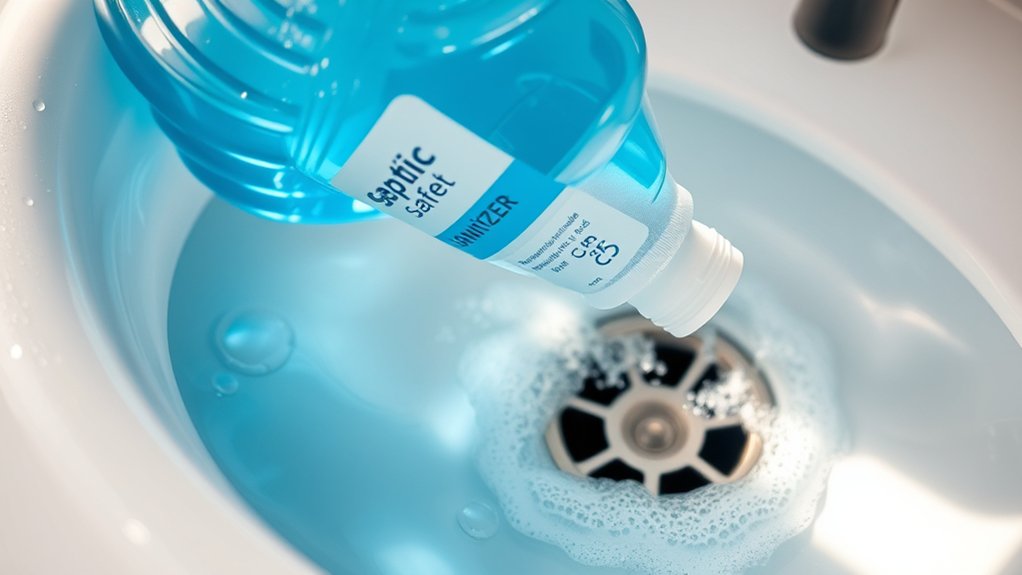
Although you might use regular detergent to clean your clothes, Lysol Laundry Sanitizer adds an extra layer of protection by killing 99.9% of bacteria and viruses on your laundry.
You apply it during the wash or rinse cycle to disinfect fabrics effectively.
This sanitizer targets specific pathogens responsible for illnesses, making it especially useful for households prioritizing hygiene.
Available in liquid and spray forms, Lysol Laundry Sanitizer offers versatile application options.
However, while it enhances cleanliness, it’s important to take into account that your septic system relies on beneficial bacteria to break down waste.
Keep in mind your septic system depends on beneficial bacteria to break down waste when using powerful sanitizers.
Using products that kill bacteria and viruses could potentially disrupt this balance, which raises questions about the sanitizer’s broader environmental impact.
Understanding its function helps you make informed choices about laundry hygiene.
Is Lysol Laundry Sanitizer Safe for Septic Systems?
While Lysol Laundry Sanitizer effectively kills harmful bacteria on your clothes, its impact on septic systems raises concerns. The sanitizer’s strong chemicals can disrupt the delicate bacterial balance septic systems rely on to break down waste.
Using Lysol Laundry Sanitizer may kill beneficial bacteria essential for septic tank function, impair waste decomposition, and lead to backups. Over time, it can cause septic system failures and increase maintenance costs due to system damage.
It’s usually unnecessary since detergent and hot water suffice for cleaning. Because septic systems depend on healthy bacteria to process waste efficiently, introducing harsh antibacterial agents like Lysol Laundry Sanitizer can undermine their operation.
If you have a septic system, it’s best to avoid such disinfectants to prevent harm to the bacterial ecosystem critical for your system’s health.
Using Lysol Laundry Sanitizer Safely With Septic Systems
Since Lysol Laundry Sanitizer contains chemicals that can harm the beneficial bacteria in your septic system, you should use it sparingly and only on heavily soiled laundry.
Lysol Laundry Sanitizer’s disinfectants effectively kill 99.9% of bacteria, including those essential for breaking down waste in septic tanks.
Lysol Laundry Sanitizer kills 99.9% of bacteria, including vital ones for septic tank waste breakdown.
Frequent use risks disrupting this bacterial balance, leading to sludge buildup and increased maintenance. To protect your septic system, limit Lysol Laundry Sanitizer to occasional, necessary applications rather than regular use.
For routine laundry, choose biodegradable or septic-safe detergents that maintain bacterial health.
This approach minimizes chemical exposure to your septic system while still addressing hygiene needs, helping preserve its function and longevity without compromising sanitation.
Risks of Lysol Laundry Sanitizer for Septic Systems
If you rely on a septic system, using Lysol Laundry Sanitizer regularly can disrupt the essential bacterial balance that breaks down waste.
Lysol Laundry Sanitizer contains chemicals that kill bacteria, both harmful and beneficial, which compromises your septic system’s efficiency.
This disruption can cause impaired breakdown of organic waste, sludge buildup requiring frequent pumping, increased risk of septic system failure, potential sewage backups or overflows, and higher maintenance costs and health hazards.
The active ingredients in Lysol Laundry Sanitizer aren’t selective; they eliminate the beneficial microbes your septic system needs to function properly.
Frequent use of such products can lead to system imbalance and costly consequences.
Septic-Safe Alternatives to Lysol Laundry Sanitizer
How can you maintain laundry hygiene without compromising your septic system? You can choose septic-safe sanitizing products like biodegradable detergents. They clean effectively while preserving beneficial bacteria.
Natural alternatives such as vinegar, baking soda, or lemon juice offer gentle sanitizing without harming septic health. Regular hot water wash cycles help eliminate pathogens without relying on harsh chemicals.
Here’s a comparative overview:
| Alternative Type | Septic Impact | Key Benefits |
|---|---|---|
| Biodegradable Detergents | Low | Effective, eco-friendly |
| Natural Alternatives | Minimal | Safe, non-toxic |
| Regular Hot Wash Cycles | None | Pathogen reduction |
| Eco-Friendly Brands | Certified Septic-Safe | Verified safety, sustainable |
Steps to Take If Disinfectants Harm Your Septic System
If you think disinfectants might’ve caused harm to your septic system, the first thing you should do is schedule an inspection right away. This will help you figure out if there’s any damage that needs attention.
Next, it’s important to restore the beneficial bacteria in your system. You can do this by using treatments that are approved specifically for septic systems. These bacteria are key because they help break down waste effectively.
Also, keep a close eye on how your system is performing over time. Monitoring it regularly can help you spot any problems early on and prevent things from getting worse.
Taking these steps can really make a difference in keeping your septic system healthy.
Immediate System Inspection
What steps should you take when Lysol Laundry Sanitizer disrupts your septic system’s bacterial balance? Conducting an immediate system inspection is vital to limit damage. Here’s what you should do:
Stop using Lysol Laundry Sanitizer to prevent further harm to your septic system. Then, contact a septic system specialist promptly to schedule a thorough inspection. Allow technicians to assess the impact on beneficial bacteria essential for waste breakdown.
Keep an eye out for warning signs like slow drains or sewage backups and report them right away. Also, maintain regular septic tank pumping to support system recovery and health.
This evidence-based approach guarantees timely identification of issues and helps protect your septic system’s functionality by preserving the beneficial bacteria critical for its operation.
Bacteria Restoration Methods
Although disinfectants like Lysol Laundry Sanitizer can disrupt the delicate bacterial ecosystem in your septic system, you can take targeted steps to restore its balance effectively. First, consult a septic specialist to assess bacterial health.
Next, introduce beneficial bacteria products such as buttermilk or Rid-X to replenish microbes essential for waste breakdown. Limit harsh chemical use to prevent further damage.
Regular septic tank pumping helps maintain system function after exposure.
| Step | Purpose |
|---|---|
| Specialist Consultation | Assess bacterial damage |
| Beneficial Bacteria Products | Restore microbial balance |
| Reduced Chemical Use | Protect bacteria from further harm |
| Routine Maintenance | Guarantee peak septic system performance |
Monitoring Septic Performance
Maintaining the balance of beneficial bacteria in your septic system requires ongoing observation to detect any negative effects from disinfectants like Lysol Laundry Sanitizer.
To effectively monitor septic performance and address bacterial imbalance, consider these steps:
Check for slow drains, backups, or foul odors indicating bacterial imbalance.
Schedule regular inspections with a septic specialist to evaluate system health.
Document performance changes after using disinfectants for accurate diagnosis.
Avoid excessive use of disinfectants, as they aren’t needed for septic maintenance.
Use bacterial additives if disinfectant exposure disrupts beneficial bacteria.
When to Call a Septic System Professional
If you notice signs of trouble like slow drains or unusual odors, it’s a good idea to call a septic system professional.
These symptoms can point to blockages or even system failure, so it’s best to get them checked out sooner rather than later.
Professionals can do thorough inspections and diagnostics to accurately identify what’s going on beneath the surface.
They know exactly what to look for and can pinpoint issues that mightn’t be obvious at first glance.
Plus, regular maintenance is key.
Services like pumping and restoring the bacterial balance in your system help keep everything running smoothly.
Staying on top of these tasks can save you from expensive repairs down the line.
Signs Of Septic Trouble
How can you tell when your septic system needs professional attention? Recognizing specific signs early can prevent costly damage. Key indicators include:
- Slow draining sinks, toilets, or drains suggest blockages or septic issues.
- Foul odors around your home or yard often signal system failure or overflow.
- Backups in toilets or drains indicate serious septic trouble needing prompt action.
- Lush vegetation patches near the septic tank may reveal leaks.
- Water pooling above the septic field points to potential system failure.
If you notice any of these signs, it’s essential to consult a septic system professional promptly. Addressing these symptoms early can protect your property, maintain system functionality, and prevent environmental contamination.
Inspection And Diagnosis
When should you call a septic system professional? If you notice slow drains, sewage odors, or unusual signs like pooling water, lush vegetation over the drain field, or gurgling pipes, it’s time for an inspection.
Regular inspections every 1 to 3 years help detect issues early and maintain your septic system’s health.
After using disinfectants such as Lysol Laundry Sanitizer, consulting a professional is wise to assess any potential impact on the system’s bacteria balance.
Furthermore, schedule an inspection following heavy rains or frequent clogs, as these conditions can stress your septic system.
Prompt diagnosis by a professional guarantees appropriate intervention, preventing costly damage and preserving system functionality with evidence-based care.
Professional Maintenance Services
Signs like slow drains, sewage backups, or unpleasant odors often indicate septic system issues requiring professional attention. When you encounter these symptoms, don’t hesitate to call for professional maintenance services.
Regular septic system care, including pumping every 3 to 5 years, prevents costly failures. Using laundry disinfectants can disrupt the bacterial balance essential for system function, so consult a professional if you’ve recently used harsh chemicals.
A licensed expert can evaluate your system and recommend treatments like beneficial bacteria additions to restore balance.
Key moments to seek professional help include:
- Persistent slow drainage
- Sewage odors inside or outside
- Recent use of strong laundry disinfectants
- Overdue septic tank pumping
- Visible backups or soggy areas near the drain field
Timely professional intervention guarantees effective septic system management.
Frequently Asked Questions
Can Lysol Laundry Sanitizer Be Used in Well Water Systems?
You shouldn’t use Lysol Laundry Sanitizer in well water systems because it can disrupt beneficial bacteria essential for maintaining water quality.
Its active ingredients may upset the natural bacterial balance, potentially leading to contamination or taste issues.
Instead, you should opt for septic-safe alternatives designed to sanitize without harming the ecosystem in your well water.
Prioritizing these options helps protect your water’s safety and overall system health.
Does Lysol Laundry Sanitizer Affect the Color of Clothes?
Imagine your favorite shirt fading into a dull memory. Lysol Laundry Sanitizer can affect the color of clothes if not used carefully.
You’ll want to test it on a small, hidden area first because its strong chemicals might cause discoloration, especially on sensitive fabrics.
Follow the manufacturer’s guidelines strictly to avoid uneven color retention.
How Often Should Lysol Laundry Sanitizer Be Used in Laundry?
You should use Lysol Laundry Sanitizer sparingly, only on heavily soiled or high-risk items rather than every load.
Overusing it can harm the beneficial bacteria in your septic system, leading to potential buildup and costly damage.
Aim to limit its application to occasional sanitizing needs.
For regular laundry, rely on hot water and quality detergent, which effectively clean without disrupting your septic system’s balance or causing long-term harm.
Is Lysol Laundry Sanitizer Safe for Use With Sensitive Skin?
Lysol Laundry Sanitizer isn’t the best choice if you have sensitive skin. Its quaternary ammonium compounds can cause irritation or worsen conditions like eczema.
You should always do a patch test with a diluted solution before using it widely. If you notice any redness or discomfort, stop using it immediately.
Consider gentler alternatives like fragrance-free detergents or natural cleaners to avoid potential skin reactions.
Can Lysol Laundry Sanitizer Be Combined With Other Laundry Additives?
You shouldn’t combine Lysol Laundry Sanitizer with other laundry additives like bleach or fabric softeners.
Doing so can reduce its sanitizing effectiveness and might create harmful chemical reactions.
To maintain ideal cleaning and safety, always follow the manufacturer’s dosing instructions and avoid mixing it with other products during the same wash cycle.
Checking product labels for compatibility helps you prevent any interference with Lysol’s sanitizing action.
Conclusion
In short, Lysol Laundry Sanitizer isn’t the safest choice for septic systems due to its potent disinfectants that can disrupt bacterial balance. Imagine a homeowner who noticed their septic tank backing up after regular use of Lysol sanitizer. This highlights the risks involved.
To protect your system, consider septic-safe alternatives and use disinfectants sparingly. If you see signs of damage, don’t hesitate to call a professional to prevent costly repairs and maintain system health.