Is Laundry Sanitizer The Same As Detergent – Myth or Fact
Laundry sanitizer and detergent aren’t the same; that’s a fact. Detergent removes dirt, stains, and odors using surfactants and enzymes, but it doesn’t kill germs. Laundry sanitizer targets bacteria, viruses, and fungi during the rinse cycle, providing extra hygiene.
You need detergent to clean your clothes and sanitizer to disinfect them, especially for illness or hard-to-freshen fabrics. If you want to understand when and how to use each properly, there’s more you can explore.
Key Takeaways
- Laundry sanitizer kills 99.9% of germs during the rinse cycle, while detergent removes dirt and stains during the wash cycle.
- Detergents clean fabrics but lack antimicrobial agents needed for thorough sanitization.
- Sanitizers use disinfecting agents like quaternary ammonium compounds or bleach, which detergents do not contain.
- Using detergent alone does not guarantee germ elimination, especially on items exposed to illness or bodily fluids.
- Proper laundry hygiene requires detergent for cleaning and sanitizer during rinsing for effective germ-killing.
What Is Laundry Sanitizer and Why Does It Matter?
Laundry sanitizer is a powerful additive that targets bacteria, viruses, and fungi on your fabrics during the rinse cycle. Unlike detergent, which works in the wash cycle to remove dirt and stains, laundry sanitizer focuses on killing 99.9% of bacteria, providing an extra layer of hygiene.
You add it separately during the rinse cycle, as mixing it with detergent can reduce its effectiveness. This makes laundry sanitizer especially important when dealing with illness, cloth diapers, or other high-risk laundry.
Add laundry sanitizer during the rinse cycle to maintain its power, especially for illness or high-risk laundry.
Many sanitizers use disinfecting agents like quaternary ammonium compounds or bleach, so following the product instructions carefully guarantees safety for your fabrics and peak germ-killing power.
Using laundry sanitizer correctly means your clothes don’t just look clean, they’re truly sanitized.
What Does Laundry Detergent Really Do?
A detergent’s main job is to remove visible dirt, oils, and stains from your clothes by using surfactants that lift soil from fabric fibers. Detergents often contain enzymes to break down tough stains and ingredients that brighten colors. However, they don’t sanitize laundry or kill bacteria and viruses. That’s where laundry sanitizers come in. Here’s a quick breakdown:
| Function | Detergent Role | Laundry Sanitizers Role |
|---|---|---|
| Remove dirt | Yes, via surfactants | No |
| Break down stains | Yes, using enzymes | No |
| Brighten fabrics | Yes, with optical brighteners | No |
| Reduce odors | Yes, but not sanitize laundry | Yes, sanitize laundry |
| Kill germs | No | Yes |
You’ll want to use both detergent and laundry sanitizers for thorough cleaning and sanitization.
How Laundry Sanitizer Kills Germs Vs. Detergent Cleaning Action
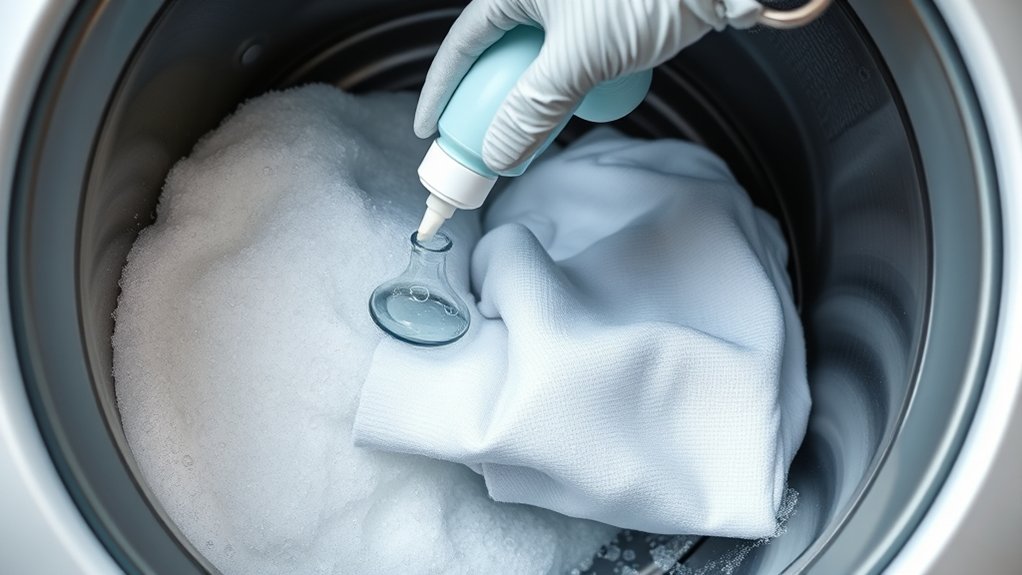
While detergents focus on removing dirt and stains by breaking down oils and soils during the wash cycle, sanitizers work differently. They target and kill bacteria, viruses, and fungi by disrupting their cell membranes, typically during the rinse cycle.
When you use detergent, it removes dirt and grime with surfactants and enzymes but doesn’t kill germs. Laundry sanitizer kills microbes using active ingredients like quaternary ammonium compounds or bleach, which damage the germs’ cell walls.
To get the best results, you apply detergent in the wash cycle and add laundry sanitizer separately in the rinse cycle. This separation guarantees that the sanitizer kills germs effectively without interference from detergent components.
Combining both actions guarantees your laundry looks clean and is hygienically safe.
Does Laundry Detergent Alone Sanitize Your Laundry?
You might think detergent alone sanitizes your laundry, but it mostly just removes dirt, stains, and odors without actually killing most germs.
Sure, washing at high temperatures can help reduce some bacteria, but detergent by itself doesn’t give you the thorough disinfection you’re looking for.
Detergent Cleaning Capabilities
Even though laundry detergent effectively removes visible dirt and stains, it doesn’t sanitize your clothes by killing bacteria or viruses.
Detergent performance focuses on breaking down oils and lifting soil, but it lacks the antimicrobial agents needed to kill germs.
Without these agents, detergent alone can’t guarantee a hygienic clean. While hot water above 140°F may help reduce some bacteria, it’s not reliable for thorough sanitization.
That’s where laundry sanitizer comes in. It contains disinfectants formulated to kill 99.9% of bacteria during the rinse cycle.
If you want to make sure your laundry is both clean and sanitized, relying solely on detergent won’t suffice.
Incorporating a laundry sanitizer is essential to achieve effective germ elimination beyond what detergent performance can provide.
Germ Removal Limitations
Although laundry detergent removes visible dirt and stains effectively, it doesn’t sanitize your laundry by killing bacteria or viruses. Laundry detergent primarily targets dirt and grime but lacks the germ removal power needed to eliminate harmful microorganisms.
While agitation and heat during washing help reduce germs, detergent alone can’t guarantee thorough sanitization. That’s where laundry sanitizer comes in. It provides the targeted germ-killing action detergents miss, especially important after illness or with heavily soiled items.
Relying solely on detergent leaves bacteria and viruses on fabrics, posing health risks. Using a laundry sanitizer complements detergent, enhancing germ removal and giving you cleaner, safer laundry.
Understanding detergent’s limits helps you make smarter choices for hygiene and household safety.
Role Of Washing Temperature
When you wash laundry at temperatures above 140°F, many microorganisms can be killed.
But typical home washing cycles often don’t reach or maintain these levels long enough to secure complete sanitization.
The water temperature in most household machines usually stays below this threshold, limiting the ability of regular detergent alone to eliminate bacteria and viruses effectively.
While detergent removes visible dirt and uses agitation and dilution to lift away some germs, it doesn’t sanitize fabrics.
To guarantee thorough hygiene, you need to use a laundry sanitizer instead, which is specifically formulated to kill pathogens.
Relying solely on detergent, especially at lower water temperatures, may leave harmful microorganisms on your clothes.
When Should You Use Laundry Sanitizer?
Because regular detergent mightn’t eliminate all germs and bacteria, you should use laundry sanitizer for items exposed to bodily fluids or during illness. Laundry sanitizer targets bacteria that survive the wash cycle, providing extra protection for your laundry.
It’s especially useful for damp-smelling or sweat-heavy loads like gym clothes and towels, which can harbor odor-causing microorganisms.
Ideal for sweaty gym wear and towels that trap odor-causing microbes.
You’ll also want to use it on hard-to-freshen fabrics, such as cloth diapers and pet bedding, where hygiene is essential.
For everyday clothing that doesn’t hold odors, laundry sanitizer isn’t typically necessary.
When you do use it, adding the sanitizer during the rinse cycle guarantees maximum effectiveness by killing lingering bacteria.
Following product instructions will help you get the best results and keep your laundry truly clean and safe.
How to Use Laundry Sanitizer Correctly for Best Results
To get the best results from your laundry sanitizer, you need to use it alongside your regular detergent rather than as a replacement. Incorporate adding sanitizer during the rinse cycle or in the softener compartment, never during the wash cycle.
Sorting your laundry by color, fabric, and hygiene needs optimizes sanitization. Follow label instructions carefully for the recommended amount. After proper washing, verify clothes are completely dried to eliminate bacteria and odors.
Here’s a quick guide:
| Step | When to Add | Purpose |
|---|---|---|
| Detergent | Wash cycle | Clean dirt and grime |
| Laundry Sanitizer | Rinse cycle | Kill bacteria and germs |
| Drying | After washing | Remove moisture, odor |
Stick to this laundry routine to maximize hygiene and freshness in every load.
Common Mistakes Using Laundry Sanitizer and Detergent
Using laundry sanitizer and detergent correctly can make a big difference in how clean and hygienic your clothes become. A common mistake is using laundry sanitizer in place of detergent, which leaves dirt behind since sanitizer only targets germs.
Using laundry sanitizer instead of detergent leaves dirt behind because sanitizer targets only germs.
Another frequent error is adding sanitizer during the wash cycle; to be effective, it should be added during the rinse cycle as directed.
Overusing laundry sanitizer not only wastes product but can reduce its effectiveness, so always stick to the recommended dosage.
Also, many think you need to sanitize every load, but it’s best reserved for specific situations, like illness or heavily soiled items.
Avoiding these common mistakes guarantees your laundry stays both clean and germ-free.
Alternatives to Commercial Laundry Sanitizers and Detergents
You can totally use natural sanitizing solutions like white vinegar or oxygen bleach to give your laundry a good boost without relying on harsh chemicals.
And here’s a cool trick—sunlight is actually a powerful, eco-friendly way to kill bacteria. Just hang your clothes outside to dry and let the sun do its magic.
On top of that, fabrics treated with antimicrobial technology can help reduce bacteria growth, keeping your laundry fresher for longer.
It’s like giving your clothes an extra layer of protection without any extra hassle.
Natural Sanitizing Solutions
Although commercial laundry sanitizers and detergents are widely available, you can rely on natural alternatives that effectively freshen and disinfect your clothes without harsh chemicals.
White vinegar, added during the rinse cycle, offers mild antimicrobial properties to reduce bacteria and odors.
Baking soda enhances detergent’s cleaning power and neutralizes smells while providing some antibacterial effects. You can also incorporate essential oils like tea tree or lavender for their natural antimicrobial properties and pleasant scent.
Sunlight acts as a natural disinfectant too. Line-drying your laundry outdoors exposes fabrics to UV rays that help kill pathogens.
Using these natural alternatives alongside regular washing keeps your clothes fresh and sanitized without relying on strong chemical agents, making your laundry routine safer and eco-friendlier.
Vinegar And Oxygen Bleach
White vinegar and oxygen bleach offer effective, eco-friendly alternatives to commercial laundry sanitizers and detergents.
You can add vinegar during the rinse cycle to reduce odors and soften fabrics with its mild antimicrobial effects. Oxygen bleach is gentler than chlorine bleach, brightens clothes, and kills some bacteria safely.
Both options suit various fabrics and support sustainable laundry habits.
Consider these benefits:
- Vinegar works best in the rinse cycle for odor and bacteria control
- Oxygen bleach safely brightens colors and whites
- Both are compatible with most fabrics
- They reduce chemical exposure compared to commercial products
- Using them minimizes environmental impact
Sunlight And Fabric Technology
Building on natural options like vinegar and oxygen bleach, sunlight and advanced fabric technologies provide further ways to sanitize your laundry without relying on commercial chemicals.
Sunlight acts as a natural disinfectant through UV radiation, effectively killing many bacteria and viruses when you line-dry your fabrics outdoors.
You can also enhance cleanliness by adding white vinegar during the rinse cycle, which offers mild antimicrobial properties to neutralize odors and reduce bacteria.
Furthermore, certain textiles incorporate antimicrobial properties, such as silver-infused fabrics, which inhibit bacterial growth and minimize odor buildup, allowing you to wash less frequently.
Do Antimicrobial Fabrics Reduce Laundry Sanitizer Needs?
When you choose antimicrobial fabrics, you benefit from materials designed to inhibit bacterial growth. This can reduce how often you need to sanitize your laundry.
These fabrics, often infused with agents like silver, actively limit microbial proliferation and help control odors.
However, they don’t eliminate the need for laundry sanitizer, especially for items exposed to bodily fluids or during illness.
Using antimicrobial fabrics can prolong freshness, but proper laundering remains essential to maintain hygiene.
- Antimicrobial fabrics reduce bacterial growth
- Infused agents like silver enhance protection
- They help lower but don’t remove sanitizing needs
- Essential for prolonging freshness between washes
- Laundry sanitizer still needed for high-risk situations
Choosing the Right Laundry Sanitizer and Detergent for Your Needs
You’ll want to choose a laundry sanitizer that really gets rid of germs but doesn’t harm your fabrics, especially when you’re washing colors or delicate items.
It’s all about finding that balance.
And when it comes to detergent, matching it to the type of fabric is key.
This helps to remove dirt and stains while keeping your clothes looking and feeling great.
Selecting Effective Sanitizers
Although detergents remove dirt and stains, laundry sanitizers target bacteria and viruses to assure your clothes are truly clean.
To select an effective laundry sanitizer, you need to understand its role alongside detergent and guarantee proper use. Here’s what to reflect on:
Use laundry sanitizer with detergent; it doesn’t replace cleaning. Follow label instructions carefully, especially for rinse cycle application.
Choose a sanitizer safe for your fabric type, including delicates and baby clothes.
Confirm sanitizer compatibility with your washing machine.
Opt for sanitizers when laundering items exposed to illness, sweat, or body fluids.
Matching Detergent To Fabric
Since different fabrics require specific care, matching your detergent and laundry sanitizer to the material guarantees effective cleaning without damage.
Start by checking fabric care labels to verify fabric compatibility; some detergents and sanitizers may harm delicate fabrics like silk or wool.
For detergent selection, choose formulas designed for your load type. Cold water detergents save energy, and hypoallergenic options work best for sensitive skin.
Likewise, confirm sanitizer suitability by opting for color-safe or bleach-free products, especially when washing colored items.
Consider washing temperature too. Hot water above 140°F kills microbes but can damage delicate fabrics.
Finally, select antimicrobial detergents or sanitizers tailored to specific needs, such as odor control or enhanced hygiene for gym clothes or baby items.
This approach guarantees safe, effective laundry results every time.
Frequently Asked Questions
Can Laundry Sanitizer Damage Delicate Fabrics?
Laundry sanitizer can damage delicate fabrics if you don’t use it properly. You should always check the product label to verify it’s safe for your specific fabric type.
Many sanitizers are bleach-free and gentle, but overusing or applying them incorrectly risks harming your clothes.
To protect delicate items, follow the manufacturer’s instructions carefully and test a small, hidden spot first. That way, you’ll sanitize effectively without causing damage.
Are Laundry Sanitizers Safe for Children’s Clothing?
Yes, you can safely use laundry sanitizers on children’s clothing, but make certain you pick one labeled as gentle, bleach-free, and hypoallergenic.
Follow the instructions carefully to avoid fabric damage and guarantee effective germ elimination.
Adding sanitizer gives extra protection beyond detergent alone, especially for germ-prone items.
Always rinse and dry clothes thoroughly to prevent any residue, keeping your child’s clothes both clean and safe.
How Do Laundry Sanitizers Affect the Environment?
Laundry sanitizers can increase water pollution since around 30% of their chemicals don’t break down easily.
When you use them excessively, harmful substances like quaternary ammonium compounds enter waterways, disrupting aquatic life.
You’ll also contribute to higher energy consumption and carbon emissions from their production.
To reduce environmental harm, choose biodegradable, eco-certified sanitizers and use them sparingly.
This helps protect ecosystems while keeping your laundry germ-free.
Can Laundry Sanitizer Be Used in Cold Water?
Yes, you can use laundry sanitizer in cold water. Many products, like Lysol® Laundry Sanitizer, are designed to kill 99.9% of bacteria even at low temperatures.
Just follow the instructions carefully. Usually, adding it during the rinse cycle works best.
Keep in mind, cold water won’t remove all stains, so pre-treating with detergent is helpful.
Using sanitizer in cold water is great for protecting delicate fabrics and preserving colors.
Do Pets’ Bedding Require Laundry Sanitizer Regularly?
Think of your pet’s bedding like a garden that needs regular weeding; yes, you should sanitize it regularly.
Laundry sanitizer tackles hidden germs detergent alone can’t, especially with moisture and pet odors creating a breeding ground for bacteria and fungi.
Using sanitizer after illness or during humid times keeps your pet’s space fresh and healthy.
You’ll protect your furry friend by making sanitizing a routine part of washing their bedding.
Conclusion
You might think laundry sanitizer and detergent are the same, but they’re not. Detergent cleans, sanitizer kills germs.
If you want truly hygienic laundry, relying on detergent alone is like using a rotary phone in the smartphone era—outdated and less effective. Use sanitizer when dealing with illness, odors, or heavy contamination.
Choosing the right products helps you keep your clothes fresh, clean, and safe. Don’t overlook the power of combining both for the best results.