Is Laundry Sanitizer Necessary – Here’s the Truth
You need laundry sanitizer when regular detergent can’t fully kill viruses and bacteria, especially during outbreaks or in high-risk settings like healthcare or athletic wear. Sanitizers use powerful antimicrobial agents to inactivate germs, including SARS-CoV-2, more effectively than detergents alone.
However, they may harm delicate fabrics, so testing first is wise. Using both detergent and sanitizer guarantees cleaner, safer laundry. Keep exploring to understand when and how to use them best.
Key Takeaways
- Laundry sanitizer provides an essential antimicrobial layer beyond detergent, effectively killing bacteria and viruses on fabrics.
- It is crucial in healthcare, athletic wear, and humid environments to prevent bacterial, fungal, and viral contamination.
- Standard detergents mainly remove germs physically, while sanitizers chemically inactivate pathogens like SARS-CoV-2 with proven log reductions.
- Using both detergent and laundry sanitizer ensures cleaner, safer laundry, especially for high-risk items like masks and sports gear.
- Careful use is needed on delicate fabrics to avoid damage, and eco-friendly options offer safer, effective alternatives.
What Is Laundry Sanitizer and How Does It Work
Laundry sanitizer is a specialized antimicrobial agent that targets bacteria and germs on your fabrics more effectively than regular detergents.
Unlike standard detergents, laundry sanitizers contain active ingredients such as hypochlorous acid, lactic acid, and quaternary ammonium compounds.
These components work by disrupting the cell walls of bacteria, enhancing the antimicrobial action. Often combined with surfactants or enzymes, these sanitizers boost their effectiveness during the wash cycle.
The concentration of active ingredients varies by manufacturer, ensuring safety for both humans and the environment while maximizing bacterial reduction.
While standard detergents primarily clean, laundry sanitizers deliver an added layer of protection by considerably reducing bacteria on fabrics.
This makes them especially useful in healthcare or other high-hygiene settings where controlling microbial contamination is critical.
Are Laundry Sanitizers Effective Against SARS-CoV-2?
How effective are sanitizers in tackling SARS-CoV-2 on your clothes?
Laundry sanitizers have proven their efficacy by achieving complete inactivation (≥4 log reduction) of SARS-CoV-2 in liquid suspension studies within 15 minutes.
On hard surfaces, they work even faster, reducing the virus by ≥4 logs in just 5 minutes. Those containing quaternary ammonium compounds (QAC) or p-chloro-m-xylenol (PCMX) show particularly strong antiviral action, sometimes reaching ≥5 log inactivation.
Since SARS-CoV-2 can persist on fabrics with a half-life of about 27 minutes, using laundry sanitizers helps you notably reduce the risk of cross-contamination during washing.
Incorporating these sanitizers into your laundry routine enhances hygiene, especially during viral outbreaks, providing an effective barrier against SARS-CoV-2 on your garments.
Can Laundry Detergent Kill Germs Without Sanitizer?
You can definitely count on laundry detergent to break down dirt and even tackle some germs by penetrating fabrics, especially if you use warm water.
That said, detergent alone mightn’t wipe out all the bad germs as well as a dedicated sanitizer would.
Detergent Germ-Killing Mechanism
Detergents play an essential role in removing dirt, grime, and bacteria from your clothes by bonding with these contaminants and lifting them away during washing. Your detergent’s germ-killing action mainly comes from this physical removal rather than outright disinfection.
Many detergents, especially eco-friendly ones, dissolve well in warm water, helping penetrate fabrics and reduce bacterial presence. However, detergent effectiveness in killing germs varies with water temperature and soil load, and it doesn’t guarantee complete elimination of pathogens.
For thorough germ-killing, especially against stubborn bacteria, relying on detergent alone isn’t enough. That’s where a laundry sanitizer comes in, enhancing your wash by targeting residual germs detergents may leave behind.
Using both assures your laundry is cleaner and safer.
Effectiveness Without Sanitizer
Although laundry sanitizers add an extra layer of germ-killing power, your detergent alone can effectively reduce bacteria and viruses on fabrics when used properly. Detergents break down grime and inactivate pathogens, contributing considerably to cleaning and hygiene.
High-quality detergents, especially eco-friendly ones, penetrate fabrics deeply, enhancing their effectiveness without sanitizer. Research confirms detergents can neutralize viruses like SARS-CoV-2 during routine washing, maintaining hygiene in everyday laundry.
| Factor | Impact on Germ Reduction |
|---|---|
| Detergent Quality | Higher quality improves cleaning |
| Washing Technique | Proper agitation enhances removal |
| Water Temperature | Moderate warmth boosts effectiveness |
| Detergent Concentration | Sufficient amounts guarantee thorough cleaning |
You can trust detergents for effective bacteria and virus removal in typical laundry tasks.
Role of Water Temperature
Reducing germs in your laundry depends not only on the detergent but also on the water temperature you use.
Laundry detergent’s ability to kill germs improves greatly with hot water, typically at 140°F (60°C) or higher. This temperature helps the detergent penetrate fabrics and dissolve oils and grime that harbor bacteria and viruses.
Studies confirm that such water temperature combined with proper washing techniques can inactivate pathogens, including viruses like SARS-CoV-2, without needing additional sanitizer.
While eco-friendly detergents perform well in warm water, following the manufacturer’s recommended water temperature and cycle settings guarantees maximum effectiveness.
When Should You Use Laundry Sanitizer?
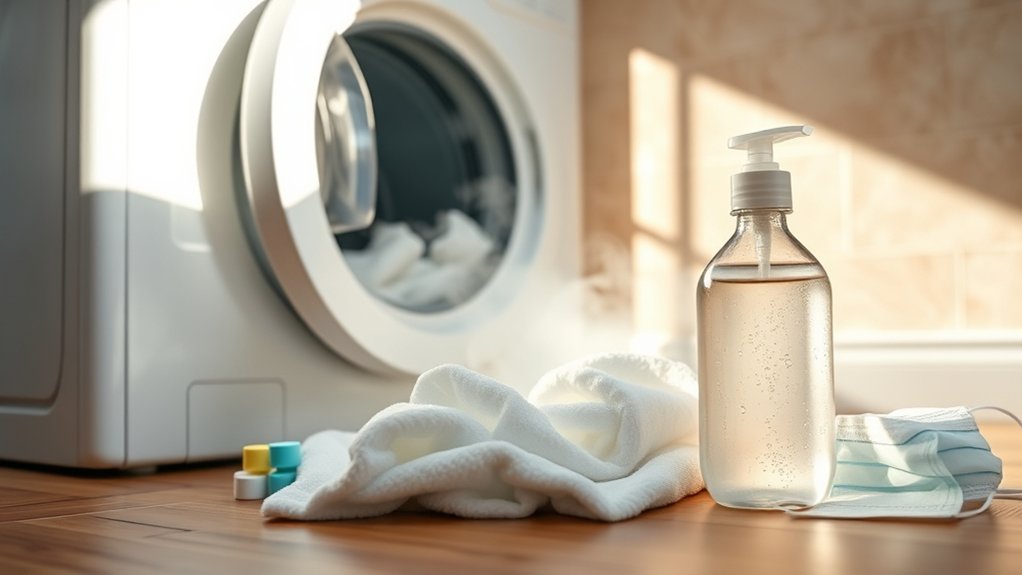
When should you use laundry sanitizer? It’s most essential in healthcare settings, where killing bacteria, fungi, and viruses on fabrics is critical.
For everyday use, laundry sanitizer isn’t necessary but can be a smart extra step if you want to combat bacteria and mildew, especially in humid environments.
Laundry sanitizer isn’t essential daily but helps fight bacteria and mildew, especially in humid conditions.
It’s particularly effective for athletic wear, which often harbors odor-causing bacteria, helping with odor elimination in sweat-prone clothing and even shoes.
If you’re dealing with persistent mildew or mold spores, adding a laundry sanitizer can protect your fabrics better than detergent alone.
Just remember to test it on a small fabric area first, since some sanitizers may harm delicate materials.
Use laundry sanitizer strategically to keep your laundry fresher and more hygienic.
Can Laundry Sanitizer Harm Your Clothes?
Using laundry sanitizer can boost fabric hygiene, but it’s important to evaluate its effects on your clothes. Laundry sanitizers sometimes harm delicate fabrics like silk or rayon, especially if they contain strong disinfectants or exceed recommended concentrations.
To avoid damage, always check product labels for compatibility with your fabric type. Some sanitizers may cause discoloration or texture changes, even irritation such as fading or roughness.
Testing a small, inconspicuous area before full use helps you spot potential issues. For safer results, consider eco-friendly laundry sanitizers designed to be gentler on fabrics while still effective.
How Do Laundry Sanitizers Stop Germ Spread?
You rely on laundry sanitizers because their active ingredients, like hypochlorous acid and quaternary ammonium compounds, target and destroy bacteria, fungi, and viruses on your fabrics.
These sanitizers work by disrupting virus structures, which effectively inactivates pathogens and lowers the chance of germs spreading from your laundry.
When you use them along with proper laundering practices, you’re making sure your clothes get a deeper clean.
This extra step helps keep your home more hygienic and reduces the risk of cross-contamination.
Antimicrobial Ingredients Explained
Although standard detergents clean fabrics, they can’t fully eliminate harmful microbes. That’s where laundry sanitizers come in. These products include antimicrobial agents that enhance disinfection and boost effectiveness against bacteria and fungi.
Here’s what you need to know:
- Hypochlorous acid, quaternary ammonium compounds, and hydrogen peroxide actively kill bacteria and some viruses on fabrics.
- Research confirms a ≥4 log reduction in viruses like SARS-CoV-2 within 15 minutes in liquid tests.
- PCMX and quaternary ammonium compounds quickly inactivate viruses on surfaces, showing their strong antimicrobial action.
- Combining surfactants and enzymes helps penetrate fabric fibers, removing germs beyond detergent’s reach.
Virus Inactivation Mechanisms
Because viruses can persist on fabrics and pose cross-contamination risks, laundry sanitizers play an essential role in stopping germ spread by actively inactivating viral particles.
Laundry sanitizers, often containing quaternary ammonium compounds and hypochlorous acid, disrupt viral envelopes and cellular structures, leading to effective virus inactivation.
Research shows PCMX-based sanitizers achieve ≥5 log reduction of SARS-CoV-2 in 15 minutes, while hard surface tests reveal ≥4 log reductions within 5 minutes.
Though detergents alone reduce viruses and bacteria, adding laundry sanitizers greatly enhances overall sanitization, protecting both clothing and washing machines.
By targeting viruses directly, these sanitizers guarantee a higher level of hygiene, vital for minimizing infectious risks during laundering.
Understanding these mechanisms helps you appreciate why sanitizers are more than just an extra step; they’re a necessary defense.
Reducing Cross-Contamination Risks
When handling laundry, especially during viral outbreaks like COVID-19, you need to prevent germs from spreading between fabrics and surfaces.
Using a laundry sanitizer adds a critical barrier against bacteria and viruses. This reduces cross-contamination risks considerably.
Evidence shows sanitizers can achieve a ≥ 4 log reduction in pathogens like SARS-CoV-2 within minutes.
To enhance hygiene effectively, you should:
- Combine detergent with laundry sanitizer for thorough germ elimination.
- Prioritize sanitizing high-risk items such as masks and athletic wear.
- Avoid manual washing to reduce secondary surface contamination.
- Treat contaminated fabrics promptly to prevent virus survival and spread.
What Users Say About Laundry Sanitizers
Many users have noticed significant improvements in laundry odor after using sanitizers, especially on athletic wear and children’s shoes.
Despite initial skepticism, many report clear effectiveness in reducing odors linked to sweat and skin conditions like eczema.
Trying different brands often leads to satisfactory results, though some products, like Sainsbury’s, receive mixed reviews.
Cost-effectiveness also matters; for example, Costco’s larger bottles are popular for their value.
You should always test laundry sanitizers on a small fabric area first to avoid damage, especially on delicate items.
Choosing the Best Laundry Sanitizer for You
Positive user experiences highlight the importance of choosing the right laundry sanitizer tailored to your needs.
To select an effective product, consider these key factors:
- Active Ingredients: Look for sanitizers with hypochlorous acid or quaternary ammonium compounds. These are proven to kill bacteria and viruses efficiently.
- Fabric Compatibility: Confirm the sanitizer suits your laundry. Avoid harsh formulas on delicate fabrics like silk or rayon to prevent damage.
- Eco-Friendly Options: Prioritize products safe for both your health and the environment. Larger, cost-effective bottles often help reduce waste.
- Efficacy Evidence: Choose products with validated results, such as PCMX-based sanitizers that achieve ≥5 log virus inactivation quickly.
Tips for Safe and Effective Laundry Sanitizer Use
Although laundry sanitizers offer powerful germ-killing benefits, you must use them carefully to protect your fabrics and guarantee effectiveness. Always follow washing instructions and test on delicate items first to avoid damage or discoloration.
Combine laundry sanitizer with detergents to boost bacteria removal, especially for odor-prone clothes like athletic wear. Remember, sanitizers are essential in high-hygiene settings but often unnecessary for routine laundry.
| Tip | Reason | Example |
|---|---|---|
| Read product labels | Confirm fabric compatibility | Avoid damage on silk/rayon |
| Follow washing instructions | Maximize sanitizer effectiveness | Use recommended water temp |
| Test on small fabric area | Prevent adverse reactions | Check for discoloration |
| Use with detergent | Enhance bacteria elimination | Athletic wear, face masks |
| Reserve for critical needs | Avoid overuse in daily laundry | Healthcare environments |
Frequently Asked Questions
Are Laundry Sanitizers Safe for Septic Systems?
Laundry sanitizers can be safe for septic systems if you choose products labeled as septic-safe and use them sparingly.
Overusing sanitizers with strong chemicals, like quaternary ammonium compounds, can disrupt the beneficial bacteria your septic system relies on.
To protect your system, opt for eco-friendly formulas and avoid excessive use.
Regular septic maintenance also helps keep your system balanced and prevents damage from any cleaning product you use.
Can Laundry Sanitizers Be Used in Cold Water?
Think of laundry sanitizer like a superhero that doesn’t need warmth to fight germs. Yes, you can use laundry sanitizers in cold water effectively.
Studies show they achieve a ≥ 4 log reduction of bacteria and viruses in just 15 minutes, no matter the temperature.
Just follow the instructions carefully, and you’ll save energy while keeping your clothes fresh and sanitized.
Even your toughest gym gear will thank you!
Do Laundry Sanitizers Affect Fabric Softeners?
Yes, laundry sanitizers can affect fabric softeners. Many contain quaternary ammonium compounds that coat fibers, which limits how well softeners adhere and reduces their effectiveness.
To avoid this, you should check product labels for compatibility and test combinations on a small fabric swatch first.
For the best results, consider using sanitizers and softeners separately or at different stages during your wash cycle to minimize any negative interactions.
How Do Laundry Sanitizers Impact the Environment?
Laundry sanitizers impact the environment depending on their ingredients. If you choose formulations with biodegradable compounds like lactic acid or hydrogen peroxide, you’ll reduce ecological harm.
However, sanitizers containing quaternary ammonium compounds (QACs) can negatively affect aquatic life if misused or disposed of improperly.
To minimize environmental damage, always follow disposal guidelines and opt for eco-friendly brands.
This way, you protect water systems and lessen your carbon footprint while keeping laundry clean.
Are Laundry Sanitizers Safe for Baby Clothes?
You want clean clothes, soft fabrics, and safe skin. Laundry sanitizers can be safe for baby clothes if you choose those labeled for sensitive skin and compatible with delicate fabrics.
You should always test a small patch first to avoid irritation or damage. Harsh chemicals can harm babies’ skin and fabrics, so stick to trusted products.
For everyday use, quality eco-friendly detergents often do the job without extra sanitizers.
Conclusion
Think of laundry sanitizer as an extra shield in your cleaning arsenal. It’s not always essential but offers added protection when you need it most.
While regular detergent tackles most germs, sanitizer targets stubborn viruses like SARS-CoV-2 more effectively. Use it wisely, especially for high-risk loads, and follow instructions to keep your clothes safe.
This practical step guarantees your laundry doesn’t just look clean but truly helps stop germ spread.