Is Gain Laundry Detergent Toxic – Fact Check
You may be exposed to harmful chemicals, including 1,4-dioxane, in Gain laundry detergent at levels exceeding safety limits. This substance is a probable human carcinogen and persists in the environment, raising health concerns.
Gain also contains synthetic fragrances and optical brighteners that can cause irritation. Despite its “green” branding, Gain has faced legal challenges for misleading consumers about its safety and environmental impact.
Understanding these issues can help you make informed, safer laundry choices.
Key Takeaways
- Gain Laundry Detergent contains synthetic fragrances and optical brighteners linked to skin irritation and potential endocrine disruption.
- It has detectable 1,4-dioxane levels at 3.32 PPM, exceeding New York’s regulatory limit of 2 PPM.
- 1,4-dioxane is a probable human carcinogen that can cause long-term health and environmental risks.
- Consumers report adverse reactions, and a 2023 lawsuit accuses P&G of misleading environmental claims.
- Safer, eco-friendly alternatives like Blueland and Dirty Labs are recommended to avoid toxic exposure.
What Chemicals Are in Gain Laundry Detergent?
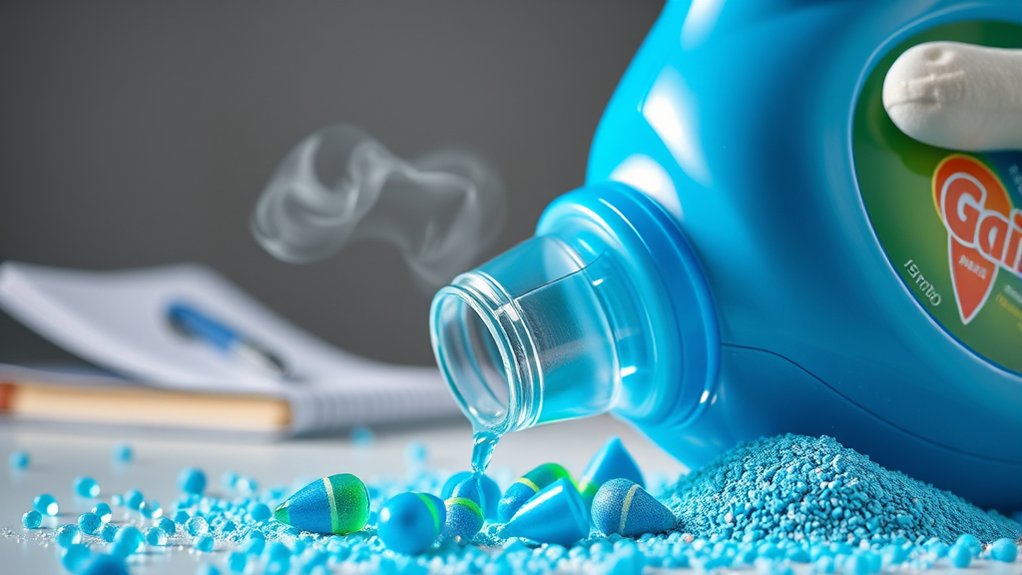
Although Gain laundry detergent effectively cleans clothes, it contains several chemicals that may raise health and environmental concerns.
Detergents often contain harmful ingredients such as synthetic fragrances, which in Gain’s case may include phthalates linked to endocrine disruption.
Detergents like Gain may contain synthetic fragrances with phthalates linked to hormone disruption.
You should also be aware of optical brighteners used to enhance fabric appearance; these compounds can cause skin irritation and aren’t biodegradable, contributing to ecological pollution.
Furthermore, sodium hypochlorite, sometimes labeled as bleach or optical brightener, may provoke allergic reactions or respiratory issues upon exposure.
Though trace amounts of 1,4-dioxane, a probable human carcinogen, are present due to ethoxylated surfactants manufacturing, this will be discussed separately.
Understanding these components is essential since detergents often contain substances that impact both your health and the environment.
Why 1,4-Dioxane in Gain Detergent Is a Concern?
You should know that 1,4-dioxane is considered a probable human carcinogen, which means it could potentially cause cancer. This raises pretty serious health concerns when it’s found in detergents like Gain.
What’s more, independent tests have actually found dioxane levels that go beyond regulatory limits. That points to some compliance issues manufacturers need to address.
The tricky part is that 1,4-dioxane forms as a byproduct during the making of surfactants, so it often doesn’t show up on product labels. This makes it harder for you to know exactly how much you’re being exposed to.
Health Risks of Dioxane
Why does the presence of 1,4-dioxane in Gain laundry detergent raise significant health concerns? Dioxane is classified as a probable human carcinogen by the NIH and EPA, meaning exposure could increase cancer risk.
You might encounter dioxane through inhalation, skin contact, or contaminated drinking water. Independent tests found 3.32 PPM of dioxane in Gain detergent, surpassing New York’s 2 PPM regulatory limit.
This matters because dioxane has been detected in various drinking water supplies, threatening local aquifers and community health.
The compound’s persistence and potential for long-term exposure make it a critical issue for human health.
Understanding these risks helps you make informed decisions about detergent use and the possible health implications linked to dioxane contamination.
Regulatory Limits and Compliance
Because Gain laundry detergent contains 3.32 PPM of 1,4-dioxane, exceeding New York’s regulatory limit of 2 PPM, regulatory compliance becomes a critical concern.
You need to understand the implications of this exceedance, as dioxane is classified by the EPA as a probable human carcinogen. This noncompliance raises issues regarding consumer safety and environmental impact.
Key points to evaluate include:
- Regulatory limits exist to minimize dioxane exposure and protect public health.
- Exceeding these limits can lead to legal actions, such as lawsuits against manufacturers.
- Persistent dioxane release through wastewater contributes to environmental contamination.
You should recognize that adherence to regulatory limits is essential for safety and legal accountability.
This emphasizes why dioxane presence in Gain detergent demands scrutiny.
Dioxane Sources in Detergents
Although 1,4-dioxane is not intentionally added to laundry detergents like Gain, it forms as a byproduct during the manufacturing of ethoxylated surfactants. These surfactants are common cleaning agents. This trace contaminant raises concerns due to its classification as a probable human carcinogen by regulatory agencies.
You should note that dioxane content often exceeds safety limits, as seen in Gain detergent’s 3.32 PPM, which surpasses New York’s 2 PPM threshold.
| Source | Role | Concern |
|---|---|---|
| Ethoxylated Surfactants | Cleaning agents | Byproduct formation of dioxane |
| Dioxane | Contaminant | Probable carcinogen |
| Gain Detergent | Consumer product | Contains measurable dioxane |
Understanding these sources helps you evaluate detergent safety effectively.
Is Gain’s Dioxane Level Within Safety Limits?
How safe is Gain laundry detergent when it comes to dioxane levels? Gain contains 3.32 PPM of dioxane, surpassing New York’s regulatory safety limit of 2 PPM. This raises serious health concerns since dioxane is classified as a probable human carcinogen by NIH and EPA.
Exposure can occur via skin absorption during laundry use, inhalation of fumes from washing processes, or contaminated drinking water from environmental runoff. These pathways increase your potential risk of dioxane-related health effects.
Independent tests also reveal some New York water supplies exceed EPA guidelines for dioxane, compounding environmental exposure concerns.
Given this data, Gain’s dioxane level isn’t within established safety limits, demanding caution in its use and further scrutiny from regulatory agencies.
Is Gain’s “Green” Branding Misleading Consumers?
The discovery that Gain’s dioxane levels exceed regulatory limits raises questions about the accuracy of its environmentally friendly image. You should scrutinize Gain’s “green” branding, as independent tests found 3.32 PPM of dioxane, which is above New York’s 2 PPM limit. Yet this toxic compound isn’t disclosed.
This discrepancy suggests the detergent’s marketing may constitute greenwashing, misleading you about its safety and environmental impact. A class action lawsuit highlights the need for transparency and challenges Procter & Gamble’s claims.
| Aspect | Details |
|---|---|
| Dioxane Level | 3.32 PPM (exceeds 2 PPM limit) |
| Label Disclosure | None |
| Regulatory Standard | 2 PPM (New York) |
| Marketing Practice | Alleged greenwashing |
| Legal Action | Class action lawsuit ongoing |
How Are Consumers Responding to Gain’s Safety Issues?
Why are consumers increasingly concerned about Gain laundry detergent’s safety? Reports of adverse reactions like skin irritation, throat constriction, and eye irritation after using Gain’s fragranced laundry products have raised alarms.
Furthermore, a lawsuit challenges the brand’s claims about environmental friendliness and dioxane content, fueling skepticism.
You’re likely seeing growing calls for product transparency and reformulation, as evidenced by:
- A surge in public discourse with numerous comments highlighting fragrance-related health concerns
- Advocacy movements promoting fragrance-free laundry products
- Negative impacts on Gain’s brand reputation linked to safety and environmental responsibility
These responses reflect a scientifically grounded apprehension that safety issues with Gain’s formulations may affect consumer health.
This is prompting demands for safer alternatives in the laundry products market.
What Health Risks Do Chemicals in Gain Detergent Pose?
What health risks do the chemicals in Gain detergent present to you? The chemicals used in Gain include 3.32 PPM of dioxane, classified as a probable human carcinogen by the NIH and EPA. Prolonged exposure through inhalation, skin absorption, or contaminated water may increase your cancer risk.
Furthermore, phthalates found in scented detergents like Gain can disrupt your endocrine system, potentially affecting fertility and overall health.
Optical brighteners and surfactants may cause skin irritation, respiratory problems, and allergic reactions, particularly in sensitive individuals.
Hidden chemicals such as nonylphenol ethoxylates (NPEs), banned in the EU for their hormone-disrupting effects, still exist in Gain products.
These health risks highlight concerns regarding the chemicals used and their potential impact on your well-being.
What Legal Cases Are Against Gain and P&G?
How has Procter & Gamble faced legal challenges over Gain laundry detergent? In March 2023, a lawsuit accused P&G of false advertising by promoting Gain Laundry as environmentally friendly despite evidence to the contrary. Independent tests found 3.32 PPM of dioxane, surpassing New York’s 2 PPM legal limit.
The lawsuit, filed under case number § 1:23-cv-00218, alleges misleading “greenwashing” claims on packaging.
It also points to violations of the Magnuson-Moss Warranty Act and New York General Business Law.
The case represents consumers from multiple states who bought Gain Original Aroma Boost within two years.
It highlights concerns about product safety transparency and challenges P&G’s marketing practices related to Gain Laundry detergent.
What Are Safer Alternatives to Gain Laundry Detergent?
If you’re looking for safer alternatives to Gain laundry detergent, there are some great non-toxic options out there.
For example, Blueland Laundry Detergent Tablets and Dirty Labs Bio Laundry Detergent use clean, effective ingredients without any harmful chemicals.
You might also want to consider eco-friendly choices like Meliora Eco Laundry Powder or even wool dryer balls. These not only work well but also help reduce your environmental footprint.
When shopping, keep an eye out for products that have certifications like EWG Verified or EPA Safer Choice.
These labels can give you extra confidence that the detergent you’re using is formulated with safety in mind.
Non-Toxic Detergent Options
Although Gain laundry detergent is popular, many consumers seek safer alternatives that minimize health and environmental risks. Non-toxic detergents offer effective cleaning power without harmful chemicals like phosphates, formaldehyde, or phthalates.
When selecting safer options, consider products that hold eco-certifications such as EWG Verified or EPA Safer Choice.
Here are three notable non-toxic detergent options:
- Blueland Laundry Detergent Tablets: Eco-certified, free of microplastics, with clean ingredients.
- Dirty Labs Bio Laundry Detergent: Enzyme-powered, ultra-concentrated, available in natural or unscented formulas.
- Meliora Eco Laundry Powder: Budget-friendly, simple ingredients, highly sustainable with low refill costs.
These alternatives maintain cleaning power while reducing exposure to potentially toxic substances.
Eco-Friendly Laundry Choices
Exploring safer laundry detergent options leads naturally to contemplating eco-friendly choices that reduce chemical exposure and environmental impact.
Eco-friendly alternatives to Gain laundry detergent, such as Blueland Laundry Detergent Tablets, eliminate microplastics and utilize clean ingredients, minimizing harmful chemicals.
Dirty Labs Bio Laundry Detergent employs enzyme-powered, ultra-concentrated formulas, available in natural or unscented variants, further lowering chemical risks.
Meliora Eco Laundry Powder offers a cost-effective option with simple ingredients and sustainable refill systems.
Many of these products carry certifications from EWG and EPA Safer Choice, validating their safety and environmental standards.
Selecting fragrance-free detergents or those scented with essential oils also helps you avoid synthetic fragrances, which often contain harmful chemicals.
These choices collectively promote a safer, more sustainable approach to laundry.
Frequently Asked Questions
How Should Gain Detergent Be Stored to Ensure Safety?
You should store Gain detergent in a cool, dry place away from direct sunlight to preserve its chemical stability.
Keep the container tightly sealed to prevent leaks and minimize exposure to harmful substances.
Always place it out of reach of children and pets to avoid accidental ingestion or contact.
Avoid storing it near food to prevent contamination.
Regularly check the expiration date and dispose of expired detergent according to local hazardous waste guidelines.
Can Gain Detergent Cause Allergic Reactions in Sensitive Individuals?
Can you tolerate strong synthetic fragrances without issues?
Gain detergent can indeed cause allergic reactions in sensitive individuals due to its synthetic fragrances. These chemicals may trigger skin irritation, respiratory problems, and eye discomfort.
Some users report throat tightness and burning sensations.
If you’re sensitive or have pre-existing conditions, exposure to components like dioxane in Gain could heighten health risks.
Always consider fragrance-free alternatives to minimize allergic responses.
Is Gain Laundry Detergent Environmentally Friendly?
You shouldn’t consider Gain laundry detergent environmentally friendly.
Independent tests show it contains 3.32 PPM of dioxane, exceeding New York’s 2 PPM limit.
Dioxane is a probable human carcinogen that can contaminate water sources.
Despite marketing claims, these chemical levels suggest environmental risks.
Consequently, if you prioritize eco-friendly products, Gain’s formulation may not align with sustainable choices or regulatory standards.
How Should Accidental Ingestion of Gain Detergent Be Treated?
If you ever accidentally ingest Gain detergent, immediately call Poison Control or seek medical help. Quick response is essential.
Do not induce vomiting unless a professional instructs you to. Rinse your mouth thoroughly with water, but avoid eating or drinking until advised.
Symptoms like nausea or abdominal pain require prompt attention.
Always store detergents safely to prevent such incidents and guarantee your well-being through preventive care.
Does Gain Detergent Work Effectively in Cold Water?
Yes, Gain detergent works effectively in cold water. Its formulation contains enzymes that activate at lower temperatures, enhancing stain removal and cleaning power.
You’ll find it performs well for typical laundry needs without sacrificing cleanliness.
Using Gain in cold water also helps reduce energy consumption, aligning with eco-friendly practices.
Procter & Gamble designed it to maintain performance in cold washes, ensuring you get efficient results even without hot water.
Conclusion
You shouldn’t ignore the chemicals in Gain detergent, especially 1,4-dioxane, which is linked to serious health risks despite being within regulatory limits. While Gain’s “green” branding might seem reassuring, it can be misleading.
Legal cases highlight consumer concerns, so it’s wise to evaluate safer alternatives. Don’t let your laundry routine turn into a chemical warzone. Stay informed and choose products that prioritize your health without compromise.