What Happens If You Accidentally Swallow Laundry Detergent
If you accidentally swallow laundry detergent, you’ll likely experience immediate mouth and throat irritation, nausea, vomiting, and diarrhea. The severity depends on the amount ingested and the detergent type, with concentrated pods posing higher risks like burns and breathing difficulties.
Skin, eye, and lung contact can cause irritation or more serious symptoms. Prompt rinsing and medical help are essential. Understanding symptoms, treatment, and prevention measures can empower you to act effectively in such situations.
Key Takeaways
- Swallowing laundry detergent causes immediate mouth and throat irritation, nausea, vomiting, and diarrhea.
- Concentrated detergent pods can cause severe burns, breathing difficulties, and rapid symptom escalation.
- Skin and eye contact may cause irritation, pain, redness, and allergic reactions.
- Do not induce vomiting; rinse the mouth and seek immediate medical or poison control assistance.
- Treatment includes supportive care, hydration, symptom management, and possible hospitalization for severe cases.
What Happens When You Swallow Laundry Detergent?

If you swallow laundry detergent, you can experience immediate irritation in your mouth and throat, along with nausea, vomiting, and diarrhea. The severity depends on the amount ingested and the detergent type.
Concentrated laundry pods pose a heightened risk because of their toxic chemical concentration. They can cause severe burns and breathing difficulties.
You should seek immediate medical assistance rather than trying to induce vomiting, as improper actions may make things worse.
Contacting a poison control center, like the National Capital Poison Center or the Poison Control hotline at 1-800-222-1222, is essential for expert guidance.
Their professionals provide 24/7 support to assess your symptoms and recommend the right treatment, ensuring prompt and effective management of laundry detergent ingestion cases.
Common Symptoms of Laundry Detergent Ingestion
What symptoms should you watch for after ingesting laundry detergent? Initial signs often include mouth and throat irritation, coughing, nausea, and vomiting.
Watch for mouth and throat irritation, coughing, nausea, and vomiting after ingesting laundry detergent.
You might also experience gastrointestinal issues like diarrhea, lethargy, and sometimes severe abdominal pain.
In more serious cases, difficulty breathing and burns to the throat can occur, signaling the need for medical help right away. Children are especially vulnerable, as their smaller size can amplify these symptoms.
Furthermore, you might notice allergic reactions such as red, itchy rashes, particularly in sensitive body areas. Recognizing these symptoms promptly is essential, as early intervention can prevent complications.
If you or someone else swallows laundry detergent and exhibits any of these signs, seek medical help right away to guarantee proper treatment and safety.
How Does Laundry Detergent Affect Your Skin, Eyes, and Lungs?
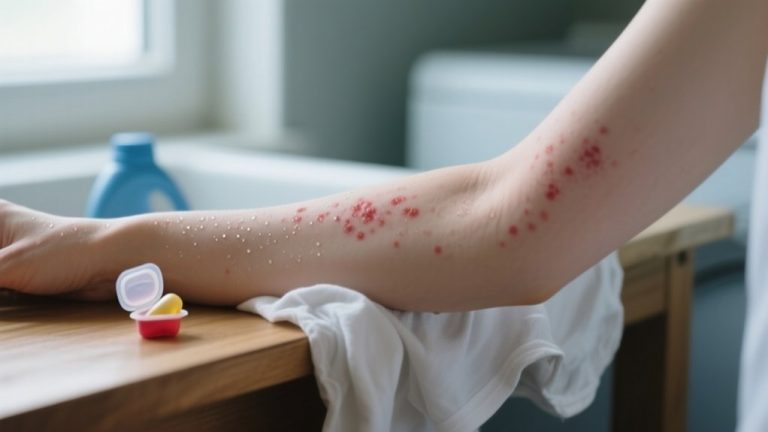
When laundry detergent comes into contact with your skin, it can cause irritation, rashes, and allergic reactions—especially if your skin is sensitive.
So, if you notice any redness or itching, it’s a good idea to wash the area thoroughly.
Now, if detergent gets into your eyes, it can be quite painful and cause redness.
You’ll want to rinse your eyes immediately to prevent any further damage.
And when it comes to breathing in detergent fumes, that can irritate your respiratory system.
This is particularly important for people with asthma or other breathing issues, as it might make those conditions worse.
Skin Irritation And Rash
Although laundry detergents are designed for cleaning fabrics, their chemical components can irritate your skin, eyes, and respiratory system. When detergent contacts your skin, it can cause skin irritation, leading to inflammation, redness, and uncomfortable rashes.
You might experience itching and swelling, especially in sensitive areas. Allergic reactions can develop quickly or over time. There’s also potential corrosive damage if exposure is prolonged or intense.
This irritation happens because harsh surfactants and additives in detergents disrupt your skin’s natural barrier. If you notice persistent redness or rash after detergent exposure, wash the area thoroughly with water and avoid further contact.
Taking these precautions helps minimize skin irritation and protects your skin’s health when handling or accidentally contacting laundry detergent.
Eye And Respiratory Effects
If laundry detergent gets into your eyes, it can cause intense irritation, pain, and redness. This might lead to conjunctivitis unless you rinse immediately with lukewarm water.
Inhaling detergent vapors may cause respiratory symptoms like coughing, wheezing, and shortness of breath, especially if you’re sensitive. Getting prompt medical evaluation is important to avoid complications such as aspiration pneumonitis.
Here’s a summary of common eye and respiratory effects:
| Exposure Type | Symptoms | Recommended Action |
|---|---|---|
| Eye Contact | Eye irritation, pain | Rinse with lukewarm water |
| Respiratory Inhalation | Coughing, wheezing | Move to fresh air |
| Skin Contact | Inflammation, rash | Wash with soap and water |
| Ingestion | Respiratory distress | Seek immediate medical help |
| Severe Exposure | Conjunctivitis, pneumonitis | Emergency treatment required |
Why Are Laundry Detergent Pods More Dangerous?
Because laundry detergent pods contain highly concentrated liquid detergent enclosed in water-soluble packaging, they pose a greater risk than traditional detergents.
You need to understand that laundry detergent pods are more dangerous due to their design and chemical potency.
Laundry detergent pods pose greater dangers because of their unique design and strong chemical concentration.
Their appealing appearance often resembles candy or toys, which increases the chance of accidental ingestion by children.
When swallowed, symptoms can escalate rapidly, requiring immediate attention from a poison center.
Key reasons why laundry detergent pods are more hazardous include:
- Highly concentrated detergent causes severe symptoms like vomiting and respiratory distress
- Packaging dissolves quickly, releasing chemicals rapidly into the body
- Visual similarity to candy increases accidental ingestion risks
Always treat exposure seriously and consult a poison center promptly if ingestion occurs.
Immediate Steps to Take If You Swallow Laundry Detergent
Act quickly by seeking immediate medical help when someone swallows laundry detergent, and avoid inducing vomiting unless a healthcare professional advises it.
While waiting for medical care, rinse the person’s mouth with water to reduce detergent contact but prevent swallowing excess liquid.
Collect critical information such as the person’s age, weight, the detergent’s brand, and the amount ingested. This data helps emergency responders deliver appropriate treatment.
If the detergent contacts skin or eyes, flush the area with lukewarm water for at least 15 minutes to minimize irritation.
Although you should seek medical care promptly, you can also use the webPOISONCONTROL online tool or call Poison Control at 1-800-222-1222 for expert advice.
Following these precise steps guarantees the best outcome after swallowing detergent.
When to Call Poison Control or Seek Emergency Care
While swallowing laundry detergent can cause various symptoms, knowing when to call Poison Control or seek emergency care is critical for ensuring safety. You should immediately contact Poison Control at 1-800-222-1222 for expert guidance.
Seek medical attention without delay if you notice severe symptoms. Key signs to watch for include difficulty breathing, severe throat burns, or swelling.
Also, persistent vomiting, nausea, or diarrhea.
Any respiratory distress or altered consciousness means you should get help right away. Avoid inducing vomiting unless a healthcare professional tells you to, as it might make things worse.
When calling for help, provide clear info about the person’s age, weight, and the detergent’s name and ingredients.
Promptly recognizing these signs and seeking medical care can prevent complications and improve outcomes after detergent ingestion.
How Doctors Treat Laundry Detergent Poisoning
If a person swallows laundry detergent, doctors will promptly evaluate the severity of symptoms to decide the best treatment approach. Health care providers assess respiratory function, monitor essential signs, and manage nausea. They avoid inducing vomiting to reduce aspiration risk.
Severe cases may require hospitalization for ventilatory support and endoscopy to evaluate chemical burns.
| Treatment Aspect | Purpose | Method |
|---|---|---|
| Supportive Care | Stabilize and hydrate | Intravenous fluids |
| Symptom Management | Control nausea and pain | Medications |
| Diagnostic Evaluation | Assess internal damage | Endoscopy |
Timely medical intervention guarantees proper management of liquid laundry detergent poisoning, minimizing complications and promoting recovery.
How to Prevent Laundry Detergent Ingestion in Children and Adults
Managing laundry detergent poisoning effectively depends not only on timely medical care but also on preventing ingestion from occurring in the first place.
To enhance laundry poison prevention for both children and adults, you should implement practical measures that reduce exposure risks. Key strategies include:
Store laundry detergents, especially pods, in high, locked cabinets away from children’s reach.
Use child-proof containers or opaque packaging to reduce the product’s visual appeal.
Educate children on the hazards of laundry detergent and maintain supervision during laundry activities.
Additionally, always secure laundry areas and promptly dispose of empty detergent containers to avoid confusion with consumables.
These scientifically grounded precautions greatly decrease the risk of accidental ingestion, safeguarding health and safety within the household.
Safer Laundry Detergent Alternatives to Consider
Because traditional laundry detergents often contain harsh chemicals and synthetic additives, choosing safer alternatives can greatly reduce health risks and environmental impact.
You should consider biodegradable detergents formulated with plant-based surfactants and enzymes, which effectively clean clothes while minimizing ecological harm.
Opt for biodegradable detergents with plant-based surfactants and enzymes for effective, eco-friendly cleaning.
These alternatives typically exhibit low toxicity, making them safer for households with children or pets.
Moreover, many avoid synthetic fragrances, reducing the risk of respiratory irritation and allergic reactions.
Concentrated formulations also help by requiring less product per wash, decreasing both waste and the potential for accidental ingestion.
Resources for Support and Safety Education on Detergent Poisoning
If you think someone might’ve been poisoned by detergent, don’t hesitate—call Poison Control right away at 1-800-222-1222.
They’re experts who can guide you through what to do next.
You can also find plenty of helpful educational materials that explain how to handle detergents safely and prevent accidents before they happen.
Knowing what to do in an emergency and using these resources can really help keep you and your loved ones safe.
Poison Control Contacts
One critical step after swallowing laundry detergent is to immediately contact the Poison Control Center at 1-800-222-1222 for expert guidance. The poison control experts provide free, confidential, 24/7 support, helping you assess the severity of the exposure and advising on necessary actions.
Before calling, gather key details such as the person’s age, weight, and the detergent package’s name and ingredients to guarantee accurate assistance.
Keep these tips in mind when seeking help:
- Provide precise information from the detergent package for effective identification.
- Follow poison control instructions carefully to prevent complications.
- Use online resources like Poisonhelp.org for additional safety information.
Prompt poison control contact is essential for managing detergent poisoning safely and efficiently.
Educational Safety Materials
Although many people underestimate the risks, educational safety materials play an essential role in preventing laundry detergent poisoning. You can access a variety of educational resources such as brochures, posters, and lesson plans designed specifically for parents and caregivers to increase awareness of detergent hazards and promote safe handling.
Educators benefit from structured lesson plans that teach children about these dangers, reinforcing preventive behaviors early. Community programs also offer safety training, equipping families with practical knowledge to minimize exposure risks.
Particularly, the National Capital Poison Center provides extensive online materials to guide you on recognizing and addressing detergent exposures effectively.
These coordinated efforts by organizations guarantee that you stay informed and proactive, reducing accidental ingestion incidents through targeted education and support.
Emergency Response Guidance
When laundry detergent is accidentally swallowed, you should immediately contact the Poison Control Center at 1-800-222-1222 for expert guidance tailored to the specific situation. Proper emergency response is critical, especially with liquid detergent, which can cause chemical burns or respiratory issues.
Before calling, prepare essential information to help responders act quickly and accurately. Gather the person’s age, weight, and current condition. Also, have the exact product name and ingredients of the detergent ready.
Be ready to describe any symptoms like nausea or lethargy. Avoid inducing vomiting unless instructed by a healthcare professional, as this can worsen injuries.
Educational resources are available to help you understand detergent poisoning and prevention, ensuring safety in future incidents.
Frequently Asked Questions
Can Swallowing Detergent Affect Your Long-Term Digestive Health?
Yes, swallowing detergent can affect your long-term digestive health.
It can irritate and damage your esophagus and stomach lining, potentially causing gastritis or strictures that impair digestion.
If untreated, this damage may lead to chronic issues requiring medical intervention.
Repeated exposure increases risks, possibly causing anxiety around eating and nutritional deficiencies.
Seeking prompt medical care minimizes these long-term complications and helps preserve your digestive function effectively.
Are Certain Laundry Detergent Ingredients More Toxic Than Others?
Some laundry detergent ingredients hit harder than others, like a bull in a china shop. Corrosive acids and benzalkonium chloride are especially toxic, causing severe tissue damage.
Surfactants and enzymes can irritate and burn your digestive tract, while concentrated pods ramp up the danger.
Fragrances and synthetic additives might trigger allergic or respiratory reactions.
Knowing these differences helps you choose safer options and respond appropriately if exposure happens.
How Can Pets Be Protected From Detergent Poisoning?
You can protect pets from detergent poisoning by storing laundry products in high, locked cabinets, out of their reach.
Use child-proof containers to add an extra safety layer.
Monitor your pets for signs like vomiting or breathing difficulty, especially within 24 hours after exposure.
Educate yourself on poisoning symptoms and keep emergency veterinary contact info handy.
Prompt action and prevention are essential for your pet’s safety and well-being.
Is It Safe to Induce Vomiting After Swallowing Detergent?
You shouldn’t induce vomiting after swallowing detergent; nearly 20% of such cases worsen because of it.
Vomiting can cause corrosive chemicals to damage your throat and increase the risk of aspiration pneumonia.
Instead, call poison control or seek immediate medical help.
Professionals will guide you through safer treatments, minimizing injury and complications.
Avoid self-treatment, as timely expert intervention is essential for proper evaluation and care after detergent ingestion.
What Household Items Can Neutralize Detergent if Ingested?
Baking soda can help neutralize the acidity of some laundry detergents, but you should use it cautiously and not rely on it alone.
Water or milk may dilute the detergent, easing irritation but won’t neutralize it chemically.
Avoid vinegar, as its acidity might worsen the effects.
Honey can soothe throat discomfort but doesn’t counteract toxicity.
Always contact poison control or a healthcare professional immediately for proper treatment instead of depending on household items.
Conclusion
If you accidentally swallow laundry detergent, act quickly like a firefighter dousing flames before they spread. The chemicals can cause severe irritation and damage to your mouth, throat, stomach, and lungs.
Recognizing symptoms early and seeking immediate medical help can prevent serious complications. Always store detergents securely and consider safer alternatives to protect yourself and others.
Being informed and cautious is vital to avoid the harmful effects of detergent poisoning.