Does Laundry Detergent Cause Cancer – Straight Answer
Yes, your laundry detergent can pose cancer risks due to 1,4-Dioxane, a likely carcinogen formed as a byproduct during the ethoxylation process in many liquid detergents. This chemical isn’t listed on labels and can enter your body through skin or inhalation over time.
Choosing solid or 1,4-Dioxane-free detergents lowers exposure considerably. Understanding how to identify hidden carcinogens and safer alternatives helps you protect your health and reduce risks in everyday laundry.
Key Takeaways
- Some laundry detergents contain 1,4-Dioxane, a likely human carcinogen formed during ethoxylation in surfactant production.
- Chronic exposure to 1,4-Dioxane via skin or inhalation can increase cancer risk and cause liver and kidney damage.
- Labels often omit 1,4-Dioxane, but ingredients ending in “-eth” or containing PEG may indicate its presence.
- Traditional liquid detergents with ethoxylated compounds pose higher cancer risks compared to ethoxylation-free solid detergents.
- Choosing 1,4-Dioxane-free, fragrance-free, and certified non-toxic detergents reduces carcinogen exposure and promotes safer laundry practices.
What Is 1,4-Dioxane And Why It Matters
1,4-Dioxane is a synthetic industrial chemical that you might unknowingly encounter in laundry detergents. Classified as a likely human carcinogen by the EPA, 1,4-Dioxane forms primarily through the ethoxylation process used in manufacturing surfactants like Sodium Laureth Sulfate (SLES).
This process generates 1,4-Dioxane as a byproduct, introducing toxic chemicals into products you use daily. Chronic exposure, even at low levels, poses significant health risks, including liver and kidney damage.
Because 1,4-Dioxane isn’t intentionally added but results from manufacturing, it often goes unlisted on labels, making it hard for you to identify. Its presence in laundry detergents raises concerns due to potential dermal absorption and inhalation, increasing your exposure to this carcinogen and emphasizing the importance of awareness about these hidden toxic chemicals.
How 1,4-Dioxane Gets Into Laundry Detergents
Although you mightn’t see it listed on labels, this carcinogenic contaminant commonly enters laundry detergents during the ethoxylation process. Manufacturers use this process to create surfactants like Sodium Laureth Sulfate (SLES).
Ethoxylation involves reacting ethylene oxide, a known carcinogen, with fatty alcohols to produce these surfactants. However, this reaction can generate 1,4-Dioxane as an unintended synthetic byproduct.
Since 1,4-Dioxane isn’t an ingredient but a contaminant, it typically goes unlisted on consumer products. The Environmental Protection Agency classifies 1,4-Dioxane as a likely human carcinogen, raising concerns about health risks from dermal absorption and inhalation.
This is especially true for detergent residues left on fabrics. Understanding this formation pathway helps you recognize why 1,4-Dioxane contamination persists despite manufacturers’ efforts to produce safer detergents.
How To Spot Hidden Carcinogens On Detergent Labels
How can you identify hidden carcinogens lurking in your laundry detergent? Start by scrutinizing the ingredients list for ethoxylated compounds, often indicated by names ending in “-eth,” such as Sodium Laureth Sulfate. These can contain harmful byproducts like 1,4-Dioxane, a likely carcinogen.
Watch for polyethylene glycol (PEG) compounds, frequently ethoxylated and potential sources of hidden toxins. Polysorbates, used to blend water and fragrance, also raise concern due to possible carcinogens.
Even “plant-based” or “natural” claims don’t guarantee safety, so rely on an ingredients glossary to decode complex terms.
What Science Says About Cancer Risk From Laundry Detergents
What does science reveal about the cancer risks linked to laundry detergents? Research shows that some laundry chemicals, like 1,4-dioxane and phthalates, pose potential cancer risks. Volatile organic compounds (VOCs) in scented detergents, including benzene and acetaldehyde, also raise concerns.
Safety limits for these substances may be insufficient, especially considering the risk of DNA damage. Exposure levels vary, but ongoing studies emphasize the need for stricter regulation and greater consumer awareness to minimize cancer risk.
| Chemical | Source in Laundry Products | Cancer Risk Evidence |
|---|---|---|
| 1,4-Dioxane | Ethoxylated surfactants | Potential via dermal/inhalation |
| VOCs (benzene, etc.) | Scented detergents | Linked to increased risk |
| Perchloroethylene | Dry cleaning solvents | Higher mortality in workers |
| Phthalates | Fragrances | Endocrine disruption, carcinogenic |
| Safety Limits | Regulatory standards | May require reevaluation |
How Cancer Risks Differ For Laundry Workers And Home Users
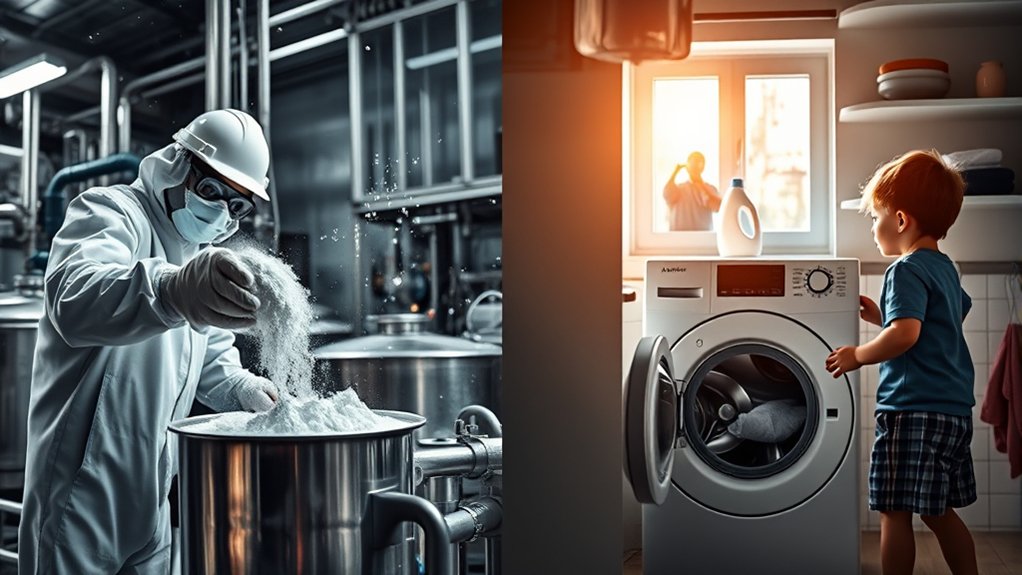
Because laundry workers handle higher concentrations of carcinogenic solvents like perchloroethylene (PCE) and trichloroethylene (TCE) daily, they face considerably greater cancer risks compared to home users.
Studies, including NIOSH research, confirm elevated cancer mortality linked to chronic exposure to hazardous chemicals in commercial laundry settings.
As a home user, your cancer risks are lower but not negligible due to possible low-level exposure to carcinogenic solvents hidden in detergents.
Key differences include:
- Laundry workers encounter acute, high-level exposure to carcinogenic solvents.
- Home users face chronic, low-level exposure through common laundry products.
- Regulatory controls primarily target occupational hazards, less so home product ingredients.
- Both groups should remain aware of hazardous chemicals and cancer risks associated with prolonged contact.
Understanding these distinctions helps you assess and mitigate your personal risk effectively.
Why Choose 1,4-Dioxane-Free Detergents
You should avoid detergents that contain 1,4-dioxane because it’s likely to cause cancer and can damage your organs.
The tricky part is that this chemical often hides in ethoxylated surfactants, like Sodium Laureth Sulfate, making it hard to spot on labels.
By choosing formulas without ethoxylation, you reduce your exposure to these hidden carcinogens.
Plus, it supports safer laundry practices overall.
It’s a simple change that can make a big difference for your health.
Health Risks of 1,4-Dioxane
How does 1,4-Dioxane in laundry detergents impact your health? This likely human carcinogen, classified by the EPA, poses serious health risks through chronic exposure.
Even at low levels, 1,4-Dioxane can cause liver and kidney damage. You mightn’t see it on labels since it’s a byproduct of ethoxylation in many cleaning products.
Exposure occurs via:
- Skin absorption from washed fabrics
- Inhalation of residues released during drying
- Prolonged contact with contaminated clothing
- Accumulated exposure over time increasing cancer risk
Understanding these risks highlights why choosing 1,4-Dioxane-free detergents reduces your carcinogen exposure.
Protect your health by selecting safer alternatives that avoid this hidden chemical threat.
Identifying Hidden Carcinogens
Where can hidden carcinogens like 1,4-Dioxane be lurking in your laundry routine? This contaminant forms as a byproduct during the ethoxylation process, which is commonly used in detergents containing Sodium Laureth Sulfate (SLES).
Since 1,4-Dioxane isn’t listed on labels, you might unknowingly face chronic exposure through skin contact or inhalation. Scientific evidence links this carcinogen to significant health risks, including liver and kidney damage and increased tumor incidence in animal studies.
To identify potential 1,4-Dioxane presence, look for PEG compounds or surfactants ending in “-eth,” such as SLES.
Choosing alternative options like detergents with Sodium Coco Sulfate can help reduce your exposure to this hidden carcinogen and enhance your health safety during laundry.
Benefits of Ethoxylation-Free Formulas
Recognizing the presence of 1,4-Dioxane in many conventional detergents highlights the importance of choosing ethoxylation-free formulas.
These safer alternatives eliminate exposure to this likely human carcinogen and its harmful byproducts.
By selecting ethoxylation-free detergents, you benefit from reduced risk of liver and kidney damage linked to 1,4-Dioxane contamination.
You also get ingredients like Sodium Coco Sulfate that avoid hazardous ethylene oxide.
There’s lower chemical complexity, especially in solid detergents, which means less residue buildup.
Plus, transparent labeling guarantees you avoid hidden ethoxylated compounds.
Choosing ethoxylation-free products offers a scientifically sound way to minimize carcinogen exposure while keeping effective cleaning power with fewer health risks.
How Solid And Alternative Detergents Reduce Chemical Risks
Although many traditional liquid detergents contain ethoxylated ingredients that can produce harmful byproducts like 1,4-Dioxane, solid detergents eliminate these risks by excluding such compounds altogether. Solid detergents reduce chemical exposure by minimizing toxic substances and removing ethylene oxide. This lowers cancer risk and skin irritations.
Choosing solid detergents aligns with health-conscious choices, offering a safer laundry environment.
| Feature | Benefit |
|---|---|
| No ethoxylated agents | Prevents 1,4-Dioxane formation |
| Fewer additives | Reduces toxic substance exposure |
| Solid form | Minimizes contact-related irritation |
Practical Steps To Avoid Carcinogens In Laundry Products
To reduce your exposure to carcinogens in laundry products, carefully examine detergent labels for compounds like PEG and ingredients ending in -eth. These often indicate the presence of 1,4-Dioxane.
Follow these practical steps:
- Choose solid laundry detergent options to avoid ethoxylated ingredients that generate 1,4-Dioxane byproducts.
- Select fragrance-free detergents to minimize inhalation of volatile organic compounds (VOCs) linked to cancer risk.
- Verify that brands provide transparency about 1,4-Dioxane testing and hold non-toxic certifications.
- Avoid surfactants such as nonylphenol ethoxylates and phenol known for carcinogenic potential.
Frequently Asked Questions
Are Natural Laundry Detergents Always Safer Than Conventional Ones?
No, natural laundry detergents aren’t always safer than conventional ones. You need to check labels carefully because natural products can still contain harmful substances like 1,4-Dioxane or emit volatile organic compounds linked to health risks.
Even essential oils in natural detergents might cause allergies or respiratory problems.
Can Using Fabric Softeners Increase Cancer Risk?
Using fabric softeners can be like inviting hidden toxins into your home.
They often contain chemicals such as phthalates, VOCs, and 1,4-Dioxane, linked to endocrine disruption and potential carcinogenic effects.
While direct evidence tying fabric softeners to cancer is limited, these substances raise valid concerns.
You should weigh these risks carefully and consider safer alternatives to reduce your exposure to potentially harmful compounds in your laundry routine.
How Does Water Temperature Affect Chemical Exposure From Detergents?
You increase chemical exposure from detergents when you wash clothes in hot water because higher temperatures boost the solubility and release of harmful substances like 1,4-Dioxane and volatile organic compounds.
Heat accelerates chemical reactions, breaking down ingredients into potentially carcinogenic byproducts.
To reduce risk, you should opt for lower water temperatures.
This limits the leaching of toxic compounds and minimizes your overall exposure to hazardous chemicals during laundry.
Do Fragrance-Free Detergents Work as Well as Scented Ones?
You don’t need bells and whistles for a clean load. Fragrance-free detergents work just as well as scented ones.
Scientific studies show they contain similar cleaning agents, ensuring effective stain removal and freshness. Since they skip synthetic scents, you avoid potentially harmful VOCs and reduce skin irritation risks.
Are There Any Regulations Limiting Carcinogens in Laundry Products?
You won’t find extensive federal regulations specifically limiting carcinogens in laundry products in the U.S. The EPA identifies some chemicals, like 1,4-dioxane, as likely carcinogens but doesn’t enforce strict limits on them in detergents.
However, the European Union enforces stricter controls through REACH.
Some U.S. states are starting their own regulations targeting harmful chemicals, reflecting growing public concern and pushing for better consumer protection.
Conclusion
You should know that 1,4-dioxane, a probable human carcinogen, can be found in some laundry detergents at levels linked to increased cancer risk. Studies show that even trace amounts pose long-term concerns, especially for laundry workers exposed daily.
Choosing 1,4-dioxane-free or solid detergents greatly reduces this risk. By reading labels carefully and opting for safer alternatives, you can protect yourself and your family from unnecessary chemical exposure.