What Are Laundry Sheets – Quick Answer
Laundry sheets are thin, pre-measured detergent strips you place directly into your washer drum. They contain ingredients like dodecanol and polyglycol ether that break down dirt while polyvinyl alcohol guarantees they fully dissolve.
These sheets reduce plastic waste with recyclable packaging and offer a low-sudsing formula for high-efficiency machines. You’ll find them great for small to large loads, though tough stains may need extra care.
Understanding how to use them right opens their full cleaning power.
Key Takeaways
- Laundry sheets are thin, pre-measured detergent strips that dissolve in water to clean clothes effectively.
- They contain surfactants, solvents, binders, and water to lift dirt and stains while dissolving completely.
- Sheets are placed directly in the washer drum, with dosing based on load size and soil level.
- They reduce plastic waste through recyclable packaging and lower transportation emissions due to their lightweight design.
- Laundry sheets work best with longer wash cycles and may be less effective on tough stains or quick washes.
Ingredients in Laundry Detergent Sheets
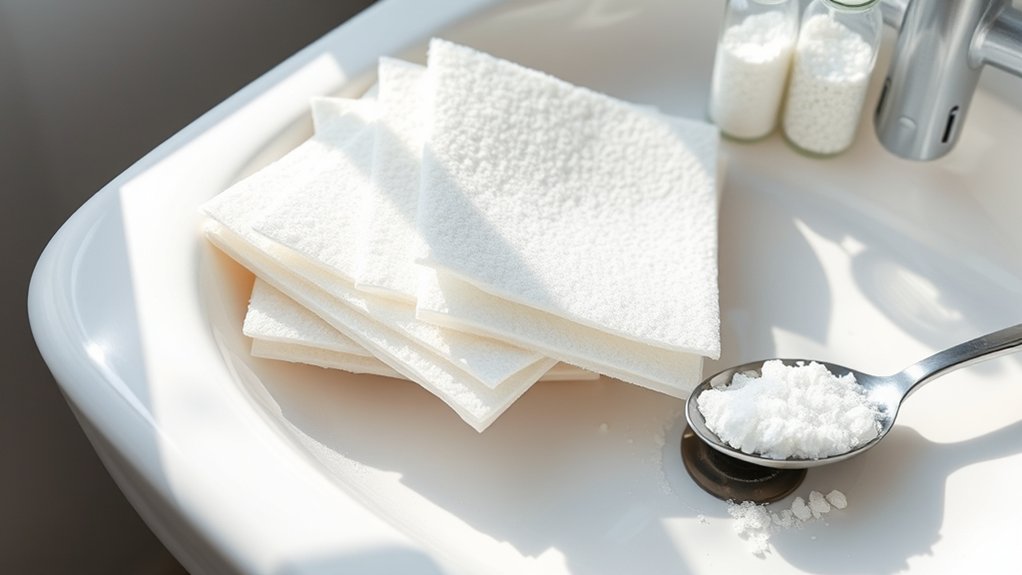
Laundry detergent sheets rely on a streamlined blend of four key ingredients to deliver effective cleaning while minimizing environmental impact. These cleaning ingredients include dodecanol, polyglycol ether, polyvinyl alcohol (PVA), and water.
Dodecanol, derived from coconut oil, acts as a surfactant that lifts dirt and stains from your clothes efficiently. Polyglycol ether complements this by gently dissolving residues and enhancing cleaning power.
Dodecanol and polyglycol ether work together to effectively remove dirt and dissolve residues for cleaner clothes.
Polyvinyl alcohol is a water-soluble resin that binds these ingredients together, ensuring the sheet dissolves fully during washing.
Unlike traditional detergents, laundry detergent sheets contain only about 15% water, making them a concentrated laundry solution that reduces packaging waste and transport emissions.
You get powerful cleaning with minimal environmental footprint, thanks to this precise, eco-friendly formulation.
How Laundry Detergent Sheets Work in Your Washer
Experience a convenient and efficient way to clean your clothes by placing detergent sheets directly into your washer drum.
During the wash cycle, laundry sheets dissolve in water, releasing concentrated cleaning power that tackles dirt and stains effectively.
These detergent sheets are low-sudsing and easy-rinsing, making them ideal for high-efficiency washers. You shouldn’t put them in detergent dispensers; the drum placement guarantees they dissolve properly and distribute evenly.
For smaller loads, half a sheet suffices, while larger or heavily soiled loads may need up to three sheets.
In cold or quick wash cycles, pre-dissolving sheets in hot water can boost their cleaning power.
This process assures your laundry sheets perform at their best throughout the wash cycle, giving you fresh, clean clothes every time.
Using Laundry Detergent Sheets Correctly
To get the most out of your detergent sheets, place them directly into the washer drum rather than the detergent dispenser. This makes certain they dissolve properly and distribute evenly.
You can use fewer detergent sheets by adjusting the amount based on your load of laundry: half a sheet for small loads, one for medium, and two for large or heavily soiled loads. For bulky items or tough stain removal, adding an extra sheet guarantees thorough cleaning.
While detergent sheets dissolve in any water temperature, very cold water may slow dissolution. So, consider pre-dissolving sheets in hot water for better results.
Avoid quick wash cycles, as they may limit cleaning effectiveness. Using laundry sheets correctly maximizes their stain removal power and efficiency every time.
Best Conditions for Laundry Detergent Sheets
Although detergent sheets dissolve in any water temperature, they’ll clean best when used in warm or hot water, especially for heavily soiled garments. You can boost laundry sheets’ performance by pre-dissolving them in hot water for cold cycles, ensuring full dissolution.
For medium loads, one sheet suffices. Increase to two or three for larger or heavily soiled loads. Keep in mind, hard water may require extra sheets for effective cleaning.
Avoid quick wash cycles, as longer durations improve results.
| Load Size | Water Temperature | Recommended Sheets |
|---|---|---|
| Small | Cold/Warm | 1 |
| Medium | Warm/Hot | 1 |
| Large/Bulky | Warm/Hot | 2-3 |
| Heavily Soiled | Warm/Hot | 2-3 (or pre-dissolve) |
Pros and Cons of Laundry Detergent Sheets

You’ll really appreciate how laundry detergent sheets help cut down on plastic waste.
Plus, they make dosing your wash super simple—no more guessing how much detergent to use. Their low sudsing formula is great for high-efficiency machines, too.
That said, they might’ve a bit of trouble tackling tough stains or working well during quick cycles.
Environmental Benefits
Laundry detergent sheets offer a compelling environmental advantage by drastically cutting down on plastic waste, thanks to their recyclable packaging. When you choose laundry sheets with biodegradable ingredients, you reduce your ecological footprint compared to traditional detergents loaded with harsh chemicals.
Their lightweight design also lowers transportation emissions, as shipping requires fewer resources than bulkier liquid detergents. Plus, laundry sheets use only about 15% water in their formulation, minimizing water consumption during production.
However, you should stay vigilant against greenwashing. Some brands may still use plastic packaging or fillers that compromise eco-friendly claims.
To maximize environmental benefits, opt for reputable brands that prioritize sustainability in both ingredients and packaging, ensuring your laundry routine aligns with your eco-conscious values.
Cleaning Effectiveness
While detergent sheets dissolve quickly to release concentrated cleaning agents, they work best for everyday laundry rather than heavily soiled or stained items.
You’ll find detergent sheets deliver effective cleaning through their active ingredients, especially in regular loads. However, they might struggle with tough stains or set-in dirt, often requiring additional washes.
Unlike liquid detergents, detergent sheets don’t pre-treat stains well, which limits their power on stubborn soiled items.
Their low-sudsing formula suits high-efficiency washers, reducing residue buildup. Keep in mind, water hardness and load size affect performance, so adjusting the number of sheets is key for best results.
Usage Convenience
Detergent sheets offer several convenience advantages that simplify your laundry routine. They come in pre-measured doses, so you don’t have to guess the right amount, preventing waste and overdosing.
Their compact and lightweight design makes them perfect for travel and easy storage, even in tight spaces.
Once you toss a sheet directly into the washing drum, it dissolves quickly, leaving no messy residue. However, detergent sheets mightn’t tackle heavily soiled clothes as effectively as liquids, and they aren’t compatible with detergent dispensers.
Here’s a quick overview of their usage convenience:
- Pre-measured doses reduce waste and simplify dosing.
- Compact size saves space and aids travel.
- Sheets dissolve completely, minimizing mess.
- Less effective on tough stains; use directly in drum only.
Comparing Laundry Detergent Sheets to Liquid Detergent
Although both laundry detergent sheets and liquid detergent serve the same basic purpose, they perform differently in several key areas.
Detergent sheets dissolve quickly, releasing cleaning agents and producing low-sudsing action, making them ideal for HE washers.
In contrast, liquid detergent offers a concentrated formula that dissolves in cold or warm water, ensuring thorough cleaning at various temperatures. Liquid detergent excels at pre-treating stains and heavy soil, often outperforming sheets in removing tough stains.
While detergent sheets provide convenience through pre-measured doses and reduce mess and waste, liquid detergent’s versatility suits diverse laundry needs.
If you want hassle-free, lightweight options for regular loads, sheets work well. But for heavily soiled items and targeted stain removal, liquid detergent remains the superior choice.
Best Laundry Loads for Detergent Sheets
When you choose laundry detergent sheets, you’ll find they perform best with small to medium loads. Typically, you just need one full sheet for effective cleaning.
To get the most out of detergent sheets, consider these guidelines:
- Use one sheet for small to medium loads to guarantee balanced cleaning without waste.
- For large or bulky loads, double up with two sheets to maintain cleaning power throughout.
- Add an extra half sheet when washing heavily soiled items or strong odors for enhanced stain removal.
- Avoid quick wash cycles because longer wash times allow sheets to dissolve fully and work effectively.
How to Tell if Laundry Sheets Aren’t Working
A reliable laundry routine depends on knowing when your laundry sheets aren’t performing as they should. If you notice stiffer clothes after washing, it often means the detergent sheets aren’t dissolving fully or cleaning effectively.
Lingering odors on garments indicate the sheets aren’t removing dirt and bacteria thoroughly. Pay close attention to any unwashed stains; these spots reveal the sheets didn’t penetrate fabric fibers properly.
A tacky or sticky feel can result from leftover detergent residues, signaling incomplete dissolution. Furthermore, oily residues on clothing suggest the detergent sheets aren’t emulsifying grease efficiently.
When you spot these issues, it’s clear your detergent sheets aren’t working at their best. Adjustments in usage or product choice are necessary to guarantee your laundry gets the clean results you expect.
How Laundry Sheets Reduce Plastic Waste
Noticing issues with your laundry sheets might prompt you to reconsider your detergent choice, but switching to laundry sheets also offers a powerful environmental benefit: reducing plastic waste.
Here’s how laundry sheets make a difference:
- They come in recyclable cardboard packaging, cutting down on plastic waste from traditional detergent jugs.
- Using laundry sheets helps prevent millions of plastic detergent containers from filling landfills annually.
- Their lightweight design reduces transportation emissions and packaging waste, lessening your environmental footprint.
- Made with biodegradable materials, laundry sheets break down naturally, avoiding contribution to plastic pollution.
Frequently Asked Questions
Are Laundry Sheets Safe for Sensitive Skin?
Yes, laundry sheets are generally safe for sensitive skin. They contain fewer harsh chemicals and often come fragrance-free, which helps reduce irritation risks.
Their dissolvable nature leaves minimal residue, lowering the chance of allergic reactions. Ingredients like dodecanol and polyglycol ether, derived from natural sources, make them gentler.
Still, you should always check product labels for hypoallergenic certifications to make sure they meet your specific skin needs and to avoid potential irritants.
Can Laundry Sheets Be Used in All Washing Machines?
Laundry sheets fit like a glove in all washing machines. You can safely use them in both high-efficiency (HE) and standard washers because they dissolve quickly and don’t create excess suds.
Just toss the sheet directly into the drum with your clothes. Never put it in the detergent dispenser.
Adjust the number of sheets based on your load size, and remember that harder water might need extra sheets for the best clean.
Do Laundry Sheets Have a Shelf Life?
Yes, laundry sheets do have a shelf life, typically around 1-2 years.
You should store them in a cool, dry place away from moisture and sunlight to keep them effective.
Over time, their cleaning power may fade, especially if exposed to humidity.
Always check the packaging for specific expiration or best-by dates to guarantee you get the best results.
Proper storage helps maintain their quality and prevents clumping or deterioration.
Are Laundry Sheets Effective in Cold Water?
Yes, laundry sheets can be effective in cold water, but you might notice slower dissolution and reduced cleaning power with very cold or quick wash cycles.
To get the best results, you should consider pre-dissolving sheets in warm water or increasing the dosage based on soil level and water hardness.
Experimenting with cycle length and sheet quantity will help you optimize cleaning performance in cold water.
Can Laundry Sheets Be Used for Hand Washing?
Yes, you can use laundry sheets for hand washing. Just dissolve half a sheet in warm water for small loads or a full sheet for medium ones, making sure it’s fully dissolved before adding clothes.
This method simplifies your routine by avoiding mess and measuring, while still providing effective cleaning.
Plus, you’ll benefit from their eco-friendly, biodegradable ingredients, which make your hand washing gentler on fabrics and the environment.
Conclusion
So, you want to save the planet without wrestling with giant detergent jugs? Laundry sheets might just be your new best friend. They’re tiny, mighty, and eco-friendly warriors battling stains and plastic waste simultaneously.
Sure, they’re not magical fairy dust, but if you follow the directions, you’ll get clean clothes without a chemical war zone in your washer. Embrace the sheet revolution because who knew saving the world could be this simple (and less messy)?