Do Laundry Pods Expire – Fact Check
Yes, laundry pods do expire and lose their cleaning power over time, especially after 6 to 12 months once opened. Heat, moisture, and damaged packaging speed up this process, causing pods to clump, discolor, or fail to dissolve properly.
Using expired pods can result in less effective cleaning and residue buildup. Proper storage in a cool, dry place extends their life, and some brands last longer than others. Keep going to find out how to spot expired pods and maximize their use.
Key Takeaways
- Laundry pods typically expire within 6 to 12 months after opening, losing cleaning effectiveness over time.
- Unopened pods last about 12 to 18 months if stored properly in a cool, dry place.
- Exposure to heat, humidity, or damaged packaging accelerates pod degradation and reduces shelf life.
- Signs of expired pods include discoloration, stickiness, clumping, and incomplete dissolution during washing.
- Expired pods can be repurposed for household cleaning tasks by diluting them with water.
How Long Do Laundry Pods Last?
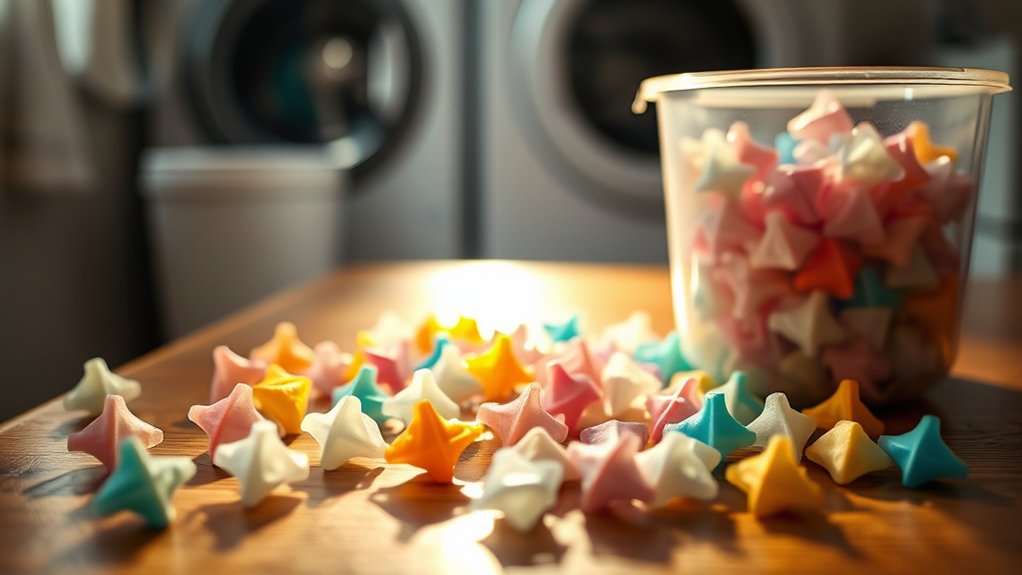
Although laundry pods offer convenience, it’s important to know they don’t last forever. Laundry pods expire typically within 6 to 12 months after opening and 12 to 18 months if unopened, depending on how well they’re stored.
Their shelf life shortens considerably if they face heat, humidity, or exposure to air. If not stored properly, moisture can cause the water-soluble film to become sticky or brittle, which impacts their effectiveness during washing.
To guarantee your laundry pods last as long as possible, keep them in a cool dry place, ideally in an airtight container away from direct sunlight and moisture.
Why Laundry Pods Lose Effectiveness
When you use laundry pods past their prime, you’ll notice they don’t clean as well because their active ingredients, like enzymes and surfactants, break down over time.
Laundry pods lose effectiveness mainly due to this degradation, especially after the 6 to 12-month mark once opened.
Laundry pods start losing their cleaning power primarily between 6 to 12 months after being opened.
Exposure to moisture and heat can also damage the water-soluble film, causing clumping or leakage that further reduces cleaning power.
The shelf life for unopened pods is typically 15 to 18 months, but improper storage can shorten it.
Signs of aging in laundry pods include discoloration, sticky or cracked film, and residue left on clothes after washing.
These indicators mean the pods won’t dissolve properly, leaving stains and buildup behind, signaling they’ve lost their effectiveness.
Does Damaged Packaging Make Pods Expire Faster?
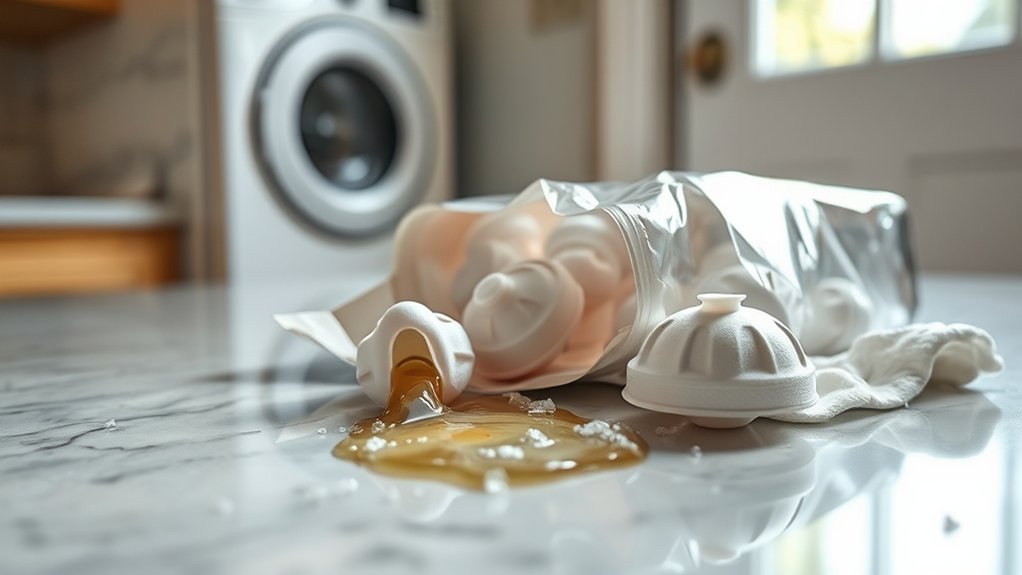
You need to understand that damaged packaging can seriously reduce your laundry pods’ lifespan by letting air and moisture in.
When that happens, the pods start to weaken. Plus, their cleaning power and overall effectiveness take a hit.
Packaging Integrity Importance
Since damaged packaging exposes laundry pods to air and moisture, it causes them to deteriorate faster than properly sealed ones.
Maintaining packaging integrity is essential to preserve the active ingredients and extend the shelf life of your laundry pods.
When you use pods with damaged packaging, you risk reduced cleaning power and potentially expired laundry detergent.
Here’s why packaging matters:
- Damaged packaging allows moisture in, causing pods to clump and break down faster.
- Compromised water-soluble film lets active ingredients degrade, diminishing effectiveness.
- Properly sealed packaging protects enzymes and surfactants, ensuring peak performance.
Always inspect packaging before use.
Any signs of damage may indicate the pods have aged or lost potency, which can affect your laundry’s cleanliness.
Air And Moisture Exposure
Although laundry pods are designed to maintain their potency, damaged packaging exposes them to air and moisture, which speeds up their expiration.
When pods get exposed to moisture, the water-soluble film can become sticky or brittle, causing clumping and reducing effectiveness.
Air exposure also causes pods to lose their pre-measured dosage accuracy, leading to inconsistent cleaning results.
To prevent your pods from expiring prematurely, store them in air-tight containers to minimize contact with air and moisture.
Regularly check for any damage in the packaging to avoid exposing pods unnecessarily.
Impact On Pod Longevity
When laundry pod packaging gets damaged, it exposes the pods to air, moisture, and heat, which greatly shortens their lifespan. This exposure causes pods to clump and lose active ingredients, making them expire faster.
Damaged packaging also affects the water-soluble film, causing it to become sticky or brittle, which compromises cleaning performance. To maintain pod longevity, watch for packaging that’s intact and airtight.
Here’s how damaged packaging impacts pods:
- Moisture and air exposure accelerate loss of active ingredients like enzymes and surfactants.
- The film may fail to dissolve properly, reducing cleaning effectiveness.
- Heat and humidity can discolor or deform pods, signaling deterioration.
Always inspect packaging before buying to guarantee peak pod performance and shelf life.
How To Spot Expired Laundry Pods
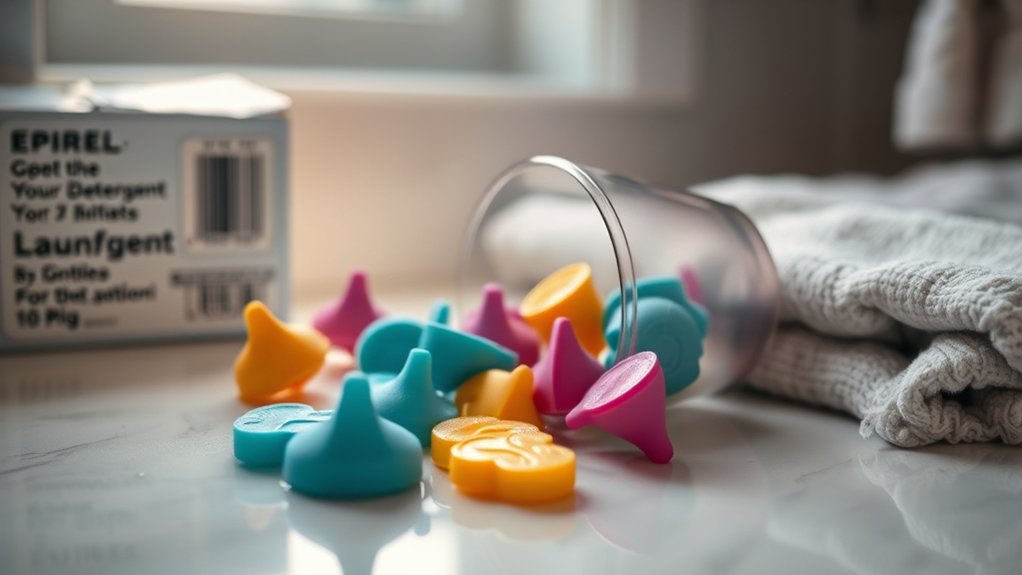
How can you tell if your laundry pods have expired? Start by examining their appearance. Discoloration or any changes from their original look are clear signs.
Next, check for texture changes. If the pods feel sticky or tacky, they’ve likely degraded. Clumping or leaking also indicates compromised integrity and expiration.
Texture changes like stickiness, clumping, or leaking signal that your laundry pods have likely expired.
During use, if your laundry pods don’t fully dissolve, that’s another red flag. You might also notice reduced cleaning power. If your clothes don’t come out feeling or smelling clean, the pods may no longer be effective.
Paying attention to these signs—discoloration, texture changes, clumping, and poor cleaning results—helps you identify expired laundry pods, ensuring you maintain peak washing performance and avoid ineffective laundry cycles.
What Happens If You Use Expired Pods?
If you use expired laundry pods, you’ll likely notice a drop in cleaning performance that leaves stains and dirt behind. Expired pods lose cleaning effectiveness, making your laundry less effective overall.
You might also find residue on clothes due to poor pod dissolution, especially in cold water.
Here’s what to expect with expired pods:
- Sticky residue or musty odors that reduce fabric freshness.
- Incomplete stain removal, leaving clothes looking dirty or dull.
- Potential mild skin irritation if you have sensitive skin, caused by ingredient breakdown.
Using expired pods compromises your laundry results and can also affect your skin’s comfort.
To maintain peak cleanliness and fabric care, avoid relying on pods past their prime.
When To Discard And Replace Old Laundry Pods
Recognizing the right moment to discard and replace your laundry pods helps you maintain excellent cleaning results. Laundry pods typically expire within 6 to 12 months after opening, or 15 to 18 months if unopened and properly stored.
You should discard pods showing clear signs of deterioration such as discoloration, sticky surfaces, or clumping. These changes indicate the ingredients are breaking down, reducing cleaning effectiveness.
Discard pods with discoloration, stickiness, or clumps, as these signs mean reduced cleaning power.
If pods don’t fully dissolve during a wash, that’s another sign they’ve expired and need replacing. Using old pods can leave residues or musty odors on clothes, signaling it’s time to replace them.
To guarantee peak performance, regularly inspect your laundry pods for these signs and discard any that no longer look or function as intended.
How Storage Affects Pod Shelf Life
Since laundry pods are sensitive to environmental conditions, storing them properly plays an essential role in preserving their effectiveness and extending their shelf life.
To maintain the performance of your laundry pods and prevent them from expiring prematurely, you need to store them in a way that minimizes exposure to moisture or heat.
Here’s what you should focus on:
- Use an air-tight container to protect pods from humidity and air, which can cause clumping or degradation.
- Keep pods in a cool, dry place to prevent the water-soluble film from becoming sticky or brittle.
- Regularly inspect pods for signs of deterioration to avoid using compromised ones.
Following these steps helps you store laundry pods correctly and maintain effectiveness over time.
Best Ways To Store Laundry Pods
You should store laundry pods in a cool, dry place to keep them effective and prevent damage from moisture or heat.
It’s best to use airtight containers because they help protect the pods from humidity and air exposure, which can really extend their shelf life.
Plus, keeping your pods sealed properly means they’ll stay fresh and ready for each wash.
Ideal Storage Conditions
Although laundry pods are convenient, storing them properly is essential to keep them effective. To maintain their potency, you need to control the environment where you keep them.
Follow these key guidelines:
Store laundry pods in a cool, dry place to prevent humidity and moisture that cause clumping and reduce cleaning power.
Use airtight containers to shield pods from air and humidity, which can degrade the water-soluble film.
Avoid exposure to heat sources and direct sunlight, as high temperatures can weaken the pods and cause premature dissolution.
Airtight Container Benefits
When you store laundry pods in an airtight container, you protect them from moisture that causes clumping and reduces their cleaning power.
An airtight container preserves the water-soluble film, preventing it from becoming sticky or brittle due to air exposure. This protection helps maintain the effectiveness of the pods by preventing degradation of the active ingredients.
By sealing the container properly after each use, you keep humidity and heat at bay, which extends the pods’ shelf life up to 15 to 18 months when unopened.
Furthermore, using an airtight container lets you organize and monitor pod freshness easily, ensuring you always use them at their peak performance.
For the best results, combine airtight storage with a cool, dry environment.
Which Laundry Pod Brands Last The Longest?
How long your laundry pods last depends largely on the brand you choose. Different brands offer varying shelf lives and effectiveness, influenced by their ingredients and your storage conditions.
Here are three top options for longevity:
Tide Pods last 15 to 18 months when stored properly, making them the longest-lasting with consistent cleaning power.
Gain Flings maintain effectiveness for about 15 months if kept in a cool, dry place.
Arm & Hammer Pods have a shelf life of up to 12 months, though humidity can reduce their cleaning power.
Practical Uses For Expired Laundry Pods
You can totally repurpose expired laundry pods for all kinds of household cleaning tasks. For example, they’re great for wiping down countertops or mopping floors.
And it doesn’t stop there! They work really well for outdoor maintenance too, like cleaning garden tools or patio furniture.
If you mix the pods with water, you get an effective and budget-friendly cleaning solution that’s perfect for use all around your home and yard.
Easy and practical!
Household Cleaning Applications
Although expired laundry pods may no longer be ideal for washing clothes, they still pack a cleaning punch around the house. You can dilute expired pods with water to create an effective cleaning solution for various household surfaces, ensuring they’re sanitized without harsh chemicals.
Repurposing these pods helps reduce waste while maintaining cleanliness.
Here are three practical household cleaning applications:
- Use a diluted cleaning solution from expired pods to wipe down countertops, sinks, and other household surfaces.
- Mix expired pods with water for mopping floors, enhancing your mop’s cleaning power.
- Fill spray bottles with this solution for convenient, quick cleaning in kitchens and bathrooms.
Outdoor Maintenance Uses
When you dilute expired laundry pods with water, they become a powerful cleaning solution perfect for tackling outdoor maintenance tasks. This solution works well on various outdoor surfaces, such as patios, decks, and garden tools, effectively removing dirt and grime.
You can also use a spray bottle filled with this mixture to target stubborn stains on outdoor furniture and equipment. Expired laundry pods help remove stains from outdoor textiles like cushions and umbrellas, restoring their appearance.
Moreover, cleaning plastic play equipment with this solution guarantees a safe and hygienic environment for children.
Using expired laundry pods this way extends their usefulness, providing an efficient, economical method to maintain your outdoor spaces without waste.
Frequently Asked Questions
Can Laundry Pods Cause Allergies or Skin Irritation?
Yes, laundry pods can cause allergies or skin irritation, especially if you have sensitive skin. The concentrated detergents, enzymes, and fragrances inside may trigger reactions.
You should avoid direct contact with the pods and make sure they fully dissolve during washing.
If you’re prone to irritation, test a small load first or choose hypoallergenic pods.
Taking these precautions helps protect your skin from adverse effects while keeping your clothes clean.
Are Laundry Pods Environmentally Friendly?
When it comes to laundry pods, you can’t have your cake and eat it too regarding eco-friendliness. While pods offer convenience, many still rely on plastic packaging and chemicals that harm aquatic life.
However, you’ll find some brands pushing toward biodegradable packaging and greener formulas.
To truly make a difference, you should properly recycle packaging and choose pods designed for cold water use, cutting energy consumption and your carbon footprint.
How Do Laundry Pods Compare to Traditional Detergent Powders?
You’ll find laundry pods offer convenience with pre-measured, concentrated formulas that dissolve easily in all water temperatures.
They cut down on mess and overuse compared to traditional powders, which need precise measuring and may not dissolve well in cold water.
However, pods have a shorter shelf life and require careful storage to prevent sticking or leaking.
Traditional powders last longer if kept dry but can clump when exposed to moisture.
Can Laundry Pods Be Used for Hand Washing Clothes?
You can definitely use laundry pods for hand washing, but treat them like a delicate dance.
Dissolve the pod fully in warm water before adding your clothes. Using one pod is usually enough; more can create suds that won’t rinse well.
Avoid dropping pods directly on fabric to prevent residue.
Follow the instructions carefully, and you’ll get clean clothes without damage or leftover detergent sticking around.
What Should I Do if a Child Swallows a Laundry Pod?
If a child swallows a laundry pod, call Poison Control or get emergency help right away.
Don’t make them vomit unless a professional tells you to.
If the child is awake and can swallow, rinse their mouth with water to dilute the detergent.
Watch for breathing problems, coughing, or stomach pain, and share these symptoms with medical staff.
Always keep laundry pods locked away to prevent accidents.
Conclusion
Think of laundry pods like fresh fruit: they don’t spoil overnight, but over time, their punch fades. You might not get the same cleaning power after a year, much like biting into a less juicy apple.
By storing pods properly and checking packaging, you can extend their life and avoid laundry day surprises. Remember, using expired pods won’t harm your clothes but may leave them less fresh, so treat them with care for best results.