Are Laundry Pods Bad For Your Washer – What Science Says
You won’t harm your washer using laundry pods if you follow science-backed guidelines. Placing pods directly in the empty drum and avoiding overloading guarantees full dissolution and prevents residue buildup that can affect performance.
Using HE-compatible pods in high-efficiency machines avoids clogging and mechanical issues. The water-soluble PVA film is EPA-approved and safely dissolves, protecting both your washer and the environment.
Keep proper pod use in mind, and you’ll maintain washer efficiency. Exploring these points further reveals how to optimize pod use safely.
Key Takeaways
- Proper use of laundry pods in the empty drum ensures full dissolution, preventing residue buildup and protecting washer performance.
- Overloading washers restricts water flow, causing pods to dissolve incompletely and increasing residue on clothes and machine parts.
- Using HE-compatible pods in high-efficiency washers prevents clogging and mechanical issues, ensuring safe and effective cleaning.
- The EPA confirms PVA film in pods is safe and fully dissolves, avoiding environmental harm and washer clogs.
- Regular washer cleaning cycles and appropriate pod usage maintain machine efficiency and prevent detergent residue accumulation.
How Laundry Pods Protect Your Washer
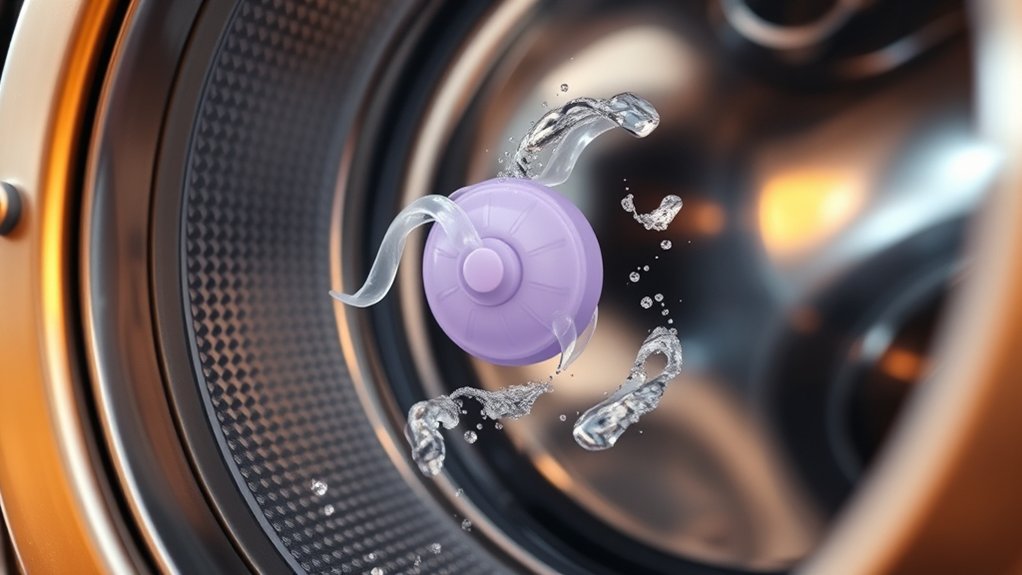
Although some worry about detergent buildup, laundry pods protect your washer by dissolving completely in water and releasing concentrated detergent directly into the drum.
When laundry pods dissolve properly, their water-soluble film biodegrades fully, leaving no residue that could harm washing machines or plumbing.
Properly dissolved laundry pods leave no harmful residue, protecting washers and plumbing effectively.
Their concentrated formulation guarantees precise dosing, so you avoid excess detergent that often causes clogging issues and buildup.
Importantly, placing pods directly in the drum, rather than the detergent dispenser, prevents blockages and maximizes cleaning power.
Studies confirm that, when used according to manufacturer guidelines, laundry pods are compatible with both standard and high-efficiency washers.
Why Laundry Pods Sometimes Don’t Fully Dissolve
When laundry pods don’t fully dissolve, it usually results from improper placement or washing conditions that hinder water flow and temperature effectiveness.
If you place pods on top of clothes instead of directly in the empty drum, water flow becomes restricted, preventing complete dissolution.
Overloading your washing machine further limits water movement, increasing the chance that pods won’t dissolve fully.
Although laundry pods are designed to dissolve in various water temperatures, using cold water below 60 degrees Fahrenheit often causes incomplete dissolution.
Avoid placing pods in the detergent dispenser, as this can clog the drawer and disrupt detergent release.
Using more pods than recommended also raises the risk of residue remaining on clothes and inside the machine, compromising cleaning performance and potentially affecting your washer over time.
Why Residue and Buildup Form From Laundry Pods
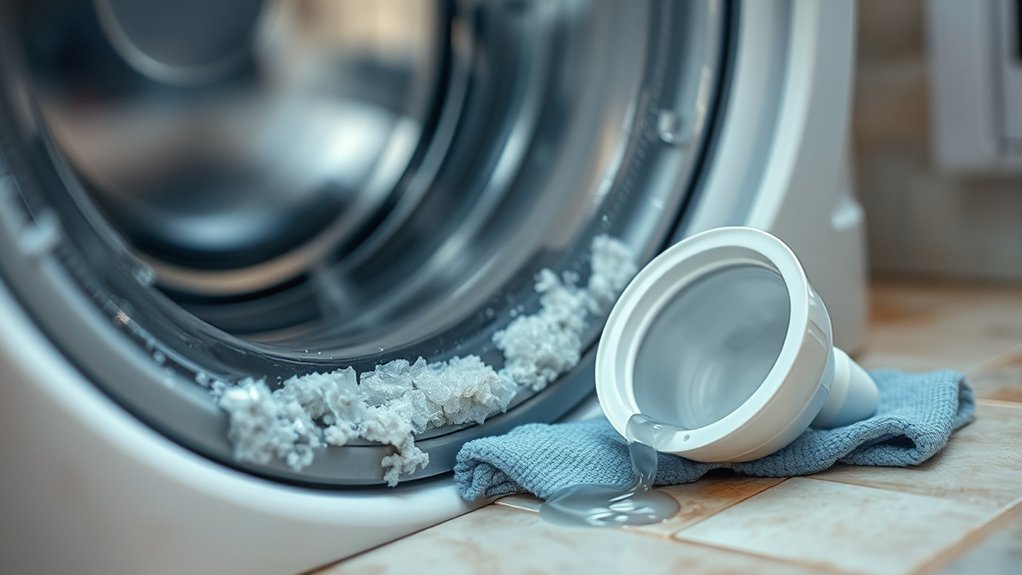
Because improper use often causes residue and buildup, understanding the factors that contribute to these issues is essential for maintaining both your clothes and washing machine.
Residue and buildup from pods primarily form due to improper placement. Placing pods on top of clothes rather than directly in the drum can prevent them from fully dissolving.
Overloading the washing machine restricts water flow, leading to undissolved pods and detergent residue on fabrics. Using excessive pods also increases leftover detergent because more pods don’t guarantee cleaner clothes.
Furthermore, cold water below 60°F can hinder pod dissolution, causing residue to cling to garments.
These residue problems are typically linked to user errors rather than the pods themselves. This highlights the importance of following manufacturer guidelines for proper pod use and water temperature to avoid buildup in your washing machine.
Why Using Laundry Pods in the Wrong Washer Compartment Hurts
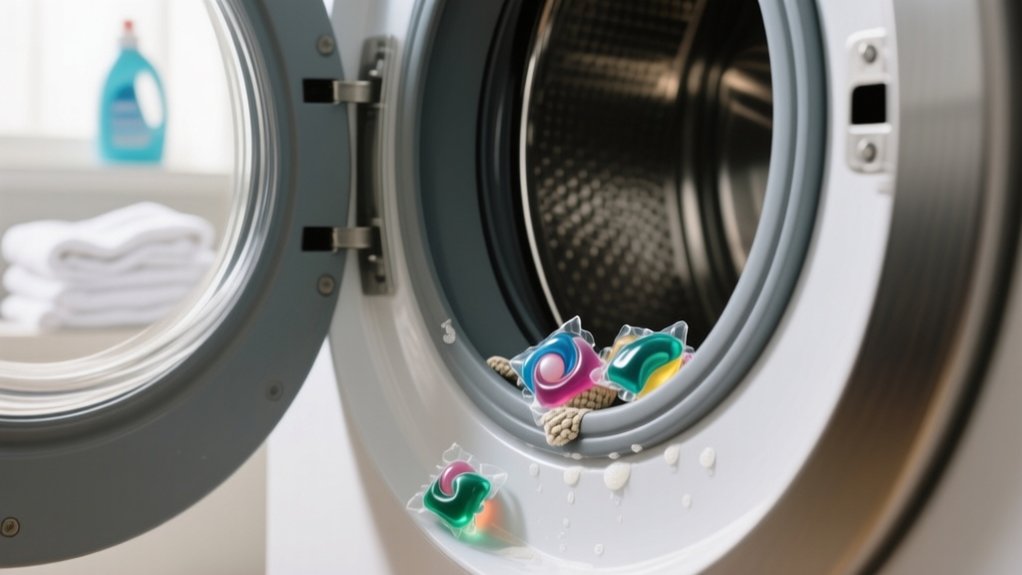
If you put laundry pods in the detergent drawer, they often won’t dissolve fully. This can leave residue on your clothes and inside the machine.
Over time, that buildup can clog the dispenser and make your washer less efficient.
Pods Not Dissolving
Although laundry pods offer convenience, placing them in the detergent dispenser drawer instead of directly in the drum can prevent them from dissolving properly. Pods not dissolving leads to detergent residue on clothes and inside the washing machine.
Overloading your washer or placing pods on top of clothes restricts water flow, which further causes undissolved pods. Using too many pods overwhelms rinsing capacity, increasing residue buildup.
Following manufacturer instructions on load size and pod placement guarantees peak performance and prevents these issues.
| Cause | Effect |
|---|---|
| Pods in detergent drawer | Pods not dissolving |
| Overloading washer | Reduced water flow |
| Pods on top of clothes | Undissolved pods remain |
| Excess pods used | Detergent residue buildup |
| Ignoring manufacturer instructions | Suboptimal washer performance |
Proper use avoids detergent residue and protects your washing machine.
Detergent Drawer Risks
When you place laundry pods in the detergent drawer, you risk clogging the compartment and preventing the pods from dissolving properly.
The detergent dispenser drawer isn’t designed for pods; its water flow is insufficient to dissolve the water-soluble film effectively.
As a result, pods can remain undissolved, causing detergent stains on your clothes. Improper placement also leads to detergent buildup within the drawer, which restricts water flow further and reduces the efficiency of the wash cycle.
Over time, this residue accumulation may cause mechanical issues in your washer, compromising its performance.
For proper dissolution and to avoid these risks, always place pods directly in the drum. This way, the water-soluble film can break down as intended without affecting your machine’s functionality.
Residue Build-Up Effects
Multiple factors contribute to residue build-up in washing machines, with improper placement of laundry pods being a primary cause.
When detergent pods don’t dissolve properly, residue build-up affects both fabrics and machine parts, reducing ideal washing machine performance.
Incorrect usage, like placing pods in the detergent drawer or on top of clothes, hampers proper dissolution of cleaning ingredients.
Furthermore, excess detergent from using too many pods or overloading the machine increases residue risks.
To avoid these issues, always follow the manufacturer’s guidelines.
Key points to prevent residue build-up include:
- Place detergent pods directly in the drum, not the detergent drawer
- Avoid overloading the washer to guarantee full pod dissolution
- Use the recommended number of pods to prevent excess detergent
- Adhere strictly to manufacturer’s instructions for best results
How Overloading Your Washer Stops Pods From Working Right
If you overload your washer, you restrict water flow, which prevents laundry pods from fully dissolving during the cycle.
Overloading limits water circulation, causing pods to clump or remain partially undissolved.
This incomplete dissolution results in detergent residue depositing on clothes and inside the washer.
Using too many pods in an overloaded washer makes this worse, since excess detergent can’t disperse effectively.
For peak performance, follow recommended pod usage: one pod for small loads, two for standard loads, and three for large loads.
Proper loading not only guarantees that laundry pods dissolve completely but also helps maintain your washer’s efficiency by preventing residue buildup and potential clogs.
What Science Says About PVA Film and Washer Safety
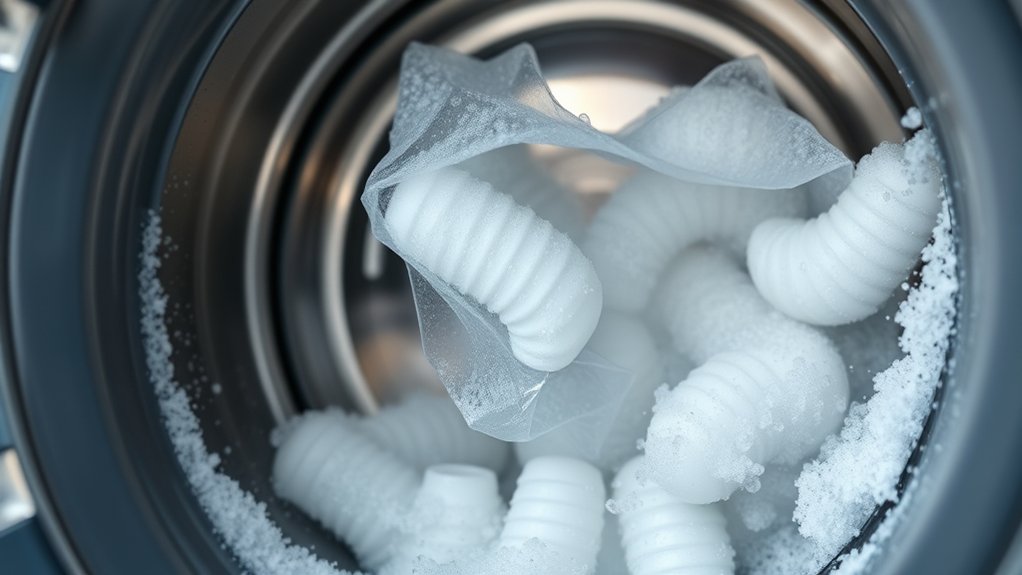
Although some concerns have arisen about the impact of PVA film in laundry pods on washing machines and the environment, scientific research and regulatory evaluations provide clear evidence of its safety.
PVA used in laundry pods dissolves completely during the wash cycle, preventing clogs in washing machines. Science confirms detergent-grade PVA biodegrades effectively in wastewater treatment plants, avoiding environmental risks linked to microplastics.
Key points on PVA and washer safety include:
- PVA dissolves fully in water, ensuring safe use without damaging washing machines.
- The EPA has approved PVA as safe, rejecting microplastic pollution claims.
- Detergent-grade PVA doesn’t bioaccumulate or absorb harmful substances.
- Proper use of laundry pods maintains washer performance and environmental safety.
Science supports that PVA film poses minimal risk when used as directed.
How to Keep Your Washer Safe When Using Laundry Pods
To keep your washer functioning efficiently when using laundry pods, place the pod directly in the empty drum before adding clothes. This guarantees it dissolves completely during the wash cycle. Doing this helps prevent residue buildup, which can affect your machine’s performance.
Place pods in the empty drum first to ensure full dissolution and prevent residue buildup.
Use one pod for small loads (4–8 pounds) and two for standard loads (12–16 pounds). This ensures effective cleaning without leaving excess detergent residue.
Avoid overloading your washing machine because restricted water flow can cause pods to dissolve improperly.
Make sure the laundry pods you use are compatible with your machine type. For example, use HE pods in high-efficiency washers to prevent clogging.
Finally, practice safe handling by storing pods in their original container, out of children’s reach.
Frequently Asked Questions
Can Laundry Pods Cause Skin Irritation or Allergies?
Yes, laundry pods can cause skin irritation or allergies, especially if you have sensitive skin or pre-existing conditions like eczema.
Their concentrated detergents, fragrances, and enzymes may trigger rashes or allergic reactions.
To reduce risk, you should test your skin’s response and consider pods labeled hypoallergenic or free from dyes and fragrances.
Being aware of the ingredients helps you avoid potential irritation while still keeping your clothes clean.
Are Laundry Pods Safe for Septic Systems?
Yes, laundry pods are generally safe for your septic system. They contain biodegradable ingredients and use a water-soluble film that dissolves completely, reducing residue buildup.
Because they’re concentrated, you use less product, which eases the load on your septic system compared to traditional detergents.
Just avoid overloading pods in a single wash and maintain your septic system regularly to guarantee it functions efficiently without issues from detergent components.
How Should Laundry Pods Be Stored for Safety?
You should store laundry pods in their original container, keeping it tightly closed to prevent moisture exposure that can degrade the pods.
Place the container in a cool, dry spot away from children and pets. Preferably, keep it in a high cabinet or locked area.
Always handle pods with dry hands to avoid premature dissolution.
Regularly inspect the container for damage or moisture, and safely discard any compromised pods to maintain safety and effectiveness.
Do Laundry Pods Work in Cold Water?
Imagine you run a small boutique hotel and want to save energy by washing linens in cold water.
Laundry pods work effectively in cold water because they contain concentrated cleaning agents designed to dissolve and activate even below 60°F.
However, you need to place pods correctly and avoid overloading the washer to guarantee full dissolution.
Studies confirm that most modern pods maintain cleaning power across cold, warm, and hot cycles, making them reliable for your needs.
Can Laundry Pods Be Used for Hand Washing Clothes?
Yes, you can use laundry pods for hand washing clothes, but you should dissolve them in warm or hot water first to guarantee they fully dissolve.
Using one pod per small load is effective, but avoid using too little water, as that might leave residue.
Wear gloves to protect your skin from the concentrated detergent.
Following the pod manufacturer’s instructions helps you achieve the best cleaning results without damaging fabrics or your skin.
Conclusion
So, are laundry pods really bad for your washer? Science shows that when used correctly, pods protect your machine by delivering detergent efficiently without excess residue.
However, improper use like overloading or placing pods in the wrong compartment can cause buildup and damage. By understanding these factors and following guidelines, you can keep your washer running smoothly.
After all, wouldn’t you want your washer working at its best, wash after wash?