How To Dispose Of Laundry Detergent – Do It Right
You should never pour laundry detergent directly down the drain, as it can clog plumbing and harm aquatic ecosystems. Always use up water-soluble detergent fully or dilute leftover liquid with plenty of water before disposal.
Check product labels for specific instructions and avoid dumping powder detergents. Donate unused detergent or locate local hazardous waste events for safe disposal.
Proper recycling of containers and participation in take-back programs also help. Following these steps protects your home and the environment. Explore further tips to manage detergent waste responsibly.
Key Takeaways
- Use up all water-soluble detergent completely before disposing to minimize waste and environmental harm.
- Pour small amounts of leftover detergent down the drain with plenty of water to avoid clogs and damage.
- Donate unused detergent in original containers to local charities or share via community platforms like Freecycle.org.
- Recycle empty detergent containers according to local guidelines after rinsing to remove any residue.
- Participate in hazardous waste collection events or brand take-back programs for safe disposal and recycling.
Why You Should Never Pour Laundry Detergent Down the Drain
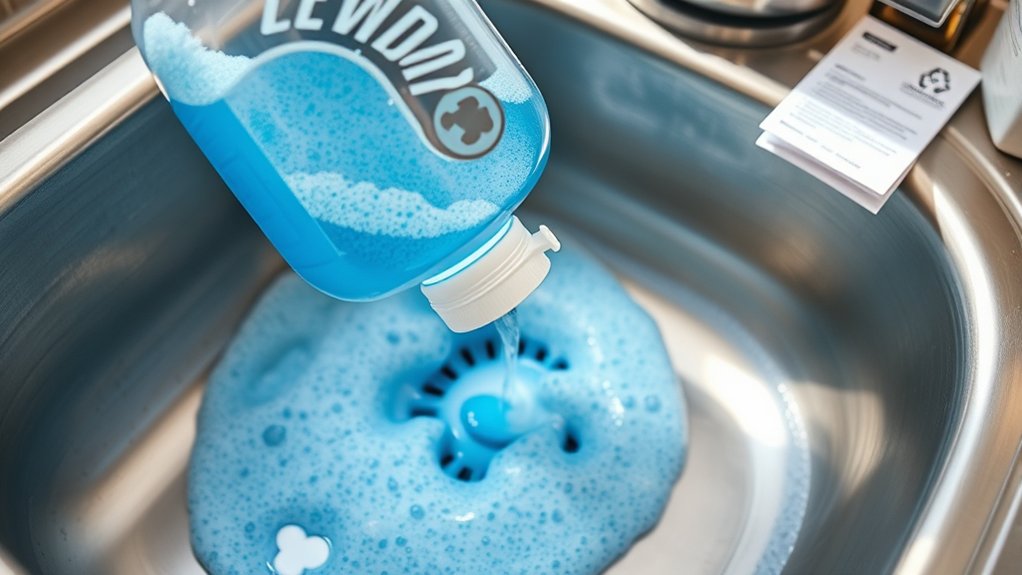
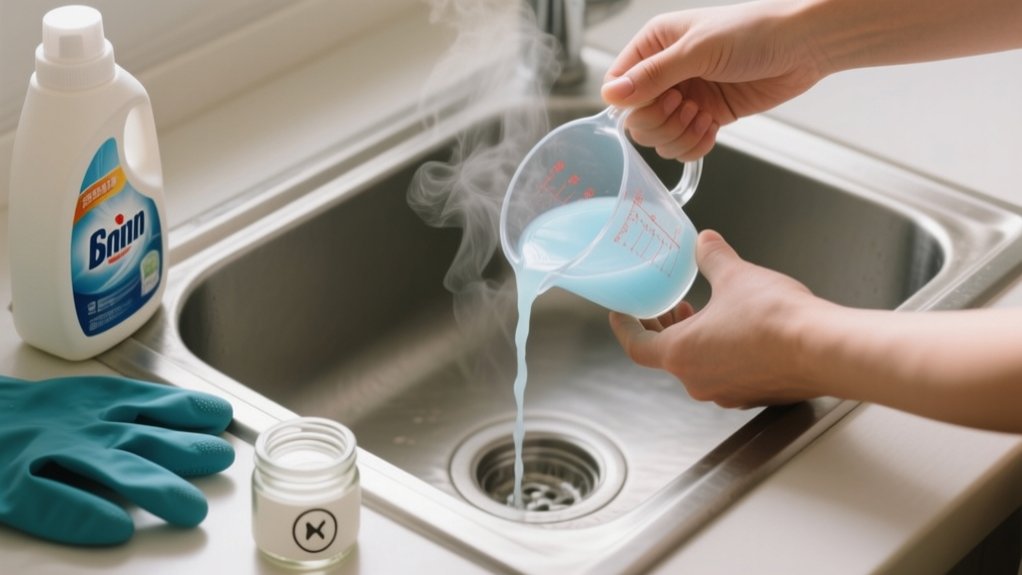
Although it might seem convenient, you should never pour laundry detergent down the drain because it can cause serious plumbing issues and environmental harm.
Powder detergents may accumulate and solidify, leading to clogs in your plumbing system.
Many detergents contain phosphates and harmful chemicals that, if untreated, damage aquatic ecosystems.
Phosphates and harmful chemicals in detergents can severely damage aquatic ecosystems if not properly treated.
Your residential septic system can also struggle with these chemicals, risking failure or contamination.
Flushing large amounts of laundry detergent overwhelms local wastewater treatment facilities, accelerating environmental degradation.
To minimize such risks, always dispose of cleaning products responsibly by following local waste disposal guidelines.
Using up the detergent entirely or recycling its container are safer options that protect both your home’s plumbing and the environment.
How to Read Labels for Safe Laundry Detergent Disposal
Understanding the risks of improper detergent disposal highlights the importance of reading product labels carefully before getting rid of any laundry detergent.
Learning how to read labels for safe laundry detergent disposal helps you avoid environmental harm and comply with regulations when disposing of cleaning products.
Always check the label for specific instructions, as some detergents require unique handling. If instructions aren’t clear, check with your local authorities or recycling programs for guidance.
Keep these points in mind:
- Confirm if the detergent is water-soluble and safe to flush with water.
- Avoid pouring large amounts of powder detergent down drains.
- Rinse empty containers before recycling to prevent contamination.
- Contact the manufacturer if you’re uncertain about disposal methods.
Following these steps guarantees safe, responsible disposal.
Safe Disposal Methods for Leftover Laundry Detergent
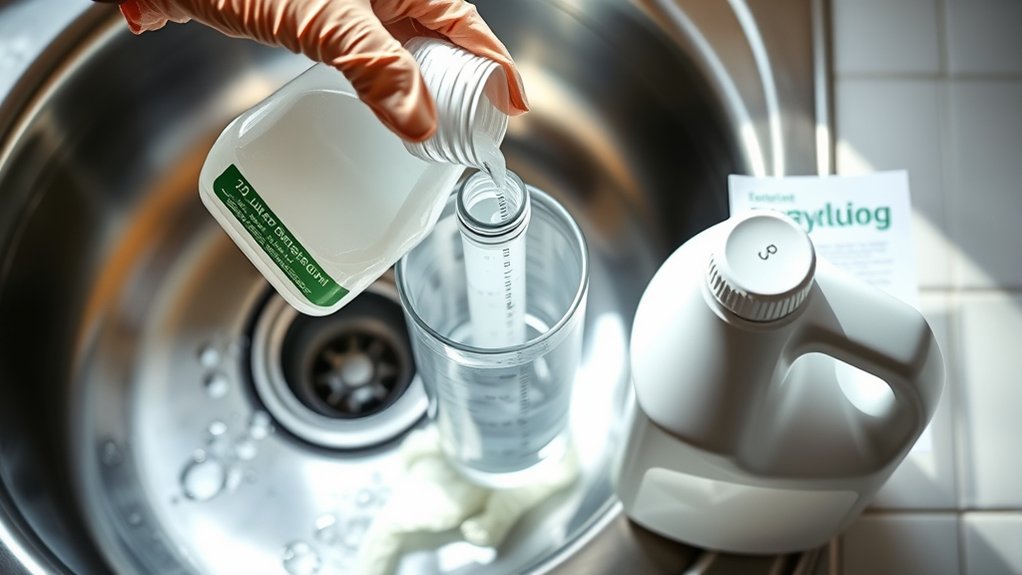
You should try to use up water-soluble laundry detergents completely.
If you have any leftover, it’s okay to pour it down the drain, but make sure you run plenty of water while doing so.
If you end up with unused detergent, a great option is to donate it, just keep it in its original container.
And, of course, always follow the instructions on the label.
It’s also a good idea to check with your local waste facilities to see if they’ve proper disposal or recycling options.
Use It Up
When you have leftover laundry detergent, the safest and most environmentally responsible approach is to use it up completely before disposal. This minimizes waste and guarantees the product is fully utilized.
If you can’t use it all, consider giving it away to friends, family, or local charities, keeping the original container and label intact for safety.
Water-soluble detergents often qualify as Safer Choice products and can be flushed down the drain with running water.
For any remaining detergent that can’t be used or redistributed, store it safely for a household hazardous waste collection event. Always check local recycling or disposal guidelines to handle solid detergents properly.
- Use the product fully to reduce waste
- Share leftover detergent responsibly
- Flush safe, water-soluble detergents with water
- Participate in household hazardous waste collection
Proper Disposal Options
Once you’ve used up or shared leftover detergent, choosing the right disposal method for what remains guarantees safety and environmental care.
Always read the disposal instructions on the label, as many liquid detergents are water-soluble and can be safely flushed down the drain with running water.
Use up or donate leftover detergent to avoid waste. For solid detergents, dispose of them with regular household waste, but avoid pouring large amounts of powder detergent down drains to prevent clogs. Dispose in small quantities instead.
Rinse out liquid detergent containers before recycling to reduce contamination.
If you encounter hazardous or unclear products, contact your local waste management or hazardous waste program for proper guidance.
Following these steps assures safe, responsible disposal of laundry detergent.
How to Use Up or Give Away Leftover Laundry Detergent
You should try to use up all your leftover laundry detergent to avoid any waste.
But if you find that you just can’t finish it, don’t worry! You might want to donate it to friends, family, or even local charities. Just be sure the container is sealed and labeled before you pass it along.
Another great option is to share it with neighbors through community platforms like Freecycle.org or Nextdoor.com.
It’s a simple way to make sure your detergent doesn’t go to waste and helps someone else out too!
Use It Up
How can you responsibly handle leftover laundry detergent to prevent waste and environmental harm? The best approach is to use it up completely. This reduces waste and limits the buildup of household hazardous products.
Before disposal, check the label for specific instructions, as some detergents require special care.
To manage leftover detergent effectively, use the detergent fully for laundry or other household cleaning products. Avoid mixing it with other chemicals to prevent hazardous reactions.
You might also consider sharing excess detergent within your household to make sure it gets used.
Finally, recycle the container according to local guidelines to minimize environmental impact.
Donate To Others
If leftover laundry detergent remains after household use, donating it can be a responsible way to prevent waste. You can donate to others by giving unused detergent to local charities, churches, or homeless shelters, ensuring the products stay in their original packaging for safety and proper handling.
Many organizations welcome cleaning products, as they help those in need and reduce waste by keeping items out of landfills. Before donating, always check expiration dates and any specific donation guidelines on the packaging.
Moreover, you can use online platforms like Freecycle.org or Nextdoor.com to connect with individuals interested in taking your leftover detergent.
Share With Neighbors
One effective way to manage leftover laundry detergent is by sharing it with neighbors or local community groups. Before you share, always read the label to confirm safe handling and check for any disposal or safety warnings.
Make sure the detergent remains in its original container with the label intact.
You can share unused cleaning products with neighbors, friends, or local community organizations such as shelters and charities that could benefit from them. Platforms like Freecycle.org or Nextdoor.com can help connect you with people interested in taking your excess detergent.
- Keep detergent in original packaging with label
- Read the label for safety and disposal instructions
- Share with neighbors, friends, or local community organizations
- Use online platforms to find local recipients
Sharing reduces waste and supports your community responsibly.
Where to Find Local Hazardous Waste Collection Events
Wondering where to safely dispose of your laundry detergent? Start by contacting your local environmental agency or visiting their website to find scheduled hazardous waste collection events near you.
Many counties hold regular collection days for cleaning products and other household hazardous wastes. Check community calendars for details.
Tools like the Waste Wizard can direct you to proper disposal sites and times. In Oregon, calling 1-800-732-9253 provides specific event information.
You can also connect with local zero waste groups and community organizations for updates on hazardous waste collection opportunities.
Following these steps guarantees you handle laundry detergent responsibly and support environmental safety.
Always verify event dates and accepted materials before attending to avoid improper disposal.
Recycling Laundry Detergent Containers and Brand Take-Back Programs
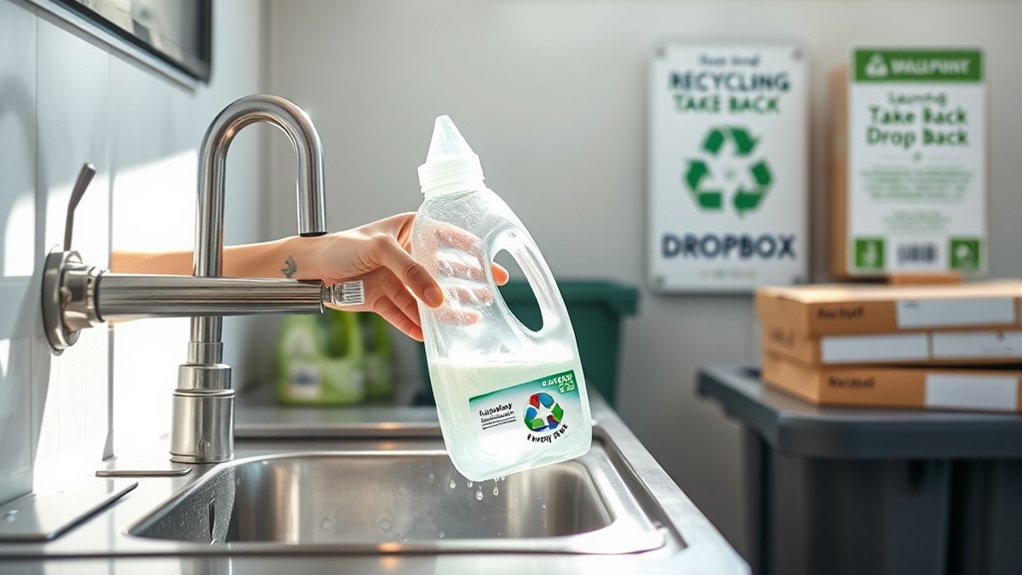
Although disposing of laundry detergent safely is important, recycling the containers offers another effective way to reduce environmental impact. Many cleaning product containers are made from recyclable plastics like HDPE (#2) and PET (#1). Before recycling, rinse these containers to remove detergent residue.
You can also participate in brand take-back programs offered by companies like Method and Clorox. They collaborate with initiatives such as TerraCycle’s Cleaner Packaging Brigade to recycle used plastic packaging.
To maximize your recycling efforts:
- Rinse containers thoroughly before recycling
- Check local recycling guidelines for cleaning product containers
- Use brand take-back programs when available
- Support manufacturers promoting sustainable plastic packaging
Engaging in these practices helps reduce waste and encourages better packaging designs.
Tips for Storing and Handling Laundry Detergent Before Disposal
When storing and handling laundry detergent before disposal, you should always keep the container tightly sealed and in a secure location away from children and pets to prevent accidental exposure.
Store laundry detergent in a cool, dry place, away from direct sunlight to maintain its efficacy.
Keep laundry detergent in a cool, dry area away from sunlight to preserve its effectiveness.
When handling detergent, wear gloves and a mask, especially if the product contains hazardous ingredients. This helps reduce skin and inhalation risks.
Keep original labels intact on containers so you have disposal instructions available.
If you transfer detergent to another container, make sure it’s compatible and clearly labeled to avoid contamination or chemical reactions.
Proper storage and careful handling safeguard safety and environmental responsibility before you proceed with laundry detergent disposal.
Frequently Asked Questions
Can Laundry Detergent Harm Septic Systems if Disposed Improperly?
Yes, laundry detergent can harm septic systems if you dispose of it improperly.
Chemicals like phosphates and surfactants disrupt the natural bacteria your septic system relies on to break down waste.
Pouring concentrated detergent without enough water can cause clogs and damage.
To protect your system, always dilute detergent with plenty of water and choose water-soluble formulas.
Regular septic maintenance also helps prevent costly repairs from detergent-related issues.
Are Natural or Eco-Friendly Detergents Safer to Dispose Of?
Yes, natural or eco-friendly detergents are generally safer to dispose of because they often contain biodegradable and water-soluble ingredients.
You can usually flush them down the drain without harming septic systems.
However, you should still read labels carefully since some may contain hazardous components.
Always follow disposal instructions to reduce environmental risks.
Being cautious guarantees you protect water systems and minimize potential contamination.
How Long Does Laundry Detergent Remain Hazardous in the Environment?
You should know that laundry detergent can remain hazardous in the environment for days, months, or even years. Some ingredients break down quickly, while phosphates and certain surfactants persist much longer, causing damage.
You must act cautiously because these chemicals can disrupt ecosystems and harm aquatic life.
To reduce these risks, you should dispose of detergents properly and avoid pouring them directly into drains or waterways.
Can Expired Laundry Detergent Be Used for Cleaning Other Household Items?
Yes, you can use expired laundry detergent for cleaning other household items, but you should be cautious.
Its cleaning power may be reduced, so test it on a small, hidden area first to avoid damage or discoloration.
Avoid using it on delicate surfaces or fabrics.
If it causes irritation or doesn’t clean well, it’s best to dispose of it properly according to local guidelines to prevent any environmental harm.
What Should I Do if Detergent Spills During Transport to Disposal Sites?
If detergent spills during transport, contain it immediately using absorbent materials like paper towels or rags to stop further leakage.
Put the soaked materials in a sealed plastic bag to prevent contamination.
Clean any hard surfaces with water and mild detergent, avoiding harsh chemicals.
Always wear gloves to protect your skin.
For large spills or if you’re unsure what to do, report the incident to local waste authorities to guarantee safe disposal.
Conclusion
Now that you know why pouring laundry detergent down the drain is a no-go, you can handle leftovers responsibly. Always read labels carefully to avoid hazards, and consider safe disposal, donating, or using up your detergent.
Check for local hazardous waste events or brand take-back programs to recycle containers properly. Remember, treating detergent like a relic from a bygone era, precious and needing care, helps protect your home and the environment.
Dispose thoughtfully, every time.