Can You Use Laundry Detergent In A Carpet Cleaner – Guide
You shouldn’t use regular laundry detergent in a carpet cleaner because it can leave sticky residue, cause fiber damage, and harm your machine due to excess foam and harsh chemicals.
If you must use it, choose a High-Efficiency (HE) liquid detergent, dilute properly, and test a hidden spot first. However, safer alternatives like white vinegar or specialized carpet solutions work better.
Keep going to discover how to protect your carpet and cleaner effectively.
Key Takeaways
- Regular laundry detergents can leave sticky residue that attracts dirt and damages carpet fibers.
- Use only High-Efficiency (HE) liquid detergents, diluted properly to avoid excessive foam and residue buildup.
- Optical brighteners in laundry detergents may cause color fading and uneven discoloration on carpets.
- Excessive sudsing from laundry detergents can harm carpet cleaning machines and void warranties.
- Better alternatives include white vinegar, baking soda, mild dish soap, or specialized carpet cleaning solutions.
Should You Use Laundry Detergent for Carpet Cleaning?
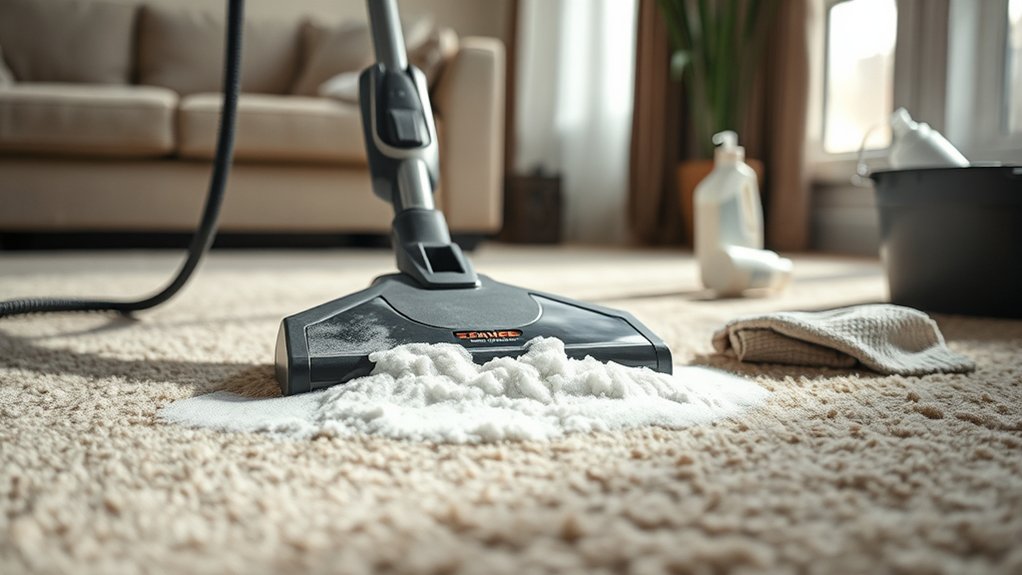
Why should you avoid using regular laundry detergent in your carpet cleaner?
Laundry detergent isn’t designed for carpet cleaning machines and can leave detergent residue that attracts dirt, making your carpet dirtier over time.
This residue buildup not only prevents you from effectively removing stains but also risks damaging your machine due to excess foaming.
Optical brighteners in laundry detergents can even cause color fading, reducing the life and vibrancy of your carpet fibers.
Professional carpet cleaners use specialized solutions formulated to protect fiber integrity and minimize residue, ensuring a truly clean carpet without harm.
If you must use laundry detergent, opt for a high-efficiency (HE) liquid type in very small amounts, but it’s best to rely on products made specifically for carpet care.
Risks of Using Laundry Detergent on Carpets
You mightn’t realize it, but using laundry detergent on your carpet can actually leave behind a sticky residue.
This residue tends to attract more dirt as time goes by.
And that’s not all—it can make your carpet look worse and even damage those delicate fibers.
Residue Buildup Issues
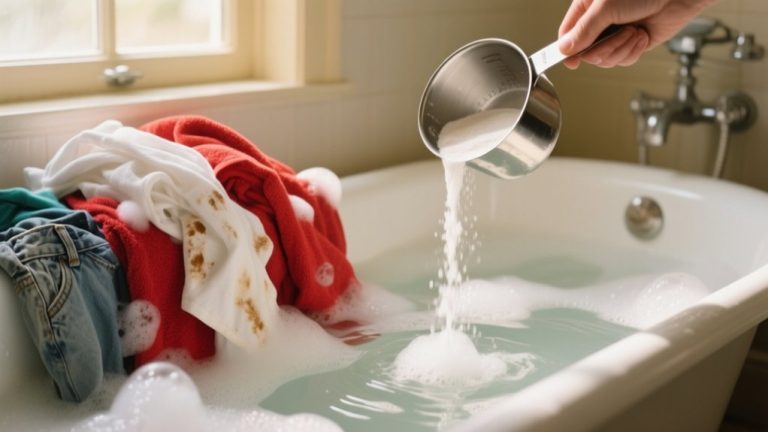
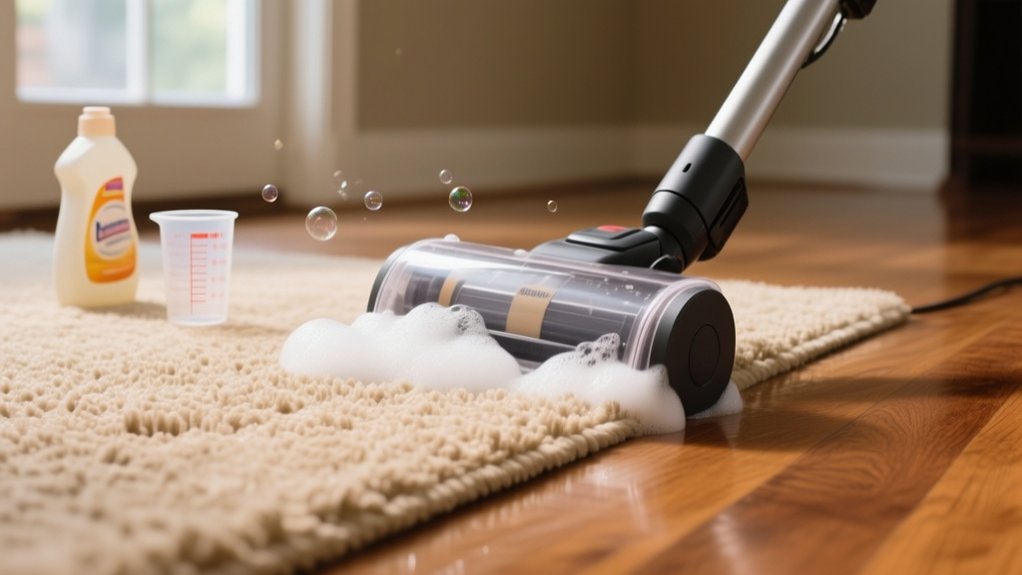
Although laundry detergents might seem like a convenient choice for carpet cleaning, they often cause residue buildup that can make your carpets dirtier over time.
When you use detergent directly or in excessive amounts, it leaves behind a sticky film that attracts dirt, defeating your cleaning efforts.
Optical brighteners in these detergents can also fade dyed carpets, causing discoloration.
To avoid these problems, you need proper dilution and to follow recommended ratios strictly.
Using laundry detergent instead of specialized cleaning solutions increases the risk of residue buildup, which can harm carpet fibers and even void your machine’s warranty.
Stick to products designed for carpet care to keep your carpets clean and prolong their life.
Carpet Fiber Damage
When you use laundry detergent in carpet cleaners, you risk damaging the fibers because of harsh bleaching agents and unbalanced pH levels. Laundry detergents contain optical brighteners that can strip color, causing uneven fading.
Their high sudsing can also lead to residue buildup that attracts dirt. This makes carpets dirtier faster and weakens delicate materials like wool or synthetics. Carpet cleaning solutions are specially pH-balanced to protect fibers, but laundry detergents disrupt this balance, speeding up carpet fiber damage.
| Risk Factor | Effect on Carpets |
|---|---|
| Optical Brighteners | Color stripping, uneven fading |
| Bleaching Agents | Weaken delicate materials |
| High Sudsing | Residue buildup, machine damage |
| pH Imbalance | Fiber degradation, dirt attraction |
When Is Laundry Detergent Safe to Use?
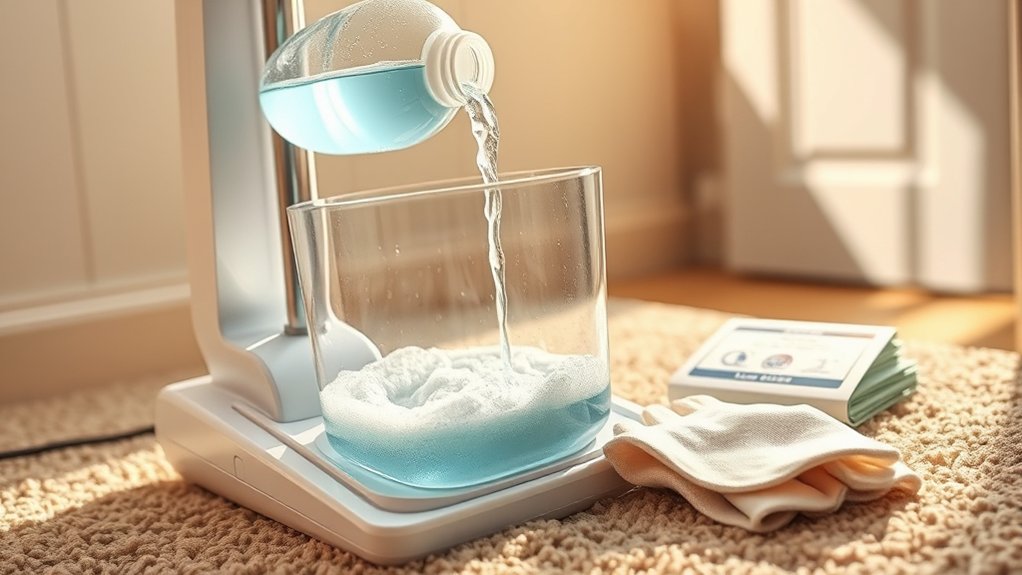
If you want to use laundry detergent in your carpet cleaner safely, choose only a High-Efficiency (HE) liquid detergent. It produces less foam and reduces residue buildup.
Always dilute the HE liquid detergent properly, about 1 tablespoon per quart of water, to prevent excessive sudsing that can harm your machine.
Before applying the solution broadly, perform a patch test on a hidden carpet area to check for colorfastness. This helps avoid unwanted fading or discoloration.
Be cautious not to overuse laundry detergent, as too much can leave a sticky residue that attracts dirt and causes your carpet to soil faster.
Remember, regular laundry detergents often contain optical brighteners or bleaching agents that may damage carpet fibers and void your cleaner’s warranty.
Better Alternatives to Laundry Detergent
Since laundry detergent can sometimes cause issues like residue buildup or excessive foaming, you’ll want to contemplate better alternatives for cleaning your carpets. A white vinegar solution mixed with water effectively cleans and neutralizes odors without leaving residue.
Using a small amount of dish soap targets greasy stains and reduces foaming risks. Sprinkling baking soda on carpets absorbs odors and stains, rejuvenating your space after vacuuming.
For a more tailored approach, consider Rug Doctor cleaning solutions. They’re designed to minimize residue and work safely with professional machines.
If you want thorough results, professional cleaning services offer advanced equipment and expertise, ensuring deep cleaning without damaging your carpet.
These better alternatives to laundry detergent help you maintain clean, fresh carpets while avoiding common detergent pitfalls.
How to Prepare Laundry Detergent for Carpet Cleaning
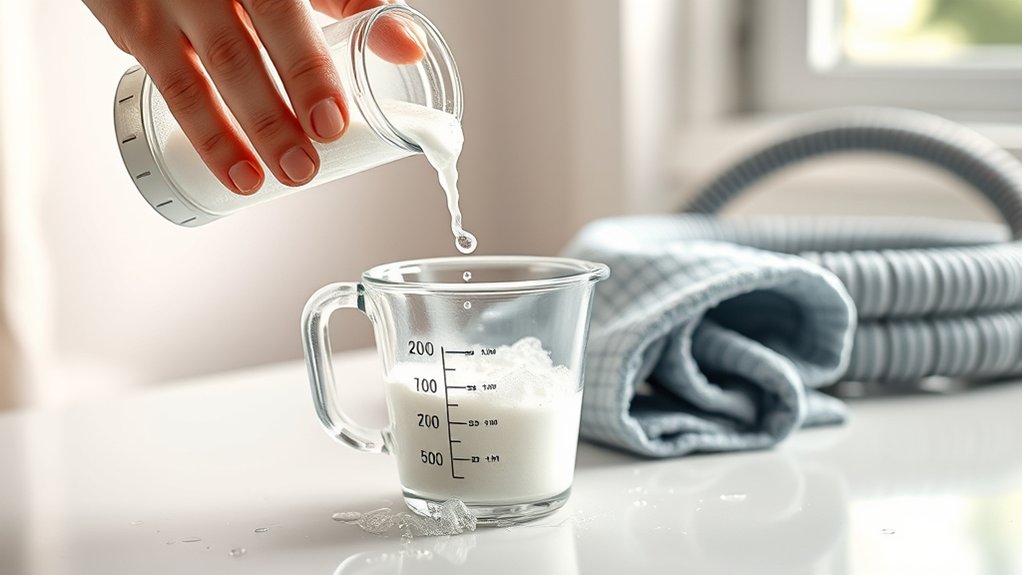
Although better alternatives exist, you might still choose to use laundry detergent for carpet cleaning. To prepare the detergent solution properly and minimize residue, follow these steps:
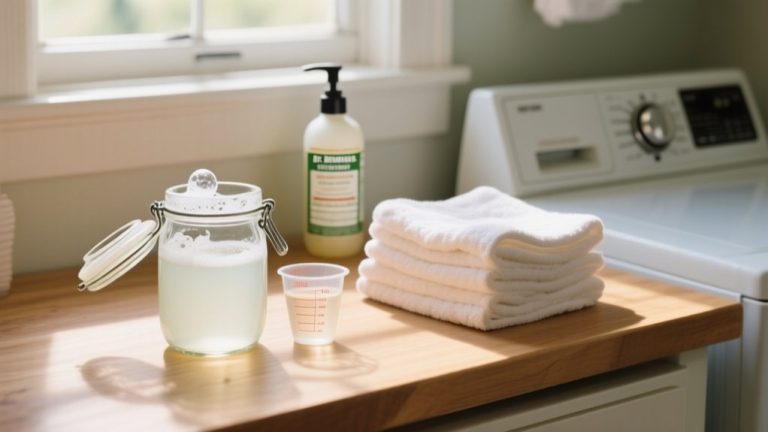
- Dissolve one tablespoon of HE liquid laundry detergent in a quart of warm water for safe dilution.
- Always perform a patch test on a hidden carpet spot to verify colorfastness before full cleaning.
- Mix the solution thoroughly in a bucket, then pour it into your carpet cleaner’s tank.
- After cleaning to remove carpet stains, rinse the carpet with clean water or a white vinegar solution to neutralize detergent residue.
This preparation helps you use laundry detergent effectively while protecting your carpet and optimizing cleaning results.
How to Use Laundry Detergent Safely: Step-by-Step
Using laundry detergent safely for carpet cleaning involves a few essential steps to protect your carpet and achieve the best results.
First, vacuum the carpet thoroughly to remove dirt and debris.
Begin by thoroughly vacuuming the carpet to eliminate all dirt and debris.
Next, dilute liquid laundry detergent, preferably a High-Efficiency (HE) formula, using about 1 tablespoon per quart of water.
Always perform a patch test on a hidden area to confirm the cleaning agents won’t harm or discolor your carpet.
Apply the mixture gently, then rinse the area with clean water or a white vinegar solution to neutralize any detergent residue.
Finally, allow carpets to dry completely by ensuring good ventilation and avoiding walking on the wet areas.
This careful process helps clean effectively while preserving your carpet’s appearance and longevity.
Tips to Prevent Residue and Carpet Damage
To prevent residue and damage when cleaning carpets with laundry detergent, you need to choose the right type and use it properly. Not all detergents are safe. Some detergents contain additives that can harm fibers or leave buildup.
Follow these tips:
- Use only HE liquid laundry detergent to minimize suds and residue.
- Dilute detergent properly—1 tablespoon detergent per quart of water—to avoid sticky buildup.
- Always perform a patch test in an inconspicuous spot to verify no damage or discoloration.
- Rinse thoroughly with clean water after cleaning to remove dirt and neutralize leftover detergent.
Avoid using powdered or excessive detergent amounts. Proper use helps you clean effectively without risking carpet damage or residue buildup.
Frequently Asked Questions
Can Laundry Detergent Clean Pet Stains as Effectively as Carpet Cleaner?
No, laundry detergent won’t clean pet stains as effectively as a carpet cleaner.
You’ll find that laundry detergent can leave residues that attract more dirt and might even damage your carpet fibers or cause color fading.
Carpet cleaners are specially formulated with enzymes and antimicrobial agents to break down stains and odors thoroughly.
For the best results, stick to products designed specifically for pet stains and odors to keep your carpet fresh and clean.
Does Laundry Detergent Affect Carpet Cleaning Machine Lifespan?
Yes, using laundry detergent can shorten your carpet cleaning machine’s lifespan.
The excessive suds it creates can damage internal parts, clog hoses, and filters, reducing efficiency.
You’ll likely face more frequent maintenance and possible breakdowns.
Plus, using non-approved detergents often voids warranties, leaving you responsible for costly repairs.
To keep your machine running smoothly longer, stick to cleaners made specifically for carpet machines.
How Does Laundry Detergent Impact Carpet Drying Time?
Laundry detergent can considerably increase your carpet’s drying time because it creates excessive suds that trap moisture in the fibers.
When you use too much detergent, it leaves a sticky residue that attracts dirt and holds onto water longer, making your carpet feel damp.
To speed up drying, you’ll need to rinse thoroughly with clean water or a vinegar solution to remove detergent residues and help moisture evaporate faster.
Are Homemade Carpet Cleaning Solutions Better Than Laundry Detergent?
Yes, homemade carpet cleaning solutions are often better than laundry detergent. You’ll avoid residue buildup and harsh chemicals that can damage carpet fibers or cause discoloration.
Homemade mixes like vinegar and water are gentle, pH-neutral, and effectively neutralize odors without leaving suds that might harm your carpet cleaner.
Plus, baking soda helps lift stains naturally.
Using these safer options protects your carpet and keeps your machine running smoothly.
Can Laundry Detergent Cause Allergies or Skin Irritation From Carpets?
About 15% of people with sensitive skin experience irritation from household cleaning residues.
Yes, laundry detergent can cause allergies or skin irritation when used on carpets. Its fragrances, dyes, and enzymes often linger in fibers, triggering reactions, especially if you have eczema or dermatitis.
To protect yourself, use carpet-specific cleaners and ventilate the room well during and after cleaning.
This reduces harmful residue and keeps your skin safe.
Conclusion
You might think laundry detergent is a magic fix for carpet cleaning, but it’s not always the best choice. Using it carelessly can leave residues or damage your carpet beyond belief.
If you decide to use it, dilute properly and follow safe steps to protect your floors. Still, it’s wiser to opt for products made specifically for carpets. That way, you’ll keep your carpet fresh without any unexpected disasters.