How To Use Castile Soap For Laundry – Quick Guide
You can use Castile soap as a gentle, plant-based laundry detergent by diluting it properly, about 1/3 to 1/2 cup for regular washers or 2-4 tablespoons for HE machines. Add ½ cup vinegar during the rinse cycle to soften fabrics and prevent soap residue.
For delicates, dilute a capful in cold water and use a gentle cycle. Store mixtures in airtight containers away from heat. Following these tips guarantees clean, soft laundry. There’s plenty more to help you master Castile soap use.
Key Takeaways
- Dilute Castile soap properly: use 1/3 to 1/2 cup for regular machines, 2-4 tablespoons for HE washers per load.
- Add ½ cup vinegar during rinse to break down soap residue and soften fabrics without mixing it directly with soap.
- For delicate fabrics, dilute one capful in cold water, test a small area, use gentle cycle, and lay flat to dry.
- Store diluted soap in airtight containers, label with date and ratio, keep cool and dark, and use within two weeks.
- Pre-treat tough stains with a 1:1 Castile soap and water mix or baking soda, then rinse with vinegar for best results.
What Is Castile Soap and Why Use It for Laundry

Castile soap is a plant-based, biodegradable soap originally from Spain that you can use to clean your laundry effectively and eco-consciously. Made from natural oils like olive, coconut, and hemp, this versatile soap serves as a gentle laundry detergent that’s safe for septic systems and the environment.
Because it’s hypoallergenic and free from synthetic fragrances, dyes, and harsh surfactants, Castile soap reduces the risk of skin irritation, making it ideal if you have sensitive skin.
Its low-sudsing formula works well in both high-efficiency and standard washing machines, ensuring thorough cleaning without excessive foam.
Plus, using Castile soap regularly helps maintain fabric integrity, gently caring for delicate materials like silk and wool while providing a natural, cost-effective cleaning alternative.
Choosing the Best Castile Soap for Laundry
When selecting the best soap for your laundry, you’ll want to prioritize a product that’s both gentle and effective. Choose a 100% plant-based Castile soap free from synthetic fragrances and dyes to protect your fabrics and skin.
Brands like Dr. Bronner’s stand out for their biodegradable formulas, ensuring eco-friendly use and safety for septic systems.
Opt for a low-sudsing Castile soap, especially if you use a high-efficiency washing machine, to prevent excess foam.
Look for natural oils such as olive or coconut oil in the ingredients, which boost cleaning power without harshness.
Finally, consider the soap’s concentration; highly concentrated soaps need proper use to avoid residue buildup.
Selecting the right Castile soap balances cleaning strength with gentle care and environmental responsibility.
Castile Soap Dilution Ratios for Washing Machines

Choosing the right soap is just the start; knowing how to dilute it properly guarantees your laundry gets clean without excess suds or residue.
When using Castile soap in your washing machine, keep these dilution ratios in mind:
- For regular machines, use 1/3 to 1/2 cup of Castile soap diluted with water per load.
- In HE washers, opt for 2-4 tablespoons of diluted Castile soap to prevent too many suds.
- Prepare a pre-diluted mixture of 1 part Castile soap to 10 parts water and store it in a sealed container for easy use.
During the rinse cycle, adding 1/2 cup of vinegar helps remove residue without mixing it directly with the soap, preserving both their effectiveness.
Using Vinegar to Boost Castile Soap Laundry Power
Although vinegar isn’t a detergent, adding ½ cup during the rinse cycle can greatly boost your laundry’s cleanliness by breaking down Castile soap residue. This simple step helps prevent buildup, ensuring your clothes feel fresh and clean.
Vinegar also acts as a natural fabric softener, reducing static cling and making fabrics softer. When combined properly, Castile soap and vinegar work together to deodorize your laundry, tackling stubborn odors effectively.
Just remember not to mix vinegar directly with Castile soap in the wash cycle to avoid curdling.
For tough stains, pre-treat with a Castile soap and baking soda mixture, then follow with a vinegar rinse during the rinse cycle for maximum stain removal and freshness.
This method keeps your laundry routine both natural and effective.
Preparing a Pre-Diluted Castile Soap Laundry Solution
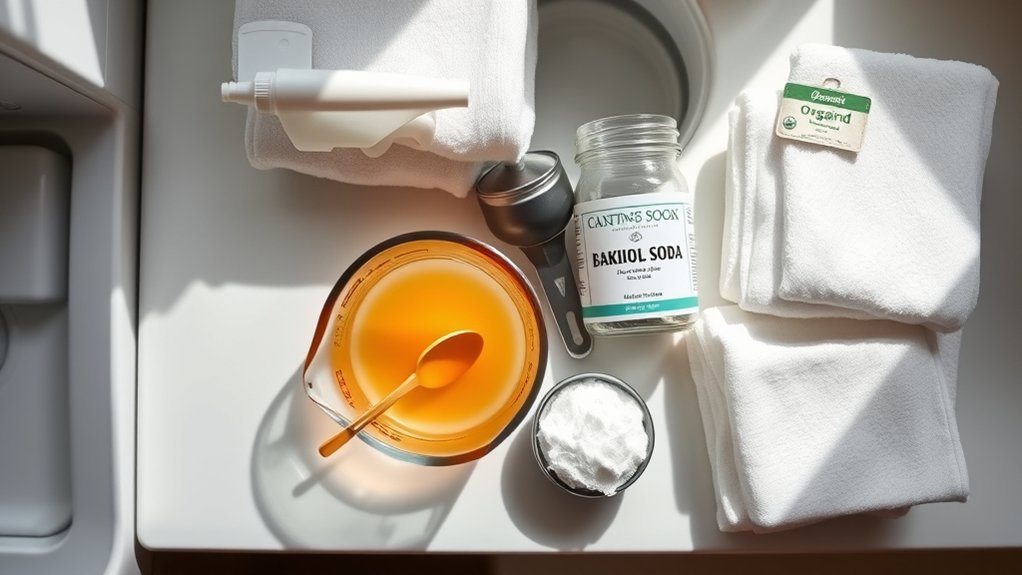
Mixing one part Castile soap with ten parts water creates a convenient pre-diluted laundry solution that saves time and guarantees consistent cleaning power.
To prepare this solution, combine the soap and water in a sealed container, then shake gently to mix.
Store it in an airtight container and use within two weeks for best results.
When it’s time to wash, follow these guidelines:
- Use 1/3 to 1/2 cup of the pre-diluted solution for regular washing machines.
- For HE washers, use 2 to 4 tablespoons per load.
- Always shake the container before each use to keep the solution well mixed.
Avoid mixing vinegar directly with this solution, as it can cause curdling and reduce effectiveness.
Washing Clothes With Castile Soap: Step-By-Step
First, you’ll want to prepare the right dilution of Castile soap. This helps avoid any residue and makes sure your clothes get properly cleaned.
Next, adjust your washing machine settings depending on the size of your load and how hard your water is — this really makes a difference in the results.
Then, once the washing is done, try adding some vinegar during the rinse cycle. It’s a simple step that keeps your clothes smelling fresh and even helps keep your machine clean.
Preparing Soap Dilution
When preparing Castile soap for laundry, you’ll want to dilute it properly to avoid residue buildup and guarantee even cleaning. Start by following the ideal dilution ratio: mix Castile soap with water at 1:10. This helps the soap distribute evenly and prevents any leftover residue in your washer.
Keep these key points in mind:
- Use 1/3 to 1/2 cup of Castile soap per regular load or 2–4 tablespoons for HE washers, always diluted.
- For tough stains treatment, pre-treat the stain with a 1:1 diluted Castile soap or add baking soda for extra power.
- Add a ½ cup vinegar rinse in a separate cycle to break down soap residue without mixing vinegar and soap.
This approach guarantees effective, residue-free cleaning every time.
Washing Machine Settings
Choose the right washing machine cycle based on your fabric type to get the best results with Castile soap. Use a gentle cycle for delicate fabrics and a standard cycle for regular laundry.
If you have a high-efficiency washing machine, add 2-4 tablespoons of diluted Castile soap into the detergent tray to avoid excess suds. Remember to dilute the soap with water at a 1:10 ratio before pouring it in, preventing residue buildup.
During the rinse cycle, add ½ cup of vinegar to break down any leftover soap and soften your clothes.
Regularly run a hot water cycle with vinegar in your washing machine to maintain its performance and stop soap buildup, ensuring your laundry stays fresh and clean every time.
Post-Wash Care
Although washing with Castile soap effectively cleans your clothes, proper post-wash care guarantees they stay fresh and soft.
To prevent soap residue buildup and maintain fabric quality, follow these key steps:
Add half a cup of vinegar during the rinse cycle to remove any lingering soap residue and naturally soften your fabrics.
Regularly check fabric compatibility by testing Castile soap on delicate items to avoid damage or discoloration.
Run a hot water cycle with vinegar every few months to clean your washing machine and prevent soap buildup.
Tips for Washing Delicate Fabrics With Castile Soap
Delicate fabrics require extra care to stay looking their best, and using Castile soap is a gentle way to clean them without causing damage. Dilute one capful of Castile soap in cold water to wash your delicate fabrics safely.
Always test a small, hidden spot first to avoid surprises. Use the gentle cycle on your washing machine and place items in a mesh laundry bag for added protection.
Avoid mixing vinegar directly with Castile soap, but you can add vinegar during the rinse cycle to soften fabrics without causing curdling.
After washing, lay your delicates flat to dry, preserving their shape and preventing stretching. Following these tips guarantees your delicate fabrics stay fresh and intact while benefiting from Castile soap’s natural cleaning power.
How to Store and Maintain Your Castile Soap Mixtures
To keep your Castile soap mixtures effective, it’s best to store them in airtight containers.
Make sure to label each container with the dilution ratio and the date you prepared it. This way, you’ll always know what’s inside and how fresh it is.
Try to keep your mixtures in a cool, dark spot. Heat and light can cause the soap to break down, so a cupboard or drawer works well.
It’s a good idea to use your mixtures within a couple of weeks.
Keep an eye out for any changes in color, scent, or texture—these can be signs that the soap has gone bad. That way, you’ll always have a fresh, effective product on hand!
Proper Storage Techniques
When you store your diluted Castile soap mixtures in airtight containers, you help prevent contamination and extend their shelf life. Ideally, use them within a couple of weeks.
To properly store and maintain your Castile soap mixtures, follow these key steps:
- Label each container with the dilution ratio and preparation date to track freshness and effectiveness.
- Store the containers in a cool, dark place to protect the soap from heat and light, which can degrade its quality.
- Regularly inspect your mixtures for any changes in odor, appearance, or separation, and discard any that show spoilage.
Avoid mixing Castile soap with vinegar during storage, as it can cause curdling and reduce cleaning power.
Using these proper storage techniques guarantees your soap stays effective and ready for laundry use.
Shelf Life Considerations
Proper storage sets the foundation for maintaining the quality of your Castile soap mixtures, but understanding their shelf life is just as important to keep them effective.
When using pre-diluted Castile soap, store it in airtight containers to prevent contamination and preserve its cleaning power.
Keep these containers in a cool, dark place, as heat and light shorten their shelf life. For ideal cleaning, use your pre-diluted mixtures within a couple of weeks to avoid bacterial growth.
Label each container with the dilution ratio and preparation date so you can track freshness easily.
By following these shelf life considerations, you’ll maintain your soap’s effectiveness and guarantee your laundry gets the best clean every time.
Avoid mixing vinegar directly to protect your solution’s integrity.
Preventing Soap Degradation
Although Castile soap is naturally durable, you’ll need to store your mixtures carefully to prevent degradation and keep them effective. To maintain effectiveness and extend shelf life, follow these simple steps for preventing soap degradation:
- Store pre-diluted Castile soap in airtight containers away from direct sunlight and heat to avoid accelerated breakdown.
- Label each container with the dilution ratio and preparation date to facilitate proper usage and monitor freshness.
- Regularly inspect mixtures for separation or changes in consistency, which signal loss of potency.
For longer shelf life, keep concentrated Castile soap in a cool, dark place and dilute only when ready to use. This approach helps you preserve your soap’s cleaning power and assures consistent laundry results.
Avoid Common Castile Soap Laundry Mistakes
Because Castile soap is highly concentrated and natural, you’ll need to handle it carefully to avoid common laundry mistakes.
First, always dilute Castile soaps before adding them to your washing machines. Using undiluted soap can cause residue buildup, harming machine performance and fabric care.
Stick to proper ratios: for regular washers, use 1/3 to 1/2 cup of diluted soap per load; for HE machines, only 2-4 tablespoons are needed.
Also, avoid mixing Castile soap directly with vinegar, as this causes curdling and reduces cleaning power.
To keep your machine running smoothly, run occasional hot cycles with vinegar separately to clear soap buildup.
Following these practical steps guarantees effective cleaning without damaging your washing machines or clothes.
Fixing Castile Soap Laundry Problems
If you notice soap scum buildup or residue on your clothes, don’t worry—adjusting how you use Castile soap can make a big difference.
It’s all about using the right amount and adding a little vinegar during the rinse cycle; this helps clear away any leftover soap effectively.
And if you’re dealing with tough stains, try pre-treating them with a Castile soap mixture or some baking soda.
This boosts the cleaning power without harming your fabrics, so your clothes come out fresh and clean every time.
Common Soap Issues
Three common issues can arise when using Castile soap for laundry: residue buildup, soap scum, and suds control. You need to be mindful of these to keep your laundry fresh and machines running smoothly.
1. Residue Buildup: Using too much Castile soap causes residue buildup, especially in HE washers.
Stick to 1/3 to 1/2 cup for regular machines and 2-4 tablespoons for HE washers to avoid this problem.
2. Soap Scum: Soap scum can form on clothes or inside your washer, particularly if you have hard water.
Running a hot wash with vinegar regularly helps reduce soap scum.
3. Suds Control: In HE washers, suds must stay below one-third of the window.
Over-sudsing can damage your machine, so always measure the soap carefully.
Effective Problem Solutions
Addressing common issues like residue buildup, soap scum, and suds control starts with knowing how to adjust your use of Castile soap effectively.
If you notice soap scum buildup in your machine, reduce the amount of Castile soap and rinse with vinegar during the rinse cycle to break down residue.
For tough stains, pre-treat with a 1:1 mix of Castile soap and water or add ¼ cup of baking soda to boost cleaning.
When using high-efficiency washers, stick to 2-4 tablespoons of diluted Castile soap per load to avoid suds lock errors.
If clothes feel stiff or have residue, increase rinse cycles and rinse with vinegar.
Store diluted soap in a sealed container and use it within two weeks for best results.
Frequently Asked Questions
Can Castile Soap Be Used for Hand-Washing Clothes?
Yes, you can use Castile soap for hand-washing clothes. Just mix a capful in a gallon of cold water to create a gentle cleaning solution.
Soak your clothes for 10-15 minutes, then gently agitate and rinse thoroughly to avoid residue.
For tough stains, apply undiluted soap directly before washing.
Always rinse well to keep your clothes soft and prevent skin irritation.
Is Castile Soap Safe for Baby Clothes?
Yes, Castile soap is safe for baby clothes. Since it’s hypoallergenic and free from synthetic fragrances, it won’t irritate your baby’s sensitive skin.
You should use about 1/2 cup for a large load and make sure to dilute it properly to avoid residue. Always rinse thoroughly to remove any soap remnants.
Choosing unscented or mild varieties helps minimize allergic reactions, making it a gentle, eco-friendly option for your little one’s laundry.
How Does Castile Soap Affect Fabric Colors?
Funny enough, you might notice Castile soap brightens your whites but slowly fades your favorite dark shirt if you’re not careful.
It’s gentle, but its natural ingredients can dull vibrant colors over time.
To keep colors crisp, always dilute the soap properly and test on a small patch first.
Adding a bit of vinegar during the rinse helps set colors, so your clothes stay fresh and vibrant longer.
Can Castile Soap Remove Tough Stains?
Yes, Castile soap can remove tough stains effectively. You’ll get better results by mixing it with ¼ cup of baking soda for extra cleaning power.
For stubborn stains, apply a 1:1 diluted solution directly to the spot before washing.
Because it’s gentle, you can safely use it on delicate fabrics without worrying about damage.
This makes it a natural and reliable choice for tackling grime while preserving your clothes.
Does Castile Soap Work With Hard Water?
Yes, Castile soap works with hard water, but you’ll want to tweak your routine a bit.
Adding baking soda softens the water and boosts cleaning power. You might need to use a little more soap to tackle mineral buildup.
To avoid residue, add vinegar during the rinse cycle.
Also, keep your washer clean by running hot cycles with vinegar regularly. This helps Castile soap perform well even in hard water conditions.
Conclusion
By embracing Castile soap for your laundry, you’re choosing a gentle yet effective ally that treats your clothes with care. Just remember to dilute properly and use vinegar to enhance its magic.
Handle delicate fabrics thoughtfully and store your mixtures wisely to avoid surprises. With these mindful steps, your laundry routine transforms into a simple, eco-friendly ritual, one that leaves your garments fresh without any hidden complications.
You’re set for success every wash.