What Is The Best Whitener For Laundry? – Quick Answer
The best laundry whitener effectively breaks down stains while protecting fabrics and the environment. You’ll want to choose oxygen-based whiteners like OxiClean White Revive for safe, strong cleaning without harsh chemicals.
Natural boosters such as baking soda and borax also improve brightness and detergent performance without damage. Avoid chlorine bleach to preserve fabric integrity.
Using these options with proper washing techniques maximizes results and longevity. Exploring whitening methods deeper reveals smarter choices for your laundry routine.
Key Takeaways
- Oxygen-based whiteners like OxiClean White Revive effectively remove stains without harsh fabric damage.
- Natural options such as baking soda and vinegar safely enhance whiteness and neutralize odors.
- Avoid chlorine bleach due to fabric degradation and toxic fumes despite its strong whitening power.
- Pre-soaking whites with borax and powdered detergent improves stain removal and brightness.
- Drying whites in direct sunlight utilizes UV rays for natural and chemical-free whitening.
What Makes a Laundry Whitener Work?
Anyone looking to brighten their laundry should understand how whitening agents work at a chemical level. Whitening products achieve stain removal by breaking down discoloration through oxidation or pH adjustment.
Chlorine bleach uses strong oxidation to dissolve tough stains but can degrade fabrics and release harsh chemicals.
Oxygen-based whiteners, such as sodium percarbonate, release oxygen in water, lifting stains effectively while being gentler and more compatible with eco-friendly methods.
Alkaline agents like borax raise wash pH, boosting detergent efficiency and facilitating stain breakdown.
Optical brighteners don’t remove stains; instead, they absorb UV light and emit visible light, counteracting detergent residue and fabric dullness by creating an illusion of enhanced whiteness.
Understanding these mechanisms helps you select the best whitener for fabric care and environmental considerations.
Why Baking Soda Is the Best Laundry Whitener
Three key attributes make baking soda the best laundry whitener: its stain-removal efficacy, fabric safety, and compatibility with detergents.
Baking soda effectively whitens clothes by enhancing detergent performance. Adding just half a cup to your wash cycle brightens white fabrics and tackles heavily soiled items without damage.
Its alkaline nature neutralizes odors and breaks down stains, functioning as a reliable stain remover. You can also create a spot treatment paste by mixing one tablespoon of baking soda with water to target specific stains immediately.
Unlike harsh chemicals, baking soda is safe for all fabrics and washing machines. This ensures you clean your washing without risk.
Its versatility and cost-effectiveness make baking soda indispensable for maintaining bright whites, delivering superior results through soaking or direct application alongside detergent.
Comparing Popular Laundry Whiteners and Risks
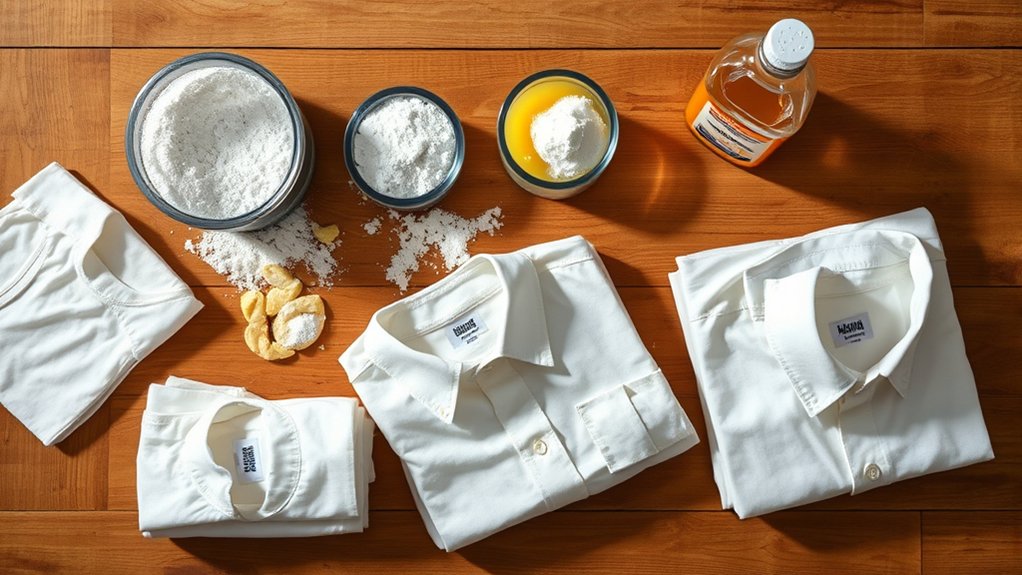
While baking soda stands out for its safety and effectiveness, it’s important to evaluate other popular laundry whiteners to understand their benefits and drawbacks.
Bleach whitens white garments efficiently but risks fabric damage and toxic fumes, especially if mixed improperly.
Hydrogen peroxide, despite common use, scores poorly due to staining issues, making it unsuitable for regular laundry.
Dishwasher detergent can reverse yellowing but may cause washing machine drum buildup and harm delicate fabrics.
Commercial products like OxiClean White Revive deliver reliable whitening without the harshness of bleach. Unlike fabric softener, which doesn’t whiten, these agents actively target stains and discoloration.
You should balance whitening power with potential risks to your fabrics and machine, ensuring you choose the whitener that aligns with your laundry needs and equipment maintenance.
Safe Natural Ingredients for Laundry Whitening
You can brighten your fabrics by adding baking soda to your wash. It raises the pH of the water, which helps break down stains more effectively.
Then, when it’s time to rinse, try adding some white vinegar. It not only neutralizes odors but also works as a natural brightener by dissolving any leftover residues.
Another great ingredient is borax. It softens the water, making your detergent work better. This means stains come out easier and your whites stay bright for longer.
Using these natural boosters can really make a difference in your laundry routine!
Baking Soda Benefits
Baking soda offers multiple benefits as a safe, natural whitening agent for laundry. When you add half a cup of baking soda to your laundry routine, it enhances cleaning by removing stains and brightening whites without harming fabric fibers.
This non-toxic cleaning solution also neutralizes odors, ensuring fresh-smelling laundry. For spot treatment, mix one tablespoon of baking soda with water to target stains directly.
Baking soda’s versatility suits both regular and delicate fabrics, making it an essential element in effective stain removal and whitening.
| Benefit | Application | Effect |
|---|---|---|
| Whitening agent | Add ½ cup to wash | Brightens whites |
| Stain removal | Paste spot treatment | Removes stains |
| Odor control | Added in laundry | Neutralizes odors |
| Fabric safe | All fabric types | No damage to fibers |
| Versatile use | Regular or delicate | Enhances cleaning power |
Vinegar Whitening Effects
Because white vinegar neutralizes alkaline residues left on fabrics, it effectively restores brightness and prevents dullness in your laundry.
Using distilled white vinegar as a natural whitening agent enhances fabric brightness and stain removal without harsh chemicals. When you add half a cup of vinegar to your wash cycle, it breaks down detergent residues and tackles stains efficiently.
Consider these key effects of vinegar whitening for laundry:
- Restores bright whites by neutralizing alkaline build-up on fabrics.
- Removes detergent residues that cause fabric dullness.
- Safely whitens most fabrics, including colors, without damage.
- Works synergistically with baking soda to boost stain removal naturally.
This makes vinegar a sustainable, effective option for maintaining fabric integrity and brightness.
Borax Cleaning Power
Borax, a naturally occurring mineral known as sodium borate, boosts laundry detergent effectiveness by increasing the pH level, which enhances stain removal and fabric brightness.
When you add borax to your wash, it acts as a water softener, preventing mineral deposits that dull white clothes. This increased cleaning power helps combat yellowing and greying without the harshness associated with bleach.
Borax is safe for most fabrics and effectively breaks down protein-based stains while neutralizing odors.
Incorporating just ½ cup of borax alongside your regular laundry detergent markedly improves whiteness and stain removal.
Its dual function, enhancing detergent action and maintaining brightness, makes borax a reliable, safe natural ingredient for maintaining bright, white clothes over time.
Best Ways to Use Laundry Whiteners Safely
When you want to maintain the brightness of your whites, it’s important to separate them from colored items to prevent dye transfer during washing.
To keep your white clothes bright and in peak condition, follow these key steps:
- Always wash whites separately to prevent dye contamination and maintain brightness.
- Use Oxygen Brightener products and natural whiteners like baking soda to enhance whitening safely during a regular wash.
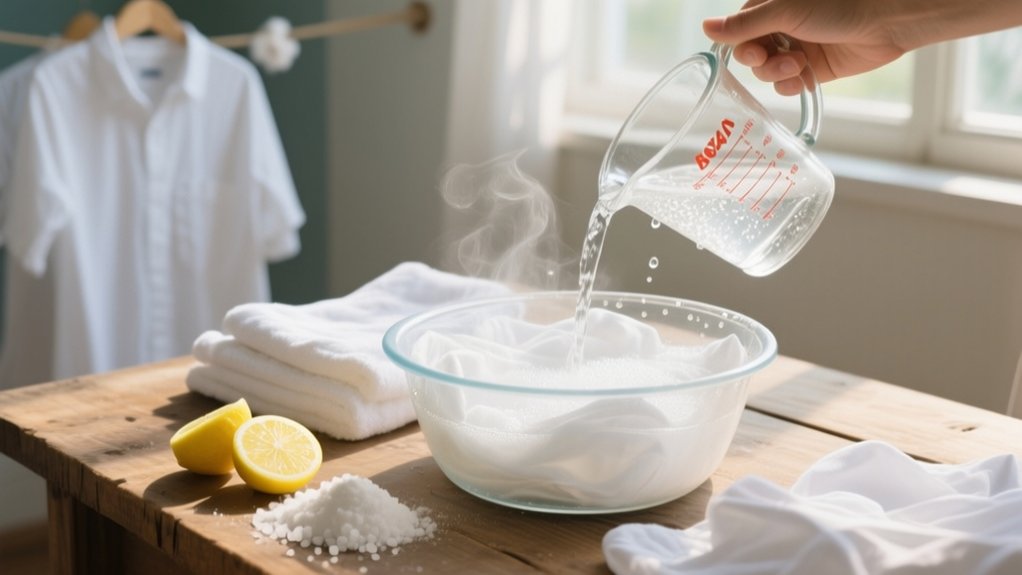
- Incorporate a pre-soak with powdered detergent and borax in hot water for at least 4 hours to boost stain removal.
- Dry whites in direct sunlight when possible, as UV rays naturally whiten fabrics without damage.
These practices guarantee effective whitening while protecting fabric integrity and preventing discoloration.
Common Whitening Mistakes and How to Avoid Them
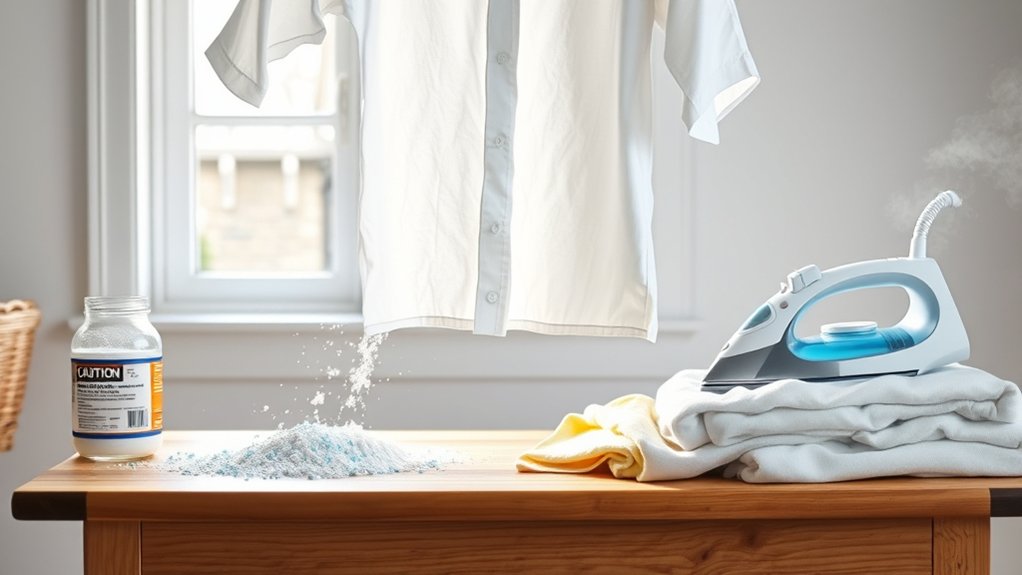
Maintaining bright whites requires more than just choosing the right whitening products and following safe usage methods. To keep your white clothes vibrant, avoid overloading the washer. Overloading compromises the wash cycle’s effectiveness and increases fabric wear.
Use detergent according to manufacturer guidelines; excess detergent can leave residues that dull whites. Always separate whites from colored items to prevent dye transfer and discoloration. Wash whites separately to avoid this issue.
Pre-treat organic stains with spot treatments or soak them because neglecting this reduces whitening success. Incorporate baking soda during the wash cycle to boost cleaning power gently without harsh chemicals.
Finally, guarantee a thorough rinse cycle to remove residues completely. Ignoring these factors undermines whitening efforts and damages fabric integrity.
Top Laundry Whitener Products to Try in 2024
Although selecting the right whitener can be challenging, understanding the specific formulations and applications of top products in 2024 will help you make an informed choice. You want a product that effectively addresses yellowing while brightening whites and ensuring stain removal.
Choosing the right whitener means knowing how top 2024 products tackle yellowing and stains effectively.
Consider these options:
- OxiClean White Revive uses oxygen bleach for powerful stain removal and brightening without harsh chemicals.
- Mrs. Stewart’s Bluing adds a blue tint to neutralize yellowing, restoring whiteness in fabrics.
- Nellie’s All-Natural Oxygen Brightener is eco-friendly, with natural ingredients that maintain fabric integrity while enhancing whiteness.
- Vanish Oxi Action Powder is particularly effective for soaking greyed whites before washing, resulting in noticeable brightening.
For targeted use, Dr. Beckmann Glowhite Ultra sachets also revive white garments efficiently when added during the wash cycle.
Frequently Asked Questions
Can Laundry Whiteners Damage Delicate Fabrics?
Yes, laundry whiteners can damage delicate fabrics. You should avoid harsh chemicals like chlorine bleach, which can weaken fibers, cause tears, or discolor materials such as silk and lace.
Using these agents improperly risks fabric integrity. Instead, always check care labels and opt for gentler alternatives like baking soda or vinegar.
These maintain brightness without compromising fabric strength or texture, ensuring your delicate garments last longer and retain their original appearance.
How Often Should I Use a Laundry Whitener?
You should use a laundry whitener every 4 to 6 washes, adjusting based on fabric type and stain severity.
For heavily yellowed or soiled items, apply whitener with each wash until brightness improves.
Avoid frequent use on delicate fabrics to prevent fiber weakening.
Always follow the whitener’s instructions, as formulations vary in recommended frequency.
Incorporate maintenance steps like separate washing and pre-soaking to minimize the need for frequent whitening.
Do Laundry Whiteners Work in Cold Water?
Yes, laundry whiteners can work effectively in cold water when you use formulations designed for low temperatures.
These products often contain enzymes and surfactants optimized to break down stains and brighten fabric fibers without heat.
To maximize results, you should select whiteners labeled for cold water use and consider pre-soaking garments.
This allows the active ingredients to penetrate stains and maintain fabric brightness while conserving energy and protecting delicate materials.
Can I Mix Laundry Whitener With Detergent?
Over 60% of consumers combine laundry whitener with detergent to boost cleaning efficiency. Yes, you can mix them, but you need to follow manufacturer instructions carefully.
Using the correct ratio optimizes stain removal and brightness without damaging fibers.
Check compatibility between your whitener and detergent to avoid adverse reactions. Always test a small load first to prevent fabric dulling or buildup.
Precision in mixing guarantees effective, safe whitening every wash.
Are Laundry Whiteners Safe for Septic Systems?
Laundry whiteners can harm septic systems if they contain chlorine bleach. This chemical disrupts beneficial bacteria that are essential for breaking down waste.
You should opt for oxygen-based bleach alternatives. They degrade into harmless compounds and help preserve the bacterial balance in your system.
Always check product labels for septic-safe certifications. Follow dosing instructions carefully to avoid overwhelming the system.
Regular septic maintenance also helps minimize damage from any chemical usage. This ensures long-term functionality of your septic system.
Conclusion
When aiming for that pristine brilliance, you’ll find baking soda stands out as a gentle yet effective ally in your laundry routine. While some commercial whiteners may promise dramatic results, they often come with hidden complications.
By choosing safe, natural options and applying them correctly, you can avoid common pitfalls and keep your fabrics looking their best without unnecessary wear. Embrace these subtle enhancements for consistently bright, fresh laundry that quietly impresses.