Can You Mix Baking Soda And Laundry Detergent – Yes or No?
Yes, you can mix baking soda with laundry detergent to boost cleaning power, provided you use the right amounts. Typically, around ½ cup per load works well for regular machines.
Baking soda enhances detergent efficiency by softening water, balancing pH, and deodorizing fabrics. However, too much can reduce detergent effectiveness or cause residue.
To avoid machine or fabric issues, add baking soda directly to the tub and avoid mixing it with vinegar. More details can help you optimize your laundry routine.
Key Takeaways
- Yes, baking soda can be mixed with laundry detergent to enhance cleaning and deodorizing effects.
- Use recommended amounts (e.g., ½ cup per load) to avoid reducing detergent effectiveness or fabric damage.
- Add baking soda directly to the washer tub, not the detergent dispenser, to prevent machine issues.
- Avoid mixing baking soda with vinegar during laundry, as they neutralize each other’s cleaning power.
- Monitor fabric type and washing machine compatibility to maintain optimal cleaning and prevent residue buildup.
Can You Mix Baking Soda With Laundry Detergent?
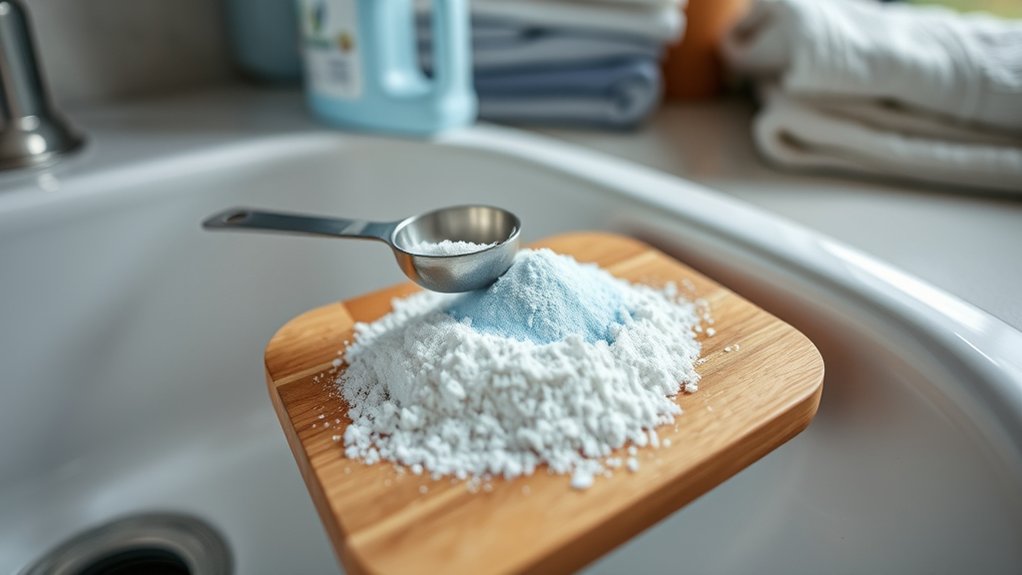
How does mixing baking soda with laundry detergent affect your wash? When you add baking soda to your laundry detergent, you enhance its ability to clean and freshen your clothes.
Baking soda helps balance pH levels and softens the wash water, which improves the detergent’s efficiency. For best results, add about ½ cup of baking soda directly into the washer tub alongside your regular detergent.
This method allows baking soda to work effectively without interfering with the detergent dispenser’s function. You can also reduce the amount of laundry detergent needed, making the process more cost-effective.
However, avoid combining baking soda and vinegar in the same load, as they neutralize each other and diminish cleaning power.
How Baking Soda Boosts Detergent Performance
Adding baking soda to your laundry routine does more than just freshen clothes; it actively enhances detergent performance by adjusting the wash’s pH levels.
Baking soda, a mild alkaline compound, balances pH levels, which improves detergent efficiency in breaking down stains and odors.
Baking soda’s mild alkalinity balances pH, boosting detergent power to tackle stains and odors effectively.
It softens wash water, enabling detergent to penetrate fabric fibers more effectively. This results in better removal of dirt and organic stains.
This synergy reduces detergent usage without compromising cleanliness, making your laundry process more economical.
Furthermore, baking soda prevents mineral buildup in hard water areas, which can otherwise hinder detergent action over time.
How Much Baking Soda To Use With Detergent
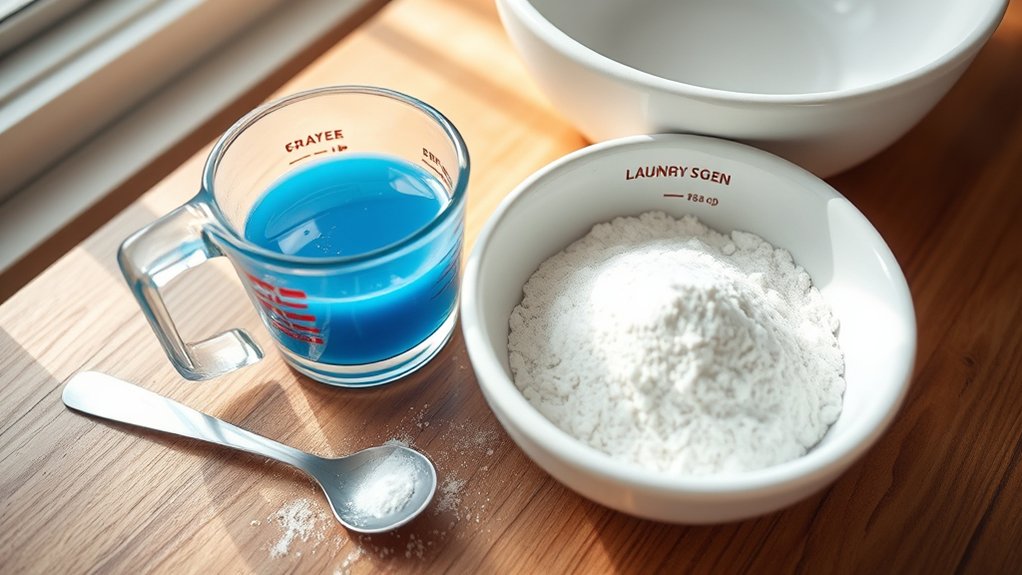
Since the effectiveness of baking soda depends on its quantity, you should add about ½ cup per regular load to enhance cleaning and deodorizing. When using baking soda with laundry detergent, avoid exceeding this amount to prevent residue buildup.
In high-efficiency (HE) washing machines, reduce the quantity to 1/8 cup to maintain machine performance and control suds. For best results, add baking soda directly into the washer drum rather than detergent dispensers for even distribution.
Always check fabric care labels and your washing machine manual before use.
| Washing Machine Type | Baking Soda Amount | Notes |
|---|---|---|
| Regular | ½ cup | Standard load |
| HE | 1/8 cup | Prevents excess suds |
| Large Load | ¾ cup | Adjust for bigger loads |
| Delicate Fabrics | ¼ cup | Use cautiously |
| Mixed Fabrics | ½ cup | General recommendation |
When Mixing Baking Soda And Detergent Can Cause Problems
While using baking soda alongside detergent can seem like a straightforward way to boost cleaning, combining them directly may actually reduce their effectiveness. The high pH of baking soda can interfere with laundry detergent’s ability to target low-pH sensitive stains, lowering overall cleaning efficiency.
Furthermore, excessive baking soda may cause fabric fading and fiber damage, especially in materials like nylon and elastane when hard water is present. Mixing the two can neutralize their benefits, leaving residues on clothing rather than enhancing cleanliness.
In addition, using baking soda during rinse cycles can make fabrics feel rough, counteracting the softening effect of fabric softener.
To avoid these problems, it’s best to use baking soda separately from laundry detergent to maintain the best cleaning results.
Avoid Washing Machine Issues With Baking Soda And Detergent
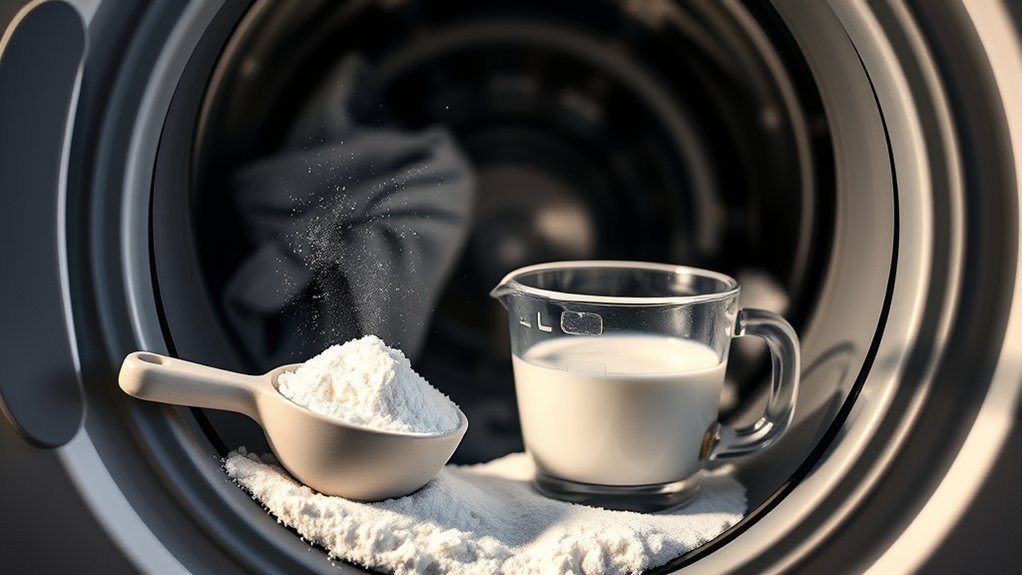
If you want to prevent washing machine issues when using baking soda with detergent, it’s crucial to add the baking soda directly into the washer tub instead of the dispenser.
Adding baking soda to the dispenser can cause clogs or overflow, disrupting the washing machine’s operation.
Using up to ½ cup of baking soda per load enhances laundry detergent effectiveness, softens fabrics, and helps eliminate odors without harming your washing machine.
Regular use also reduces mineral buildup, which prolongs the machine’s lifespan and maintains peak performance.
By carefully integrating baking soda into the wash cycle, you maximize cleaning results and avoid mechanical problems.
This method guarantees your washing machine runs smoothly while benefiting from baking soda’s odor-neutralizing and fabric-softening properties alongside your laundry detergent.
Vinegar Vs. Baking Soda And Laundry Detergent: What Works Best?
Adding baking soda directly into your wash not only boosts detergent performance but also avoids mechanical issues in your machine.
When comparing vinegar, baking soda, and laundry detergent, baking soda enhances cleaning and deodorizing, especially in hard water.
Vinegar serves better as a fabric softener or odor neutralizer but can weaken fibers and affect colors when overused.
Laundry detergent remains the most effective in stain removal and overall cleaning.
Consider these points:
- Baking soda improves detergent efficiency and combats hard water deposits.
- Vinegar can interfere with detergent action and damage pH-sensitive fabrics.
- Detergent alone or combined with baking soda provides a more thorough, odorless clean.
For best results, rely on baking soda and detergent rather than vinegar as your primary laundry aids.
Why You Shouldn’t Mix Vinegar And Baking Soda With Detergent
Because vinegar and baking soda have opposing chemical properties, mixing them with laundry detergent neutralizes their individual cleaning effects. When combined, vinegar’s low pH and baking soda’s high pH cancel each other out, diminishing their respective cleaning properties.
This reaction reduces stain removal efficiency, making the mixture less effective than using each separately. Moreover, vinegar can weaken cellulose fibers, while baking soda may damage protein-based fabrics, risking harm to your laundry.
Excessive use of either also interferes with laundry detergent’s ability to remove odors and tough stains. Although the combination produces a fizzy reaction, it doesn’t enhance cleaning performance.
For best results, rely on laundry detergent alone rather than mixing it with vinegar and baking soda.
Which Fabrics Benefit Most From Baking Soda And Detergent Mixes
Understanding which fabrics respond well to a baking soda and detergent mix can help you optimize cleaning results without risking damage.
You’ll find that cotton and linen benefit most, as the combination enhances cleaning and deodorizing while preserving fiber integrity.
Synthetic fabrics like polyester also respond positively. Baking soda neutralizes odors and softens water, which boosts laundry detergent efficiency.
However, delicate fabrics require care because baking soda has a high pH.
Key fabric types benefiting from this mix include:
- Cotton and linen: improved cleanliness and odor control without harm
- Synthetic fabrics: odor neutralization and enhanced detergent action
- Mixed fabric loads: color preservation and reduced bleach dependence
Using baking soda with laundry detergent is especially effective for these fabrics.
It ensures thorough cleaning and fabric longevity.
The Best Way To Use Baking Soda Separately With Detergent
When you want to boost your laundry’s cleaning power without compromising detergent effectiveness, incorporate baking soda directly into the wash cycle. Add ½ cup of baking soda along with your detergent to enhance stain removal and soften fabrics naturally.
For further softening and odor neutralization, add another ½ cup during the rinse cycle. Avoid mixing baking soda with vinegar, as this reduces cleaning efficiency. Always verify your washer’s compatibility with baking soda.
| Step | Action | Purpose |
|---|---|---|
| 1 | Add ½ cup baking soda | Boost cleaning power |
| 2 | Add detergent | Clean laundry |
| 3 | Wash cycle | Remove stains |
| 4 | Add ½ cup baking soda | Soften fabrics, deodorize |
| 5 | Rinse cycle | Final softening |
Frequently Asked Questions
Can Baking Soda Replace Laundry Detergent Entirely?
You can’t rely on baking soda to replace laundry detergent entirely.
While it deodorizes and softens fabrics, it lacks the surfactants and enzymes needed to break down tough stains and dirt.
Without these cleaning agents, your clothes won’t get thoroughly cleaned, and dirt may redeposit.
For effective stain removal and odor control, you should use baking soda as a supplement to detergent, not a substitute.
Is Baking Soda Safe for Sensitive Skin When Mixed With Detergent?
About 15% of people experience skin irritation from laundry products.
Yes, baking soda is generally safe for sensitive skin when mixed with detergent because it helps balance pH and reduce harsh chemical effects.
You should still rinse thoroughly to avoid residue buildup. If you have very sensitive skin, test treated fabrics first.
Opt for fragrance-free baking soda to minimize allergic reactions while benefiting from its odor-neutralizing and fabric-softening properties.
Does Baking Soda Affect the Color of Clothes?
Yes, baking soda can affect the color of clothes, especially if you use it excessively or on delicate fabrics.
Its mild alkalinity may fade pH-sensitive dyes and damage protein-based fibers like wool and silk, altering their color.
You should use baking soda sparingly and avoid combining it with acidic substances like vinegar.
This careful approach helps preserve your garments’ colors while still benefiting from baking soda’s cleaning properties.
Can Baking Soda and Detergent Be Used in All Types of Washing Machines?
You might wonder if baking soda and detergent work in every washing machine. They do, but with caution.
Baking soda is safe for both regular and HE machines when you add about ½ cup directly into the tub. However, always check your washer’s manual. Some models might have specific restrictions.
Using too much baking soda can cause buildup or fabric stiffness, so precise measurements and proper use are key to avoiding problems.
How Does Baking Soda Impact the Lifespan of Washing Machines?
Baking soda can impact your washing machine’s lifespan both positively and negatively. When used moderately, it softens water, which helps reduce wear on components.
However, excessive use may cause mineral buildup, leading to clogs and decreased efficiency. Its high pH can also damage seals and hoses over time.
To protect your machine, you should follow manufacturer guidelines and avoid overusing baking soda. This way, you ensure peak performance and a longer lifespan.
Conclusion
You can mix baking soda with laundry detergent safely, boosting cleaning power by up to 40%. It helps balance pH and soften water, enhancing stain removal. However, avoid overuse to prevent residue buildup or machine issues.
Remember, combining vinegar with baking soda and detergent isn’t a good idea due to neutralization. For best results, measure carefully and tailor use to fabric types.
This simple addition can make a noticeable difference in your laundry routine.