How Much Baking Soda For Laundry – Quick Answer
For a standard laundry load, you should add ½ cup of baking soda directly into the washer tub to boost cleaning power and neutralize odors effectively. If your clothes are heavily soiled, increase to 1 cup for better results.
Avoid putting it in the detergent dispenser, and don’t mix it with vinegar, as that reduces cleaning power. Using baking soda alongside detergent helps brighten fabrics and freshen your laundry.
Keep exploring for more tips on making the most of baking soda in your wash.
Key Takeaways
- Use ½ cup of baking soda for a standard laundry load to remove stains and odors effectively.
- Increase to 1 cup for heavily soiled clothes to boost cleaning power.
- Add ½ cup during the rinse cycle for extra freshness and fabric softening.
- Avoid putting baking soda in the detergent dispenser to prevent premature dilution.
- Always check your washer’s manual for specific baking soda usage instructions.
How Much Baking Soda to Add Per Laundry Load
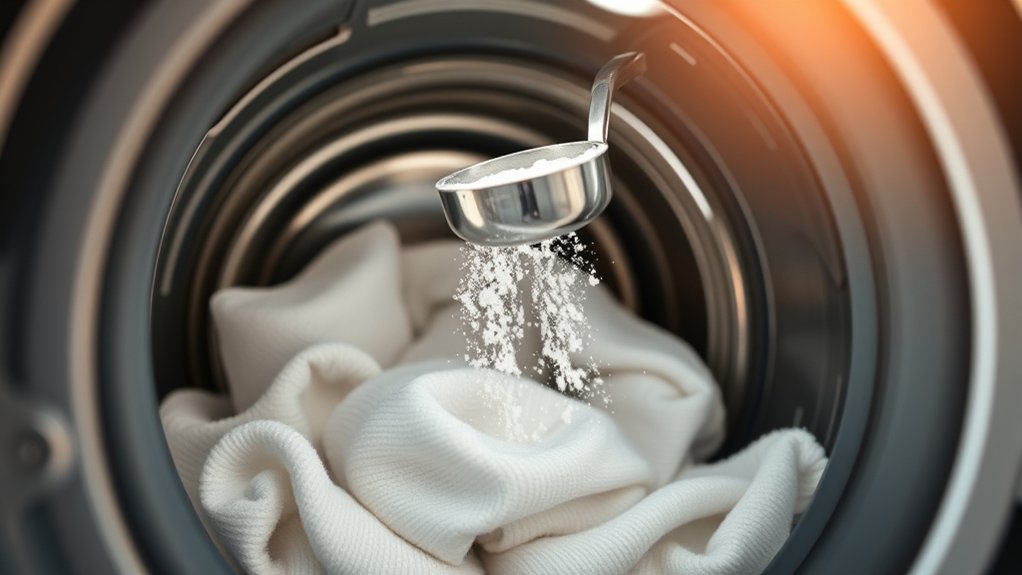
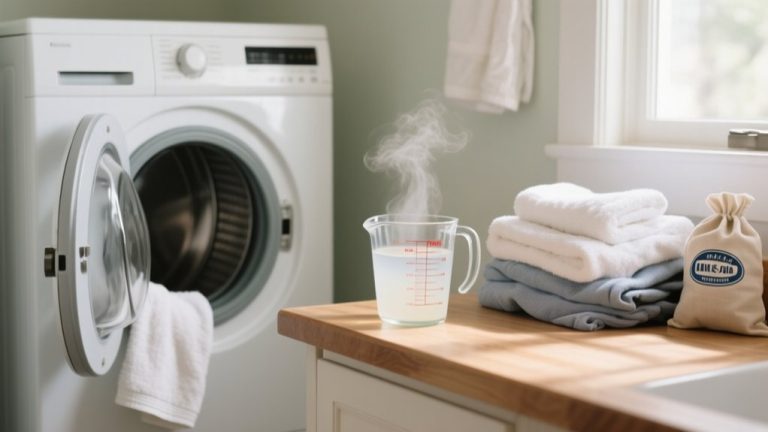
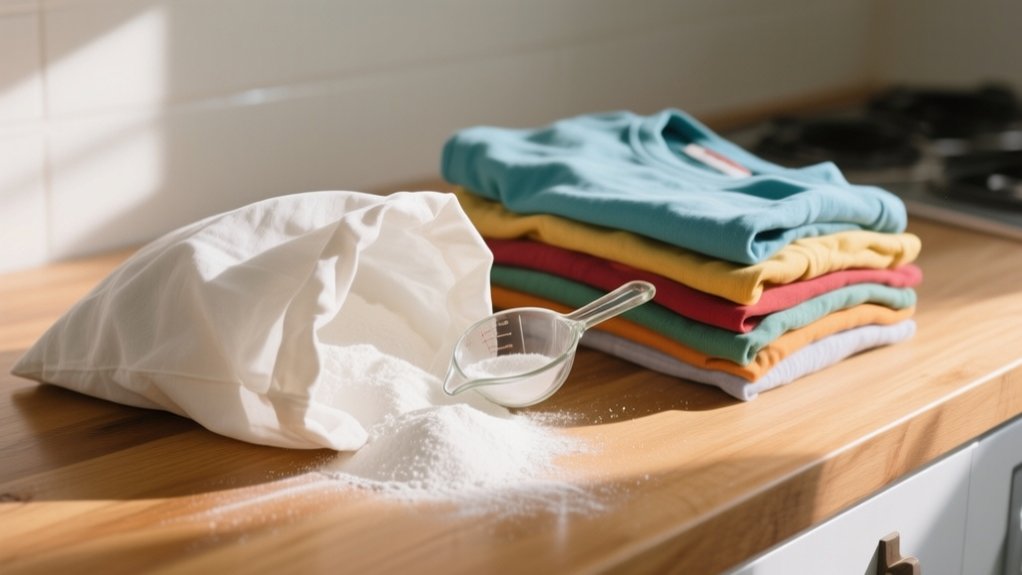
How much baking soda should you add to your laundry load for the best results? For a standard load, add ½ cup of baking soda directly into the washer tub. This amount aids in stain removal and odor neutralization effectively.
Add ½ cup of baking soda to your standard laundry load for effective stain removal and odor neutralization.
If you’re dealing with heavily soiled clothes, consider increasing to 1 cup for enhanced cleaning power.
When washing whites, ½ cup of baking soda helps brighten fabrics without relying on bleach.
For extra freshness, add another ½ cup during the rinse cycle to soften fabrics and neutralize lingering odors.
Always check your washer’s manual before use to confirm compatibility with baking soda.
Knowing exactly how much baking soda to add per laundry load optimizes cleaning while protecting your fabrics and machine.
Where to Put Baking Soda in the Washing Machine
You should add baking soda directly to the washer tub—not the detergent dispenser—for the best results.
Using about half a cup per load helps boost cleaning and deodorizing.
Just be careful if you decide to add baking soda during the rinse cycle, especially with delicate fabrics that can be sensitive to high pH levels.
Washer Tub Placement
Although it might seem convenient to add baking soda to the detergent dispenser, placing it directly into the washer tub guarantees it dissolves properly and interacts effectively with the wash water.
For a standard laundry load, add half a cup of baking soda straight into the washer tub to boost cleaning performance and deodorizing effects. You can also add another half cup during the rinse cycle to soften fabrics further and neutralize lingering odors.
Always check your washing machine’s manual to confirm if there are model-specific instructions regarding washer tub placement.
Remember to avoid combining baking soda with vinegar in the washer, as they neutralize each other and reduce cleaning effectiveness.
Proper washer tub placement assures you get the most from baking soda’s benefits.
Avoid Detergent Dispenser
When adding baking soda to your laundry, avoid using the detergent dispenser because it can dilute the powder too early, diminishing its cleaning effectiveness. Instead, add baking soda directly into the washer tub at the start of the wash cycle. This guarantees the baking soda mixes thoroughly with your laundry load, providing enhanced cleaning and deodorizing benefits.
Using half a cup per load balances cleaning power without causing residue buildup. Placing baking soda in the detergent dispenser risks premature dilution, reducing its ability to neutralize odors and boost detergent performance.
For best results, always follow your washing machine’s manual recommendations regarding additives.
Rinse Cycle Caution
Since adding baking soda during the rinse cycle can cause fabric stiffness and reduce detergent effectiveness, always add it directly into the washer tub at the start of the wash cycle. Baking soda’s cleaning power works best when it doesn’t interfere with detergents.
Avoid adding it in the rinse cycle, as this can compromise detergent compatibility and reduce overall cleaning results. Also, never combine baking soda with vinegar during rinsing because they neutralize each other, diminishing effectiveness.
Check your machine’s manual to verify compatibility before use.
| Action | Reason |
|---|---|
| Add baking soda early | Guarantees proper distribution |
| Avoid rinse cycle | Prevents fabric stiffness |
| Don’t mix with vinegar | Avoids neutralizing cleaning power |
| Check manual | Confirms machine compatibility |
Can Baking Soda Replace Detergent? What You Need to Know
Can baking soda fully replace laundry detergent in your washing routine? Not exactly. Baking soda enhances laundry detergent by balancing pH levels and neutralizing odors but lacks the surfactants needed for effective cleaning, especially on tough stains.
Here’s what you should know:
Baking soda works well for light cleaning, deodorizing, and softening fabrics. It doesn’t remove heavy stains or grease as efficiently as detergent. Using baking soda alone may leave clothes less clean, particularly with high-sweat or oily fabrics.
For best results, combine baking soda with your laundry detergent. Avoid relying solely on baking soda; it’s not a full alternative.
Also, adding vinegar during the rinse cycle can further neutralize odors and boost freshness. This combo guarantees thorough cleaning without sacrificing fabric care.
How to Pretreat Laundry Stains With Baking Soda
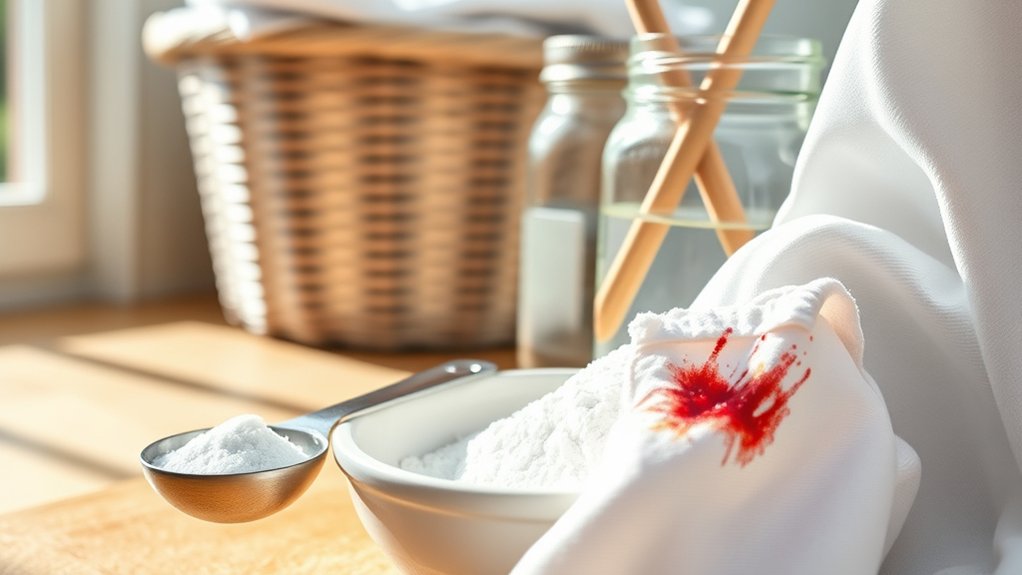
To pretreat stains, just mix equal parts baking soda and water to make a paste.
Then, apply it right onto the stained area. Let it sit for about 30 minutes so the paste can work on breaking down the stain before you wash it.
After that, go ahead and follow your garment’s care instructions to get the best cleaning results.
Baking Soda Paste
Mixing equal parts baking soda and water creates a thick paste that effectively tackles laundry stains.
To use this baking soda paste for stain treatment, first test the paste on a hidden fabric area to avoid discoloration or damage.
Then, apply the paste directly onto the stain and let it sit for about 30 minutes. This allows the baking soda to penetrate and lift various stains, including grease, sweat, and food.
Afterward, wash the garment following the care label instructions to guarantee proper cleaning.
Keep these tips in mind:
- Always test the paste before full application.
- Apply the paste generously on stubborn stains.
- Follow care label instructions post-treatment for best results.
This method provides a practical, versatile approach to pretreat laundry stains.
Stain Soaking Time
Once you’ve applied the baking soda paste to a stain, letting it sit for about 30 minutes allows it to break down the stain effectively.
To pretreat, create a paste by mixing equal parts baking soda and water, then apply directly to the affected area.
This stain soaking time is essential for the baking soda to penetrate and lift light stains and odors efficiently.
For best results, always test the paste on a hidden fabric spot first to avoid discoloration.
After you soak for 30 minutes, follow the garment’s care tag instructions when washing to fully remove the stain and baking soda residue.
While baking soda is effective on light stains and odors, tougher stains may need additional treatments beyond this soaking step.
Post-Treatment Washing
Although the baking soda paste needs time to work on your stains, you’ll want to wash the garment promptly afterward to prevent residues from setting in.
After soaking the stains for about 30 minutes, proceed with post-treatment washing by following the care label instructions carefully.
To guarantee peak results, remember to test the baking soda paste on a hidden garment area before full application.
Wash the garment immediately after soaking to avoid baking soda buildup.
And try to address stains quickly, as older stains may need repeated treatments.
This approach helps the baking soda break down stains effectively without damaging fabric.
Combining Baking Soda Safely With Bleach and Detergent in Laundry
When you combine baking soda with bleach, using equal parts, typically ½ cup each, can enhance whitening while reducing the strong bleach odor, provided your fabrics are bleach-safe.
Baking soda helps neutralize bleach’s harshness, making it gentler on fabrics yet boosting cleaning effectiveness.
Always add baking soda and bleach separately during the wash cycle to avoid harmful chemical reactions.
When used with laundry detergent, baking soda softens water, which enhances stain removal and improves the detergent’s performance.
This combination is safe to use and practical for tougher laundry challenges.
Why Not Mix Baking Soda and Vinegar in Laundry?
Because baking soda and vinegar have opposite pH levels, mixing them neutralizes their cleaning power, making them less effective for laundry.
Baking soda’s high pH and vinegar’s low pH cancel each other out, which diminishes their cleaning properties and reduces stain removal efficiency.
When combined, they create carbon dioxide gas, causing excessive suds but no added cleaning benefits. This reaction can also interfere with laundry detergents, lowering their performance.
To get ideal results, avoid mixing these two substances during laundry.
Neutralization removes the distinct cleaning benefits of baking soda and vinegar. Excess suds from carbon dioxide gas don’t improve stain removal.
Combining them hampers laundry detergents’ effectiveness.
Use baking soda and vinegar separately for better laundry outcomes.
Top Tips for Using Baking Soda Effectively in Laundry
To get the most out of baking soda in your laundry, use about ½ cup per load to boost your detergent’s cleaning power and neutralize odors effectively.
Always add baking soda directly to the washer tub, not the dispenser, to maximize detergent effectiveness.
For stain treatment, mix equal parts baking soda and water into a paste. Apply it to stains and let it soak for 30 minutes before washing.
You can also add another ½ cup of baking soda during the rinse cycle to soften fabrics and reduce detergent residue.
Remember to avoid combining baking soda with vinegar, as they neutralize each other and lessen cleaning power.
Using baking soda properly guarantees fresher, cleaner laundry with enhanced results.
Frequently Asked Questions
Can Baking Soda Damage Delicate Fabrics?
Yes, baking soda can damage delicate fabrics like wool, silk, and cashmere if you use it excessively.
Its high pH can weaken protein-based fibers and cause fading over time.
You should avoid applying baking soda directly on delicate materials or only use it in very small amounts after testing a hidden spot.
Always check the care label before using baking soda to protect your delicate clothes from potential harm.
Does Baking Soda Help Remove Mildew Smells?
You might be surprised, but yes, baking soda really helps remove mildew smells. When you add about half a cup to your laundry, it balances the pH and neutralizes odors effectively.
For stubborn smells, you can even make a paste and apply it directly before washing. Not only does it deodorize, but it gently lifts stains without harming your fabrics, making your clothes fresher and cleaner every time.
How Does Baking Soda Affect Water Temperature Settings?
Baking soda works well across all water temperatures but dissolves best in warm water, enhancing its stain-fighting and deodorizing power.
In cold water, it still freshens your laundry but with slightly less effectiveness.
Using it in hot water helps break down tough grime and softens hard water, boosting detergent performance.
Regardless of temperature, adding about half a cup balances pH and leaves your clothes cleaner and fresher every time.
Is Baking Soda Safe for All Washing Machine Types?
Think of baking soda as the Swiss Army knife of laundry, versatile but with limits. You can safely use it in both standard and high-efficiency machines without worry, as it won’t harm their components.
Just avoid adding it to delicate fabrics like silk or wool.
To get the best results, add baking soda directly into the washer tub and don’t overdo it to prevent residue buildup that could affect your machine’s performance.
Can Baking Soda Be Used in Hand Washing Laundry?
Yes, you can use baking soda when hand washing laundry. Just dissolve 1/4 to 1/2 cup in warm water before soaking your clothes.
It helps neutralize odors, soften fabrics, and gently lifts stains without harsh chemicals.
Make sure to rinse your garments thoroughly afterward to avoid any residue.
Using baking soda this way balances pH and boosts cleaning power, making your hand-washed laundry fresher and cleaner.
Conclusion
Think of baking soda as your laundry’s secret weapon, a gentle, natural boost that brightens and freshens with ease. Just a half cup added to each load transforms your wash into a cleaner, fresher experience without harsh chemicals.
Remember to place it in the drum or detergent drawer and avoid mixing it with vinegar. With these simple steps, you’ll keep your clothes vibrant and your laundry routine smart and effective every time.