How To Make Natural Laundry Detergent – Made Easy
You can make natural laundry detergent easily by dissolving 1 cup each of borax and washing soda in 6 cups boiling water. Then add 9 cups distilled water and 1 cup liquid castile soap once cooled.
Mix in essential oils for fragrance. Use 1/8 to 1/4 cup per load in top-loaders or less for front-loaders, shaking before use to prevent separation. Store airtight for about a month.
Explore further to optimize recipes and usage tips.
Key Takeaways
- Combine borax, washing soda, and liquid castile soap dissolved in water to create an effective natural laundry detergent base.
- Boil water, dissolve 1 cup each of borax and washing soda, then add castile soap after cooling for 5-10 minutes.
- Add 50 drops of essential oils for fragrance and antibacterial benefits, mixing only after the detergent cools.
- Use 1/8 to 1/4 cup for top-loading and 1 to 2 tablespoons for front-loading machines per load.
- Store the detergent in airtight containers at room temperature, shaking before use and using within one month for best results.
What Ingredients Do You Need for Natural Laundry Detergent?
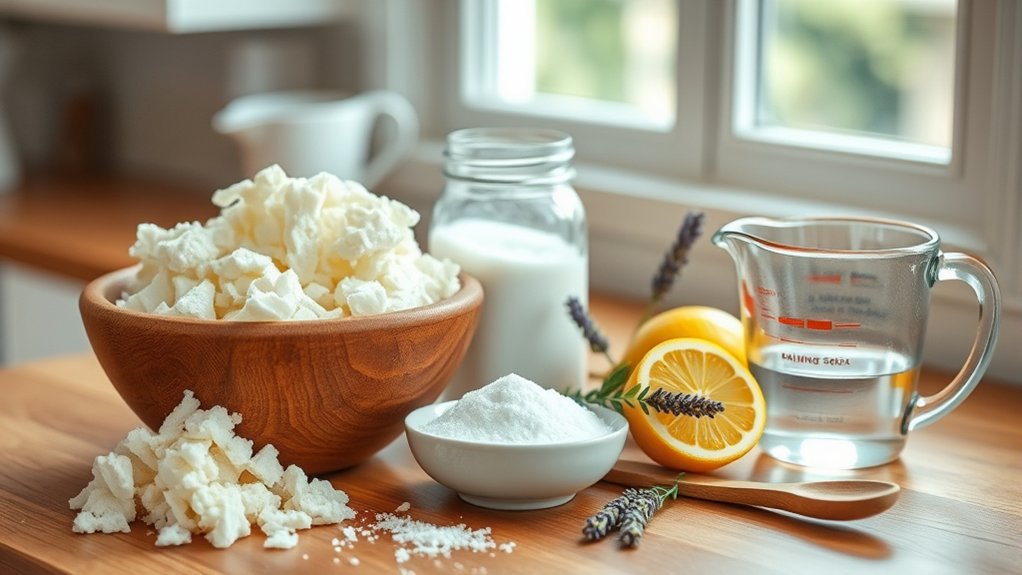
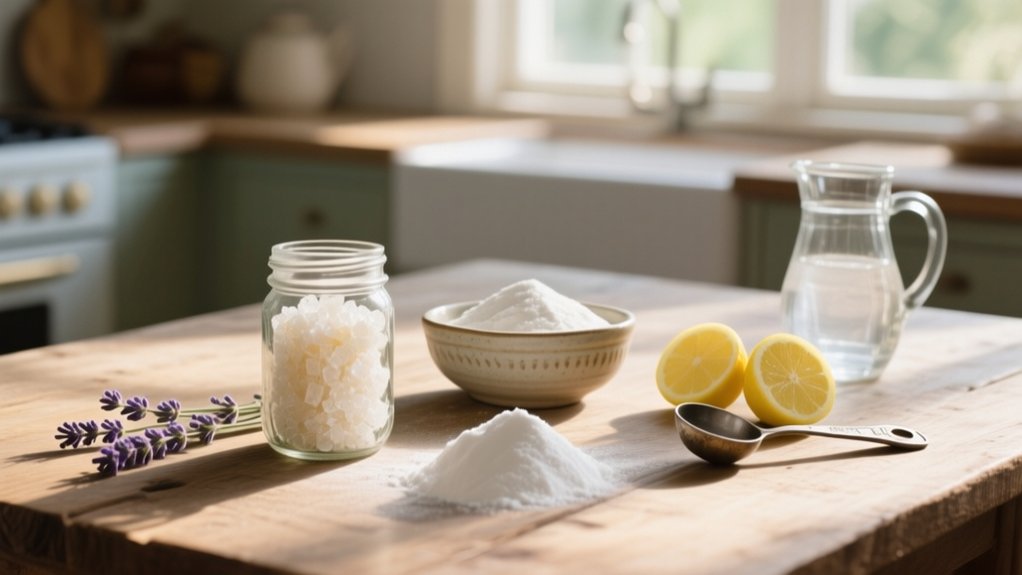
What ingredients do you need to make an effective natural laundry detergent? You’ll require three primary components: borax, washing soda, and liquid castile soap.
Borax acts as a natural deodorizer and helps lift dirt from fabrics, while washing soda boosts cleaning power and further deodorizes.
Liquid castile soap serves as the main cleaning agent, providing non-toxic and effective cleansing.
For added freshness and enhanced cleaning properties, you can include about 50 drops of essential oils.
To guarantee a smooth, contaminant-free solution, combine these ingredients with 15 cups of distilled water.
These ingredients form the foundation of a DIY natural laundry detergent that’s both efficient and environmentally friendly, making your laundry routine safer and more sustainable.
How Do You Make Natural Laundry Detergent Step-by-Step?
When you’re ready to make natural laundry detergent, begin by boiling 6 cups of water in a large saucepan and dissolving 1 cup each of borax and washing soda in it.
Next, add 9 cups of distilled water at room temperature and stir in 1 cup of liquid castile soap to enhance cleaning power.
After the mixture cools for 5-10 minutes, incorporate 50 drops of your preferred essential oil for fragrance.
Transfer this homemade detergent into a gallon bucket or glass jars for storage, allowing it to cool completely before sealing.
To use your homemade laundry soap, shake well and measure 1/8 to 1/4 cup for top-loading machines or 1-2 tablespoons for front load washers.
This method answers how do you make natural laundry detergent efficiently and safely.
How to Avoid Common Natural Laundry Detergent Problems
After preparing your natural laundry detergent, you might encounter a few common issues that can affect its performance or your washing machine’s function.
First, always use washing soda, not baking soda, because washing soda effectively boosts cleaning power.
Avoid dish soap in your detergent recipes. It creates excessive suds that risk machine damage.
If your homemade laundry detergent has a watery consistency, don’t worry. This is normal. Just shake before use to mix the natural ingredients thoroughly.
To improve thickness consistency, consider using distilled water and an immersion blender for a more concentrated formula.
When adding essential oils, wait until the detergent cools to prevent evaporation and preserve fragrance.
Following these precise steps helps you avoid common problems and optimizes your detergent’s effectiveness safely.
How Do You Use Natural Laundry Detergent Effectively?
You’ll want to use the right amount of natural detergent depending on your machine type. For top-loaders, aim for about 1/8 to 1/4 cup, and for high-efficiency front-loaders, 1 to 2 tablespoons usually does the trick.
It’s a good idea to mix the detergent well before adding it directly to the drum or the detergent compartment. This helps make sure the cleaning is consistent throughout the wash.
Proper Detergent Dosage
Although natural laundry detergent offers a gentle alternative to conventional cleaners, using the correct dosage is crucial for achieving the best results.
For top-loading machines, use 1/8 to 1/4 cup of homemade laundry detergent per load. Front loaders require only 1 to 2 tablespoons due to lower water usage.
Always stir before using your liquid laundry soap to guarantee an even mixture, especially if separation occurs.
Adjust the amount of detergent based on how dirty your clothes are. Use more for heavily soiled items and less for lighter loads.
To maintain its effectiveness, store homemade detergent in a cool, dry place and allow it to cool completely before sealing.
Proper detergent dosage optimizes cleaning power while preserving your natural cleaning products.
Washing Machine Compatibility
When using natural laundry detergent, understanding your washing machine’s compatibility is essential to guarantee effective cleaning and prevent issues like oversudsing.
For top-loading machines, use 1/8 to 1/4 cup of homemade natural laundry detergent per load. This ensures sufficient cleaning without residue.
Front load, especially high-efficiency (HE) washers, require only 1 to 2 tablespoons due to their low-water usage. Excess detergent can cause oversudsing and reduce effectiveness.
Always shake or stir your detergent to maintain consistency before adding it directly to the washer drum or detergent compartment.
Consider your water type: hard water may need slightly increased detergent amounts for ideal cleaning.
Finally, a thorough rinse cycle helps remove detergent residues, maintaining washing machine performance and laundry freshness.
Can You Use Natural Laundry Detergent in HE Washing Machines?
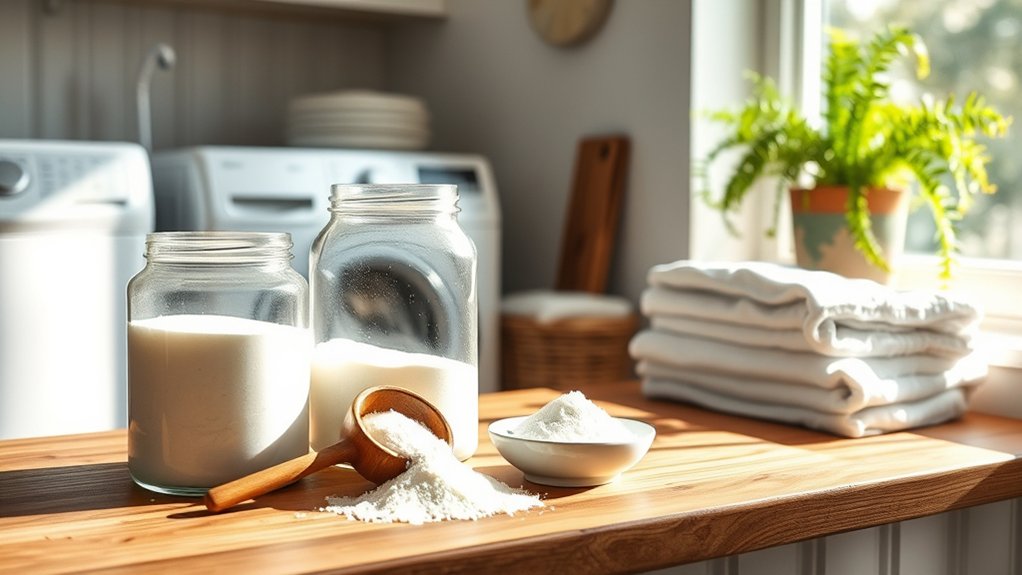
How well do natural laundry detergents perform in HE washing machines? They work effectively thanks to their low sudsing properties, which prevent excess foam that could impair the machine’s function.
When using homemade detergents, you should add 1-2 tablespoons per load to maintain efficiency and avoid residue buildup. Many recipes incorporate washing soda and baking soda, optimizing cleaning power while remaining HE-compatible.
Adding essential oils for scent is fine but keep quantities minimal to protect your machine’s performance.
Always consult your HE washing machine’s manufacturer’s guidelines to confirm compatibility with homemade natural laundry detergent.
Following these steps guarantees you enjoy the benefits of natural cleaning without sacrificing your machine’s efficiency or longevity.
How Long Does Natural Laundry Detergent Last?
You’ll find that natural laundry detergent usually lasts about a month when it’s stored in airtight containers at room temperature.
It’s best to keep it dry, cool, and sealed to help preserve its effectiveness.
If you notice any separation or a watery texture, just give it a good shake before using it.
Also, keep an eye on any changes in smell or cleaning power—these can be signs that it’s starting to spoil or won’t work as well anymore.
Shelf Life Duration
Although natural laundry detergent offers a gentle alternative to commercial products, its shelf life is relatively short, typically lasting about one month when stored properly in airtight containers at room temperature.
Since you’re working with homemade detergent, it’s vital to store it away from direct sunlight and moisture. These can degrade ingredients and reduce effectiveness.
Over time, a watery consistency or separation may occur. This is normal. Simply shake or stir the detergent before each use to restore uniformity.
Essential oils added for scent will lose potency after a few weeks, so you might want to refresh them occasionally to maintain fragrance strength.
Storage Best Practices
Maintaining the effectiveness of your natural laundry detergent depends largely on how you store it. Follow storage best practices by using airtight containers, such as glass jars or old detergent bottles, to prevent contamination and extend usability.
These containers help maintain effectiveness by limiting exposure to air and moisture.
Store your detergent in a cool place away from direct sunlight, which can degrade ingredients and weaken its cleaning power. Over time, separation or watery consistency may occur. Simply shake or stir the detergent before each use to restore uniformity.
If you’ve added essential oils for fragrance, mix them in after the detergent cools to prevent evaporation and preserve scent.
Signs Of Spoilage
Since natural laundry detergent lacks the preservatives found in commercial products, it typically lasts about one month when stored properly in airtight containers at room temperature.
You’ll recognize signs of spoilage by a change in smell, unusual separation of ingredients, or a drop in cleaning effectiveness.
If the detergent appears watery or separates, don’t worry. It’s still usable but requires you to shake or stir before each use.
To prolong freshness and maintain potency, use distilled water in your recipe to reduce contamination risks.
Adding essential oils only after the detergent cools helps preserve their scent and benefits.
Monitoring these factors guarantees your detergent remains effective and safe throughout its limited shelf life.
What Are Safe Alternatives and Add-Ins to Customize Your Detergent?
When you want to tailor your natural laundry detergent, incorporating safe alternatives and add-ins can greatly boost its effectiveness and customize the scent and fabric care.
Essential oils, such as lavender or lemon, add fragrance and natural antibacterial properties with 20-25 drops.
Epsom salt (½ cup) softens fabrics and reduces static without chemical fabric softeners.
Sea salt (¼ cup) lifts stains and preserves colors, ideal for bright loads.
Baking soda (1½ cups) enhances cleaning power and deodorizes musty items.
Adding a cup of vinegar during the rinse cycle further softens clothes, eliminates odors, and improves detergent efficiency.
These safe alternatives and add-ins let you customize your natural laundry detergent to meet specific cleaning and fabric care needs while avoiding harsh chemicals.
Frequently Asked Questions
Is Natural Laundry Detergent Safe for Baby Clothes?
Yes, natural laundry detergent is safe for baby clothes when you choose non-toxic ingredients like castile soap and avoid synthetic fragrances.
You should carefully select any essential oils, as some might cause skin sensitivity.
Always perform a patch test on a small garment area before washing larger loads to guarantee no irritation occurs.
This approach helps you protect your baby’s delicate skin while effectively cleaning their clothes without harmful residues.
Can Natural Detergent Remove Tough Stains Like Grease?
Think of grease stains as stubborn villains, and natural detergent as your clever hero armed with alkaline weapons like washing soda and baking soda. You can count on it to break down those oily foes effectively.
For tougher battles, pre-treating with a baking soda paste strengthens your defense.
Adding Epsom salt and essential oils enhances the detergent’s power, ensuring you defeat grease stains without harsh chemicals, keeping your fabrics safe and clean.
How Does Natural Detergent Affect Septic Systems?
Natural detergent positively affects your septic system by avoiding harsh chemicals that harm beneficial bacteria. It produces lower suds, which helps reduce clogs and overflow risks.
Ingredients like baking soda and castile soap break down naturally, preserving your system’s microbial balance.
Using essential oils instead of synthetic fragrances prevents bacterial disruption.
What Is the Environmental Impact of Homemade Detergent Ingredients?
You should know that over 90% of conventional detergent ingredients can persist in the environment, causing pollution.
Homemade detergent ingredients like washing soda and baking soda break down more easily, reducing water contamination.
By choosing these natural components, you cut down on harmful phosphates and synthetic chemicals entering ecosystems, lower volatile organic compound emissions, and minimize plastic waste from packaging.
This makes your detergent eco-friendlier and supports a more sustainable lifestyle.
Can Natural Detergent Be Used for Hand Washing Delicate Fabrics?
Yes, you can use natural detergent for hand washing delicate fabrics. Just dilute it in water to prevent any damage and use a small amount, about 1-2 tablespoons per gallon.
Always test a hidden spot first to avoid surprises.
After washing, rinse thoroughly to remove all detergent residue, preserving the fabric’s softness and integrity.
This approach guarantees gentle cleaning while protecting your delicate items effectively.
Conclusion
Making your own natural laundry detergent not only saves money but also reduces harsh chemical use. Over 50% of conventional detergents contain ingredients that can irritate skin or pollute waterways.
By following simple steps and using safe, customizable add-ins, you guarantee effective cleaning while protecting your health and the environment. Plus, natural detergents are compatible with HE machines and last long when stored properly.
Give it a try for a cleaner, greener laundry routine.