How To Hide Water Heater In Laundry Room – Full Guide
To hide your water heater in the laundry room safely, choose a well-ventilated cabinet or louvered doors that blend with your decor and allow airflow, especially for gas units. Make sure you measure accurately, maintain clear access to shut-off valves, and follow local building codes for clearance and ventilation.
Add storage thoughtfully without blocking access to components. Keeping these factors in mind guarantees safety, convenience, and style. You’ll find more tips on maintenance and design solutions ahead.
Key Takeaways
- Choose appropriate enclosure type, ensuring it fits the water heater’s size and allows easy maintenance access.
- Incorporate ventilation features like vents or louvered doors to ensure proper airflow and prevent overheating.
- Use cabinets, screens, or curtains that blend with laundry room decor while maintaining safety and accessibility.
- Follow local building codes and clearance requirements to guarantee safe installation and emergency access.
- Keep the area around the water heater clear and inspect regularly for leaks and ventilation obstructions.
Understand Your Water Heater and Hiding Challenges

Before you start planning how to hide your water heater, you need to understand its type and the challenges involved. Whether you have a tank or a tankless water heater affects your options.
Tank models need more space, so your water heater cover must allow easy access for maintenance and emergency shut-offs.
Tank water heaters require spacious covers that provide easy access for upkeep and emergency shut-off.
Gas units require proper ventilation, so any cover shouldn’t block airflow to prevent overheating.
Also, check local building codes. They often set rules on how you can enclose your water heater safely.
Measure your unit’s dimensions and location carefully to choose or build a cover that fits well without compromising function.
Keeping these factors in mind helps you find a practical, safe water heater cover that blends seamlessly into your laundry room.
Evaluate Water Heater Hiding Options Safely and Effectively
When you’re thinking about hiding your water heater, safety and easy access should be at the top of your list. You want to make sure whatever you choose doesn’t block ventilation—this is super important, especially if you have a gas heater, to avoid any risk of overheating.
A great way to keep things both hidden and practical is by using louvered doors or framed walls. These options help conceal your water heater nicely, but still let you get to it quickly when you need to do maintenance or checkups.
It’s all about finding that perfect balance between looking good and keeping things safe.
Safety And Accessibility
Although hiding your water heater can enhance your space’s appearance, you must prioritize safety and accessibility to comply with regulations and ensure efficient operation.
Always choose coverings that allow quick access to shut-off valves and maintenance points. This way, you can perform repairs or emergency shut-offs without delay.
Use materials that promote airflow, especially for gas water heaters, to prevent overheating. Louvered doors or screens are excellent choices because they blend aesthetics with safety by providing ventilation while concealing the heater.
Keep the area around the water heater clear and avoid barriers that block emergency access.
Finally, regularly check local building codes to confirm your hiding solution meets safety and accessibility standards. This helps verify your setup remains both functional and compliant.
Ventilation And Maintenance
Since proper ventilation is essential for your water heater’s safe operation, you need to choose hiding solutions that don’t restrict airflow, especially with gas units that generate heat and require combustion air.
When evaluating options, focus on ventilation and maintenance to keep your water heater safe and efficient.
- Guarantee any enclosure has vents or openings to maintain adequate ventilation and prevent overheating.
- Design for easy access so you can perform regular maintenance and quickly reach emergency shut-off valves.
- Follow local building codes and safety regulations to avoid risks associated with improper concealment.
Build or Buy Cabinets to Hide Your Water Heater

You can either build a custom cabinet or buy one that fits your water heater’s size and matches your room’s style.
Just make sure the design includes proper ventilation and easy access for maintenance.
Also, planning shelves inside the cabinet is a smart idea.
It helps keep your space organized without blocking the heater.
Cabinet Design Ideas
When hiding your water heater, building or buying a cabinet offers a practical solution that blends functionality with style. A thoughtful cabinet design guarantees your water heater stays concealed yet accessible and safe.
Here are three key ideas to keep in mind:
- Choose a pre-made option like an IKEA PAX wardrobe to hide the heater while gaining extra storage.
- Design custom cabinets with ventilation to prevent overheating, especially for gas models.
- Tailor the cabinet dimensions to your water heater and add shelves or hooks for organized storage.
Use leftover plywood to create a top piece that stops items from falling behind and adds stability.
This approach lets you blend your water heater seamlessly into your laundry room’s decor while keeping the space functional and safe.
Assembly and Installation
Building or buying a cabinet to hide your water heater involves careful measurement and planning to confirm a secure fit and easy access. Start by measuring the heater’s dimensions precisely to confirm the cabinet fits snugly without crowding.
For building, choose sturdy materials like plywood and plan the assembly so shelves can be adjusted for extra storage. If you buy a pre-made cabinet, look for one that’s easy to assemble and includes cutouts for valves and controls.
During assembly, make sure the structure is solid and stable.
Finally, apply paint or decorative finishes that match your laundry room’s style, blending functionality with aesthetics. This approach confirms your water heater remains concealed yet accessible, with a cabinet that’s both practical and visually appealing.
Ventilation and Access
Although hiding your water heater with a cabinet enhances your space’s appearance, ensuring proper ventilation and easy access remains essential for safety and maintenance.
When building or buying a cabinet, focus on these key points:
- Include ventilation features like louvers or grilles to maintain airflow and prevent overheating, especially for gas water heaters.
- Design access panels or removable sections for quick maintenance and emergency access to shut-off valves without dismantling the entire cabinet.
- Use lightweight materials to make opening and closing the cabinet easier while complying with local building codes and safety regulations.
Proper ventilation and access not only keep your water heater safe but also extend its lifespan and simplify servicing.
Don’t sacrifice function for form; balance both for the best results.
Use Doors and Screens to Conceal Your Water Heater
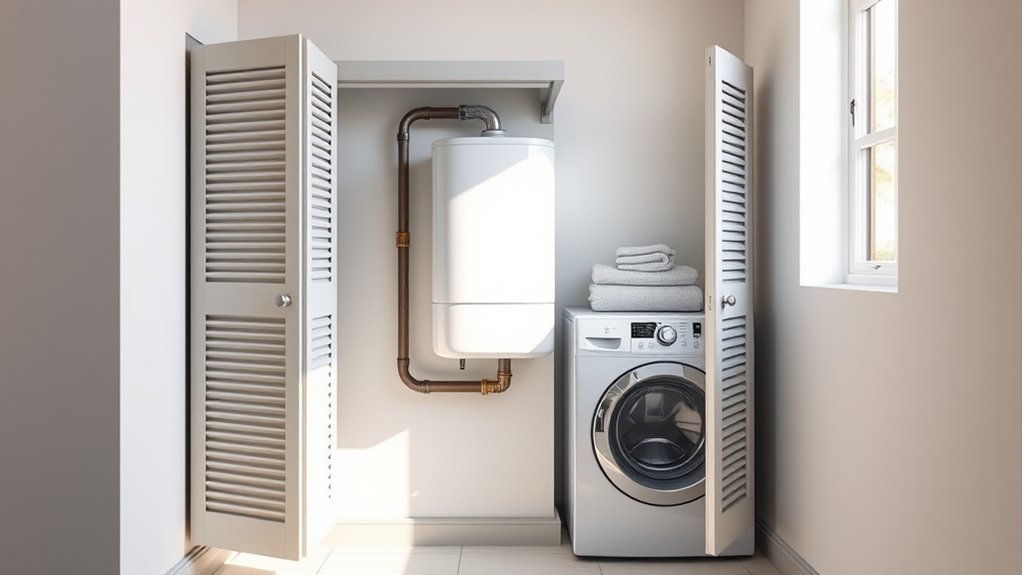
Since water heaters often occupy awkward or visible spaces, using doors and screens offers an effective way to conceal them without sacrificing accessibility or ventilation.
Installing bifold louvered doors is a smart choice. They provide easy access and promote airflow while enhancing your laundry room’s look.
If you prefer flexibility, freestanding screens or room dividers let you hide the unit and move the barrier as needed.
Curtains also work well; they’re affordable, allow air circulation, and you can quickly pull them aside.
For a more polished appearance, consider custom cabinets with built-in ventilation.
These cabinets blend your water heater seamlessly into the room’s design while keeping it accessible.
Ensure Proper Ventilation and Easy Access for Safety
While hiding your water heater can improve your space’s appearance, you must prioritize proper ventilation and easy access to guarantee safety.
Without adequate airflow, your unit risks overheating, and poor access can delay emergency shut-offs or maintenance.
Follow these key steps to verify safety:
- Maintain at least 1 inch of clearance around the water heater to promote ventilation and prevent heat buildup.
- Use vented panels or louvered doors in your enclosure, especially for gas-powered heaters, to allow continuous airflow.
- Design the cover for easy removal or access, complying with local building codes so emergency valves remain reachable.
Add Storage and Decorative Touches Around Your Water Heater
Anyone looking to hide a water heater can also add valuable storage and decorative elements to the surrounding space.
Start by installing cabinetry or shelves above the water heater to maximize vertical storage for laundry essentials or decorative items.
Use louvered doors or decorative screens to conceal the water heater while ensuring proper ventilation and easy access.
Adding hooks or a pegboard on nearby walls keeps frequently used tools within reach and blends function with style.
Choose finishes that match your laundry room’s design to create a cohesive, polished look.
These smart storage solutions not only hide the water heater but also enhance the room’s organization and aesthetic, making your laundry space both practical and visually appealing.
Follow Local Codes and Maintenance Tips for Long-Term Access
Before you conceal your water heater, make certain you understand and follow local building codes that dictate accessibility requirements.
These codes guarantee safety and easy maintenance for your water heaters.
To maintain long-term access and functionality, keep these tips in mind:
- Always allow enough clearance for emergency shut-off valves and circuit breakers to be reached quickly.
- Incorporate ventilation in any cabinetry or covers, especially for gas water heaters, to prevent overheating.
- Schedule regular maintenance, including flushing the tank and inspecting all connections, to extend your water heater’s lifespan.
Also, regularly inspect the surrounding area to avoid blockages and keep the space clear.
Following these steps assures safe, efficient operation without sacrificing aesthetics.
Frequently Asked Questions
Can I Hide My Water Heater if It’s a Tankless Model?
Yes, you can hide your tankless water heater, but since it’s more compact than traditional models, you have more flexibility.
Consider building a custom cabinet or installing it inside a closet with proper ventilation.
Make sure the enclosure allows easy access for maintenance and doesn’t block air circulation, as tankless heaters need airflow.
You might also use decorative panels or doors to blend it with your laundry room’s design while keeping it functional.
What Are the Best Paint Colors to Camouflage a Water Heater?
The best paint colors to camouflage your water heater are neutrals like soft grays, beige, or off-white, which blend well with most laundry room walls.
If your walls are bold, pick a matching or slightly darker shade to help the heater fade into the background.
Matte finishes work better than glossy ones to reduce glare.
You can even use a color that mimics nearby appliances or cabinetry, making the heater less noticeable.
How Do I Reduce Noise From the Water Heater While Hiding It?
To tackle the troublesome ticking and trilling, try thickening the thermal blanket around your water heater. It dampens disturbing sounds dramatically.
Then, strategically surround the unit with sound-absorbing materials like acoustic foam or dense fabric panels.
Make sure to seal any gaps in the enclosure to stop sneaky sound seepage.
Finally, placing the heater on a vibration-dampening mat can curb clatters and clicks. This creates a quieter, cozier laundry corner without compromising access or airflow.
Can I Use Fabric Curtains Near a Gas Water Heater Safely?
You shouldn’t use fabric curtains near a gas water heater because they can catch fire easily.
Instead, opt for non-flammable materials or metal enclosures that allow proper ventilation.
If you want to soften the look, consider flame-resistant screens or rigid panels placed at a safe distance.
Always keep the area clear of flammable objects, and check local codes to guarantee your setup meets safety standards.
Safety always comes first.
Are There Any Smart Water Heater Covers With Temperature Controls?
Think of smart water heater covers as a cozy jacket with a built-in thermostat, but those are rare.
While traditional covers mainly insulate, some advanced models come with integrated temperature controls or sensors you can pair with smart home systems.
You’ll find these in high-end or custom setups, often connected via Wi-Fi for remote adjustments.
If you want precise control, look for smart water heaters with built-in controls rather than just covers.
Conclusion
You can hide your water heater without sacrificing safety or style. By understanding your unit and choosing the right concealment options, you create a neat laundry space.
Building or buying cabinets and adding doors or screens help keep things tidy. Just remember to guarantee proper ventilation and maintain easy access.
Also, follow local codes to stay compliant. With thoughtful planning, you’ll protect your water heater, enhance your room’s look, and enjoy lasting convenience, all while keeping your home safe and functional.