How To Sort Laundry – Easy Guide
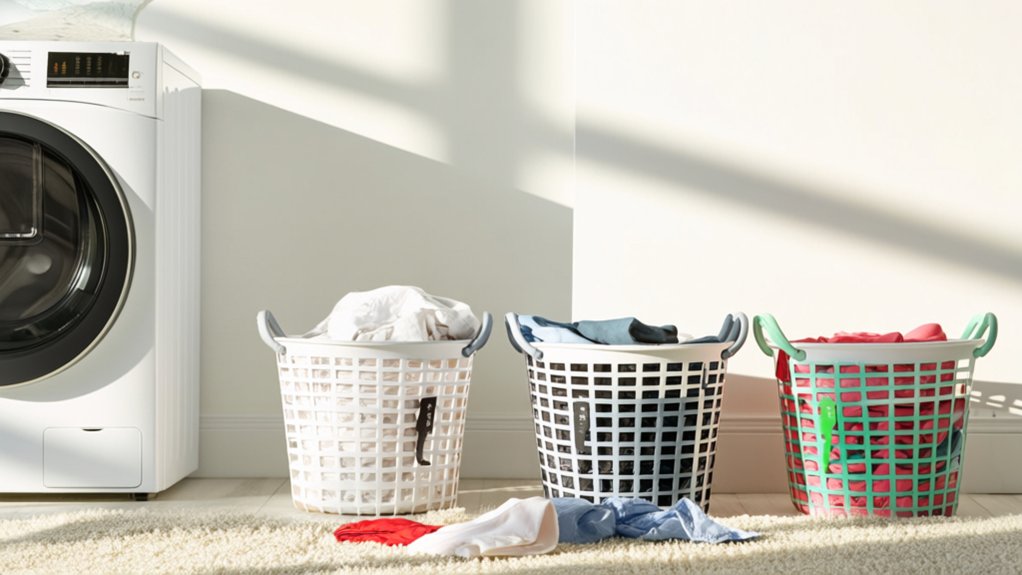
To sort laundry effectively, separate clothes by color: whites, lights, and darks. This helps prevent colors from bleeding onto each other.
Be careful with new or bright garments. Test them for colorfastness and wash them separately in cold water to avoid any surprises.
Sort by fabric type too. Keep delicates apart from heavy items, and use mesh bags for those delicate pieces.
Also, separate heavily soiled clothes so you can pre-treat stains properly. Don’t forget to follow care labels for water temperature and cycle choices.
Master these basics, and you’ll protect your fabrics while getting better cleaning results. Easy, right?
How To Sort Laundry By Color To Prevent Bleeding
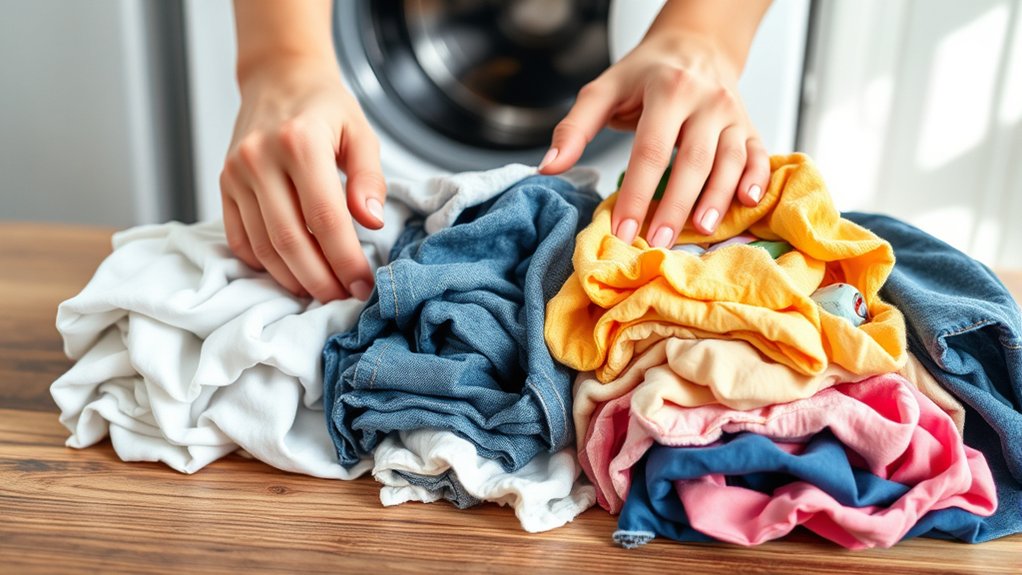
When sorting laundry by color to prevent bleeding, always separate whites, lights, and darks before you start washing.
Begin by testing new or brightly colored clothes for colorfastness. Just dampen a white cloth and press it against the fabric. If color transfers, wash that item separately.
Deep, vibrant colors like reds and blues need extra caution. Wash them alone at first to avoid dye transfer.
To protect mixed loads, toss in color catchers. These absorb loose dyes and help keep colors intact.
Also, turning garments inside out minimizes dye release and preserves fabric vibrancy during washing.
How To Separate Laundry By Fabric Type Safely
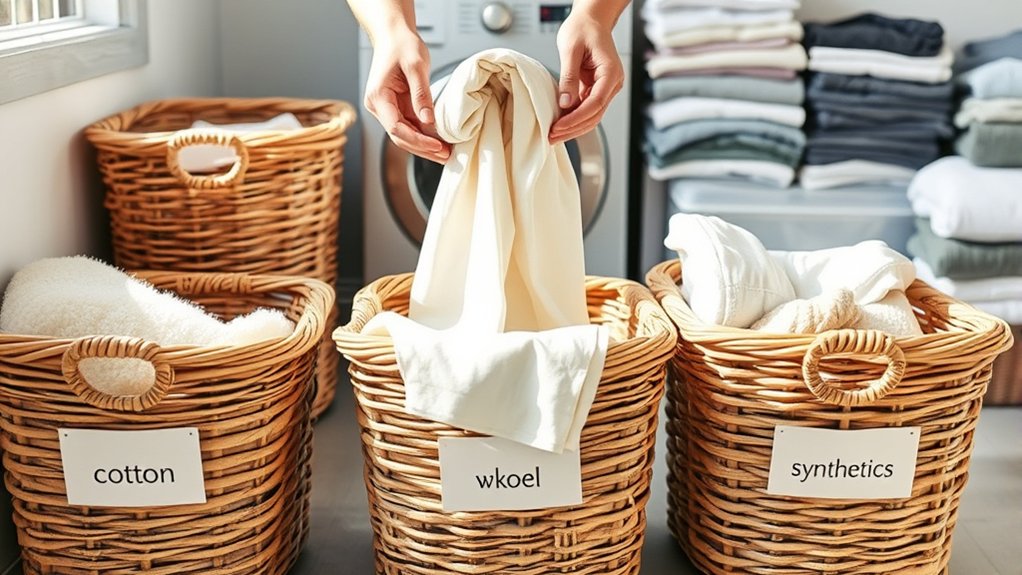
Sorting laundry by color is a smart first step, but paying attention to fabric types will keep your clothes in top condition even longer. Separate heavy fabrics like towels and jeans from delicate materials such as silk and lace to prevent damage during washing.
Wash wool and cashmere items separately from synthetics to avoid pilling and maintain softness. Use gentle cycles and cold water for delicate fabrics like silk, chiffon, and hosiery to prevent shrinking or tearing.
Keep heavy-duty items like workwear and bedding apart from lightweight fabrics to guarantee proper cleaning and drying.
Always check garment care labels for specific fabric instructions. You’ll protect your clothes and extend their lifespan by sorting thoughtfully and washing according to each fabric’s needs.
How To Sort Clothes By Dirt And Stains For Better Cleaning
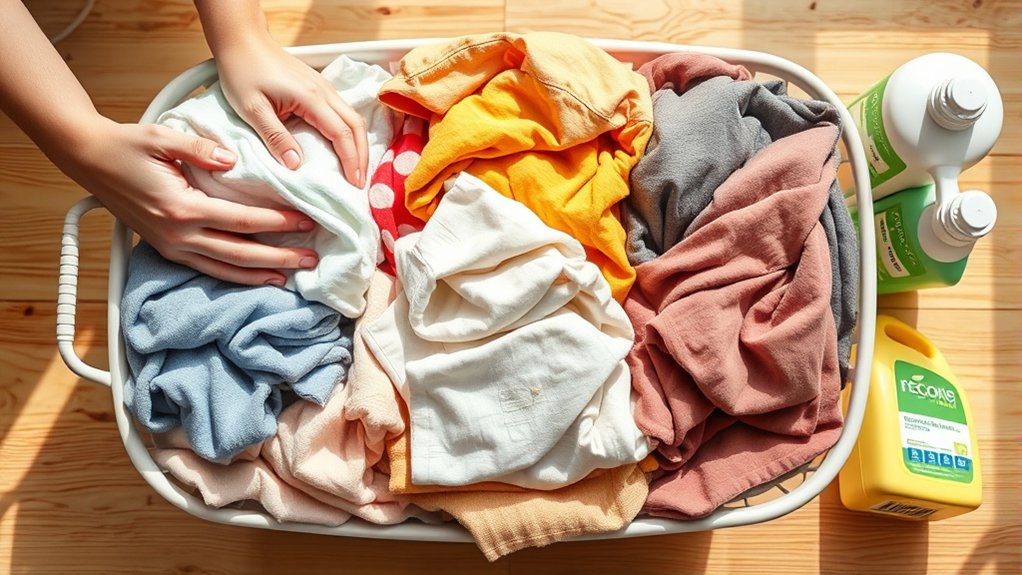
Although it might seem convenient to toss all your laundry together, separating clothes by their level of dirt and types of stains can dramatically improve your washing results. Start by sorting heavily soiled or stained items away from lightly worn clothes to avoid dirt transfer.
Separating laundry by soil level and stain type enhances cleaning and prevents dirt transfer between clothes.
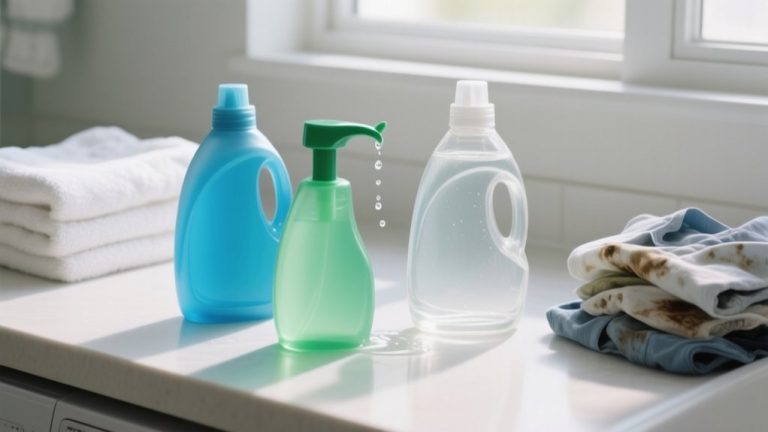
Pre-treat stains based on their type like grease, blood, or grass to boost cleaning effectiveness. Wash heavily stained garments separately, using hot water and a heavy-duty cycle for thorough cleaning.
Also, keep stained clothes distant from clean or light-colored items to prevent dye transfer.
- Separate heavily soiled clothes from lightly worn ones
- Pre-treat stains based on their specific type
- Use hot water and heavy-duty cycles for tough stains
- Avoid mixing stained with clean or light-colored garments
- Categorize stains to choose the best treatment method
How To Use Care Labels To Sort Laundry Correctly
Start by carefully reading the care labels to understand the symbols that indicate water temperature, wash cycle, and drying methods for each fabric. This way, you’ll know exactly how to treat each item.
By identifying fabric types through these labels, you can easily separate delicate pieces from sturdier ones, which helps prevent any damage.
Plus, always make sure to follow specific instructions like “hand wash only” or “dry clean” to keep your clothes looking their best.
Understanding Label Symbols
When you want to keep your clothes in the best condition, understanding care label symbols is essential. These standardized icons guide you on how to wash, dry, iron, and treat your garments properly. By decoding these symbols, you prevent damage and sort laundry efficiently.
Here’s what to look for:
- Wash tub symbol: Indicates water temperature and wash cycle (hand or machine wash).
- Triangle: Shows if bleach is allowed; crossed means no bleach.
- Square with a circle: Represents tumble drying; dots inside specify heat levels.
- Line or drip drying symbols: Suggest air drying methods.
- Iron symbol: Details the appropriate ironing temperature and if ironing is allowed.
Always check these symbols before washing to extend your clothes’ lifespan and maintain their quality. It’s a simple step that really makes a difference!
Identifying Fabric Types
Understanding care label symbols not only helps you handle each garment properly but also guides you in identifying fabric types for sorting laundry effectively. Pay close attention to fabric identifiers like “100% cotton,” “silk,” or “polyester” on the label. These details inform the ideal washing temperature and cycle.
Delicate fabrics such as silk, lace, or chiffon often come with symbols indicating gentle or hand wash only. Sorting these separately protects them from damage.
Heavy-duty items like denim or towels usually require higher temperatures and longer cycles. So, keep them apart to ensure thorough cleaning without wear.
Using care labels to identify fabric types prevents issues like shrinking, fraying, or loss of elasticity. This way, you can sort your laundry accurately and prolong your clothes’ lifespan. It’s a simple step that really makes a difference!
Following Washing Instructions
Although you might be eager to toss everything into the washer, carefully following the washing instructions on each care label guarantees your clothes stay in great condition. These labels provide essential details about water temperature, wash cycle, and drying methods tailored to each fabric. Ignoring them risks shrinking, fading, or damaging your garments.
To properly sort and wash laundry, keep these tips in mind:
Check symbols to select cold, warm, or hot water based on fabric and stains. Use gentle cycles or hand wash for delicate items. Avoid washing items marked “dry clean only” at home.
Follow drying instructions to prevent shrinkage or damage. Review care labels regularly to maintain color and fabric integrity. It’s a simple way to keep your clothes looking their best!
How To Handle New And Brightly Colored Clothes
When you wash new and brightly colored clothes, make sure to separate them from lighter items. This helps avoid dye bleeding.
Also, turn your garments inside out and use cold water with a gentle cycle. Doing this helps preserve their vibrancy.
Separate New Clothes
Since new clothes often release excess dye during their initial washes, you should always wash them separately to prevent color transfer to your other garments. This is especially important for brightly colored items, which can bleed and stain other fabrics.
To handle new clothes properly, follow these tips:
- Turn new clothes inside out to reduce color fading.
- Perform a colorfastness test by dabbing a damp white cloth on the fabric.
- Use cold water and gentle wash cycles to preserve colors.
Add color catchers to absorb any loose dyes during washing. Wash new garments alone for the first few loads to avoid unwanted staining. It’s a simple step that can save your other clothes from getting ruined.
Prevent Color Bleeding
New clothes often carry excess dye that can easily transfer to other garments, especially brightly colored ones. To prevent color bleeding, always wash new, brightly colored clothes separately for the first few washes.
Before washing, turn these garments inside out to reduce dye loss and maintain vibrancy.
You can also perform a simple colorfastness test by dampening a small hidden area and pressing it onto a white cloth to see if any dye transfers.
Avoid mixing dark or bright pieces with light-colored laundry, as this increases the risk of dye bleeding and dulls lighter fabrics.
Using these steps helps keep your clothes looking fresh and prevents unwanted color transfer during laundry day. It’s a simple way to protect your wardrobe and keep colors bright for longer.
Use Cold Water
If you want to keep your brightly colored clothes looking fresh and vibrant, always wash them in cold water. Cold water helps set the dyes in new garments, reducing the chance of color bleeding and fading.
Before washing, turn your clothes inside out to protect the fabric’s surface.
You can also use color catchers to trap any loose dyes, preventing them from staining other items. It’s a simple step that can save your laundry from unwanted color runs.
Remember to:
- Wash new and bright clothes separately in cold water
- Turn garments inside out to preserve color
- Use color catchers for extra protection
- Avoid hot water, which can cause fading and bleeding
- Wash in cold water consistently to maintain vibrancy over time
Using cold water is a simple yet effective way to keep colors vivid and your garments looking newer longer. Give it a try—you’ll notice the difference!
How To Protect Delicates And Embellished Garments
When you want to keep your delicate and embellished garments looking their best, taking a few protective steps during washing is essential. Always turn these items inside out to shield surfaces and decorations from friction.
Place them in a mesh laundry bag to prevent snags and damage caused by zippers or other rough fabrics.
Choose a gentle cycle with cold water to avoid stretching, shrinking, or fading. Use only mild or specialized detergents, steering clear of harsh chemicals and bleach that can weaken fibers and dull embellishments.
After washing, skip the dryer and air dry your delicates flat or hang them up. This prevents heat damage and maintains their shape.
That way, your delicate pieces stay beautiful and last longer through many washes.
How To Pre-Treat Stains Before Sorting And Washing
Protecting delicate fabrics is just one part of caring for your laundry. Dealing with stains effectively before sorting and washing can save your clothes from permanent damage.
So, it’s best to pre-treat stains as soon as you spot them using the right remover for each stain type.
Apply it gently and let it sit for 5-10 minutes before washing.
For tough stains, try pre-soaking the garment in cold water with a stain remover or detergent mixture for about 30 minutes.
Always check the care label first, so you don’t accidentally damage your fabric or color.
Before washing, rinse the treated area with cold water to remove any residue and prevent the stain from setting.
- Use enzyme-based removers for protein stains.
- Opt for solvent-based removers on oil stains.
- Apply stain remover directly and gently.
- Pre-soak stubborn stains in cold water.
- Rinse thoroughly before washing.
How To Choose The Right Laundry Basket For Easy Sorting
Although sorting laundry can feel like a chore, choosing the right laundry basket can simplify the process considerably. Look for baskets with multiple compartments to separate whites, darks, and delicates right away. This saves time and prevents mix-ups.
Opt for a lightweight, collapsible design so you can easily carry it and store it when not in use. Ventilation holes are essential because they keep moisture from building up, which reduces odors.
Choose sturdy materials like plastic or woven wicker for durability and easy cleaning.
If possible, pick baskets with labeled or color-coded sections to streamline sorting even further. By selecting a basket with these features, you’ll make laundry sorting quicker, neater, and more efficient every time.
It’s all about making your chore a little easier and more organized.
How To Load And Wash Sorted Laundry For Best Results
After sorting your laundry into separate categories, loading the washing machine properly guarantees each load comes out clean and undamaged. You should load clothes loosely to let water and detergent circulate thoroughly.
Place heavier items like towels and jeans at the drum’s bottom to balance the load and improve washing efficiency.
Distribute garments evenly around the agitator or drum to prevent unbalanced spins and reduce fabric wear.
Avoid overloading by leaving at least 12 inches of space for ideal water movement.
Finally, select the right wash cycle based on fabric type and soil level to protect your clothes and achieve the best results.
Load laundry loosely for thorough cleaning
Place heavy items at the bottom
Distribute clothes evenly around the drum
Leave 12 inches of space to avoid overloading
Choose wash cycles suited to fabric and soil level
Frequently Asked Questions
How Often Should I Sort Laundry Before Washing?
You should sort your laundry before every wash to prevent color bleeding and fabric damage. Sorting weekly or as needed helps manage soil levels, fabric types, and delicate items. This way, you ensure better cleaning and garment longevity.
It’s really about keeping your clothes looking good and lasting longer. So, taking a few extra minutes to sort your laundry each time definitely pays off!
Can I Mix Synthetic and Natural Fibers in One Load?
You shouldn’t mix synthetic and natural fibers in one load. They’re like oil and water and need different care.
Wash them separately to avoid shrinking or melting. And always check care labels for any special instructions.
What’s the Best Way to Store Sorted Laundry Before Washing?
You should store sorted laundry in separate, labeled baskets in a cool, dry area. Keep delicates and heavily soiled items apart. Avoid overfilling bins, so your clothes have room to breathe.
Also, fold or hang clothes to prevent wrinkles and mildew before washing. This way, your laundry stays fresh and ready to go. Keeping things organized makes washing day a lot easier, don’t you think?
How Do I Prevent Static Cling During Drying?
To keep your clothes from sticking like a magnet, toss in dryer balls or tennis balls. Avoid overloading your dryer, and try to separate synthetic fabrics from natural ones.
You can also use fabric softener sheets to help reduce static cling. Make sure to promptly remove your garments after the drying cycle. This lets them breathe and keeps static at bay.
Should I Sort Laundry Differently in Cold Weather?
Yes, you should sort laundry differently in cold weather. Separate whites, darks, and fabrics carefully to prevent color bleeding and damage.
Wash heavily soiled items hotter, and keep synthetics apart to reduce static cling effectively. It really helps keep your clothes looking great and feeling fresh. Sorting smart makes a big difference!
Conclusion
Sorting your laundry is like setting the stage for a flawless performance. Each piece plays its part perfectly when you separate by color, fabric, and care.
By treating stains early and respecting labels, you protect your clothes’ stories and colors. Choosing the right baskets and washing methods guarantees your wardrobe stays vibrant and lasts longer.
With these steps, laundry becomes less chore, more craft. It turns everyday tasks into a clean, fresh masterpiece.