Dyson Wet And Dry Vacuum How To Clean The Filter – Guide
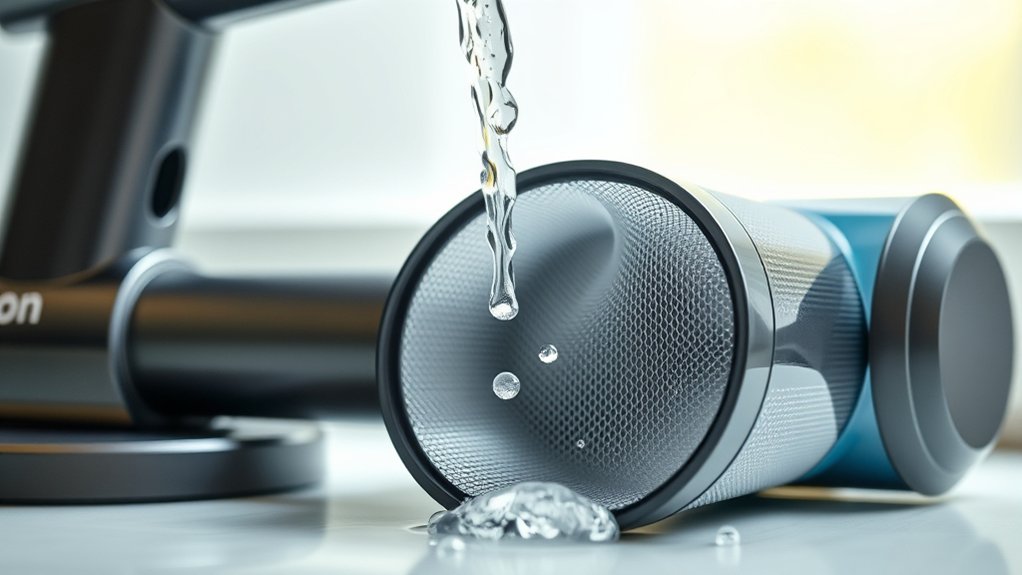
To clean your Dyson wet and dry vacuum filter, first turn off and unplug the vacuum. Remove the filter carefully, then tap it gently to remove loose dirt. Rinse it under warm water without using soap or brushes until clear.
Shake off excess water and let it dry completely for at least 24 hours in a ventilated area. Never use heat to speed up drying. Regular filter care helps maintain strong suction and prevents mold.
Keep going to find tips on avoiding common mistakes and troubleshooting suction issues.
Why You Should Clean Your Dyson Vacuum Filter Regularly
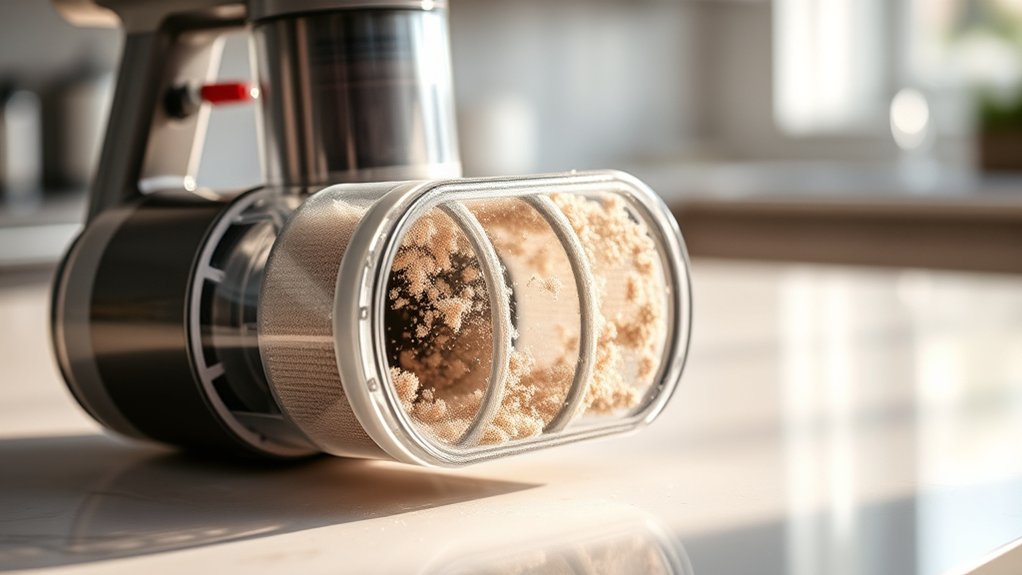
Because dust and debris quickly build up on your Dyson vacuum filter, cleaning it regularly is essential to maintain strong suction and efficient airflow. Regular filter maintenance prevents clogs that reduce performance and overall efficiency.
Regularly cleaning your Dyson filter keeps suction strong and airflow efficient, preventing clogs and performance loss.
When dust, pet hair, and debris accumulate, they restrict airflow, causing the vacuum to overheat or strain the motor.
Dyson recommends inspecting and cleaning your filter at least once a month to guarantee the best filtration and prolong the vacuum’s lifespan.
The best cleaning technique involves removing the filter carefully, rinsing it under cold water without detergent, and letting it dry completely.
Avoid harsh chemicals that can damage the filter material.
Regular inspection and proper removal techniques help you maintain peak performance and maximize your Dyson vacuum’s smooth operation every time.
Taking a little time for this simple task really pays off in the long run.
How to Safely Remove Your Dyson Vacuum Filter
Before you remove the filter, make sure your Dyson vacuum is turned off and unplugged for safety. This step is really important to avoid any accidents.
Next, find the filter, which is usually near the cyclone or dust container. Depending on your model, you might need to twist it or release it gently—just follow the instructions that came with your vacuum.
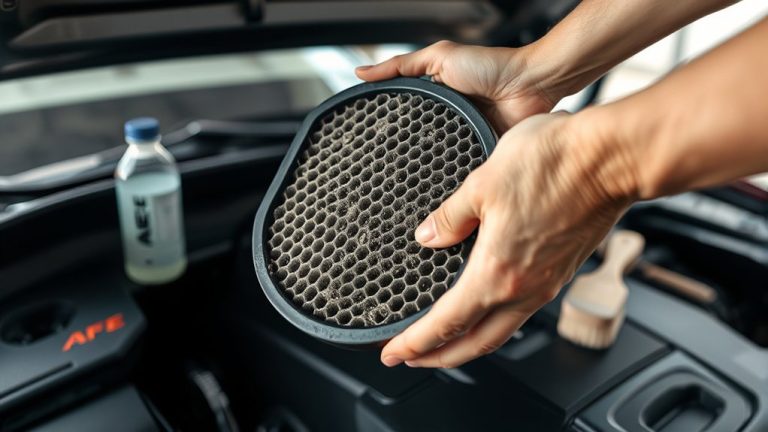
When you handle the filter, be careful not to damage it. If there’s any loose debris, you can clear it away by tapping the filter lightly. It’s a simple way to keep your vacuum working well!
Filter Removal Steps
When you want to remove the filter from your Dyson vacuum, start by turning off and unplugging the machine to guarantee safety.
For effective filter removal, locate the filter near the cyclone or dust container. Depending on your model, you may need to remove the dust bin or open a filter cover panel.
Gently twist or press the release tabs to liberate and lift out the filter. Never force it, as this could cause damage.
Handle the filter carefully to avoid dropping or harming it, and avoid pulling on any connected wires or delicate parts.
Once removed, inspect the filter for debris or damage.
This careful filter removal process ensures your vacuum stays in top condition and prepares the filter for proper cleaning.
Handling Precautions
Although removing the filter might seem straightforward, you should always handle it with care to avoid damage or contamination. Following proper handling precautions guarantees your Dyson vacuum stays in top condition. Keep these steps in mind:
- Always turn off and unplug your vacuum before removing the filter to ensure safety.
- Follow your model’s specific instructions to avoid damaging the filter or vacuum parts.
- Grip the filter gently and avoid using excessive force, preventing tears or cracks.
- Handle the filter carefully to avoid dropping it, which could cause damage or contamination.
How to Remove Dirt From Your Dyson Filter
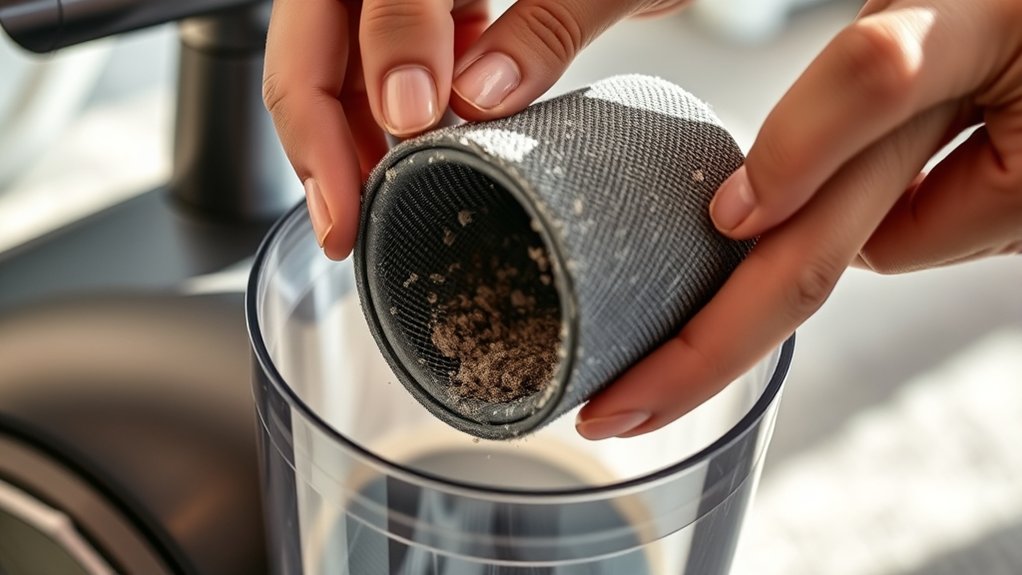
Once you’ve taken the filter out, give it a gentle tap to knock loose any debris.
Then, rinse it under warm water. You might need to shake the filter a bit to get rid of stubborn dirt.
Keep rinsing until the water runs clear.
Finally, let the filter dry completely in a well-ventilated space for at least 24 hours.
This helps keep it working at its best.
Removing Debris Effectively
Because dirt and debris can easily clog your Dyson filter, you’ll want to remove them carefully to keep your vacuum running efficiently. Using the right removal technique helps maintain suction and prolong filter life.
Here’s what you should do: tap the filter gently on the edge of a trash can or sink to dislodge loose dirt. Then, rinse the filter with warm water, shaking it gently to loosen embedded debris until the water runs clear.
Avoid brushes or abrasive tools since they could damage the filter’s delicate parts. If you come across stubborn debris, just tap or gently squeeze the filter to release trapped particles. It’s pretty simple once you get the hang of it!
Drying And Maintenance
After rinsing your Dyson filter, you’ll want to lay it flat in a well-ventilated area and let it dry completely for at least 24 hours before putting it back in the vacuum.
Before drying, gently shake or tap the filter to remove excess water, which helps speed up the drying process.
Avoid using a tumble dryer, microwave, or any direct heat source, as these can damage the filter material.
Make sure the filter is entirely dry to prevent mold, mildew, or unpleasant odors inside your vacuum.
Never reuse a damp or partially dry filter since it can reduce vacuum performance and potentially cause damage.
Proper drying and maintenance will keep your Dyson running efficiently and extend the filter’s lifespan.
How to Shake and Rinse Your Dyson Filter
Before you start shaking and rinsing your Dyson filter, make sure you remove it from the vacuum following the manufacturer’s instructions. Proper cleaning helps keep your vacuum working efficiently.
Here’s how to shake and rinse your filter effectively:
- Fill the filter with warm tap water and gently shake it to loosen debris until the water runs clear.
- Rub the filter gently to remove stubborn dirt, then rinse it thoroughly under warm water.
- Shake out excess water from the filter to prevent moisture from lingering inside.
- Set the cleaned filter aside to dry completely before putting it back in.
Following these steps makes sure your Dyson filter stays clean and ready for peak performance. Remember, thorough cleaning is key to extending your vacuum’s lifespan.
How to Dry Your Dyson Filter Properly
How long should you let your Dyson filter dry to guarantee it’s ready for use? After rinsing it with warm water, you need to let your filter dry completely for at least 24 hours.
Place it in a well-ventilated area to ensure proper airflow, which helps speed up drying without risking damage.
Never use a tumble dryer, microwave, or any direct heat source to dry your filter, as these can cause deterioration.
Before reinserting the filter, check carefully for any remaining dampness. You don’t want to risk mold growth or unpleasant odors.
Using a damp filter can also affect your vacuum’s performance. By allowing your Dyson filter to dry completely, you maintain its efficiency and protect your vacuum from potential water damage.
Mistakes to Avoid When Cleaning Your Dyson Filter
While cleaning your Dyson filter might seem straightforward, there are several common mistakes you should avoid to keep it functioning properly. Avoid these errors to guarantee effective cleaning and maintain your vacuum’s performance.
First, don’t use soap, cleaning solutions, or harsh chemicals. They can damage the filter material. Also, never put the filter in a tumble dryer or microwave to dry it. Heat can warp or degrade it.
Be gentle when removing or cleaning the filter. Forcing it or causing damage can compromise its effectiveness.
And don’t clean or reinsert a damp or wet filter. Always wait until it’s fully dry to prevent mold and odors.
Sticking to proper cleaning practices will extend your Dyson filter’s lifespan and keep your vacuum working efficiently. It’s worth taking the time to do it right!
How Often to Clean Your Dyson Vacuum Filter
Dyson recommends cleaning your vacuum filter at least once a month to keep suction strong and prevent buildup. Regular cleaning stops pet hair, dust, and debris from clogging the filter, ensuring your vacuum performs efficiently.
If you have pets or live in a dusty environment, you should clean the filter every 2-3 weeks to maintain peak suction. Some Dyson models even have digital alerts that remind you when it’s time for cleaning, which helps you stay on top of maintenance.
Consistent cleaning not only boosts performance but also extends your vacuum’s lifespan.
Troubleshooting Suction Problems After Cleaning
Even after cleaning your vacuum filter, you might notice weak suction if the filter isn’t completely dry. Damp filters can reduce suction power and even lead to mold growth. This can make your vacuum perform worse than before.
To troubleshoot suction problems after cleaning, follow these steps:
- Make sure the filter is fully dry. It’s best to leave it to dry for at least 24 hours before putting it back in.
- Check for blockages in the hose or cyclone system. These can restrict airflow and reduce suction.
- Clean and dry the filter regularly. This helps keep suction power strong and prevents pressure buildup.
- Avoid using a damp filter. It will temporarily reduce suction until it’s completely dry and properly reinstalled.
Frequently Asked Questions
Can I Use a Dishwasher to Clean My Dyson Vacuum Filter?
You shouldn’t use a dishwasher to clean your Dyson vacuum filter. Dishwashers can damage the filter’s material, causing warping or degradation that reduces its effectiveness and lifespan.
Instead, rinse your filter by hand under warm water only. Avoid any cleaning methods involving machines or detergents.
After rinsing, let the filter air dry completely for at least 24 hours before reinstalling it to guarantee maximum performance. It’s worth the wait to keep your vacuum working well!
Is It Safe to Clean the Filter With Soap or Detergent?
No, you shouldn’t use soap or detergent to clean your filter. Doing so can damage the filter’s materials and reduce its effectiveness by leaving residues that trap less dust and allergens.
Instead, rinse your filter gently with warm water only. This keeps it in good condition and helps it last longer.
Doing this saves you from frequent replacements and keeps your vacuum working at its best.
How Do I Know When My Filter Needs Replacement?
Think of your filter like a worn-out sneaker. When it’s torn, darkened, or smells bad even after cleaning, it’s time to replace it.
You’ll also notice weaker suction even if the filter looks clean.
Many Dyson models give you a digital alert, so you don’t have to guess.
Generally, swapping it out every 6 to 12 months keeps your vacuum running strong.
Don’t wait for trouble. Replace it when performance dips or you see signs it’s time.
Can I Vacuum the Filter Instead of Rinsing It?
You shouldn’t vacuum the filter instead of rinsing it. Vacuuming won’t remove all the embedded dust and debris, and it can damage the filter’s delicate fibers.
Rinsing the filter with water is the best way to clean it thoroughly and maintain your vacuum’s suction power.
Always follow the manufacturer’s instructions to rinse and dry the filter properly. That way, you’ll ensure it works efficiently and lasts longer.
Will Cleaning the Filter Affect My Vacuum’s Warranty?
Think of your vacuum’s warranty as a safety net that supports your machine. Cleaning the filter properly won’t tear that net.
If you stick to Dyson’s recommended cleaning methods, like rinsing the filter with water and letting it dry fully, you’ll keep your warranty intact.
Avoid harsh or unauthorized cleaning steps. Those could cause damage and risk voiding your coverage.
Conclusion
Cleaning your Dyson wet and dry vacuum filter is quick and essential for peak performance. You might worry it’s too time-consuming, but it only takes a few minutes and prevents costly repairs.
By regularly removing dirt, rinsing, and properly drying the filter, you’ll maintain strong suction and extend your vacuum’s life. Don’t skip this simple step. Your vacuum will thank you with better cleaning power every time.