How Long Does It Take To Dry Clean A Comforter – Guide
Dry cleaning a comforter typically takes about three to four hours of actual processing, including solvent cleaning and controlled drying. You should also factor in extra time for inspection, pre-treatment of stains, and final finishing. This time can vary depending on the fabric type and how severe the stains are.
Delicate fillings may need gentler, slower drying cycles to avoid damage. Proper preparation before cleaning and good care afterward are important steps to keep your comforter in great shape.
Understanding these details will help you get the full picture of the process. Plus, it’ll show you how to maintain your comforter’s quality over time.
Should You Dry Clean Your Comforter?

When should you consider dry cleaning your comforter? If your comforter’s care labels specify “dry clean only,” you should follow this guidance to avoid shrinking, fabric distortion, or loss of fill.
Dry cleaning is especially recommended for delicate fabrics like silk, wool, or cashmere. Water and agitation can easily damage these materials.
Delicate fabrics such as silk, wool, or cashmere benefit from dry cleaning to avoid damage from water and agitation.
Professional dry cleaners use solvents that effectively remove allergens, dust mites, and oils. At the same time, they help preserve your comforter’s shape, fluffiness, and coatings.
Unlike traditional washing, the drying process in dry cleaning prevents excessive moisture exposure. This reduces risks to your comforter’s integrity.
How Long Does Dry Cleaning a Comforter Take?
Dry cleaning a comforter generally takes about 3 to 4 hours of actual processing time. This duration covers the core dry cleaning cycle, where solvents remove dirt without water, preserving delicate fabrics.
But the entire process isn’t just about cleaning. It also includes inspection, pre-treatment, and finishing stages, which add extra time beyond the core cleaning.
For comforters with delicate fabrics or down filling, the processing time can increase. That’s because they need careful handling and controlled drying temperatures between 77°F and 122°F to prevent damage.
While the core dry cleaning time stays pretty consistent, these extra steps and the comforter’s size affect the total turnaround.
Knowing this helps you figure out how long your comforter will be out of use and ensures it gets proper care every step of the way.
Factors That Affect Dry Cleaning Time
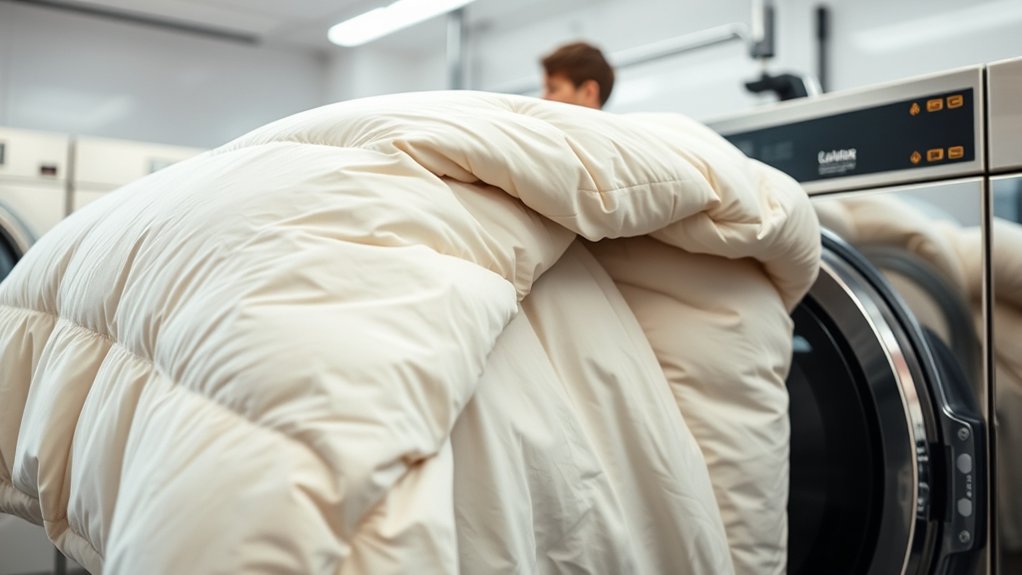
You’ll find that the fabric type and size of your comforter directly affect the dry cleaning time. Delicate or bulky materials need more careful handling, so they tend to take longer.
Stain severity also plays a role. Tougher stains require extra treatment and inspection, which adds to the time.
Plus, seasonal demand can slow things down, since dry cleaners often have higher workloads during busy times of the year.
Fabric Type Impact
Although fabric type might seem like a straightforward factor, it considerably influences the dry cleaning duration because different fabrics need different cleaning methods. When you handle delicate materials like silk or cashmere, expect the cleaning to take longer since these fabrics require gentler solvents and lower temperatures.
On the other hand, dense fabrics like thick wool or certain blends need extended cycles for thorough cleaning and drying. Plus, if the fabric tends to shrink or fade in color, extra pre-treatment steps come into play, which add more time to the process.
Complex fabrics with embellishments or delicate finishes also increase the time needed for inspection and careful handling.
Knowing these fabric-specific factors helps you better anticipate the exact cleaning time, making sure your comforter gets the right care without risking any damage.
Stain Severity Levels
Fabric type sets the groundwork for how your comforter is treated, but stain severity often dictates how long the cleaning process actually takes. Light or fresh stains usually require minimal pre-treatment, enabling a quicker cleaning time. However, deep, oil-based, or stubborn stains demand multiple pre-treatment steps, considerably extending the process.
During inspection, heavily soiled comforters with numerous or complex stains undergo thorough evaluation, which adds additional hours. These comforters often need repeated pre-treatment and extra drying cycles to ensure complete stain removal.
Each stage—inspection, pre-treatment, and drying—directly influences the total cleaning time.
Understanding the stain severity on your comforter helps set realistic expectations for turnaround. Basically, the more soiled your item is, the longer the dry cleaning process will take.
Seasonal Demand Effects
When demand surges during holidays or peak seasons, dry cleaning facilities often face extended turnaround times for comforters. Seasonal demand considerably impacts processing speed, leading to unavoidable delays.
During busy seasons, the volume of comforters increases, stretching resources thin and increasing turnaround time.
Limited staffing and restricted operational hours make these delays even worse. So, it’s not just the number of comforters but also fewer hands and less time that slow things down.
To navigate this, consider scheduling your comforter drop-off well in advance. You can also opt for rush services when possible.
And if your timeline is tight, try to avoid peak periods altogether.
What Happens During the Dry Cleaning Process?
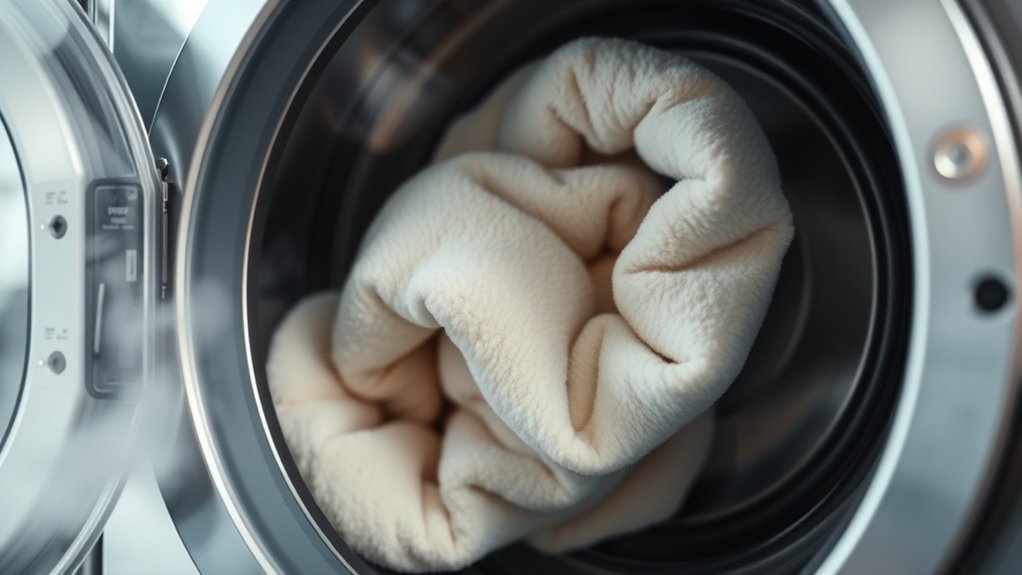
Before the dry cleaning process begins, the comforter undergoes a thorough inspection to identify stains, tears, and specific care instructions. You’ll notice that any stains are pre-treated with specialized removers targeting spots and odors.
Next, the comforter is placed in a dry cleaning machine where organic solvents, commonly perchloroethylene, replace water to clean the fabric. During this process, the comforter tumbles with these chemicals, effectively removing dust mites, bacteria, and dirt without saturating the material.
After cleaning, it’s dried at controlled temperatures to prevent damage.
Finally, the comforter is carefully checked for any remaining issues and pressed to restore its original appearance. This meticulous dry cleaning process ensures your comforter is cleaned safely and thoroughly.
Dry Cleaning vs. Machine Washing: Which Is Better?
How do you decide whether dry cleaning or machine washing is better for your comforter? The choice hinges on the fabric type, care label, and desired cleaning method.
Dry cleaning suits delicate or “dry clean only” comforters. It involves inspection, pre-treatment, and pressing, typically taking 3-4 hours.
Machine washing fits durable comforters with care labels permitting water cleaning. It’s often faster for bulky items but requires thorough drying to eliminate bacteria and dust mites.
Consider these factors: fabric sensitivity and care label instructions, time efficiency between professional dry cleaning and home machine wash, and cleaning thoroughness, including stain removal and allergen elimination.
Selecting the right cleaning method ensures your comforter is effectively and safely cleaned. This helps preserve its quality and longevity.
How to Prepare Your Comforter for Dry Cleaning
Before you take your comforter to the dry cleaner, be sure to check the care label to make sure dry cleaning is the right option. It’s a good idea to inspect the fabric for any damage, too.
If you spot small tears, try to repair them so they don’t get worse. Also, if you see any visible stains, go ahead and pre-treat them with a stain remover about 20 to 30 minutes before you drop it off.
This can really help improve the cleaning results.
Inspect For Damage
Although dry cleaning can revitalize your comforter, you’ll need to thoroughly inspect it for damage beforehand. Carefully inspecting helps prevent worsening existing issues during cleaning.
Focus on identifying tears, holes, or loose threads that require repair to maintain structural integrity.
Pay attention to these critical areas:
- Fabric surface for small tears or holes that could expand
- Seams and edges where stitching may have weakened
- Filling distribution to detect lumps or clumping affecting the comforter’s evenness
Addressing these issues prior to dry cleaning ensures the process won’t make any damage worse.
Also, don’t forget to check the care label for specific instructions and secure any fastenings like buttons or zippers.
This inspection step protects your comforter and helps get the best cleaning results.
Remove Stains Pre-Treatment
Why is stain pre-treatment essential when preparing your comforter for dry cleaning? Effective stain removal starts with pre-treatment. It targets and loosens stains before the main cleaning process.
First, make sure your comforter is dry and free of loose debris. Then, apply a stain remover directly to the affected areas and let it sit for 20-30 minutes. Use a white cloth or sponge to blot gently. Avoid rubbing, since that can push stains deeper.
For stubborn spots, lightly scrub with a soft-bristled brush after applying the stain remover. This helps boost the stain remover’s effectiveness.
This pre-treatment step really improves stain lift during dry cleaning and cuts down the risk of permanent marks.
Proper stain removal preparation means your comforter will come back clean and well-maintained. It’s a simple step that makes a big difference!
Check Care Label
How do you guarantee your comforter survives the dry cleaning process without damage? Start by carefully checking the care label for the manufacturer instructions. This label is your primary guide to determine if dry cleaning is appropriate and how to proceed safely.
Pay special attention to warnings about delicate fabrics that may need extra caution. Focus on these key points from the care label: identification of dry clean only symbols, usually a circle with letters. Also, look for specific guidance on handling delicate fabrics like silk or wool.
And don’t forget the manufacturer instructions to avoid fabric damage and preserve filling. Following these details precisely helps prevent shrinkage, fabric damage, or loss of insulation during dry cleaning.
Always trust the care label to prepare your comforter correctly for the best results.
How Much Does Dry Cleaning a Comforter Cost?
A typical dry cleaning session for a comforter costs between $20 and $50. The price depends on things like the size, fabric type, and whether there are stains that need special treatment.
Your dry cleaning cost can change based on how complex the cleaning is. For example, delicate materials or stain removal services might cost more. Sometimes, there are extra fees if you need repairs or rush service.
If you bring multiple items or are a regular customer, you might get a discount. The pricing reflects the specialized solvents and handling involved.
| Factor | Description | Estimated Cost ($) |
|---|---|---|
| Size | Twin to King | 20–50 |
| Fabric | Cotton, Silk, Down-filled | 25–50 |
| Stain Removal | Additional treatment | 5–15 |
| Repairs | Fabric mending | 10–20 |
| Rush Service | Expedited processing | 10–25 |
Why Proper Drying After Dry Cleaning Matters
Although dry cleaning removes dirt and stains effectively, proper drying afterward plays a crucial role in preserving your comforter’s quality and safety. Proper drying guarantees complete moisture removal, which is essential to prevent mold and mildew growth. It also eliminates residual cleaning solvents that could cause odors or skin irritation.
Maintaining controlled temperatures between 77°F and 122°F during drying avoids fabric damage and preserves the comforter’s fluffiness and shape. To achieve excellent results, consider using low-heat tumble drying with tennis or wool balls to maintain loft. You can also try air drying when it’s suitable for delicate materials.
Just make sure you remove all moisture thoroughly to keep mold from developing. Taking these steps will help keep your comforter fresh, safe, and looking great.
Tips to Maintain Your Comforter Between Dry Cleanings
To keep your comforter in ideal condition between professional cleanings, you should routinely shake and fluff it to maintain loft and guarantee even filling distribution. Consistent fluffing and airing prevent clumping and preserve insulation quality.
Follow care instructions by using a protective duvet cover to minimize stains and dirt. This helps with stain prevention and reduces how often you need to dry clean your comforter.
Promptly spot clean small stains with mild detergent or vinegar to avoid buildup that complicates maintenance.
Also, airing your comforter weekly in sunlight helps eliminate odors and dust mites, keeping it fresh.
When storing your comforter, use a breathable bag and avoid compressing it. This prevents mold growth and fabric damage.
What to Expect When Picking Up Your Dry-Cleaned Comforter
When you go to pick up your dry-cleaned comforter, you can expect them to give it a good once-over to check the quality and see if any repairs are needed.
It’ll be neatly folded and pressed, then covered with plastic or a breathable wrap to keep it clean while you take it home.
Pickup times can vary—some places might have your comforter ready in just a few hours, while others could take up to a week.
They’ll often give you care tips or let you know if they found anything unusual during the cleaning.
Inspection And Quality Check
What should you expect during the inspection and quality check when picking up your dry-cleaned comforter? The dry cleaner will conduct a thorough inspection and damage assessment to make sure the comforter meets professional standards.
This quality check confirms the comforter has been properly cleaned, dried, and pressed without any leftover stains or wrinkles. Key steps include examining the fabric for any remaining dirt, stains, or damage after the dry cleaning process.
They’ll also confirm the comforter is wrinkle-free and evenly pressed. If any repairs or touch-ups are needed, these will be performed based on what’s found during the damage assessment.
Usually, you’ll have the chance to review your comforter’s condition before you accept it. This way, there’s transparency and you can feel confident that the dry cleaning service was done right.
Packaging And Protection
Though your dry-cleaned comforter has already passed inspection, the packaging and protection applied during pickup play a crucial role in preserving its condition. Your comforter will be neatly folded or covered with a plastic cover designed specifically for protection against dust, dirt, and environmental contaminants during transportation.
Some cleaners use breathable plastic covers to prevent moisture buildup and mold growth, which helps keep your comforter in great shape. Proper packaging not only maintains cleanliness but also safeguards the fabric and filling integrity until you’re ready to use it again.
This careful packaging process includes precise folding or pressing, enhancing the comforter’s presentation and preventing wrinkles or damage. Overall, the packaging and protection are integral to delivering your comforter in pristine condition after dry cleaning.
Pickup Timing And Tips
Since your comforter typically requires 3 to 4 hours for dry cleaning, planning your pickup accordingly guarantees a smooth experience. Most dry cleaning services provide an estimated pickup timing when you drop off your comforter, so use this information to schedule your visit effectively.
At pickup, bring your receipt or ID to expedite the process. Before leaving, inspect the comforter thoroughly for any damages or residual stains to address concerns immediately.
Some services offer same-day or express options for faster pickup if needed.
Key pickup tips to remember:
- Confirm estimated timing at drop-off to avoid waiting
- Bring proper identification or receipt for quick service
- Inspect comforter on-site to ensure quality and completeness
Following these steps guarantees a seamless and efficient comforter dry cleaning pickup. It really makes the whole process easier for you!
Frequently Asked Questions
Can I Dry Clean a Comforter With Down Filling?
Yes, you can dry clean a comforter with down filling. Professional dry cleaners use gentle solvents that protect the delicate feathers while removing oils, dirt, and allergens. Just make sure you check the care label first.
Also, confirm with your cleaner that your comforter is suitable for dry cleaning. Proper drying techniques are really important to prevent mold or odor.
This helps ensure your down comforter keeps its loft and warmth after cleaning.
Are Hypoallergenic Comforters Safe for Dry Cleaning?
Just like a trusted guardian shields you from unseen foes, dry cleaning safely protects your hypoallergenic comforter by eliminating allergens and bacteria.
You can confidently dry clean it since chemical solvents don’t leave moisture, which helps prevent mold growth.
However, always check your comforter’s care label or ask a professional to make sure your specific fabric tolerates dry cleaning.
This way, you preserve both the material’s integrity and its hypoallergenic benefits effectively.
How Often Should I Dry Clean My Comforter?
You should dry clean your comforter every 3 to 4 months to keep it fresh and hygienic.
If you have allergies, pets, or use it a lot, consider cleaning it more often.
Try not to over-clean it because that can damage the fabric.
Always check and follow the care label instructions to be safe.
Doing seasonal cleaning helps cut down on allergens effectively.
Keeping up with regular maintenance will make sure your comforter stays in good shape and lasts longer.
Will Dry Cleaning Remove All Odors From My Comforter?
Dry cleaning removes most odors from your comforter by using specialized solvents that neutralize bacteria and oils causing smells. However, it mightn’t eliminate all odors, especially deep-seated ones like mold or mildew.
If you have persistent smells, you may need multiple dry cleaning sessions or additional treatments.
Professional cleaners can add deodorizing agents to enhance odor removal. But some odors might require airing out or specialized cleaning beyond standard dry cleaning.
Can Stains Be Treated During the Dry Cleaning Process?
Think of your comforter as a canvas, and stains as unwanted graffiti. During dry cleaning, specialized stain removers act like skilled artists, carefully targeting and breaking down these marks with solvents designed for each stain type.
You’ll find that while most stains respond well to this precise treatment, deeply set or old blemishes might need extra attention or multiple cycles to vanish completely.
This way, your comforter emerges refreshed and clean.
Conclusion
So, you’ve entrusted your comforter to dry cleaning, expecting a magical transformation in mere minutes. Reality check: it takes time, usually a day or two, because quality care isn’t instant. While you wait, resist the urge to panic or start a comforter countdown.
Proper dry cleaning preserves fluff and fabric better than any DIY hack. Remember, patience isn’t just a virtue; it’s the secret ingredient in keeping your comforter fresh, clean, and cozy.