How To Clean A Dry Paint Brush – Easy Method
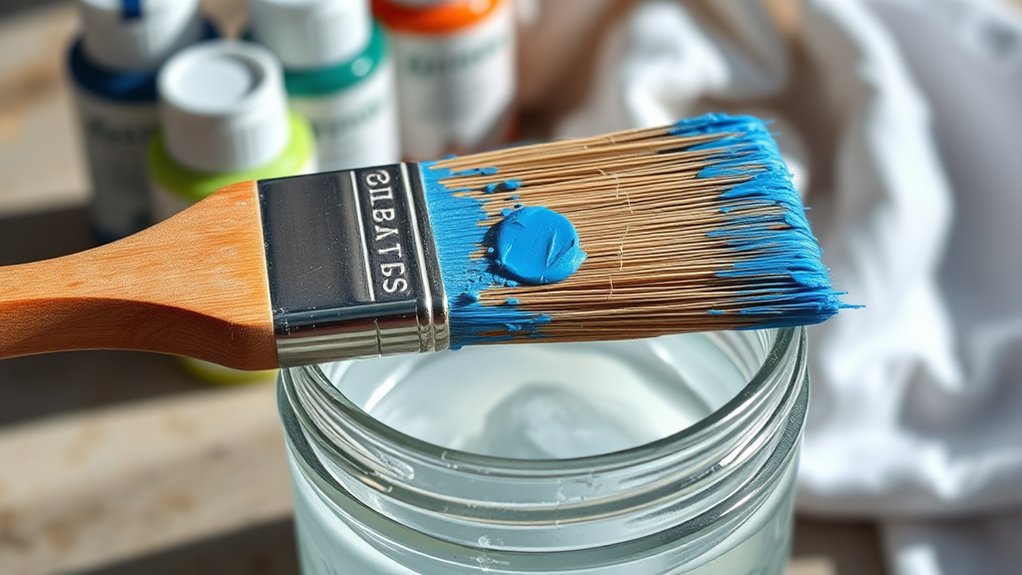
To clean a dry paintbrush easily, soak it fully in rubbing alcohol for 90 to 180 minutes to soften the hardened paint. Then, gently scrub the bristles with your fingers or a comb to loosen residue. Rinse thoroughly with warm water, apply dish soap if needed, and reshape the bristles before drying.
This method preserves brush flexibility while removing tough paint buildup. Keep going to discover detailed steps for soaking, cleaning, and proper brush care.
Why Dry Paintbrushes Are So Hard to Clean
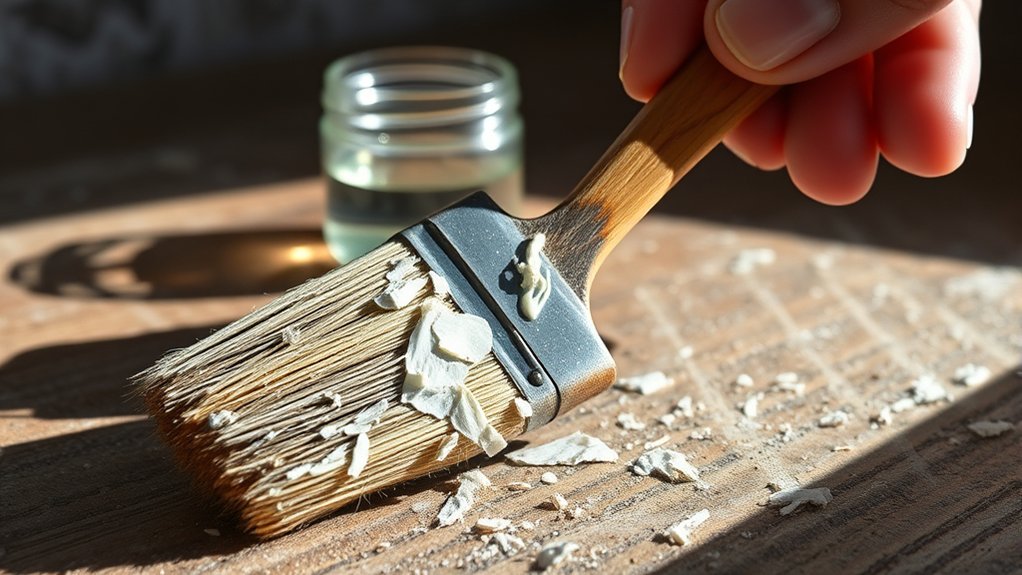
Although you might be tempted to clean a dry paintbrush quickly, dried paint creates a tough barrier that resists removal. When paint hardens inside the brush bristles, it forms a solid, adhesive layer that bonds tightly to each fiber. This makes it hard for water or cleaning solutions to penetrate.
Dried paint forms a stubborn, adhesive barrier inside brush bristles, making quick cleaning nearly impossible.
The longer dried paint stays on the brush, the more firmly it cements itself. Often, you’ll need to soak the brush for a long time or use stronger solvents to break the paint down.
This hardened paint also causes bristles to splay and stiffen, which reduces their flexibility and makes cleaning even trickier.
On top of that, oil-based dried paint develops a resistant chemical film. Water-based cleaning solutions can’t easily dissolve this film.
Knowing this helps explain why dried paintbrushes are so tough to restore without using specific, targeted methods.
Best Household Solutions to Soften Dried Paint on Brushes
You can easily soften dried paint on your brushes by soaking them in common household solutions like distilled vinegar or a baking soda mixture. Just let the brushes sit in the solution for about 1 to 2 hours.
This gives the paint enough time to loosen up without harming the bristles.
These methods are super safe and really easy to do. Plus, they won’t cost you much, making them perfect for keeping your brushes in good shape regularly.
Effective Soaking Liquids
When dried paint hardens on your brush, selecting the right soaking liquid can make all the difference in restoring its softness and usability. Rubbing alcohol is the most effective household option. It dissolves dried paint within 90 to 180 minutes, making paint removal straightforward.
Alternatively, soaking brushes in a mixture of dish soap and warm water helps soften paint, especially when combined with laundry detergent or Simple Green. These solutions begin to loosen paint after about three hours.
Vinegar can also loosen dried paint but is less effective than alcohol or soap-based solutions.
Avoid mineral spirits for water-based paints, as they tend to harden paint further and complicate cleaning.
To soak your brush properly, choose a liquid that matches the paint type. Then, allow sufficient time for soap or alcohol to work efficiently.
Soaking Time Importance
Selecting the right soaking liquid is only part of the process; allowing sufficient time for the solvent to work is just as important. Soaking time directly impacts how effectively the solvent penetrates dried paint layers to soften dried paint on your brush.
For instance, soaking brushes in rubbing alcohol for at least 90 minutes considerably loosens hardened paint, making manual cleaning easier. Extending soaking time to three hours or even overnight increases solvent penetration, resulting in near-complete paint removal. Shorter durations, like 30 minutes, often fail to soften stubborn buildup adequately.
To restore your brush’s condition efficiently, prioritize longer soaking times tailored to the paint’s hardness. Proper soaking time ensures the solvent thoroughly softens dried paint, facilitating effortless cleanup and prolonging your brush’s lifespan.
It really pays off to be patient with this step!
Safety and Accessibility
Although professional solvents can quickly strip dried paint, household solutions offer safer and more accessible alternatives that minimize exposure to harmful fumes and chemicals. Using common items like rubbing alcohol, vinegar, and baking soda guarantees safety without sacrificing effectiveness.
You’ll avoid toxic fumes and harsh chemicals while softening dried paint efficiently. It’s a win-win situation if you want something gentle but still gets the job done.
| Solution | Soaking Time | Safety & Fumes |
|---|---|---|
| Rubbing Alcohol | 90-180 minutes | Highly effective, low fumes |
| Vinegar | 1-2 hours | Mild fumes, less effective |
| Baking Soda & Soap | Variable | Non-toxic, safe for indoor use |
| Dish Soap & Water | Immediate use | No fumes, best for wet paint only |
Household solutions balance safety and accessibility, making them ideal for everyday brush cleaning. So, if you want something easy and safe, these options are definitely worth trying.
How Long to Soak a Dry Paintbrush for Effective Cleaning
Because the soaking duration directly affects the effectiveness of cleaning, you should soak your dry paintbrush in rubbing alcohol for at least 90 minutes. Three hours is ideal for most cases.
A 90-minute soak usually suffices for water-based paints, effectively loosening dried paint. However, oil-based or heavily dried paint requires longer cleaning time, up to 3 hours, to fully dissolve and restore bristles.
Soaking beyond 3 hours can help with stubborn dried paint, but extending it past 16 hours offers little added benefit and risks damaging your brush.
By sticking to this soaking time, you guarantee maximum cleaning without hurting the bristles.
This way, your paintbrush will be ready to use again while keeping its lifespan intact.
Step-by-Step Guide to Soaking and Cleaning Your Dry Paintbrush
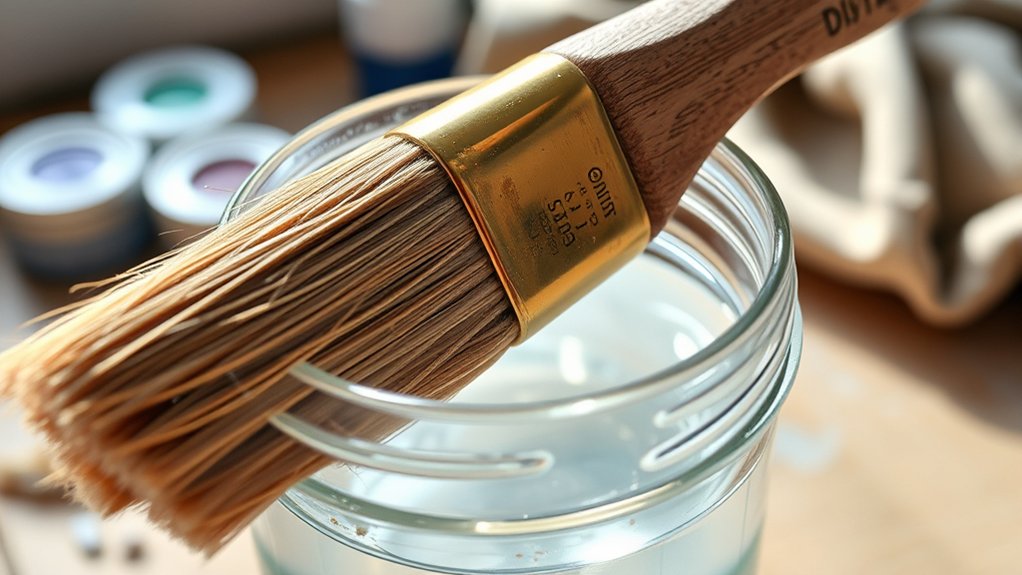
First, get a container and fill it with rubbing alcohol—enough to completely cover your dry paintbrush. Let it soak there for about 90 to 180 minutes. This helps break down any hardened paint stuck in the bristles.
Once the soaking is done, gently scrub the bristles. You can use a comb or just your fingers to work out any leftover paint residue. Be careful not to damage the bristles while you’re at it.
After that, give your brush a good rinse with warm water. Then, dry it off and reshape the bristles so your brush is ready to use again. Easy, right?
Preparing The Soaking Solution
When preparing to clean a dry paintbrush, you’ll need to choose an effective soaking solution that can break down the hardened paint without damaging the bristles. Opt for rubbing alcohol, Simple Green, or a mix of laundry detergent and warm water.
Pour an equal amount of your chosen soaking solution into a disposable cup, making sure there’s enough to fully submerge the bristles.
Fully immersing the dried paintbrush in the solution is critical for softening the dried paint. This preparation sets the stage for efficient brush cleaning.
By selecting the right soaking solution and ensuring complete coverage of the bristles, you maximize the chances of loosening stubborn paint.
That makes the next steps, like rinsing and combing the bristles, much easier and more effective.
Optimal Soaking Duration
After you’ve prepared the soaking solution and fully submerged your dry paintbrush, determining the best soaking duration becomes your next priority. The ideal soaking duration depends on the brush type and the extent of hardened paint.
Using rubbing alcohol, soak your brush between 90 to 180 minutes for effective paint softening.
Keep an eye on the brush as it soaks to avoid overexposure, which can damage the bristles. Sometimes, soaking overnight can help remove tough paint, but that usually means you’ll need to do some extra scrubbing afterward.
Soak softer bristles for about 90 minutes. Tougher, hardened paint might need closer to 180 minutes.
Try to stick to consistent soaking times for similar brushes so you know what works best.
Make sure to check your brush periodically to see how the paint is softening. And don’t go beyond the recommended time to keep those bristles in good shape.
This method will help you get your brushes clean reliably and efficiently every time.
Post-Soak Cleaning Tips
Although soaking softens the hardened paint, you’ll need to take careful steps to fully clean your dry paintbrush. After you soak the brush in rubbing alcohol for 90 minutes, gently use a brush comb or your fingers to dislodge any remaining paint particles.
Then, rinse the bristles thoroughly with warm water to wash away loosened paint and residual alcohol. Finally, pat the brush dry with a clean cloth and carefully reshape the bristles to maintain their original form.
| Step | Action |
|---|---|
| 1. Soak | Submerge bristles in rubbing alcohol |
| 2. Scrub | Use brush comb or fingers gently |
| 3. Rinse | Flush bristles with warm water |
| 4. Dry | Pat dry with a clean cloth |
| 5. Reshape | Restore bristle form before storing |
How Rubbing Alcohol Quickly Dissolves Dried Paint on Brushes
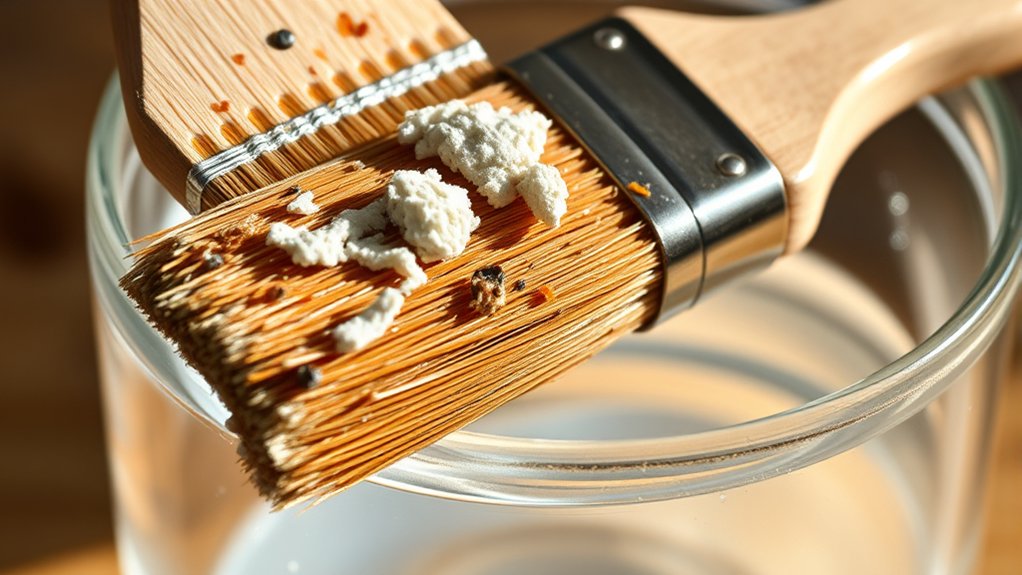
Because rubbing alcohol breaks down the chemical bonds in dried paint, it quickly dissolves residue on brushes, making cleanup straightforward. When you soak your dried paintbrush in rubbing alcohol, it softens the bristles and loosens stubborn paint particles, restoring your brush efficiently.
Rubbing alcohol dissolves dried paint by breaking chemical bonds, softening bristles and making brush cleanup easy.
For best results, fully submerge the brush and let it soak for 90 to 180 minutes. During this time, you’ll notice paint particles floating in the alcohol, confirming the solvent’s effectiveness in breaking down dried paint.
- Rubbing alcohol targets chemical bonds in dried paint for quick dissolution
- Soaking time of 1.5 to 3 hours guarantees thorough cleaning
- Paint residue visibly separates in the alcohol during soaking
- Bristles soften, enabling easier removal of dried paint
- Clean brushes emerge nearly as good as new after treatment
Using Soap and Warm Water to Finish Cleaning Dry Brushes
How do you effectively finish cleaning a dry paintbrush after using rubbing alcohol? Start by rinsing the brush under warm water to remove loosened paint.
Apply a small amount of dish soap or Murphy’s Oil Soap to the damp bristles. Gently rub the brush to break down any remaining paint and soften the bristles.
Rinse thoroughly with warm water while continuing to work the bristles until the water runs clear. For stubborn dried paint, soak the brush in warm soapy water for 15-30 minutes before repeating the rinsing process.
This method helps clean deep into the bristles and restores the brush’s flexibility.
Using soap and warm water ensures your brush is clean and ready for use, preserving its quality and extending its lifespan. It’s a simple step that really makes a difference in keeping your brushes in great shape.
How to Reshape and Dry Your Brushes After Cleaning
Once you’ve thoroughly cleaned your paintbrush, reshaping the bristles before drying is essential to maintaining its performance. To properly reshape and dry brushes, follow these precise steps:
After cleaning, reshaping bristles before drying is key to preserving your paintbrush’s performance and longevity.
Gently reshape the bristles with your fingers to restore their original form.
Blot excess moisture using a clean, dry cloth or paper towel for faster, even drying.
Store brushes flat or with bristles pointing downward to prevent water damage in the ferrule.
Wrap the brush in paper or a protective cover to hold its shape during drying.
Allow brushes to air dry completely in a well-ventilated area to avoid mold and preserve bristle integrity.
This way, your brushes will stay in great shape and last longer.
How to Store Dry Paintbrushes to Prevent Future Paint Build-Up
To prevent future paint build-up, make sure your brushes are completely dry before storing them. After cleaning, pat your dry paint brushes with a clean, dry cloth to remove all residual moisture. This helps prevent mold and mildew growth.
For effective brush storage, keep them in a well-ventilated, dust-free environment. Ideally, store them in their original covers or wrapped in plastic. It’s best to keep brushes upright or flat within a storage container to maintain bristle integrity and preserve their shape.
Also, regularly check your stored brushes for dust, debris, or damage. Clean them promptly before reuse if needed.
Following these steps will keep your brushes in excellent condition and ready for your next project without any unwanted paint build-up messing with their performance.
Frequently Asked Questions
Can I Clean a Dry Paintbrush Without Soaking It First?
Yes, you can clean a dry paintbrush without soaking it first by using rubbing alcohol or vinegar to moisten the bristles and loosen the paint.
Then, scrub the brush with a stiff-bristled brush or paint comb to remove dried paint. Applying a paint stripper directly to stubborn spots also helps.
While soaking is more effective, these methods let you clean the brush quickly when soaking isn’t an option. So, if you’re in a hurry or don’t have time to soak, this can be a handy way to get your brush ready for the next use.
What Types of Paintbrushes Are Hardest to Clean When Dry?
Think of trying to untangle a tightly knotted fishing line. Natural bristle brushes with oil-based or alkyd paints are just as stubborn when dry.
You’ll find fine detail brushes with densely packed bristles and stiff, angled brushes used for heavy coatings equally tough. Dried paint clings like cement in hidden crevices.
Synthetic bristles might seem easier when wet, but once hardened, they become a near-impossible fortress of dried paint.
Is It Safe to Use Bleach to Clean Dried Paintbrushes?
No, you shouldn’t use bleach to clean dried paintbrushes. Bleach damages the bristles, making them brittle and weak. This ruins your brush over time.
It’s also ineffective at removing dried paint and can even set it deeper into the bristles. Plus, bleach can create harmful fumes when mixed with paint residues.
Instead, go for safer alternatives like rubbing alcohol or specialized brush cleaners. These options help preserve your brush’s quality and lifespan.
How Often Should I Clean Paintbrushes During a Painting Project?
You should clean your paintbrushes every few hours during a project, not just at the end. Imagine a brush left untouched next to one you rinse regularly. The first stiffens and loses shape, while the second stays flexible and precise.
By cleaning frequently, you prevent paint buildup, maintain smooth strokes, and extend your brush’s life. Quick rinses during breaks keep bristles soft.
This way, your work stays professional and your tools stay reliable.
Can Dried Paintbrushes Be Restored for Fine Detail Work?
Yes, you can restore dried paintbrushes for fine detail work by soaking them in rubbing alcohol for about 90 minutes. This dissolves hardened paint and softens bristles, making them flexible again.
You might also soak brushes longer in Murphy’s Oil Soap or dish soap, then manually clean remaining residue.
With proper care and restoration, even stiff brushes regain precision.
This saves you from replacing tools and ensures crisp, detailed painting results.
Conclusion
Cleaning a dry paintbrush is like reviving a tired athlete. Just as muscles need stretching and care, your brush needs soaking and gentle scrubbing to regain its flexibility.
Studies show brushes left unclean can lose up to 70% of their lifespan. By following these precise steps, you not only restore your brush’s performance but also save money and reduce waste.
Treat your tools well, and they’ll serve you faithfully on every project.