Will Oxiclean Bleach Colors – Here’s the Answer
Worried that OxiClean might bleach your favorite colored clothes? You’re not alone. Many people want a stain remover that works hard without ruining the colors they love. The good news is that OxiClean is generally safer for colored fabrics than chlorine bleach, but using it the wrong way can still lead to fading or discoloration.
You can use OxiClean safely on colored fabrics because it relies on oxygen bleach, which is gentler than chlorine bleach. However, it can still cause fading or discoloration if overused or applied improperly, especially on sensitive fabrics or non-colorfast dyes. To prevent damage, always test a hidden area first and follow dilution instructions carefully. If you want to understand fabric sensitivities, stain risks, and corrective steps, there’s more detailed guidance ahead.
How Does OxiClean Work on Colored Fabrics?
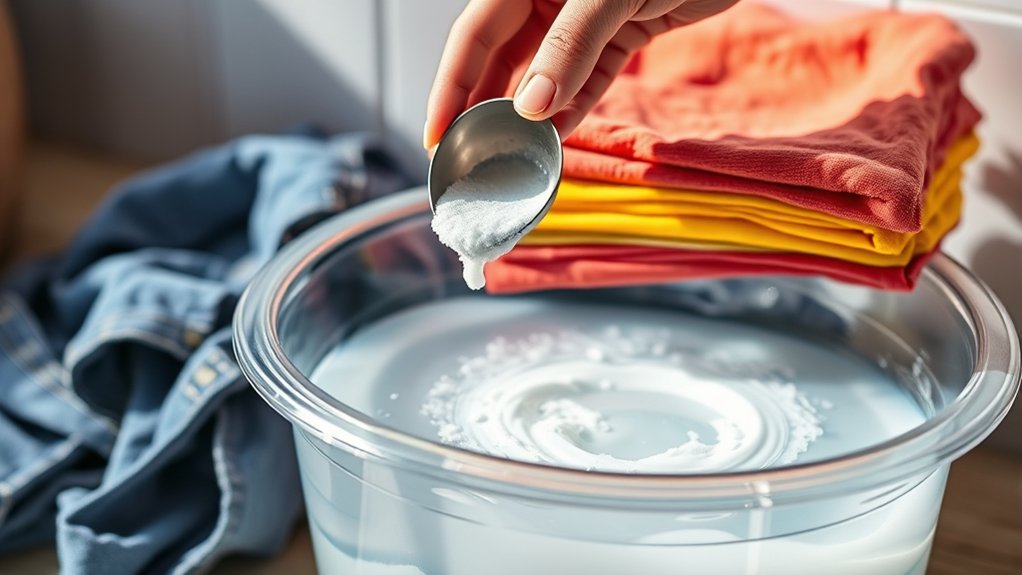
Although many stain removers risk fading colors, OxiClean™ White Revive™ effectively cleans colored fabrics by using oxygen bleach instead of chlorine bleach, which preserves color integrity.
Oxygen bleach releases active oxygen molecules that break down stains without disrupting dye molecules, unlike chlorine bleach. The product’s non-ionic detergents aid in lifting stains by reducing surface tension, allowing better penetration into fibers without causing color bleeding.
When diluted, OxiClean™ maintains a pH up to 11, which balances stain removal efficiency and fabric safety. For best results, you should mix it with warm or hot water to activate its stain-fighting properties while safeguarding colors.
However, always test a hidden fabric section first to confirm colorfastness and avoid unexpected discoloration during treatment.
Can OxiClean Bleach or Fade Colored Fabrics?
While OxiClean™ uses oxygen bleach to protect color integrity better than chlorine bleach, its interaction with colored fabrics requires careful consideration. You should always test for colorfastness because some dyes react unpredictably to cleaning agents, risking fading.
OxiClean™ is generally safe for colors since it lacks chlorine, but overuse can cause concentrated spots that look like stains, especially on darker or vibrant fabrics.
Additionally, OxiClean™ can sometimes worsen discoloration if it reacts with pre-existing stains on colored textiles. To minimize risks, follow recommended instructions precisely.
Dissolve OxiClean™ fully in warm water before application and avoid excessive quantities. This approach helps maintain fabric color while leveraging OxiClean™’s stain-removal capabilities without unintended bleaching or fading effects.
Why Does OxiClean Sometimes Leave Stains or Spots on Colors?
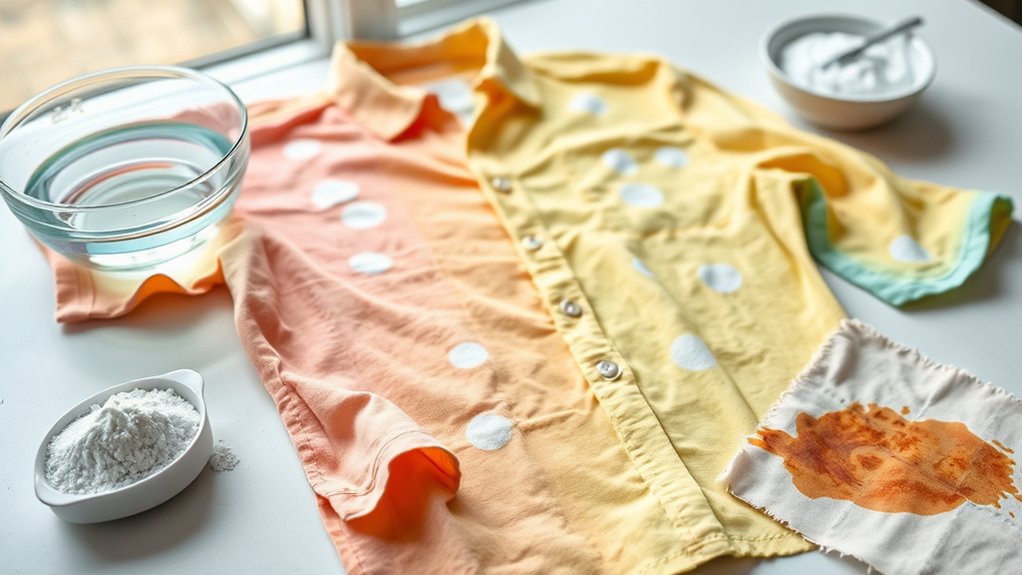
Because OxiClean releases oxygen to break down stains, using too much or applying it incorrectly can cause concentrated spots that resemble stains on colored fabrics. Undissolved granules may linger, creating bleach-like marks.
Additionally, some dyes aren’t colorfast, causing blotchy discoloration when exposed to OxiClean. If OxiClean interacts with pre-existing stains, it can worsen discoloration instead of removing it.
Testing colorfastness on hidden fabric areas is essential.
| Cause | Effect on Colored Fabrics |
|---|---|
| Excessive OxiClean | Concentrated oxygen spots |
| Undissolved powder | Bleach-like residue marks |
| Non-colorfast dyes & stains | Blotchy or worsened discoloration |
Understanding these factors helps you avoid unwanted staining.
Which Fabrics and Dyes Are Most Sensitive to OxiClean?
Dark dyes and delicate fibers often react differently, so test a hidden spot first.
Fabric Types At Risk
Although OxiClean works effectively on many fabrics, certain materials and dyes remain vulnerable to its oxidative properties.
Wool, silk, and fabrics labeled “dry clean only” are particularly susceptible to fiber weakening and color distortion when exposed to OxiClean.
Some synthetic fibers, such as polyester, may also undergo discoloration, especially if their dyes lack stability under oxidative stress.
Natural fibers like cotton and linen generally tolerate OxiClean better but still require caution with colored items.
Dark and bright dyes are prone to bleeding, making pre-testing on an inconspicuous area essential to evaluate colorfastness.
Dye Stability Factors
When treating fabrics with OxiClean, understanding dye stability is essential to prevent color loss or bleeding. Wool and silk, due to their delicate fibers, are highly sensitive and should avoid OxiClean altogether.
Dark or vibrant colors, often containing reactive dyes, are particularly vulnerable to fading or bleeding when exposed to oxygen-based cleaners. These reactive dyes, common in bright fabrics, chemically bond with fibers but can degrade under oxidative stress, leading to discoloration.
Additionally, fabrics labeled “dry clean only” typically feature dyes incompatible with OxiClean’s chemistry, risking damage if treated. To minimize risk, you should never apply OxiClean without first testing an inconspicuous area for colorfastness.
This step helps you assess the dye’s reaction, ensuring the treatment preserves fabric integrity without compromising color stability.
Colorfastness Testing Methods
Since OxiClean’s oxygen-activated formula can compromise certain dyes, performing a colorfastness test is essential before treatment. Apply a small amount of OxiClean to an inconspicuous fabric area, wait 5-10 minutes, then check for discoloration or fading.
This test helps prevent damage, especially on sensitive fabrics and dyes.
| Fabric Type | Sensitivity to OxiClean |
|---|---|
| Wool | High – prone to color bleeding |
| Silk | High – color fading common |
| Synthetic Fabrics | Variable – some react adversely |
| Cotton | Moderate – usually safe |
| Mixed Fabrics | Variable – test each component |
Dyes that are dark or bright and unstable exhibit higher risk. Always follow care label instructions and perform spot tests for safe use.
How Do You Test Colorfastness Before Using OxiClean?
How can you guarantee your fabric won’t lose color before applying OxiClean?
Begin by selecting an inconspicuous fabric area for testing.
Prepare a test solution by dissolving one tablespoon of OxiClean powder in a cup of warm water, ensuring full dissolution.
Using a cotton swab or cloth, apply a small amount of this solution to the chosen spot.
Allow it to sit undisturbed for 1 to 5 minutes.
Afterward, gently blot the area with a clean white towel.
If no color transfers to the towel, the fabric demonstrates colorfastness and is likely safe for OxiClean treatment.
Conducting this test is essential to prevent unexpected discoloration or damage, especially on dyed fabrics, before proceeding with the full cleaning process.
How Can You Avoid Color Damage When Using OxiClean?
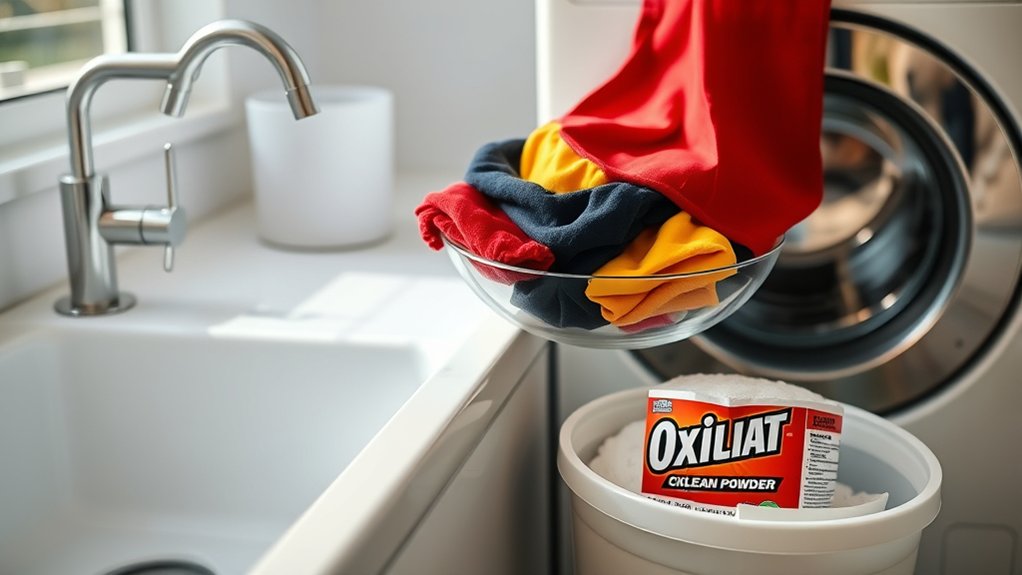
Why does proper preparation matter when using OxiClean on colored fabrics? It’s essential because it minimizes the risk of color damage and uneven fading.
You want to preserve fabric integrity while effectively removing stains.
To avoid color damage, follow these key steps:
- Test an inconspicuous area first to confirm colorfastness and prevent unexpected discoloration.
- Use OxiClean™ White Revive™, a non-chlorine formula designed for colored fabrics, reducing bleaching risks.
- Dissolve OxiClean fully in warm or hot water to avoid undissolved granules that can cause bleach-like spots.
- Never apply OxiClean to dry-clean-only, wool, or silk fabrics, which are highly susceptible to damage.
What Should You Do If OxiClean Stains Your Clothes?
If the discoloration remains, the next step is checking whether the fabric is still safe to treat.
Immediate Stain Treatment
Although OxiClean is effective for stain removal, accidental discoloration can occur, requiring immediate intervention to prevent permanent damage. If you notice a stain caused by OxiClean, act quickly to mitigate its effects.
Follow these steps:
- Avoid drying the garment immediately, since heat sets stains and complicates removal.
- Rinse the affected area under cold water promptly to limit stain absorption.
- Apply a neutralizing solution; mix vinegar or lemon juice with cold water and let it sit for 10–15 minutes to counteract bleaching.
- Gently rub a stain remover or liquid detergent into the fabric, wait 15 minutes, then rinse thoroughly before rewashing separately with cold water.
These precise actions increase the likelihood of reversing discoloration without compromising the fabric’s integrity.
Effective Stain Removal Steps
When OxiClean causes discoloration on your clothes, immediate and methodical action can improve your chances of restoring the fabric.
First, avoid drying the garment, as heat sets the stain, complicating removal. Rinse the affected area promptly under cold water to limit stain absorption.
Next, neutralize the bleach effect by applying a solution of vinegar or lemon juice mixed with cold water; allow it to sit for 10-15 minutes.
Follow by applying a stain remover or liquid detergent directly to the fabric, gently rubbing it in and letting it rest for 15 minutes.
Finally, rewash the item in cold water with regular detergent. Confirm the stain’s disappearance before air drying, as heat from a dryer may permanently fix residual discoloration.
How Do You Remove Oxiclean Stains From Colored Fabrics?
How can you effectively remove OxiClean stains from colored fabrics without causing further damage? Addressing OxiClean’s oxidative residue demands prompt and precise steps to neutralize and eliminate the stain while preserving fabric integrity.
Effectively removing OxiClean stains requires prompt, careful steps to neutralize oxidation and protect colored fabrics.
- Rinse the stained area immediately with cold water to halt further absorption and dilute the oxidizing agents.
- Neutralize residual bleach by applying a mixture of vinegar or lemon juice with cold water; let it sit for 10–15 minutes to counteract chemical effects.
- Treat the area with a stain remover or liquid detergent, gently rubbing it in and allowing the solution to penetrate for 15 minutes.
- Rewash separately in cold water with regular detergent, then air dry to prevent heat from setting any remaining stain; inspect before additional washing.
What Are Color-Safe Whitening Alternatives to OxiClean?
What options do you have if you want to whiten clothes without risking color damage? OxiClean™ White Revive™ presents a viable color-safe alternative to traditional bleach.
It employs oxygen bleach technology, which delivers 40% more whitening power than chlorine bleach while preserving fabric integrity.
This non-chlorine formula effectively removes stubborn stains from mixed loads without fading or harming colors. Available in powder, liquid, and convenient pak forms, it adapts to diverse laundry routines.
Using White Revive™ regularly not only maintains fabric brightness but also prevents dinginess, extending garment lifespan.
If you prioritize both whitening efficacy and color safety, this product represents a technically sound choice, combining potent stain removal with gentle treatment suited to delicate and colored fabrics.
Frequently Asked Questions
Can Oxiclean Be Used in Both Washing Machines and Hand Washing?
Yes. You can use OxiClean in both washing machines and for hand washing. Add it directly to the drum or dissolve it in warm water for soaking, and test fabric colorfastness before treating mixed loads to avoid damage.
Is Oxiclean Safe for Use on Upholstery or Carpets?
Yes, you can use OxiClean on water-washable upholstery and carpets if you test for colorfastness first. Mix one scoop per 16 ounces of water, then apply, blot, and rinse to help avoid residue or damage.
How Long Should Oxiclean Soak Time Be for Tough Stains?
1 to 6 hours. Use warm water and fully submerge the item, then soak long enough to lift the stain without going past 6 hours.
Can Oxiclean Remove Odors as Well as Stains?
Yes, OxiClean can remove odors. Its oxygen-activated formula breaks down odor-causing molecules, and you can use it as a pre-soak or add it to laundry. It is meant to leave fabrics fresh and odor-free without damaging colors.
Does Oxiclean Have Any Environmental or Safety Certifications?
Yes, OxiClean holds multiple safety and environmental certifications and is intended to meet regional standards. Its neutral pH, chlorine-free formula, and non-ionic detergents are designed to help reduce environmental impact and fabric damage.
Conclusion
So, you want to brighten colors without turning your favorite shirt into a science experiment? OxiClean won’t bleach colors like chlorine, but it can still leave unwanted spots if you’re careless. Testing colorfastness isn’t just a suggestion—it’s your best defense.
Ironically, the “color-safe” label doesn’t guarantee safety, so precision and caution are your real allies. If OxiClean betrays you, prompt stain removal is essential. In cleaning, trust but verify—always.