Who Invented Oxiclean – Company Facts
If you’ve ever battled a stubborn stain on your clothes, carpet, or laundry, you’re not alone. Many people struggle to find a product that actually works without being harsh or full of strong chemicals. That’s where OxiClean comes in, and its backstory is just as interesting as the product itself.
You’ll find that Max Appel invented OxiClean in the late 1990s, creating a powerful, non-toxic stain remover using oxygen-based cleaning agents. He launched it through his company, Orange Glo International, which focused on safe, eco-friendly products.
The brand gained huge popularity after aggressive marketing by Billy Mays and later expanded under Church & Dwight’s ownership. OxiClean’s unique formula set it apart, revolutionizing household stain removal. Discover how these factors combined to shape its success.
Who Invented OxiClean and How It Was Created
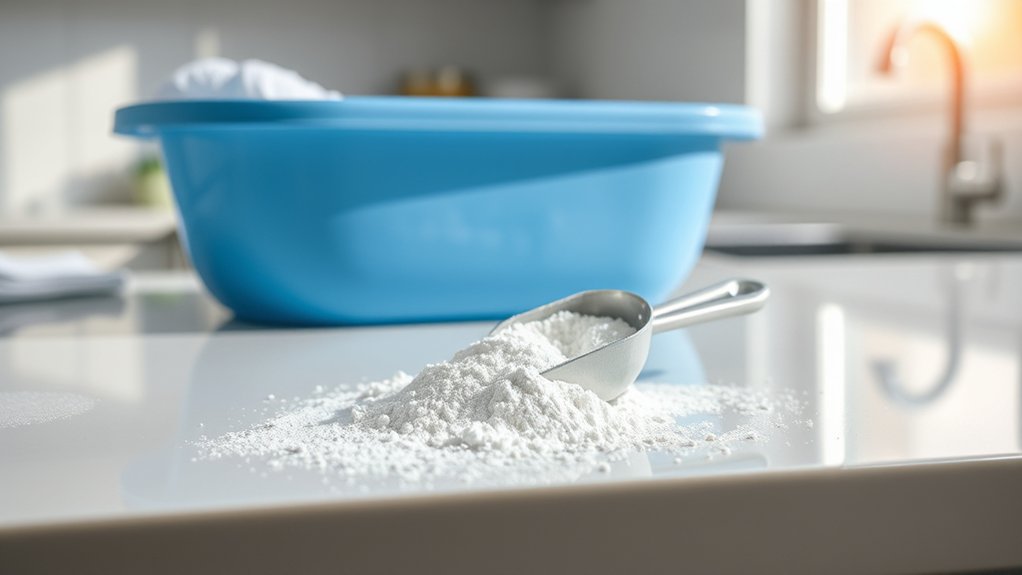
Max Appel invented OxiClean in 1997, aiming to develop a powerful stain remover that’s safe for various surfaces and fabrics. You’ll find that the product’s key ingredient is sodium percarbonate, which releases hydrogen peroxide when mixed with water. This chemical reaction makes OxiClean effective at breaking down tough stains without damaging materials.
When Billy Mays started pitching OxiClean in 2000 infomercials, you saw firsthand how its live demonstrations highlighted immediate results, boosting its popularity. The brand quickly became well-known, expanding its product line after Church & Dwight acquired it in 2006.
If you’re curious about why OxiClean succeeded, it’s largely due to innovative marketing and clear proof of effectiveness, which helped it become a trusted household name.
The Founding of Orange Glo International and OxiClean’s Origins
That early marketing push set the stage for wider consumer awareness and household adoption.
Origins Of Orange Glo
Although the non-toxic cleaning market was still emerging in the early 1990s, Orange Glo International quickly made its mark after being founded in 1994 by Max Appel. You’ll find that the company initially focused on creating non-toxic cleaning products, emphasizing safety and effectiveness.
In 1998, they introduced OxiClean, a stain remover formulated with sodium percarbonate, which releases hydrogen peroxide when dissolved in water. This innovation made OxiClean a versatile and popular cleaning agent.
The success of Orange Glo and OxiClean set the stage for future growth, leading to the company’s acquisition by Church & Dwight in 2006.
This acquisition expanded OxiClean’s product line and distribution, reinforcing its presence in the cleaning market.
Development Of OxiClean
When the need for effective stain removal grew in the early 1990s, Orange Glo International stepped up by developing OxiClean, a product designed to tackle tough stains with ease.
Max Appel, the founder, created the original formula using sodium percarbonate, a compound that releases oxygen when dissolved in water, breaking down stains efficiently. You can see how the product’s oxygen-based cleaning power set it apart from traditional cleaners.
OxiClean debuted publicly in 1998 and quickly gained attention, especially through infomercials.
This success allowed Orange Glo to expand the OxiClean brand with various cleaning products.
Later, in 2006, the company was acquired by Church & Dwight, boosting OxiClean’s market presence and making it more widely accessible to consumers like you.
Early Sales Strategies
Orange Glo International, founded in 1996 by Max Appel, specialized in non-toxic cleaning products and laid the foundation for OxiClean’s success.
You’ll see that Appel recognized OxiClean’s potential early on and brought it to market in 1998 with Billy Mays pitching the product through infomercials. Mays’ energetic style and live demonstrations quickly helped OxiClean gain traction, making it a household name by the early 2000s.
You’d notice that aggressive pricing and compelling marketing were central to this growth. As demand soared, the product line expanded to include various stain removers and laundry products.
The brand’s acquisition by Church & Dwight in 2006 further solidified its place in the cleaning industry.
These early sales strategies set the stage for OxiClean’s lasting success.
Max Appel’s Development of the OxiClean Formula
The next section explains how his formula moved from testing into commercial production.
Origin of Formula
Although many stain removers existed before, Max Appel set out in the mid-1990s to create a formula that combined effectiveness with non-toxicity and environmental safety. He developed a formula featuring sodium percarbonate, which releases oxygen when mixed with water to break down stains efficiently.
You can see how this key ingredient allows OxiClean to tackle a wide range of stains on different surfaces and fabrics.
Appel introduced the product under the brand name “OxiClean” in 1997, emphasizing its stain-fighting power. The formula’s origin reflects Appel’s goal to offer consumers a safer, environmentally friendly alternative without sacrificing cleaning strength.
His work laid the foundation for OxiClean’s later success and expansion into a broader product line.
Innovation in Cleaning
When Max Appel developed OxiClean in the 1990s, he focused on creating a versatile, non-toxic formula that could effectively clean a variety of surfaces and fabrics.
You’ll find that OxiClean’s unique formula uses sodium percarbonate, which releases oxygen when mixed with water. This reaction breaks down stains and dirt efficiently, making it highly effective.
Although initially marketed as a laundry additive, its stain-removing power quickly gained attention for use on multiple materials.
Appel’s innovation emphasized safety and eco-friendliness, appealing to those seeking non-harmful cleaning alternatives. This approach set OxiClean apart in the market, combining strong cleaning performance with environmental consciousness.
You can see how this formula’s development marked a significant innovation in cleaning products.
Early Product Development
Because Max Appel wanted a safer alternative to harsh chemical cleaners, he developed the OxiClean formula in the early 1990s with a focus on non-toxic, oxygen-based stain removal.
You’ll find that the formula uses sodium percarbonate, which releases oxygen when mixed with water, making it highly effective at breaking down stains on various surfaces. Appel’s goal was to create a product that cleaned powerfully without relying on harsh chemicals, offering a safer option for consumers.
OxiClean first launched in 1998, initially marketed through home shows before gaining wider recognition via infomercials.
Its early success set the stage for its later popularity, helped by pitchman Billy Mays. This development marked a significant innovation in safer, oxygen-based cleaning products.
How Marketing Fueled OxiClean’s Early Success
Billy Mays captured consumer attention in 1998 by pitching OxiClean with his signature high-energy style, making the product stand out in a crowded market. You’d notice how his infomercials showed real-time stain removal, offering immediate proof of effectiveness. This approach built trust, especially among busy homemakers seeking quick solutions.
Pricing played a key role too. Originally $40, it was later discounted to $19.95, creating a strong sense of value that boosted sales sharply. Mays’ loud, engaging delivery differentiated OxiClean from competitors, helping it quickly become a household name.
| Marketing Element | Impact |
|---|---|
| High-energy pitch | Captured attention |
| Live demonstrations | Showed product efficacy |
| Discounted pricing | Increased perceived value |
| Target audience | Busy homemakers |
Billy Mays’ Impact on OxiClean’s Popularity
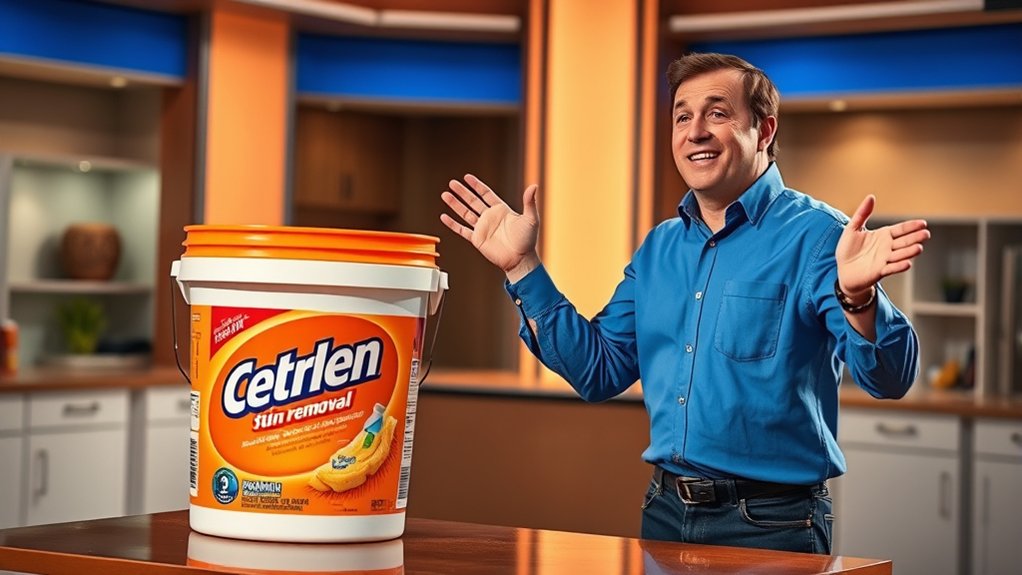
Although many products rely on traditional advertising, OxiClean’s popularity soared thanks to a unique approach led by Billy Mays. You’d notice his high-energy infomercials starting in 2000, which dramatically increased OxiClean’s visibility and sales.
His loud, engaging style captured the attention of a mostly female audience, turning the product into a household name. You could trust his live demonstrations, which clearly showed OxiClean’s cleaning power, making the product’s effectiveness undeniable.
Even after Mays passed away in 2009, sales surged, proving how impactful his promotional techniques were. His signature tagline and charismatic pitch style didn’t just sell a product.
They transformed OxiClean into one of the most recognizable cleaning brands in the U.S., a reflection of his lasting influence.
Church & Dwight’s Acquisition and OxiClean’s Growth
When Church & Dwight acquired Orange Glo International in 2006, they greatly expanded OxiClean’s reach and product offerings. This acquisition gave OxiClean access to broader distribution channels and marketing resources, helping it grow into a household name.
You’ll notice the brand’s evolution through:
- Expansion of the product line to include laundry detergents, stain removers, and other cleaning solutions.
- Increased visibility driven by high-energy infomercials, especially those featuring Billy Mays.
- Its establishment as one of Church & Dwight’s flagship products, markedly contributing to company revenue.
This strategic move not only boosted OxiClean’s market presence but also positioned Church & Dwight as a leader in the cleaning products sector.
It helped ensure the brand’s continued innovation and growth.
What Sets Oxiclean Apart From Other Cleaners
Because OxiClean uses sodium percarbonate, it releases hydrogen peroxide upon contact with water, giving it strong stain-fighting power. You’ll find it works effectively on fabrics, carpets, and hard surfaces, making it more versatile than many traditional cleaners.
Its eco-friendly, non-toxic formula means you can use it safely around children and pets, unlike harsher chemical alternatives.
OxiClean’s marketing highlights its ability to tackle tough stains through soaking and agitation, which you can see demonstrated in real time during infomercials.
OxiClean’s infomercials showcase its stain-fighting power through effective soaking and agitation techniques.
The brand also offers specialized products designed for laundry, carpets, and hard surfaces, allowing you to choose the right formula for your specific cleaning needs.
This combination of power, versatility, and safety clearly sets OxiClean apart from other cleaners on the market.
Major Milestones in OxiClean’s Growth and Expansion
Since its introduction in 1998 by Max Appel, OxiClean has achieved several major milestones that have shaped its growth and market presence.
You’ll find its success rooted in strategic marketing and product innovation. Here are three key milestones:
- Early 2000s Popularity Surge – Billy Mays’ dynamic infomercials showcased OxiClean’s stain-fighting power, driving widespread consumer adoption.
- 2006 Acquisition by Church & Dwight – This expanded OxiClean’s product line with innovations like MaxForce and OxiSoft fabric softener.
- Significant Sales Growth – By 2008, OxiClean generated over $200 million in sales, cementing its status as a top household stain remover.
These milestones highlight how OxiClean evolved from a niche product to a dominant brand in the cleaning market.
How OxiClean Changed Household Stain Removal
OxiClean’s rise to prominence reshaped how you approach household stain removal. Invented by Max Appel in 1997, OxiClean introduced a powerful formula using oxygen as a cleaning agent. Its key ingredient, sodium percarbonate, releases hydrogen peroxide in water, effectively breaking down tough stains without relying on harsh chemicals.
Thanks to Billy Mays’s energetic infomercials in the early 2000s, you saw firsthand how OxiClean tackled various stains, boosting your confidence in stain removal.
The brand’s success expanded its range, offering specialized products like OxiClean MaxForce and White Revive to address different cleaning needs.
Frequently Asked Questions
What Ingredients Are in Oxiclean?
OxiClean contains sodium percarbonate and sodium carbonate, which release hydrogen peroxide and soften water. It also includes surfactants and enzymes that help lift and break down stains.
Is Oxiclean Safe for All Fabrics?
Yes, OxiClean is safe for cotton, polyester, and blends, but you should avoid using it on wool, silk, or leather. Test a hidden spot first and follow the instructions so you can help keep fabrics fresh without damaging them.
Can Oxiclean Be Used on Carpets?
Yes, you can use OxiClean on carpets if they’re colorfast and water-safe. Test a small hidden spot first, then mix it with water and follow the instructions carefully to help avoid damage or discoloration.
How Should Oxiclean Be Stored?
Store OxiClean in a cool, dry place away from sunlight and moisture. Keep the container sealed tightly, and store it out of children’s reach.
Avoid heat and humidity, since both can reduce its effectiveness over time.
Does Oxiclean Have Any Environmental Certifications?
No, OxiClean doesn’t have official environmental certifications like EPA Safer Choice or Green Seal. It does promote being biodegradable, chlorine-free, and using recyclable packaging, which suggests a focus on safety and eco-conscious practices.
Conclusion
Now that you know Max Appel’s innovative spirit and Billy Mays’ energetic marketing helped OxiClean become a household name, can you imagine tackling tough stains without it? From its origins at Orange Glo International to Church & Dwight’s growth strategy, OxiClean set itself apart with unique formulas and smart branding.
Its journey shows how innovation and effective promotion can change everyday cleaning, making your stain battles easier than ever before.