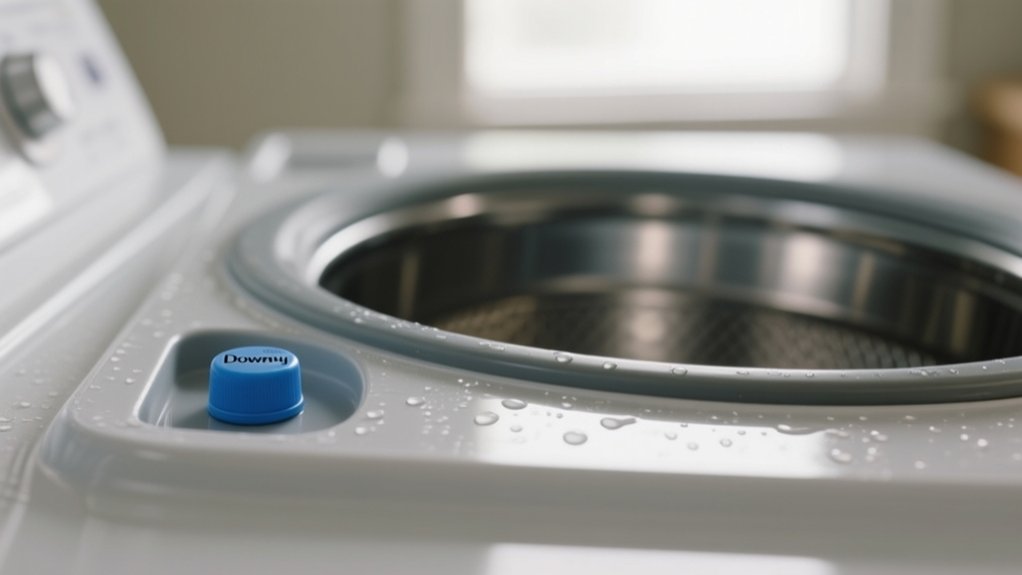
Where To Put Downy In Washing Machine – Right Spot
Pour Downy into your washer’s fabric softener dispenser, usually marked with a flower or “softener” symbol, not directly onto your clothes. In a front-loader, use the softener compartment in the detergent drawer.
In a top-loader, check the dispenser near the agitator or along the rim, and fill only to the marked line. If your washer has no dispenser, follow its manual and add diluted Downy during the rinse cycle.
A few simple steps can help prevent stains and buildup.
Where to Put Downy in Your Washer
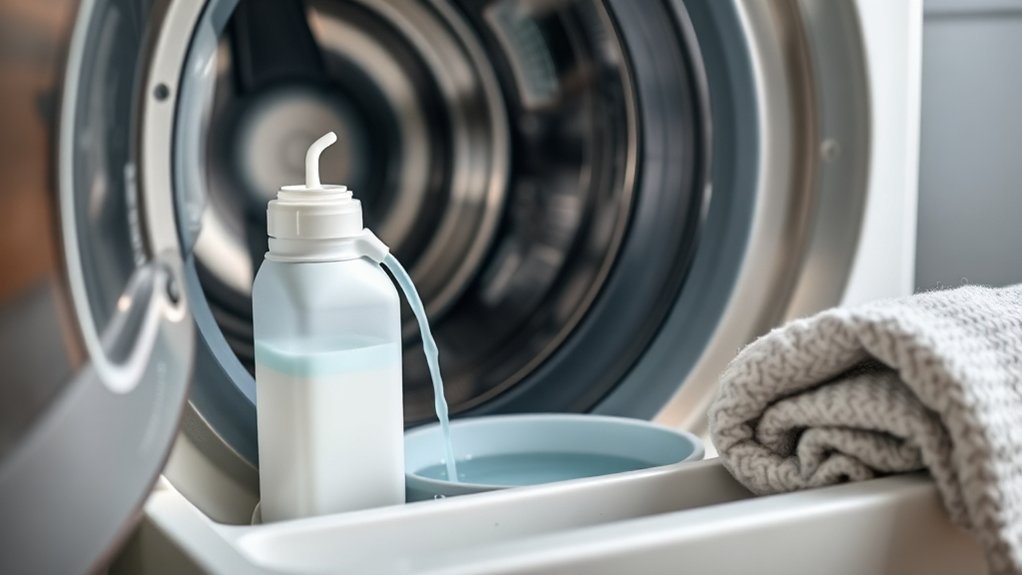
Where you add Downy depends on your washer: pour it into the fabric softener dispenser, usually marked with a flower or “softener” symbol. That compartment releases the product during the rinse cycle, helping it coat your clothes at the right time.
Follow the fill line, and don’t pour beyond it; too much softener can leave residue on fabrics or inside the machine.
If your washer doesn’t have a dispenser, check its manual for the recommended method. Some models let you add Downy to the drum at a specific point in the cycle, while others require a dispenser ball.
Don’t pour concentrated softener directly onto dry clothes, since it may stain them.
Use the amount listed on the Downy label for your load size, and dilute it only if the product instructions say to.
Find Your Washer’s Fabric Softener Dispenser
To figure out where to put your Downy, start by locating your washer’s fabric softener dispenser.
It’s important to check what type of washer you have because the dispenser’s spot can change depending on the model.
If you’re having trouble finding it, don’t worry—just take a quick look at your washer’s manual for some guidance.
Locate the Dispenser
Before adding Downy, find your washer’s fabric softener dispenser. Look around the top rim, inside the detergent drawer, or near the agitator in the drum. Your washer’s manual can help you identify the compartment if its location isn’t obvious.
Check for a flower symbol, a softener label, or a small cup-shaped insert.
Look for these common clues:
- A compartment marked “Softener” or “Fabric Softener”
- A flower icon printed beside a drawer section
- A small reservoir with a fill line
- A removable cup near the center agitator
- A labeled opening beneath the washer lid
Once you spot the dispenser, make sure you’ve found the softener section, not a detergent or bleach compartment.
Read any labels before pouring. This quick check helps you place Downy where it belongs and avoid spills or residue.
Check Your Washer Type
Once you’ve identified the softener compartment, check your washer type to confirm how to use it.
Top-load washers often have a dispenser in the center agitator, along the rim, or beneath the lid. Front-load models usually place it in a pull-out drawer near the top.
Your washer’s manual can show the exact location and explain any model-specific steps.
If you don’t see a dispenser, your machine may require you to add Downy manually. Check the manual before pouring anything into the drum.
Some washers have an automatic dispenser that holds softener for several loads, while others need you to fill the compartment before each cycle.
Follow the marked fill line, and don’t pour Downy directly onto clothes.
Using the right method helps prevent residue and guarantees the softener releases at the correct time.
Add Downy to a Top-Load Washer Without a Dispenser
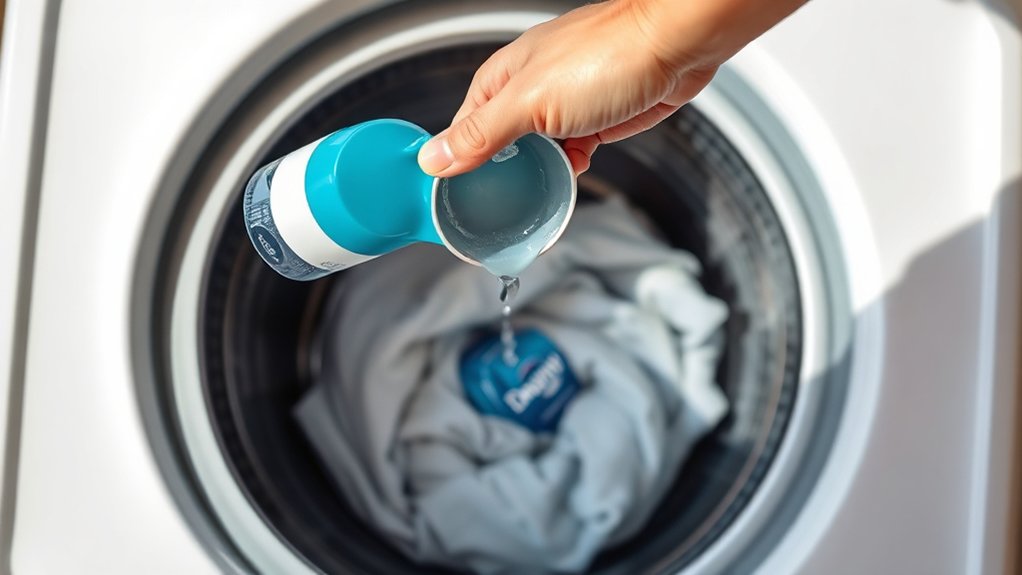
If your top-load washer has no dispenser, add Downy during the rinse cycle so it doesn’t wash away with the detergent.
Wait until the wash cycle ends and the washer begins rinsing. Open the lid only when it’s safe to do so, then dilute the recommended amount of Downy in water before adding it to the tub.
Don’t pour fabric softener directly onto clothes; concentrated liquid can leave spots.
For an even result, follow these steps:
- Check the Downy label for the correct dose.
- Use the washer’s rinse cycle timing.
- Dilute the softener with water first.
- Pour it into the water, away from garments.
- Let the rinse cycle finish before removing laundry.
If your washer locks during operation, don’t force the lid.
Consult its manual for safe timing and cycle instructions.
Use Downy in a Front-Load Washer Dispenser
For a front-load washer, pour Downy into the fabric-softener compartment, not directly into the drum. You’ll usually find this labeled compartment in the detergent drawer, often marked with a flower or softener symbol. Add Downy before you start the cycle so the washer releases it during the rinse.
| What you see | What to do |
|---|---|
| Softener symbol | Use this compartment |
| Detergent symbol | Keep Downy out |
| Bleach symbol | Don’t add Downy here |
| Removable insert | Leave it in place |
Check your washer’s manual if the drawer labels aren’t clear; compartment layouts vary by model. Don’t pour Downy into the detergent section, bleach section, or main drum, where it may release at the wrong time or leave residue. If your machine has no softener compartment, follow its manual for an approved alternative.
Measure and Dilute Downy the Right Way
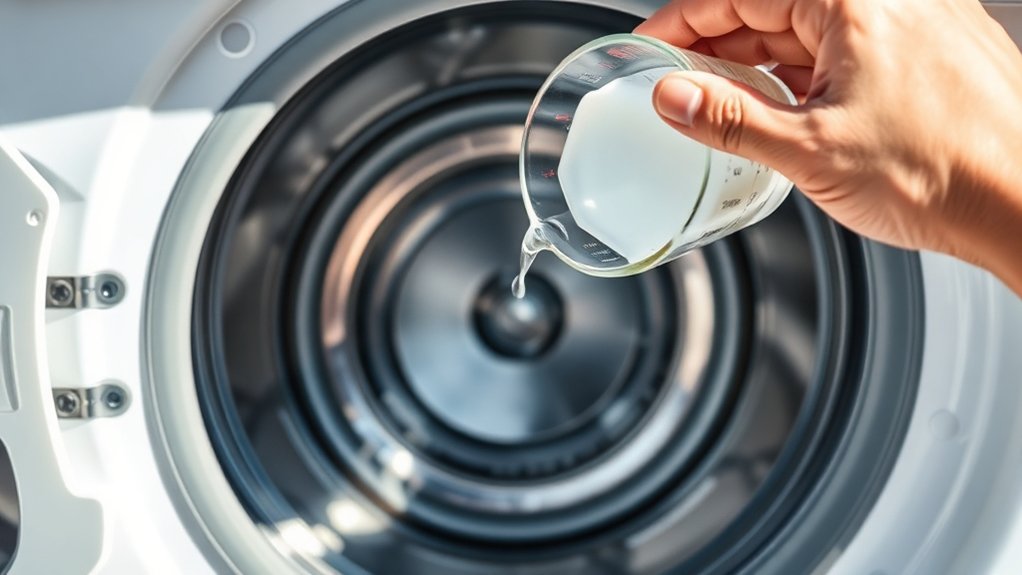
Make sure to check your washer’s instructions along with the Downy label to get the right amount for each load.
If the label says to dilute it, just mix Downy with some water before putting it in the dispenser. Doing this helps keep any residue from sticking to your clothes.
Measure the Right Amount
Measure Downy according to the amount of laundry and the dosing instructions on the bottle. Check the cap’s markings, since recommended amounts can vary by product and load size.
Using more fabric softener won’t necessarily make clothes softer; excess can leave residue on fabrics or inside your washer.
Use these checks to choose a suitable dose:
- For a small load, use the smaller amount shown on the label.
- For a regular load, follow the standard dose.
- For a large or heavily loaded washer, use the label’s larger-load guidance.
- For concentrated Downy, measure carefully; it may require less than a standard formula.
- Don’t exceed the maximum amount listed for your product.
If you’re unsure, start with the recommended dose rather than pouring by guesswork. Measure each load separately, and adjust only within the bottle’s directions.
Dilute Before Adding
Once you’ve measured the right amount, follow the bottle’s directions for adding it. Check whether your Downy formula needs dilution; some products are ready to use, while others require water. Don’t assume every bottle works the same way.
If dilution is recommended, mix the measured softener with water as directed before adding it to the washer’s dispenser. This helps the liquid flow properly and reduces the chance of concentrated softener leaving spots on your clothes.
Use a separate cup only if the label advises it, and don’t pour water into the bottle unless the instructions say to.
For a machine without a dispenser, wait for the rinse cycle and add the product to water in the washer, not directly onto fabric. Keep Downy away from dry clothes, and never exceed the label’s amount.
When to Add Downy During the Wash Cycle
Add Downy during the rinse cycle, not at the start of the wash, so it releases at the right time.
If your washer has a fabric softener dispenser, pour the diluted product into it before starting the load. The machine will dispense it automatically during the rinse. Check your washer’s manual for the dispenser’s location and fill line.
If you’re adding Downy manually, wait until the wash finishes and the washer begins rinsing. Pause the cycle if needed, then add the diluted softener to the rinse water, away from clothes. Follow the product label for the amount.
Don’t add Downy with detergent at the beginning. Use the dispenser when your washer provides one. Add manually only during the rinse. Follow your washer’s instructions. Measure according to the label.
This timing lets Downy work as your clothes rinse.
Prevent Downy Stains and Residue
To prevent Downy stains and residue, dilute it as directed and keep it off dry fabric.
Add the softener to your washer’s designated dispenser, not directly onto clothes. The dispenser releases Downy at the right point in the rinse cycle, helping it mix with water before it reaches your laundry.
If your machine doesn’t have a dispenser, wait until the rinse cycle begins. Dilute Downy with water, then pour it into the water, not onto garments.
Don’t exceed the amount listed on the bottle; too much softener can leave greasy marks or buildup on fabrics and inside the washer.
Clean the dispenser regularly since leftover product can thicken and block the flow.
If you spot residue, wipe the affected area and rewash the item with detergent. Dryer heat can set a stain.
Frequently Asked Questions
Can Downy Damage Delicate Fabrics?
Yes, Downy can damage delicate fabrics if you use too much or apply it directly.
Fabric softener may weaken fibers, leave buildup, or reduce absorbency, especially on silk, wool, lace, and moisture-wicking materials.
Check your garment’s care label before using it, and skip softener when the label advises against it.
If it’s safe, dilute the recommended amount and add it to your washer’s dispenser, not directly onto clothing.
Is Downy Safe for Baby Clothes?
Better safe than sorry: Downy can be used on baby clothes, but you should check the product label and your baby’s skin sensitivity first.
Fragrance and other ingredients may irritate sensitive skin, so choose a fragrance-free option or skip fabric softener if you notice a reaction.
Use only the recommended amount, and keep it out of reach.
For newborns or babies with eczema, ask your pediatrician before using fabric softener.
Can I Use Downy With Detergent Pods?
Yes, you can use Downy with detergent pods. Add the pod directly to the empty washer drum, then load your clothes.
Pour Downy into the fabric softener dispenser, not onto the pod or clothes, and don’t exceed the dispenser’s fill line.
If your washer doesn’t have a dispenser, follow its manual’s instructions for adding softener during the rinse cycle.
Check both product labels for any fabric or machine-specific cautions before washing.
Does Downy Reduce Towel Absorbency?
Yes, Downy can reduce your towels’ absorbency, especially if you use it regularly or add too much.
Fabric softener coats fibers, making towels feel softer but less able to soak up water.
To keep towels absorbent, skip softener when washing them, use the recommended amount of detergent, and avoid overloading your machine.
If your towels already repel water, wash them with detergent and a cup of white vinegar, without fabric softener.
Can People With Sensitive Skin Use Downy?
Yes, you can use Downy if you have sensitive skin, but it may irritate some people. Fragrances and other ingredients can trigger itching, redness, or a rash.
Choose a fragrance-free, dye-free product labeled for sensitive skin, and follow its directions.
Try a small amount first, and stop using it if you notice a reaction.
You can also skip fabric softener or ask a dermatologist for advice if symptoms persist or worsen.
Conclusion
Put Downy in your washer’s fabric softener dispenser, or add it to a top-loader during the rinse cycle if there’s no dispenser. Measure the amount listed on the label, dilute it when needed, and never pour it directly onto clothes.
These simple steps help prevent stains and residue while giving your laundry a fresh feel. Check your washer’s manual if you’re unsure where the dispenser is. Get the timing right, and you’ll be on the right track.