Is Persil Cruelty Free – Brand Ethics
If you’re trying to choose cleaning products that match your values, the shopping aisle can feel frustratingly confusing. You want a laundry brand that actually lives up to “cruelty-free,” but the labels, parent companies, and country-specific testing rules can make it hard to know what’s true. You’re not alone many people struggle to sort out which brands are genuinely ethical and which ones only seem that way at first glance.
You should know that Persil isn’t fully cruelty-free because its parent company, Unilever, still tests on animals where the law requires it, like in China. This means Persil can’t get trusted cruelty-free certifications and may rely on animal testing indirectly. If avoiding animal-tested products matters to you, Persil’s ethical status raises concerns. Luckily, there are clear ways to identify truly cruelty-free laundry brands and alternatives worth exploring for a more ethical choice.
Why Persil’s Parent Company Matters for Cruelty-Free Status
When you consider Persil’s cruelty-free status, you have to look beyond the brand itself to its parent company, Unilever. Unilever has faced criticism for animal testing, especially in countries like China, where such testing is mandatory for certain products.
Persil’s cruelty-free claims are complicated by Unilever’s animal testing policies, particularly in markets like China.
This directly impacts Persil’s claims, as the brand’s policies align with Unilever’s broader practices. Because of this, Persil can’t earn the Leaping Bunny certification, which requires strict no-animal-testing standards at every corporate level.
If you’re committed to cruelty-free choices, it’s important to realize that Persil’s ethical standing is influenced by Unilever’s actions.
Advocacy groups like PETA reflect this concern by not recognizing Persil as cruelty-free, highlighting the significance of holding parent companies accountable in your purchasing decisions.
What You Should Know About Persil and Unilever’s Animal Testing
That makes ingredient sourcing and testing policies worth reviewing before comparing options.
Unilever’s Animal Testing
Although Persil is a popular household brand, it’s important to understand that its parent company, Unilever, still conducts animal testing in certain markets where laws require it.
Unilever sells products in countries like China, where animal testing is mandatory for cosmetics and some household items.
While Unilever aims to reduce animal testing, it continues to perform tests on finished products to comply with these regulations.
This practice has drawn criticism from animal rights groups, highlighting Unilever’s incomplete commitment to cruelty-free standards across its portfolio.
Since Persil lacks a cruelty-free certification, you should carefully consider this if avoiding animal-tested products matters to you.
Understanding Unilever’s ongoing animal testing policies is essential for making informed choices about Persil and its ethical implications.
Persil’s Ethical Practices
Since Persil is owned by Unilever, its ethical practices are closely tied to the parent company’s stance on animal testing. Unilever tests on animals when required by law, especially in markets like China.
This means Persil isn’t cruelty-free by strict standards, lacking certifications from Leaping Bunny or PETA. While Unilever invests in alternative testing methods, it continues animal testing to comply with regulations.
You should consider this before choosing Persil if cruelty-free products matter to you.
| Aspect | Unilever’s Approach | Impact on Persil |
|---|---|---|
| Animal Testing | Required by law in some regions | Persil tested indirectly |
| Certifications | No Leaping Bunny or PETA | Persil uncertified |
| Transparency | Limited disclosure | Ethical concerns remain |
How Selling in China Affects Persil’s Cruelty-Free Claims
That market’s regulations also affect how brands present their testing policies worldwide.
China Animal Testing
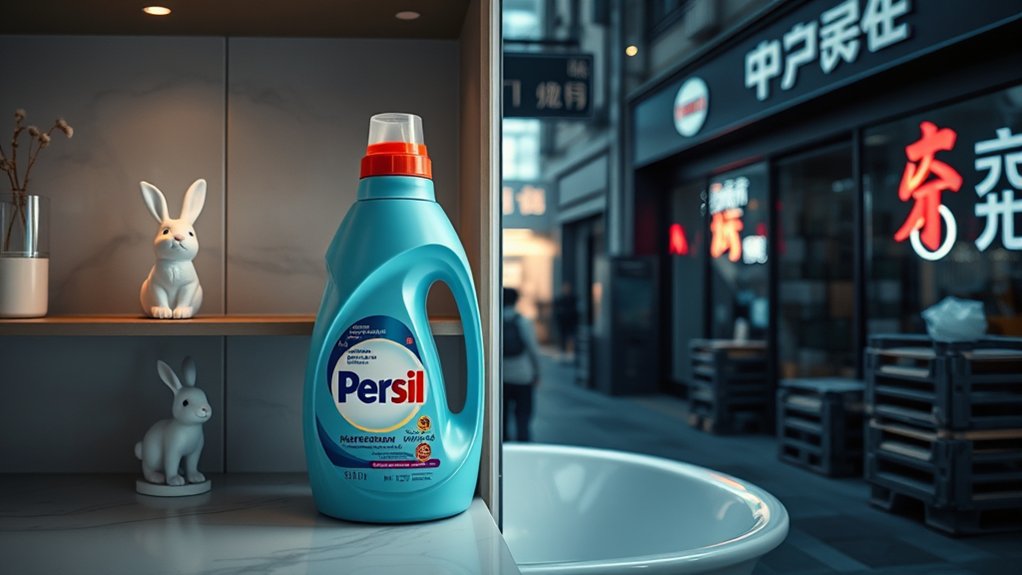
When you choose Persil, it’s important to know that the brand sells its products in China, where animal testing is legally required for cosmetics sold in retail stores. This means Persil must comply with Chinese regulations that mandate animal testing, even if the products are made elsewhere.
While Henkel, Persil’s parent company, claims to support animal welfare, their presence in China directly conflicts with cruelty-free principles. Many consumers see selling in China as a deal-breaker, questioning the brand’s transparency and ethical stance.
If you prioritize cruelty-free products, Persil’s involvement in the Chinese market complicates its claims. Understanding this helps you make an informed choice about whether Persil aligns with your values on animal testing and brand ethics.
Regulatory Impact
Although Persil promotes cruelty-free values, selling its products in China forces the brand to comply with mandatory animal testing laws. This regulatory requirement challenges Persil’s cruelty-free claims and affects how you should view the brand’s ethical stance.
As part of Unilever, Persil must navigate these rules to access the Chinese market. That can undermine its commitment to animal welfare.
| Aspect | Impact on Persil’s Cruelty-Free Claims |
|---|---|
| Mandatory animal testing | Required by Chinese law for retail products |
| Brand presence in China | Implies compliance with testing regulations |
| Consumer advocacy views | Brands selling in China often labeled “not cruelty-free” |
| Ethical contradiction | Conflict between cruelty-free messaging and regulatory compliance |
You need to weigh these facts carefully when evaluating Persil’s cruelty-free status.
How to Spot Truly Cruelty-Free Laundry Detergents
How can you confidently choose a laundry detergent that’s truly cruelty-free? Start by seeking certifications from trusted organizations like Leaping Bunny or PETA. They help ensure no animal testing happened at any point.
Look for trusted certifications like Leaping Bunny or PETA to ensure your laundry detergent is truly cruelty-free.
Next, check whether the brand is transparent about its testing and supply chain practices. If a company is upfront and easy to verify, that’s usually a good sign.
Be cautious of brands selling in countries like China, where animal testing is often mandatory for imports.
Here’s what to look for:
- Official cruelty-free certifications ensuring strict no animal testing policies
- Clear, honest communication about testing practices and ingredient sourcing
- Avoidance of markets requiring animal testing, which compromises cruelty-free claims
Using these criteria helps you make ethical choices without compromising your values.
Best Certified Cruelty-Free Alternatives to Persil
Wondering where to find reliable cruelty-free alternatives to Persil? You can turn to brands like Method, which offers eco-friendly detergents fully certified to avoid animal testing.
Seventh Generation also stands out with its plant-based formulas and strong sustainability commitment, free from animal-derived ingredients.
Ecover provides biodegradable laundry products made with ethically sourced materials, ensuring no harm to animals.
Biokleen uses non-toxic, plant-based ingredients, making it a safe and cruelty-free choice for your laundry needs.
Finally, Mrs. Meyer’s Clean Day combines cruelty-free certification with essential oils for a fresh, natural scent.
Choosing any of these brands guarantees you’re supporting ethical practices without compromising on cleaning power or environmental responsibility.
How You Can Support Cruelty-Free Laundry Brands
When you choose laundry products, you can directly support cruelty-free brands by prioritizing those certified by reputable organizations like PETA and Leaping Bunny.
Choosing laundry products certified by PETA and Leaping Bunny supports cruelty-free, ethical brands.
These certifications guarantee no animal testing occurs and that products meet strict ethical standards.
To actively support cruelty-free laundry brands, you can:
- Select detergents free from animal-derived ingredients, focusing on plant-based options for sustainability.
- Use resources like the Cruelty-Free Shopping Guide to identify trustworthy brands easily.
- Participate in awareness campaigns advocating for stronger animal welfare laws and ethical manufacturing.
Frequently Asked Questions
Does Persil Use Any Vegan Ingredients in Its Products?
Yes, some Persil products use vegan ingredients, but you need to check each label carefully. Formulas vary, so you can’t assume all Persil products are vegan. Reviewing the ingredient list is the best way to avoid animal-derived components.
Are Persil’s Products Biodegradable or Environmentally Friendly?
Yes, Persil’s products are biodegradable and eco-friendly. They use biodegradable formulas and recyclable packaging, and they include energy-saving ingredients to help reduce environmental impact.
How Does Persil Ensure Ingredient Safety Without Animal Testing?
Persil uses in vitro and computational methods to assess ingredients for efficacy and safety. This approach reflects its commitment to innovative, cruelty-free scientific methods, so you can evaluate product safety with those tools in mind.
Does Persil Have Any Certifications Related to Sustainability?
No, Persil doesn’t hold specific sustainability certifications. You can still point to Unilever’s Sustainable Living Plan, recycled plastics, biodegradable ingredients, and cold-water formulas as part of its environmental approach.
Can Persil Products Trigger Allergies or Skin Sensitivities?
Yes, Persil products can trigger allergies or skin sensitivities, especially if you already have a pre-existing condition. If you try a new product, test it on a small patch of skin first. You can also consider the sensitive skin variant, which is designed to minimize irritants.
Conclusion
You might be surprised to learn that over 80% of global cosmetics and detergent brands, including Persil’s parent company Unilever, still allow animal testing where required by law. If you care about cruelty-free choices, it’s essential to look beyond brand names and check certifications.
By choosing truly cruelty-free laundry detergents, you’re not only protecting animals but also encouraging ethical industry changes. Your everyday purchases can make a real difference. So choose wisely!