How To Clean Drain Hose On Washing Machine – Guide
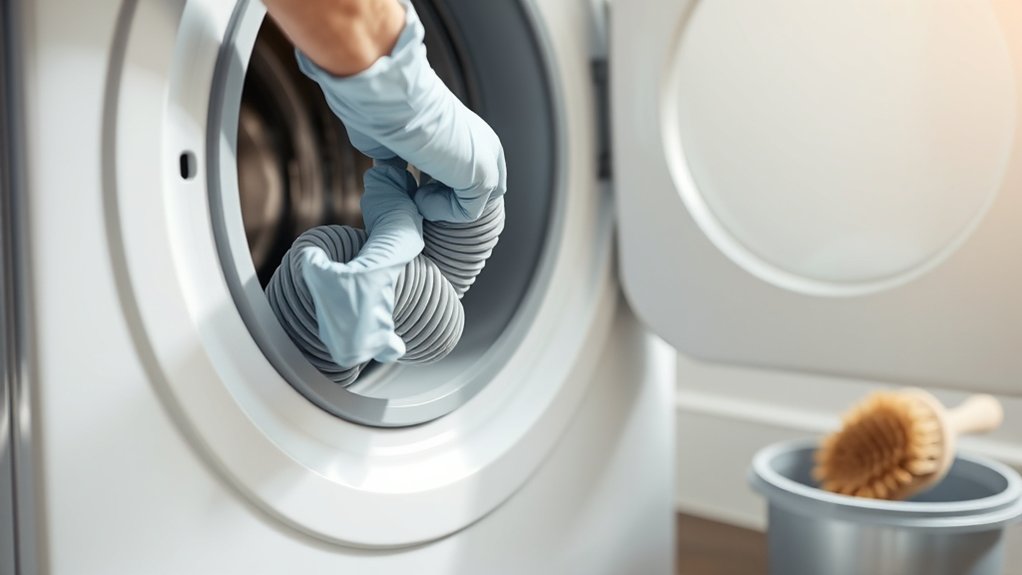
To clean your washing machine’s drain hose, first unplug the machine and turn off the water supply. Then, loosen hose clamps using pliers or a screwdriver and carefully disconnect the hose. Make sure to place a bucket underneath to catch any water that might come out.
Next, remove lint and debris with a long brush or pipe cleaner. Flush the hose with water and check it carefully for any cracks or damage. If everything looks good, reconnect the hose securely.
Finally, run a test cycle to check the drainage. Keep following these steps regularly to make sure your washing machine stays in good shape and to prevent future clogs.
Signs Your Washing Machine Drain Hose Needs Cleaning
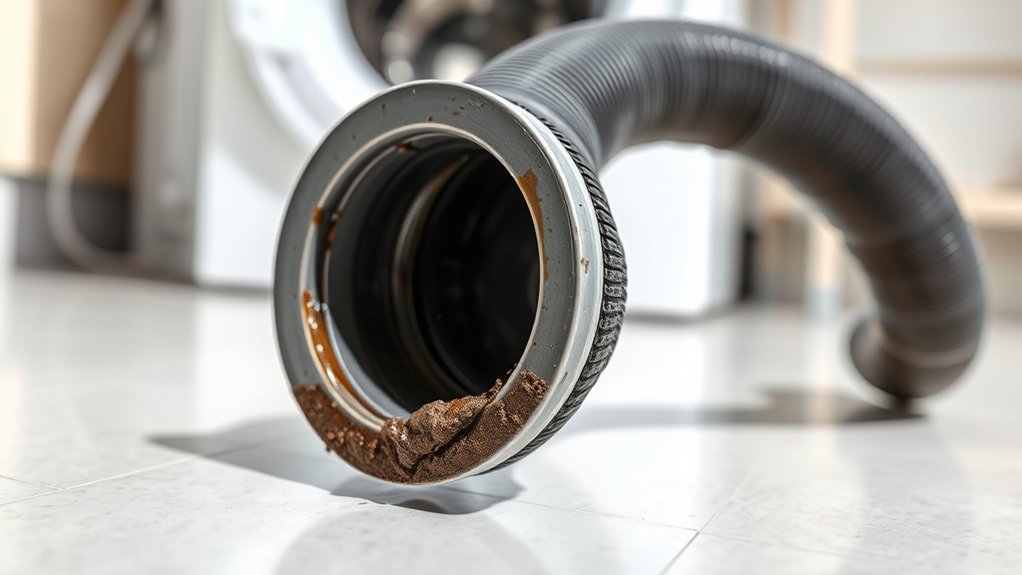
If you notice slow or incomplete drainage during wash cycles, your washing machine drain hose likely needs cleaning. A clogged drain hose restricts water flow, causing standing water in the drum after a cycle.
You might also detect musty or sewer-like odors indicating mold or buildup inside the hose.
Clothes with soap residue or unpleasant smells after washing often point to drainage problems linked to a dirty drain hose.
Furthermore, your machine may display error codes related to drainage issues, signaling a clog or obstruction.
Regularly inspecting and cleaning the drain hose prevents these issues, ensuring efficient water evacuation and avoiding odors.
Addressing these signs promptly helps maintain ideal washing machine performance and prevents further damage caused by blockages or buildup in the drain hose.
It’s a simple step that goes a long way in keeping your laundry routine smooth and hassle-free.
Causes of Washing Machine Drain Hose Clogs
Recognizing signs of a clogged washing machine drain hose is only the first step. Understanding what causes these blockages helps you prevent and address them effectively.
Identifying clogged washing machine drain hose signs is just the beginning; knowing the causes aids prevention and solutions.
A clogged drain hose often results from debris buildup, including lint, fabric fibers, and small objects like coins or buttons trapped inside. Soap residue from excessive detergent or fabric softener use can accumulate along the hose walls, restricting water flow.
Damage or kinks in the hose create pockets where debris and soap scum collect, making blockages worse.
Also, mold, mildew, and bacterial growth develop over time, contributing to clogs and unpleasant odors.
Tools and Safety Steps Before Cleaning
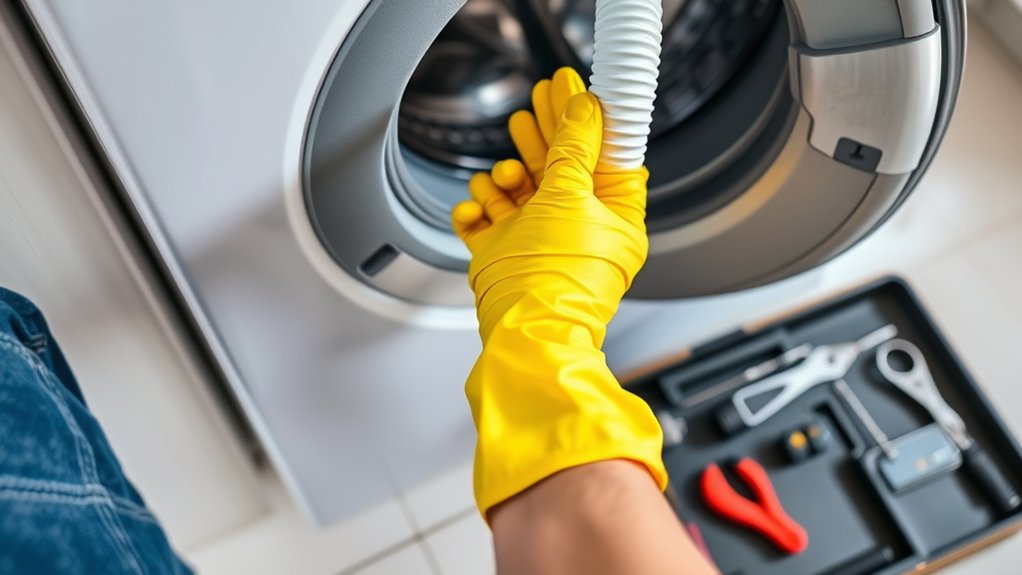
Before you start cleaning the drain hose, make sure to turn off the washing machine and unplug it from the power outlet. This helps eliminate any risk of electrical shock.
Next, shut off the water supply valves to prevent water flow during the hose cleaning process.
Gather essential tools like pliers, screwdrivers, a bucket, towels, gloves, and goggles. These will help guarantee safety and efficiency.
Place towels or a shallow container nearby to catch any residual water when disconnecting the drain hose.
Take a moment to inspect the hose and surrounding components for cracks or leaks. Replace any damaged parts to avoid future problems.
Following these safety steps and using the right tools will help you clean the drain hose effectively while minimizing hazards and water damage.
Disconnecting the Washing Machine Drain Hose Safely
Before you disconnect the drain hose, make sure to turn off the washing machine, unplug it, and shut off the water supply valves. This helps keep everything safe and prevents any unexpected leaks.
Next, gently pull the washer away from the wall so you can easily find the hose and get your workspace ready.
Once you’ve done that, grab a screwdriver or some pliers to loosen the clamps holding the hose in place.
It’s a good idea to put a towel or a container underneath to catch any water that might still be inside.
Power Off And Safety
Although disconnecting the washing machine drain hose is a straightforward task, you should always unplug the appliance and turn off the water supply valves first. This helps prevent electrical shock and water leaks.
Prioritize power off and safety to protect yourself and your home during maintenance.
Follow these steps:
- Unplug the washing machine from the electrical outlet to ensure no power runs through the appliance.
- Turn off the water supply valves completely to avoid water leakage or flooding.
- Wear gloves and safety goggles to guard against residual water, mold, or debris.
- Keep towels or a shallow container ready to catch any remaining water when disconnecting the hose.
Hose Location Identification
When you’re ready to disconnect the washing machine drain hose, start by unplugging the washer and turning off the water supply.
Then carefully pull the machine away from the wall to access the hose at the back. The drain hose location is typically where it connects the washer to the drain pipe or laundry sink.
Before disconnection, take a clear photo to guide reinstallation. It really helps to have a reference when you put everything back together.
Also, inspect the hose’s condition for cracks or damage as you prepare for removal.
Use pliers or a screwdriver to loosen the clamps securing the hose at both ends. Identifying the exact drain hose location and following these steps makes sure you disconnect everything safely and efficiently.
This way, you won’t risk damage to your washing machine or plumbing.
Removing Hose Connections
Since safety is paramount, always turn off and unplug your washing machine before disconnecting the drain hose.
To remove the hose connections properly, follow these steps:
- Locate the drain hose connection at the back of the washer, where it joins the drain pipe or sink.
- Use pliers or a screwdriver to carefully loosen the clamps securing the hoses, avoiding damage.
- Gently pull the drain hose away from the connection point, supporting it to prevent tearing or cracking.
- Take a photo of the setup before disconnecting to ensure correct reinstallation later.
Removing Lint and Debris From the Drain Hose
To effectively remove lint and debris from your washing machine’s drain hose, start by using long, narrow brushes or pipe cleaners to reach inside and dislodge buildup. Then, manually extract visible lint and debris with needle-nose pliers or a wire hanger, but be careful not to damage the hose.
Make it a habit to inspect the hose regularly, cleaning it every 3 to 6 months to prevent clogs. After cleaning, let the hose dry completely before reconnecting it. This helps avoid mold growth and keeps everything working smoothly.
| Step | Action |
|---|---|
| 1 | Use brushes or pipe cleaners |
| 2 | Dislodge lint and debris |
| 3 | Remove visible lint manually |
| 4 | Inspect hose every 3-6 months |
| 5 | Dry hose completely before use |
Flushing the Washing Machine Drain Hose to Remove Blockages
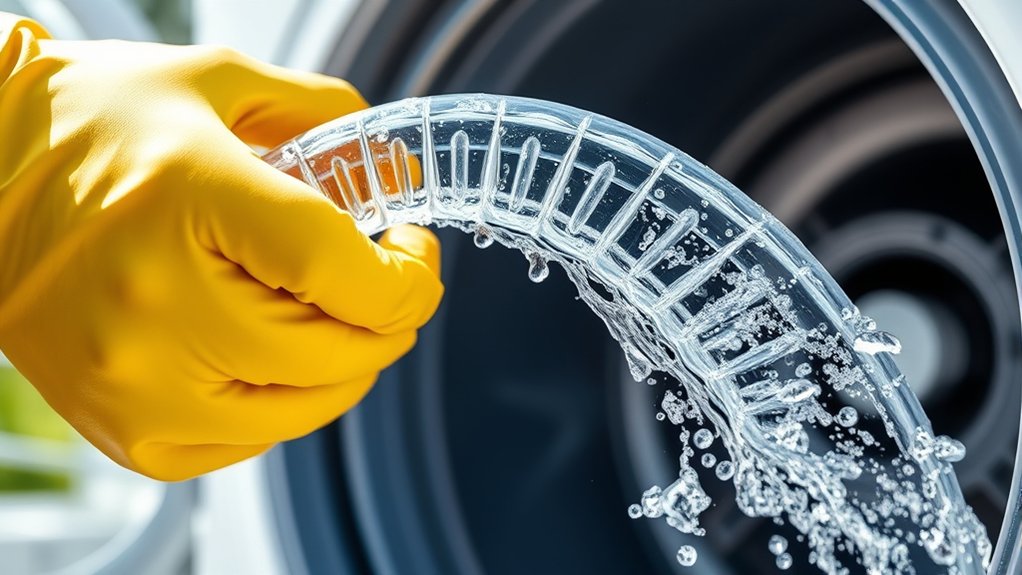
Although removing lint manually clears most debris, flushing the washing machine drain hose with water effectively dislodges soap scum and buildup stuck deeper inside.
To flush the drain hose and remove blockages, follow these steps:
- Disconnect the drain hose from both the washing machine and the drain pipe. Place a towel or bucket nearby to catch residual water.
- Use a garden hose or faucet pressure to force water through the drain hose from each end, ensuring thorough flushing.
- For stubborn buildup, add baking soda and vinegar to the flushing water to break down deposits inside the hose.
- After flushing, inspect the hose for any cracks or damage and let it dry completely before reconnecting to prevent mold growth.
This flushing process maintains ideal water flow and prevents blockages in your drain hose. It’s a simple step that helps keep your washing machine running smoothly.
Inspecting and Replacing a Damaged Drain Hose
Flushing your washing machine drain hose helps clear blockages, but it’s just as important to check the hose for any damage that might affect how well it works. When you’re inspecting, look closely for cracks, leaks, brittleness, and buildup inside the hose by using a flashlight.
Also, don’t forget to measure its length and diameter. This way, you can make sure the replacement fits just right. If you find any damage, swap out the old hose for a new, flexible one that’s rated for washing machine use. This helps avoid leaks or drainage problems down the line.
| Inspection Point | Action Required |
|---|---|
| Cracks or holes | Replace drain hose immediately |
| Brittleness | Replace to prevent future leaks |
| Buildup inside hose | Clean or replace if persistent |
| Length & diameter | Measure for correct replacement |
| Connection points | Inspect for hardening or damage |
Reconnecting and Testing the Drain Hose
Once you’ve inspected or replaced the drain hose, reconnect it securely to the washing machine outlet. Make sure the clamp is tight to prevent leaks.
Next, follow these steps to ensure proper reconnection and testing:
Next, complete these steps to securely reconnect and test your washing machine’s drainage system.
- Reconnect the hose firmly into the wall drain pipe or laundry basin. Keep the recommended height of about 30 inches to secure proper flow.
- Double-check all clamps and fittings to make sure they’re tight and properly positioned. This helps avoid leaks.
- Turn on the water supply valves and plug the washer back into the power outlet.
- Run a short wash cycle to test the drainage function. Watch carefully for any leaks or drainage issues.
Maintaining Your Washing Machine Drain Hose to Prevent Clogs
It’s a good idea to regularly check your washing machine drain hose for any kinks, cracks, or leaks. This helps prevent blockages and water backup before they become a bigger problem.
Try to clean the hose every 3 to 6 months to get rid of lint, soap residue, and fibers that can build up and cause clogs.
Regular Hose Inspection
Although it’s easy to overlook, regularly inspecting your washing machine’s drain hose is essential for preventing clogs and ensuring efficient water flow. Proper hose inspection helps you catch early signs of drainage issues and supports clog prevention.
Follow these steps for effective maintenance:
- Examine the hose for kinks, cracks, or leaks that could impair water flow.
- Check connection points at both the washer and drain pipe monthly for wear or looseness.
- Look inside the hose for lint, soap scum, or debris buildup that might cause blockages.
- Confirm the hose is securely clamped and properly positioned to avoid disconnections or kinks.
It’s a good idea to conduct hose inspections every 3 to 6 months. This way, you can maintain ideal drainage and avoid costly repairs down the line.
Preventive Cleaning Practices
Since buildup and blockages can develop gradually, maintaining your washing machine’s drain hose through preventive cleaning practices is essential. Regularly inspect and straighten the drain hose to avoid kinks that trap debris.
Clean the drain filter every 3 to 6 months to eliminate lint, hair, and detergent residue that cause clogs.
Flush the drain hose with hot water mixed with baking soda and vinegar every few months to dissolve soap buildup and maintain clear flow.
Make sure the drain hose is securely connected and positioned about 30 inches from the ground to promote proper drainage.
Replace the hose every 5 years or sooner if you notice cracks, leaks, or persistent drainage issues.
Consistent preventive cleaning preserves peak function and extends the life of your washing machine’s drain hose. It’s a simple routine that really pays off in the long run.
Frequently Asked Questions
Can I Use Vinegar to Clean the Washing Machine Drain Hose?
Yes, you can use vinegar to clean your washing machine drain hose.
Mix equal parts white vinegar and hot water, then pour the solution into the hose.
Let it sit for 30 minutes to break down soap scum, mold, and mineral buildup.
After that, flush the hose with warm water to clear out any residues.
Doing this regularly helps prevent clogs and odors.
Plus, it’s safe for most hose materials when used in moderation.
How Often Should I Clean the Drain Hose?
You should clean the drain hose every 3 to 6 months to prevent buildup and clogs. If you notice slow drainage, odors, or mold, it’s a good idea to clean it more often.
For heavy laundry use, monthly cleaning is best to keep things running smoothly.
Also, make sure to inspect and clean the hose at least once a year. This helps maintain your washing machine’s top performance.
Regular maintenance not only avoids costly repairs but also extends your appliance’s lifespan.
Will a Clogged Drain Hose Affect Washing Machine Spin Cycles?
Just like a car can’t race with a flat tire, your washing machine won’t spin properly with a clogged drain hose. When the hose’s blocked, water can’t drain, causing the spin cycle to stall or extend.
You’ll notice damp clothes and error codes signaling drainage issues.
To fix this, regularly inspect and clear the hose. Make sure water flows freely so your machine spins efficiently every time. It’s a simple check that can save you a lot of headaches down the line.
Can I Clean the Drain Hose Without Disconnecting It?
Yes, you can clean the drain hose without disconnecting it by flushing it with hot water or a vinegar solution to loosen debris. Use a long, flexible brush or drain snake if the hose is accessible to scrub inside. This works well for minor buildup.
But if you want a deeper clean or have stubborn blockages, disconnecting the hose is usually more effective. That way, you can remove grime and mold that’s stuck deep inside. It’s a bit more work, but definitely worth it for a thorough clean.
Is It Safe to Use Chemical Drain Cleaners in the Hose?
No, you shouldn’t use chemical drain cleaners in your washing machine hose. These cleaners often contain harsh acids or caustics that can corrode or weaken the hose material, causing leaks or ruptures.
They may also void your machine’s warranty if damage occurs.
Instead, try safer methods like flushing the hose with hot water, vinegar, or baking soda.
You can also physically remove blockages using the right tools.
This way, you get effective cleaning without risking any damage.
Conclusion
By regularly cleaning your washing machine drain hose, you’ll prevent clogs and keep your machine running smoothly.
For example, a homeowner noticed slow drainage and foul odors. After removing lint buildup and flushing the hose, the machine drained efficiently again. It really makes a difference!
Follow the steps to disconnect, clean, inspect, and reconnect your hose safely. Doing this routine maintenance saves you time and costly repairs.
Trust me, keeping up with this simple task ensures your washer works great every cycle.