Will Oxiclean Bleach Carpet – Find Out
Yes, OxiClean can bleach or discolor your carpet, especially if you use the wrong formula, mix it too strongly, or leave it on too long. Natural fibers like wool and silk are especially vulnerable, while synthetic carpets can still fade if their dyes aren’t stable.
Before treating a visible stain, test a label-approved solution in a hidden spot and let it dry completely. You’ll find practical steps for safer use and handling discoloration below.
Will OxiClean Bleach Your Carpet?
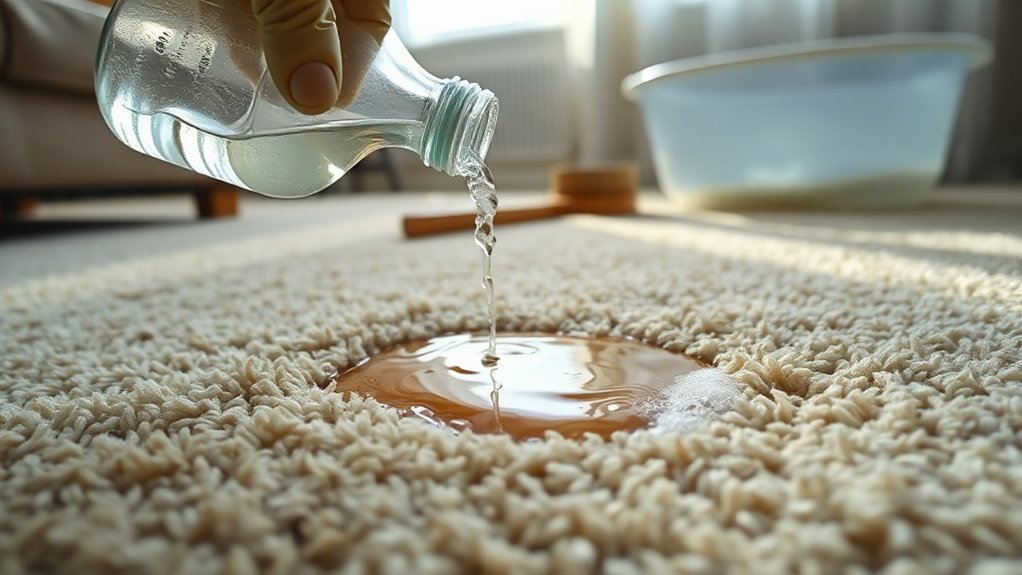
Yes, OxiClean can bleach or discolor some carpets, especially if the cleaner isn’t made for carpet or you leave it on too long. Its oxygen-based ingredients can lighten color, leaving a pale spot or uneven patch. The risk depends on the product, how you mix it, and how long it stays on the carpet.
OxiClean can lighten or discolor some carpets, particularly when the product isn’t carpet-safe or is left on too long.
Even a carpet-labeled formula can cause a change if you use too much or skip the label’s directions.
Before treating a visible stain, test the solution in a hidden area. Apply a small amount, wait the recommended time, then blot and let the spot dry completely.
Check the area in good light for any color change. If you notice fading, don’t use the cleaner on the stain. Rinse treated areas as directed, and avoid mixing OxiClean with other cleaning products.
Which Carpet Fibers and Dyes Are at Risk From OxiClean?
Natural fibers such as wool, silk, and cotton may be more vulnerable to color changes from OxiClean than many synthetic carpets.
Wool and silk can be especially sensitive to alkaline cleaners and oxidizing ingredients. These may weaken fibers or alter their appearance.
Cotton can also lose color, particularly when dyed with less stable dyes.
Synthetic carpets made from nylon, polyester, or polypropylene often tolerate oxygen-based cleaners better, but they aren’t immune to fading or discoloration.
Your carpet’s dye matters as much as its fiber. Dark, vivid, or unevenly dyed areas may show changes more clearly than pale, colorfast material.
Some dyes can react with oxygen bleach, leaving lighter patches or shifting hues.
Carpet blends, backing, and prior treatments can affect results, so don’t assume a fiber label guarantees color stability.
How Can You Spot-Test OxiClean Safely?
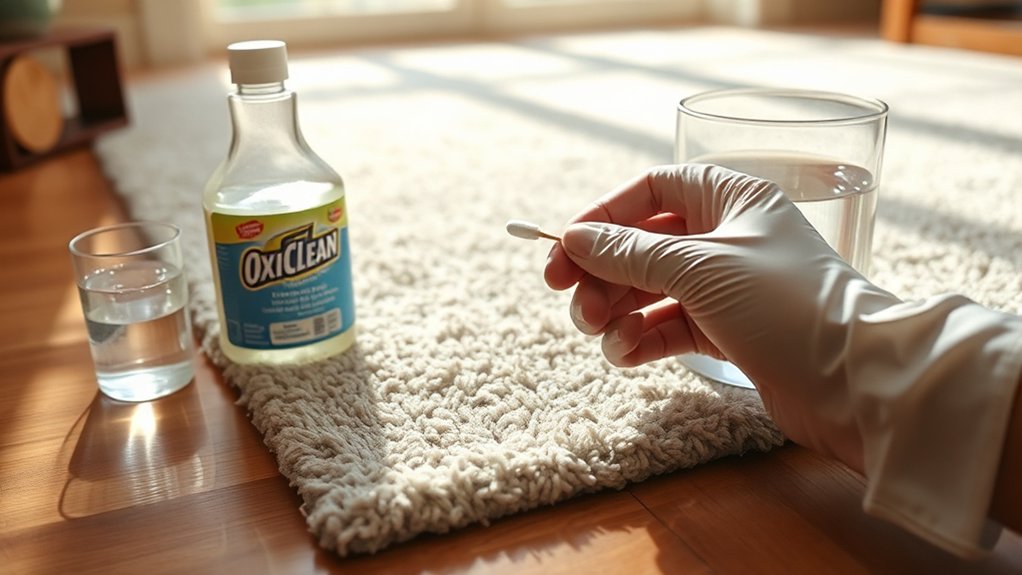
Because fiber and dye reactions vary, spot-test OxiClean before treating the whole carpet. Choose a hidden area, such as inside a closet or beneath furniture, and check that it matches the carpet’s visible surface.
Follow the product label to prepare a small amount of the solution you intend to use. Apply a little to a clean, white cloth, then gently dab the test spot; don’t scrub or saturate the fibers.
Let the area sit for the label’s recommended time, and blot it with a fresh white cloth. Check both cloths for transferred color.
Allow the spot to dry completely, since changes may not appear while it’s wet. Compare its color and texture with the surrounding carpet in good light.
If you see fading, discoloration, or damage, don’t use OxiClean on that carpet.
How Should You Use OxiClean on Carpet?
After the spot test passes, you can treat the stain with OxiClean, but follow the product label for carpet use and dilution.
Blot up excess liquid or debris with a clean cloth, working from the stain’s edge toward its center.
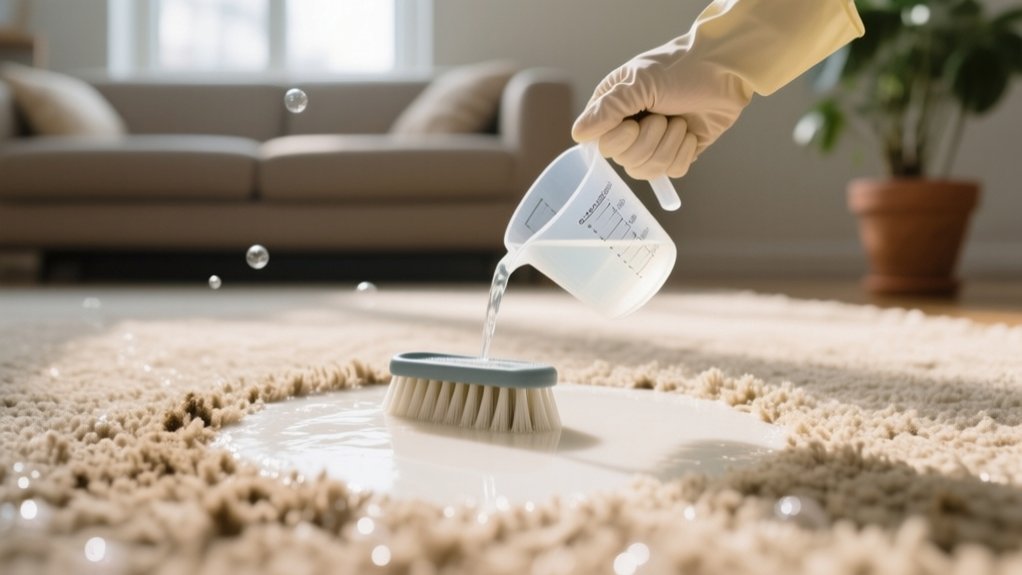
Mix the solution exactly as directed; don’t use a stronger concentration. Apply only enough to dampen the stained fibers and avoid soaking the carpet or backing.
Let the product sit for the time stated on the label.
Then blot gently with a fresh, damp cloth to lift the cleaner and loosened soil. Rinse the area with a small amount of clean water, and blot again until you’ve removed residue.
Press a dry towel over the spot, then let the carpet air-dry completely. Keep people and pets away while it dries.
What Should You Do If OxiClean Discolors Carpet?
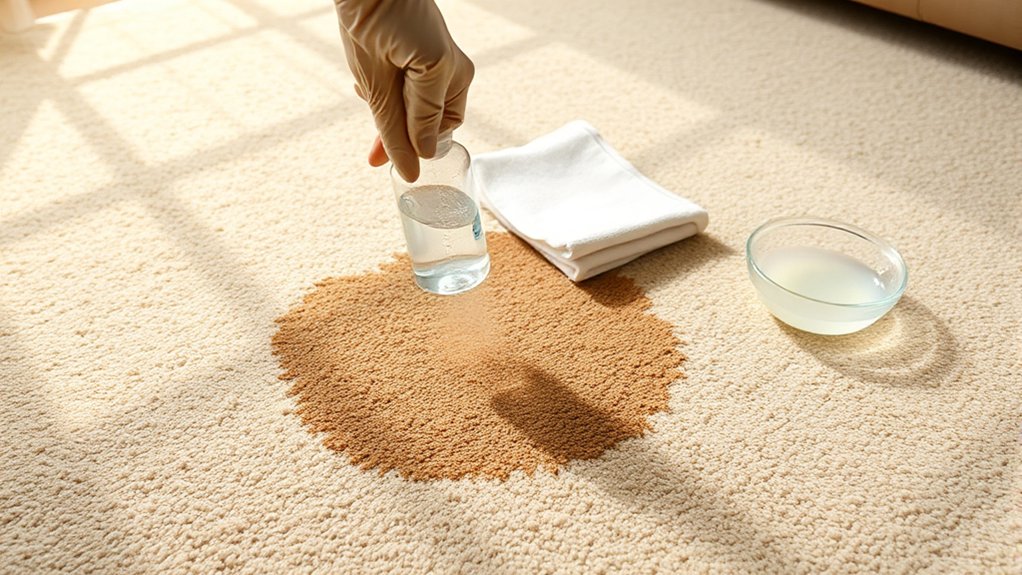
If OxiClean leaves a lighter or uneven patch, stop using it and blot the area with a clean, damp cloth to remove any remaining product.
Stop using OxiClean and gently blot the patch with a clean, damp cloth to remove any remaining product.
Don’t scrub, since friction can spread residue or damage carpet fibers. Press a dry towel onto the spot to absorb moisture, then let the area air-dry completely.
Compare the dry carpet with the surrounding fibers in natural light; wet carpet can look darker than it will when dry.
If the color change remains, OxiClean may have altered the dye, and rinsing won’t restore it.
Contact a carpet-cleaning professional for advice, especially if the carpet is valuable or the patch is large. Avoid applying bleach, vinegar, or another cleaner, which could worsen discoloration.
For a small, permanent spot, ask a professional about dye repair or consider a matching rug or furniture placement.
Frequently Asked Questions
Can Oxiclean Remove Old Pet Urine Odors From Carpet?
Yes, OxiClean may reduce old pet urine odors in carpet, but it mightn’t remove them completely. Urine can soak into the padding or subfloor, where surface cleaners can’t reach.
First, test OxiClean on a hidden spot and follow its label; don’t mix it with other cleaners.
For stubborn odors, use an enzyme cleaner made for pet urine, applying enough to reach the affected area.
Blot, let it dry fully, and repeat if needed.
Is Oxiclean Safe to Use Around Pets and Children?
OxiClean can be safe around pets and children when you follow the label, but keep them away during use.
The American Association of Poison Control Centers received more than two million exposure reports in 2022, which shows why you should store cleaners securely.
Wear gloves, ventilate the room, and prevent anyone from touching or licking treated carpet until it’s completely dry.
Never mix OxiClean with other cleaners, and contact poison control if exposure occurs.
Can Oxiclean Damage a Carpet’s Backing or Padding?
Yes, OxiClean can damage carpet backing or padding if you use too much, leave it on too long, or let the solution soak through the carpet.
Excess moisture may weaken adhesives, cause backing to separate, or encourage mold and mildew in the padding.
Check your carpet manufacturer’s care instructions first, dilute the cleaner as directed, and test it in a hidden spot.
Apply sparingly, blot rather than saturate, and dry the area thoroughly.
How Does Oxiclean Compare With Professional Carpet Cleaning?
OxiClean can brighten a small, fresh spot; professional cleaning can refresh an entire carpet.
You’ll find OxiClean cheaper and convenient for targeted stains, but it may leave residue, affect dyes, or miss grime deep in the pile.
A professional cleaner uses powerful equipment to extract embedded dirt and rinse more thoroughly.
Choose OxiClean for a tested, minor stain; choose professional service for widespread soil, delicate fibers, or stubborn odors.
Always follow product directions carefully.
Can Oxiclean Be Used in a Carpet-Cleaning Machine?
Yes, you can use some OxiClean products in a carpet-cleaning machine, but check the product label and your machine’s manual first.
OxiClean Versatile Stain Remover may be suitable when diluted as directed; don’t pour powder directly into the machine.
Use only the recommended amount, and test the solution on a hidden carpet spot to check for color changes.
Avoid using it if your manufacturer prohibits nonapproved cleaners, and rinse the carpet thoroughly afterward.
Conclusion
OxiClean can brighten carpet stains, but it may also lighten vulnerable fibers or dyes, so don’t let a cleaning quest become a carpet tragedy. Check the product label, spot-test in a hidden area, and follow the directions before treating a larger patch.
If you notice color loss, stop immediately, blot with cool water, and avoid scrubbing. You can’t always restore bleached fibers, but acting quickly may limit damage. When in doubt, call a carpet-cleaning professional before the stain of regret sets in.