How To Make Oxiclean At Home – Easy DIY Guide
You can make a simple oxygen cleaner by mixing washing soda with 3% hydrogen peroxide, but prepare only what you’ll use right away. The peroxide loses strength over time, so don’t store the liquid mixture.
Wear gloves, work in a ventilated area, and never combine it with vinegar, ammonia, or chlorine bleach. Test it on a hidden spot first, then follow your fabric’s care label.
Keep going for practical mixing, stain-treatment, and surface-safety tips.
What Ingredients Make Homemade Oxygen Cleaner?
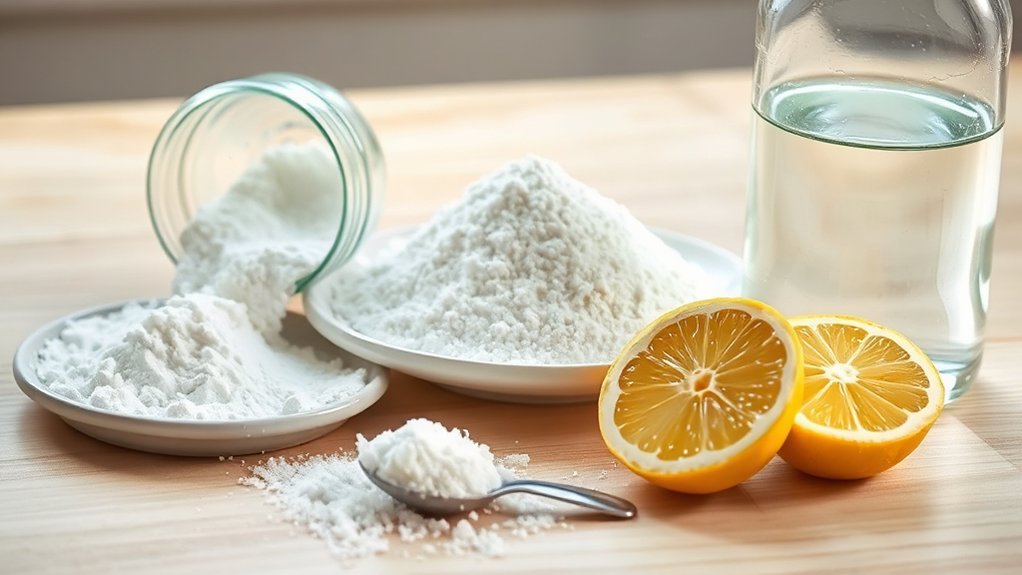
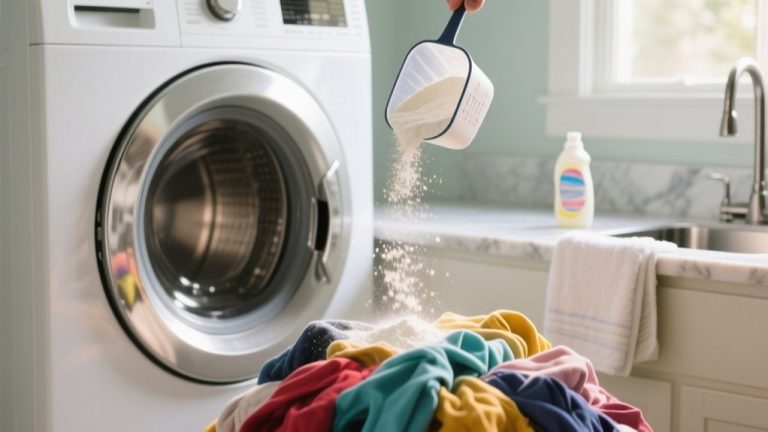
Homemade oxygen cleaner typically combines washing soda, which helps lift dirt and grease, with hydrogen peroxide, which releases stain-fighting oxygen. Together, these ingredients can help brighten washable fabrics and loosen everyday stains.
Washing soda and hydrogen peroxide combine to brighten washable fabrics and help loosen everyday stains.
You’ll also need a clean container and a suitable surface for handling the ingredients safely.
Washing soda, or sodium carbonate, is more alkaline than baking soda, so don’t treat the two as interchangeable. Hydrogen peroxide is commonly sold in a 3% household solution. Stronger concentrations can damage materials and irritate skin.
Check the product label before using it, and avoid mixing peroxide with vinegar, ammonia, or chlorine bleach. Keep the cleaner away from children and pets, and wear gloves if you have sensitive skin.
Because peroxide can fade colors, test any intended fabric or surface in a hidden spot first.
How Do You Mix Homemade Oxygen Cleaner?
To mix homemade oxygen cleaner, start by measuring the ingredients in the right ratios based on how much you need.
Once you’ve got everything measured out, stir them together until they’re evenly combined.
After that, make sure to store the mixture in a clearly labeled, airtight container.
Oh, and a quick tip—don’t mix it with other cleaners!
Ingredients and Ratios
For a simple homemade oxygen cleaner, mix two parts washing soda with one part hydrogen peroxide powder (sodium percarbonate).
Then add warm water as needed to make a new solution.
Use the same measuring unit for both dry ingredients, like tablespoons or cups, so you keep the ratio accurate.
Washing soda boosts cleaning power, while sodium percarbonate releases oxygen when it dissolves in water.
If you can’t find sodium percarbonate, check product labels carefully.
Ordinary liquid hydrogen peroxide isn’t a direct substitute for the powder by volume.
For a milder batch, use less powder while keeping the washing soda-to-powder ratio consistent.
Choose plain washing soda rather than baking soda since they’re different products.
This basic proportion gives you a practical starting point for treating laundry stains or revitalizing washable fabrics.
Mixing and Storage
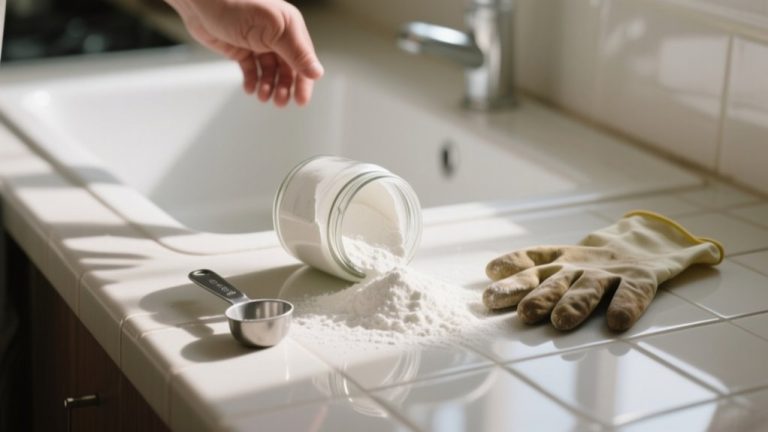
Once you’ve measured the powders, stir them together in a dry, airtight container. Keep your tools and hands dry because moisture can trigger the ingredients to react and lose strength.
Mix gently until the blend looks even, then label the container with its contents and date.
For a clear routine, follow these steps:
- Use a clean, completely dry bowl and spoon.
- Combine the measured powders slowly to limit dust.
- Transfer the finished mixture to a sealed, moisture-proof container.
- Store it in a cool, dry place, away from children, pets, heat, and sunlight.
Don’t mix the cleaner with liquids until you’re ready to use it, and prepare only what you can use promptly.
If the powder clumps, smells unusual, or gets damp, discard it rather than relying on its cleaning power.
How Should You Handle It Safely?
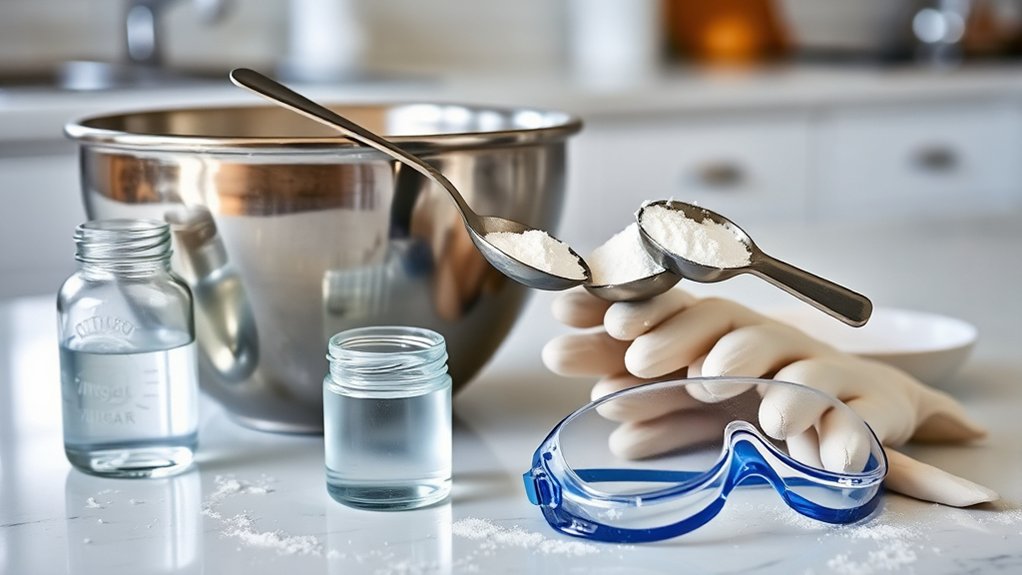
Make sure to protect your skin and eyes by wearing gloves and safety glasses when you’re handling the mixture.
It’s a good idea to keep it stored in a clearly labeled, sealed container. Also, be sure to keep it out of reach of children and pets.
And one important thing—never mix it with other cleaners.
Wear Protective Gear
Before mixing a homemade oxygen cleaner, put on gloves and safety goggles to guard your skin and eyes from irritation. Choose chemical-resistant gloves that fit well, and make sure your goggles cover the sides of your eyes.
Wear clothes that cover your arms and legs, plus closed-toe shoes, so splashes or spills don’t reach your skin. Work carefully, and keep your hands away from your face while preparing the mixture.
- Gloves: Use them when measuring ingredients and stirring; replace them if they tear.
- Goggles: Keep them on throughout mixing to block dust and splashes.
- Clothing: Wear long sleeves and pants, and remove contaminated garments promptly.
- Breathing: Avoid inhaling powder; mix gently in a well-ventilated area, and step away if dust irritates you.
Wash your hands thoroughly after removing your gear.
Store It Safely
After removing your protective gear, transfer the mixture to a clean, dry, clearly labeled airtight container.
Store it in a cool, dry place away from children, pets, moisture, and heat.
Keep it separate from food, medicines, and other household products.
Label the container with its ingredients, preparation date, and a clear warning: “Do not ingest.”
Never reuse a food or drink container since someone could mistake the mixture for something edible.
Use a secure lid, but don’t rely on packaging alone.
Choose a storage spot that children and pets can’t reach.
Keep the area ventilated and avoid placing the container near a stove, radiator, or sunny window.
If the mixture gets wet, clumps, or changes appearance, don’t use it.
Dispose of it according to local guidance.
How Do You Use It on Laundry Stains?
To treat a laundry stain, mix a fresh batch of oxygen-bleach solution according to the product label, then test it on a hidden area of the fabric. Check for color changes before treating the visible stain. Don’t use the mixture on wool, silk, leather, or garments marked dry-clean only.
- Blot fresh spills with a clean cloth; don’t rub, since that can push the stain deeper.
- Soak the stained area in the solution for the time stated on the label. Keep the fabric fully submerged.
- Check the stain before washing. If it remains, repeat the soak rather than increasing the solution’s strength.
- Wash the garment with your usual detergent, following its care label, then air-dry it.
Heat can set leftover stains, so make sure the mark has disappeared before using a dryer.
Which Household Surfaces Can You Clean?
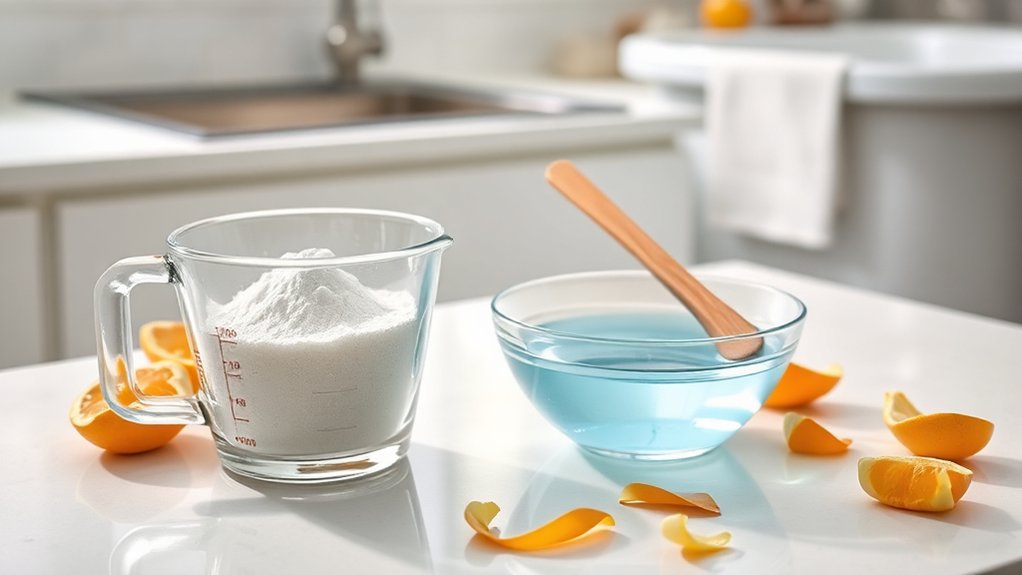
Oxygen bleach can clean many washable, colorfast household surfaces, including some tile, grout, and plastic. You can also use a properly diluted solution on sinks, tubs, shower walls, and sealed countertops.
It may lift everyday grime and help brighten grout lines, while plastic bins and outdoor furniture can benefit from a gentle soak or wipe-down.
Mix only the amount you need, following the product’s directions, and apply it with a sponge or soft brush. Let the solution sit briefly, then rinse the surface thoroughly with clean water.
For vertical areas, work in small sections so the mixture doesn’t dry before you rinse. Test a hidden spot first to check for color changes or surface effects.
Keep the area ventilated, and don’t mix oxygen bleach with other cleaners. Always follow the surface manufacturer’s care instructions.
What Fabrics and Surfaces Should You Avoid?
Avoid using oxygen bleach on wool, silk, leather, or fabrics labeled dry-clean only, as it can weaken fibers or damage finishes.
You should also check care labels before treating colored garments since dyes may fade or bleed. Test a hidden spot first, and don’t soak delicate fabrics.
Keep your homemade cleaner away from these surfaces:
- Untreated wood: Moisture and bleaching action can discolor or roughen the grain.
- Natural stone: Marble, granite, and limestone may lose their finish or develop marks.
- Metal: Aluminum and copper can tarnish or corrode when exposed to the solution.
- Painted or varnished surfaces: The cleaner may dull coatings or lift paint.
You should never mix oxygen bleach with other cleaners.
If you’re unsure about a material, follow its care instructions or ask the manufacturer before applying the solution.
Rinse accidental splashes promptly.
How Does Homemade Cleaner Compare With OxiClean?
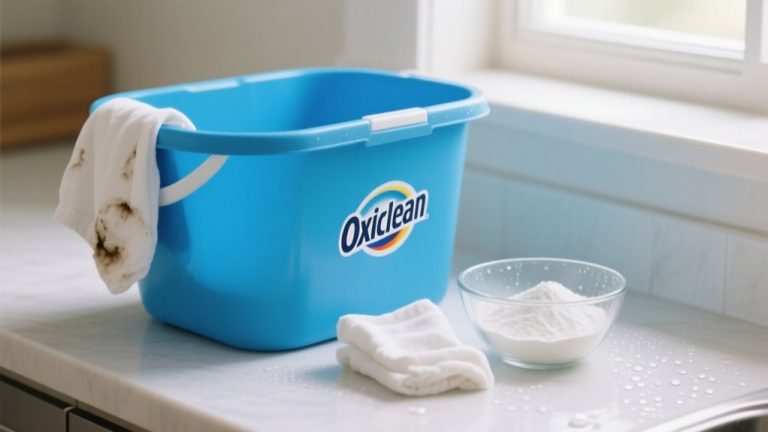
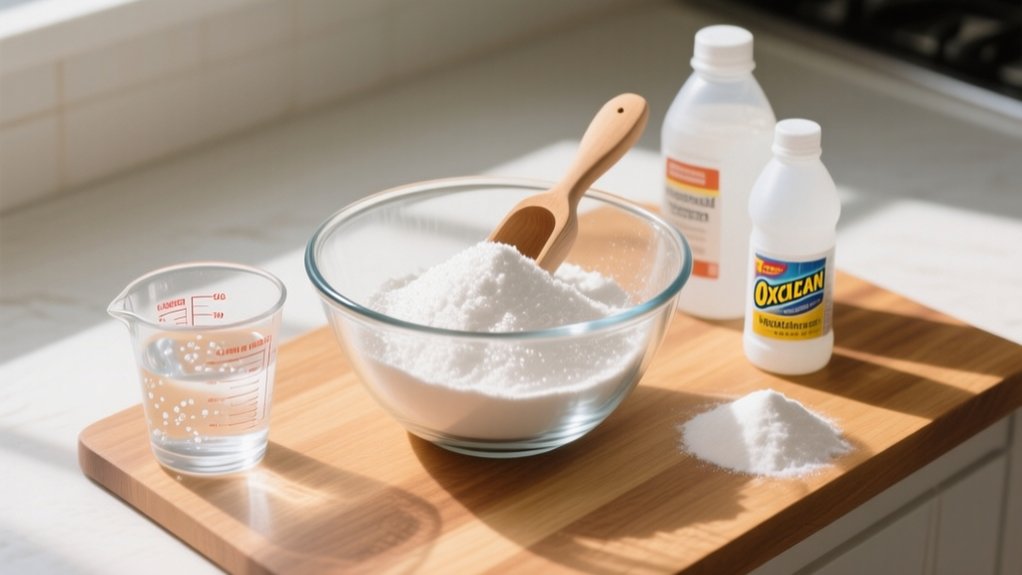
How does a homemade oxygen-bleach cleaner compare with OxiClean? Both can help lift stains and brighten washable fabrics, but they aren’t identical. A typical DIY mix uses washing soda and hydrogen peroxide, while OxiClean contains sodium percarbonate, which releases hydrogen peroxide in water, plus other ingredients that support cleaning.
You may find homemade cleaner useful for small, fresh stains and routine laundry, especially when you already have the ingredients. However, its strength and shelf life can vary, and peroxide breaks down over time.
OxiClean offers a formulated, shelf-stable product with directions for soaking and laundry use, so you get more consistent results.
For either option, follow fabric-care labels, test an inconspicuous spot, and avoid delicate materials. Don’t mix cleaners, and prepare DIY batches only as needed. Neither choice works on every stain.
Frequently Asked Questions
How Long Does Homemade Oxygen Cleaner Last After Mixing?
Use homemade oxygen cleaner immediately after mixing; it loses strength quickly, often within a few hours. This happens because hydrogen peroxide breaks down and releases oxygen.
Don’t store the solution in a sealed container since pressure can build up. Mix only what you need, and discard leftovers safely rather than saving them for later.
If you’ve added other ingredients, follow their safety guidance too.
Also, keep the mixture away from children, pets, and eyes.
Can Homemade Oxygen Cleaner Be Stored in a Sealed Container?
Yes, you can store homemade oxygen cleaner in a sealed container, but sealing it won’t keep it effective for long.
Water activates the oxygen-releasing ingredients, and pressure may build as the mixture releases gas.
You might worry that an open container will spill. Instead, mix only what you need, use it promptly, and don’t store the solution.
Keep dry ingredients separate in a labeled, airtight container away from moisture, children, and pets.
Is Homemade Oxygen Cleaner Safe for Septic Systems?
Yes, you can generally use homemade oxygen cleaner with a septic system when you use it sparingly.
Sodium percarbonate breaks down into soda ash, oxygen, and water. Small amounts shouldn’t disrupt a healthy system.
Don’t pour concentrated mixtures or large quantities down the drain since excessive cleaners can affect the beneficial bacteria your system needs.
Follow product directions, avoid combining cleaners, and check with your septic professional if your system has known problems.
Can I Use Homemade Oxygen Cleaner in a High-Efficiency Washing Machine?
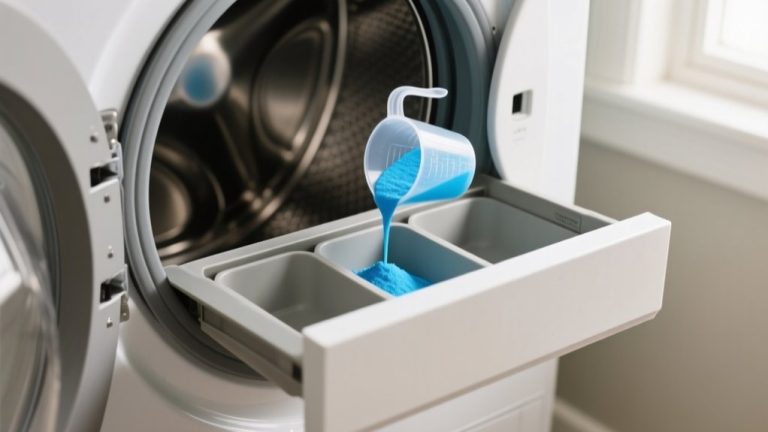
Yes, you can use homemade oxygen cleaner in a high-efficiency washer, but use caution.
Choose a simple sodium percarbonate mixture without added soap, oils, or suds-producing ingredients, and follow your washer’s manual.
Add only a small amount to the detergent compartment or drum, as directed.
Too much powder may leave residue or clog dispensers.
Don’t mix it with chlorine bleach, and test colored fabrics first to prevent fading or damage.
What Should I Do if Homemade Oxygen Cleaner Gets Into My Eyes?
If homemade oxygen cleaner gets in your eyes, rinse them immediately with clean, lukewarm running water for at least 15 to 20 minutes.
Hold your eyelids open and remove contact lenses if they come out easily.
Don’t rub your eyes or add other substances.
Call Poison Control or your local poison center for guidance.
Seek urgent medical care if pain, redness, blurred vision, or irritation continues.
Bring the cleaner’s ingredients or container with you.
Conclusion
Making a homemade oxygen cleaner is simple, but it isn’t a magic wand. Mix only what you need, handle the solution carefully, and test fabrics or surfaces in an inconspicuous spot before cleaning.
Remember, hydrogen peroxide and washing soda can’t safely tackle every stain or material. For delicate items, uncertain surfaces, or stubborn marks, follow the manufacturer’s care instructions or choose a commercial product.
With a little caution, you can give everyday messes a fresh start without turning cleaning into an odyssey.