Does Oxiclean Kill Fungus In Laundry – Quick Answer
OxiClean can loosen stains and odors, but you shouldn’t rely on it to kill fungus or fungal spores in laundry. It’s an oxygen-based cleaner, not a registered disinfectant, and results vary by product, temperature, fabric, and wash conditions.
Wash affected items at the hottest temperature their care labels allow, then dry them completely. If you need reliable disinfection, choose a product labeled for that purpose and follow its directions.
A few simple steps can also help prevent fungal growth.
Does OxiClean Kill Fungus in Laundry?
Does OxiClean kill fungus in laundry? Not reliably. OxiClean’s oxygen-based stain remover can help lift some organic residue and odors, but you shouldn’t assume it kills fungi on clothing. Results depend on the product, water temperature, dose, fabric, and wash conditions.
A standard wash may reduce contamination, yet it mightn’t eliminate fungal spores. If you’re washing items exposed to athlete’s foot or another fungal infection, check the care label and use the hottest water the fabric safely allows.
Choose a laundry product whose label specifically states that it sanitizes or kills fungi, and follow its directions. Don’t mix OxiClean with bleach, ammonia, or other cleaners.
Dry items completely, since damp fabric encourages fungal growth.
For persistent contamination, follow medical or public-health guidance rather than relying on a stain remover alone.
Does OxiClean Clean or Disinfect Laundry?
You should know there’s a difference between cleaning and disinfecting. Cleaning gets rid of dirt and some germs, while disinfecting is designed to kill specific germs.
OxiClean is great for cleaning your laundry because it lifts stains and odors. But don’t just assume it disinfects—only trust that if the product label explicitly says it does.
Cleaning Versus Disinfecting
OxiClean is a laundry cleaner, not a registered disinfectant, so it can help remove dirt and some stains without reliably killing fungi or other germs. Cleaning lifts soil and residues from fabric; disinfection targets specified microbes under tested conditions. You shouldn’t assume a cleaner disinfects just because clothes look or smell fresh.
| Laundry goal | What it means |
|---|---|
| Clean | Removes soil and some stains |
| Disinfect | Kills specified germs under label conditions |
| Fresh-looking | Doesn’t prove microbes are gone |
For dependable disinfection, check the product label for an explicit disinfectant claim and follow its directions, including any required contact time. Don’t treat a stain-removal result as proof of fungal control. If you’re laundering items after possible fungal exposure, use a product labeled for that purpose and follow its instructions. This distinction helps you choose the right product for your laundry needs.
What OxiClean Does
For everyday laundry, OxiClean helps loosen stains and lift soil through oxygen-based cleaning, but that doesn’t make it a disinfectant. Its sodium percarbonate releases hydrogen peroxide in water, helping brighten fabrics and remove some organic stains and odors. You can use it as a laundry booster alongside detergent, following the product label and care instructions for your garments.
Cleaning and disinfecting aren’t the same. OxiClean may help wash away dirt and some microbes as you launder, but you shouldn’t assume it kills fungus or sanitizes clothing. Results depend on the formula, concentration, water temperature, and contact time.
Ordinary washing also removes contaminants through detergent action, agitation, and rinsing.
If you need to disinfect laundry, choose a product specifically labeled for that purpose and follow its directions. Check fabric labels too, since oxygen bleach can damage some materials or colors.
Which OxiClean and Wash Settings Matter?
Which OxiClean formula and wash settings you choose can affect how well laundry comes clean. Check the product label first: formulas and directions vary, and some products aren’t suitable for every fabric. Use the amount listed for your load size and soil level.
| Choice | What to check | Practical setting |
|---|---|---|
| OxiClean powder | Label and fabric care | Dissolve as directed |
| OxiClean liquid | Dose for load size | Add per label |
| Water temperature | Garment care tag | Use the warmest safe option |
Choose a cycle that gives clothes room to move, and don’t overload the washer. A longer cycle may help when items are heavily soiled, but follow garment instructions to avoid damage.
Rinse thoroughly, then dry items completely according to their care labels.
When Should You Use a Laundry Disinfectant?
Use a laundry disinfectant when someone in your home has been sick or had an infection.
It’s a good idea to use one if your laundry is contaminated with bodily fluids or other infectious materials.
Just be sure to check the product label first to make sure it’s safe for your fabrics, and always follow the directions provided.
After Illness or Infection
After an illness, you usually don’t need to disinfect every load of laundry. Regular detergent and thorough drying are enough for everyday germs. Choose a laundry disinfectant when someone has a diagnosed infection and your healthcare provider recommends extra precautions, or when the product label identifies it as appropriate.
Follow its directions for fabric compatibility, dosage, water temperature, and contact time. Don’t assume oxygen bleach disinfects unless its label says so.
| Situation | Laundry approach |
|---|---|
| Common cold | Detergent; dry thoroughly |
| Stomach bug | Follow medical advice |
| Fungal infection | Use a labeled product if advised |
| Sensitive fabric | Check care instructions |
Wash your hands after handling laundry, and avoid shaking items. If illness persists or you’re unsure what precautions apply, ask a healthcare professional.
Don’t mix cleaning products; use each only as directed.
For Contaminated Laundry
For laundry contaminated with bodily fluids or linked to a diagnosed infection, consider a laundry disinfectant when a healthcare professional recommends one or its label says it’s suitable for the situation.
Follow the product directions carefully, including the amount, water temperature, and contact time.
Check that the disinfectant works against the organism involved and is safe for your fabric and washer.
Don’t assume OxiClean disinfects laundry; stain removal or oxygen bleaching doesn’t necessarily kill fungi or other germs.
Handle soiled items with gloves if needed, and avoid shaking them, which can spread particles.
Wash them promptly, separately when appropriate, using detergent and the warmest temperature the care label allows.
Dry everything fully.
If you can’t use a disinfectant, ask a clinician or local health authority about safer, effective options.
Never mix cleaning products.
How Do You Use OxiClean Safely?
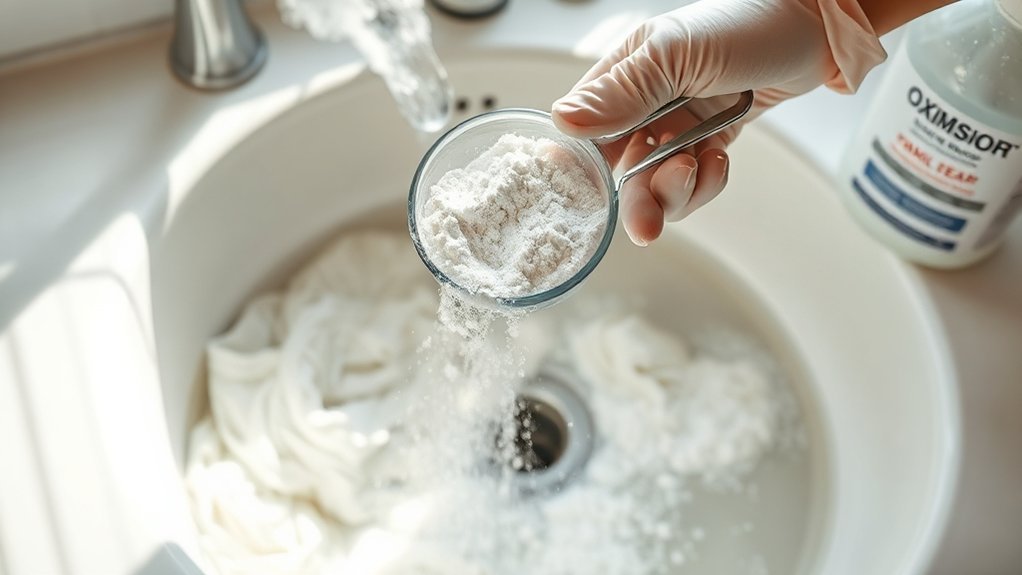
To use OxiClean safely, follow the product label and check each garment’s care instructions first.
Wear gloves if you have sensitive skin, and avoid breathing powder or getting it in your eyes.
Use the recommended amount; adding extra won’t necessarily improve cleaning and may leave residue.
Dissolve the powder completely in water before adding laundry, and don’t pour it directly onto dry clothing.
Never mix OxiClean with chlorine bleach, ammonia, or other cleaners, since combinations can create hazardous reactions.
Keep the product in its original container, tightly closed, and stored away from children and pets.
Use it in a well-ventilated area, and wash your hands after handling it.
If the solution splashes into your eyes or causes irritation, rinse thoroughly with water and follow the label’s first-aid guidance.
Which Fabrics Can Handle OxiClean?
Even when you use OxiClean safely, check whether the fabric can handle it. Oxygen bleach is generally suitable for colorfast, washable fabrics but may damage wool, silk, leather, or garments labeled dry-clean only.
Cotton, polyester, and many durable blends usually tolerate it when their care labels allow washing and bleaching. Don’t assume a fabric is safe just because it’s washable; dyes, finishes, and construction can affect how it responds.
Check the garment’s care label and the OxiClean package directions before treating it. If the label says “nonchlorine bleach only,” oxygen bleach may be appropriate, but test a hidden area first.
Mix the product as directed, apply a small amount, and check for color change or damage after the recommended time.
For delicate, valuable, or uncertain items, skip OxiClean and choose a fabric-safe cleaning method.
How Can You Prevent Laundry Fungus?
How can you prevent laundry fungus from taking hold? Don’t leave damp clothes, towels, or washcloths sitting in a pile or washer. Move each load to the dryer promptly, and dry items completely before folding or storing them.
If you can’t wash wet clothes right away, hang them separately so air can circulate.
Keep your washer clean and dry between loads. Leave the door and detergent drawer open after use, wipe away moisture, and clean the machine regularly according to its manual.
Use the recommended amount of detergent; excess can leave residue that traps grime and moisture.
Store clean laundry in a dry, ventilated place, not a damp hamper or closet. If clothes smell musty, rewash them and dry them thoroughly.
Fix leaks and reduce room humidity to limit mold growth.
Frequently Asked Questions
Can Fungal Spores Survive Inside a Washing Machine?
Yes, fungal spores can survive inside a washing machine, especially in damp seals, detergent drawers, and hidden crevices.
You may reduce their numbers by cleaning the washer regularly and leaving its door and drawer open to dry.
Run a hot maintenance cycle with a washer-safe cleaner, following the manufacturer’s directions.
Wipe the gasket and drawer, and remove wet laundry promptly.
Don’t mix cleaning products, particularly bleach with ammonia or acids.
How Can You Remove Mildew Odors From a Washer?
Remove mildew odors by cleaning the washer’s gasket, detergent drawer, and drum.
Wipe the gasket’s folds with a cloth dipped in diluted bleach, following your washer manual and never mixing bleach with other cleaners.
Run the hottest available cleaning cycle with a washer-cleaning tablet or the manufacturer-recommended product.
Then leave the door and drawer open to dry.
Use the right detergent amount, remove wet laundry promptly, and clean the washer monthly.
Can Laundry Fungus Spread Through Shared Hampers?
Yes, laundry fungus can spread through shared hampers, but you don’t need to throw yours away.
Damp, contaminated clothing can leave fungal spores on hamper surfaces. These spores may transfer to other garments, especially if they stay wet or touch directly.
Keep dirty laundry dry and separate items from anyone with a suspected fungal infection.
Clean hampers regularly. Wash washable liners and hard surfaces with detergent, then dry them completely before reuse.
Should You Rewash Clothes After Discovering Mold in a Closet?
Yes, rewash clothes that smell musty, show mold, or sat in a damp closet.
Take them outside and brush off visible spores carefully, avoiding inhalation.
Wash washable items with detergent at the hottest temperature their care labels allow, then dry them completely.
Don’t mix bleach with other cleaners.
For delicate or dry-clean-only garments, contact a professional.
Fix the closet’s moisture problem before returning clothes, or mold may grow again.
Can a Professional Cleaner Treat Fungus-Damaged Clothing?
Can a professional cleaner treat fungus-damaged clothing? Yes, a specialist can often clean and restore affected garments, depending on the fabric, damage, and extent of growth.
You’ll want to choose a cleaner experienced in mold or mildew remediation and tell them what happened before you bring items in. They can assess whether cleaning is safe and effective or whether you should discard the clothing.
Don’t shake or brush contaminated garments, since that can spread spores.
Conclusion
OxiClean can help remove fungal stains and odors, but don’t assume it disinfects laundry. For a confirmed fungal concern, choose a laundry sanitizer labeled for that use, follow its directions, and check your fabric’s care label.
Think of OxiClean as a cleanup crew, not a security guard: it can make clothes look and smell fresh without guaranteeing every fungus is gone. After a damp-towel scare, I learned to wash promptly, dry completely, and store laundry only when it’s fully dry.