How To Make Liquid Oxiclean – DIY Recipe
To make a small, fresh batch of DIY liquid OxiClean, mix 1 cup water, ½ cup 3% hydrogen peroxide, and 1 tablespoon washing soda in a clean container. Stir gently until the washing soda dissolves, and don’t shake the mixture.
Test it on an inconspicuous spot first, then apply a little to the stain for 5 to 10 minutes without letting it dry. Make only what you need, and keep it away from children and pets.
Follow these steps for safer stain treatment.
Gather Ingredients for DIY Liquid OxiClean
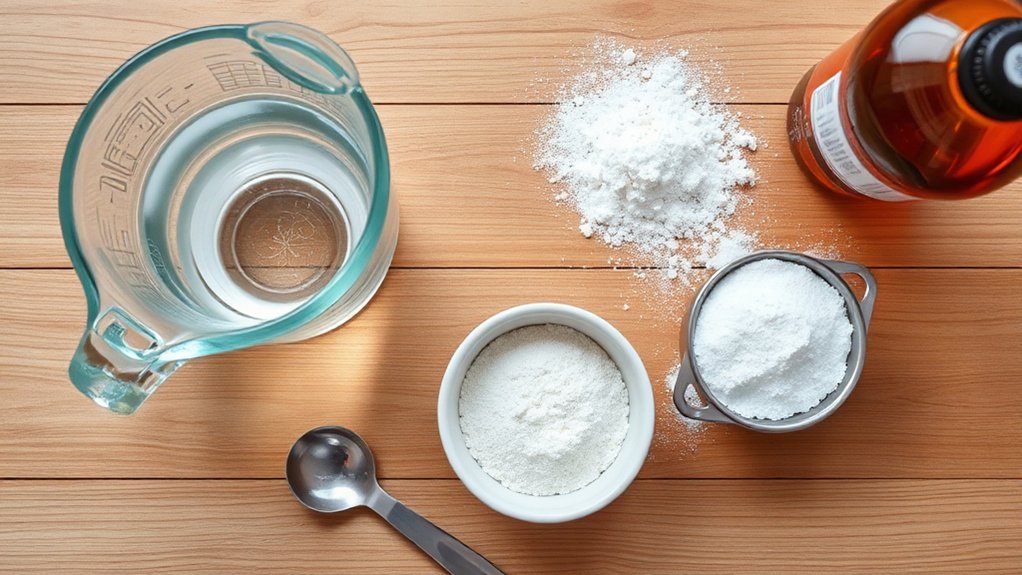
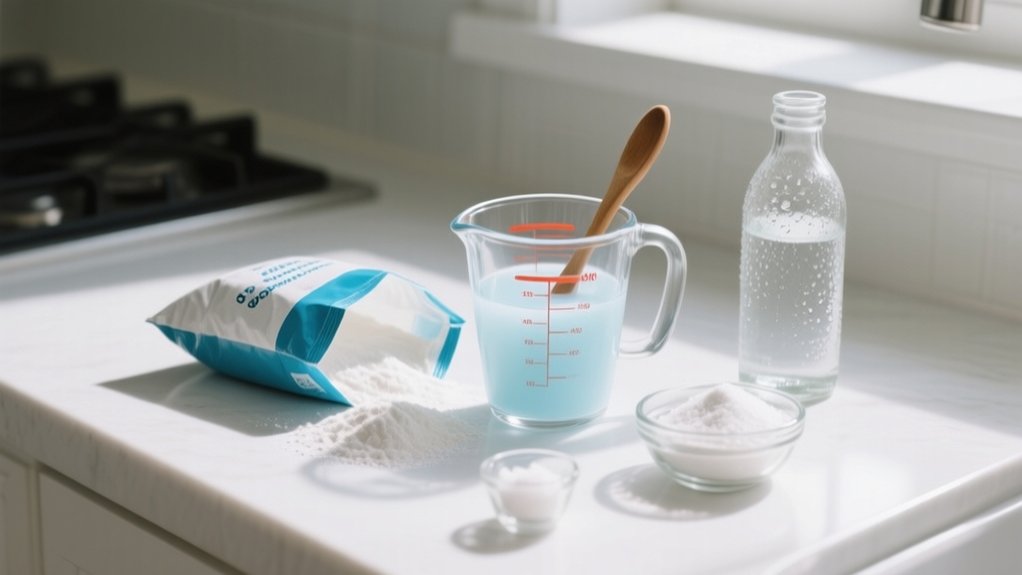
Gather a few simple ingredients to make DIY liquid OxiClean: washing soda, hydrogen peroxide, and water. You’ll also want a clean container for holding the mixture and a spoon for stirring.
Choose a container that’s large enough to leave room for mixing, and make sure it’s labeled clearly so nobody mistakes the contents for a drink.
Check the hydrogen peroxide label before you begin. A standard 3% solution is commonly available at pharmacies and grocery stores.
Washing soda, also called sodium carbonate, is sold in the laundry aisle; don’t confuse it with baking soda, which is a different product.
Washing soda and baking soda are different products, so check the label before you begin.
Use fresh hydrogen peroxide since it gradually loses strength when exposed to light and air.
Gather everything on a stable work surface, and keep the ingredients away from children and pets until you’re ready to use them.
Follow This DIY Liquid OxiClean Recipe
For a small batch, mix 1 cup water, ½ cup 3% hydrogen peroxide, and 1 tablespoon washing soda in your clean container. Stir gently until the washing soda dissolves.
Don’t shake the mixture, since agitation can cause foaming and pressure buildup.
Use a spoon or whisk reserved for cleaning products, and avoid splashing the solution.
Make only what you need for immediate use. This homemade cleaner doesn’t contain stabilizers, so its ingredients may lose strength over time.
Pour the finished mixture into a clearly labeled, clean container, and keep it away from children and pets.
Don’t store it in a sealed bottle, as oxygen can build up.
Prepare a fresh batch when needed, and discard any leftover solution safely according to local guidance.
Never combine this mixture with chlorine bleach, ammonia, or other cleaners.
Test Fabric Safety Before Treating Stains
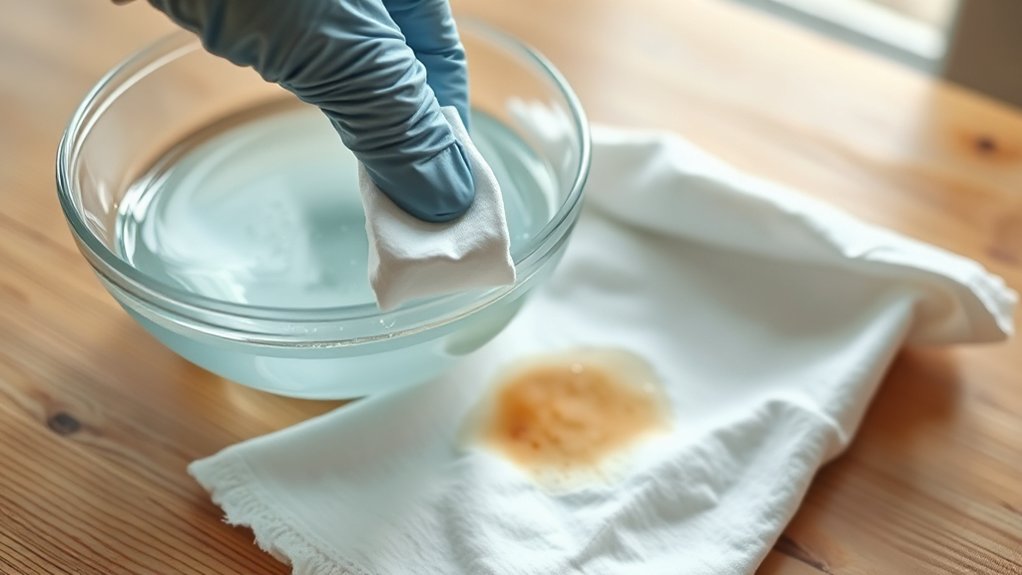
Before using the fresh mixture, test it on an inconspicuous area of the fabric. Choose a hidden seam or hem, and check the care label first. Apply a small amount, then wait five minutes. Blot the spot with a clean, white cloth and rinse it with cool water. Let the fabric air-dry completely before checking for fading, color transfer, or texture changes.
| Fabric or dye | Test location | Check for |
|---|---|---|
| Colored cotton | Inside hem | Fading or bleeding |
| Synthetics | Hidden seam | Discoloration |
| Delicate fabric | Care-label guidance | Texture changes |
If you notice any change, don’t use the mixture on that item. Test each garment separately, even if its color or material looks similar to another piece. When the test area remains unchanged, you can proceed cautiously.
Pretreat Laundry Stains With the Mixture
Once the fabric passes the safety test, use the fresh mixture to pretreat the stain. First, blot away excess liquid or gently scrape off solids without rubbing them deeper into the fibers.
After the fabric passes a safety test, blot excess liquid or gently scrape away solids before pretreating the stain.
Place a clean towel beneath the stained area to keep the mixture from reaching other layers. Apply a small amount directly to the mark, covering it without soaking the fabric. Work it in gently with your fingertips or a soft brush, moving from the stain’s outer edge toward the center.
Let the treatment sit for about five to ten minutes, and don’t let it dry on the fabric.
Check the care label and avoid using this method on wool, silk, leather, or fabrics that can’t be safely washed. Then launder the item as directed, checking the stain before drying.
Store the Mixture Safely and Use It Fresh
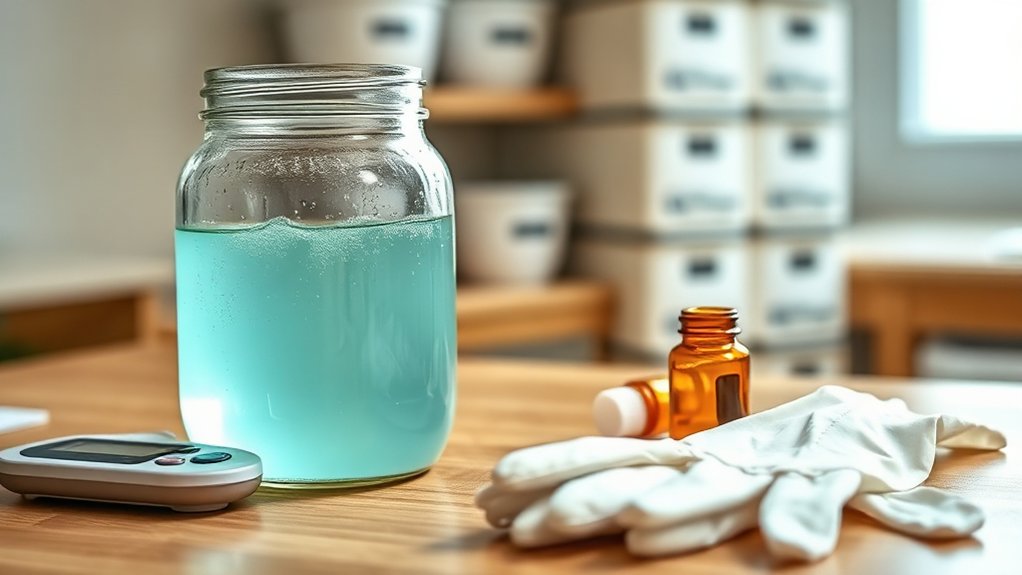
Because the mixture works best when fresh, make only what you need for the stain treatment. Oxygen-based cleaner can lose effectiveness after dissolving, so don’t prepare a large batch or count on leftovers for future laundry. If you have extra, handle it carefully and discard it rather than storing it in a sealed container.
| Situation | What you should do | Why it matters |
|---|---|---|
| Mixing | Prepare one treatment’s worth | Fresh solution works best |
| Short wait | Keep it in an open, labeled container, away from children and pets | Pressure can build in a sealed container |
| Leftovers | Dispose of them according to the product label | Avoid unsafe storage |
Keep the dry product in its original, tightly closed package, in a cool, dry place. Follow its label for handling and disposal, and never mix it with other cleaners. Rinse your container after use.
Frequently Asked Questions
Is Homemade Liquid Oxiclean as Effective as the Commercial Product?
No, homemade liquid OxiClean usually isn’t as effective as the commercial product. You can mix oxygen bleach with water, but the solution loses strength as it sits.
You won’t match the product’s stabilizers, surfactants, or carefully balanced formula. For better results, mix a small batch shortly before use.
Follow the oxygen bleach label and test it on an inconspicuous area. Don’t combine it with chlorine bleach, ammonia, or acidic cleaners.
Can I Use This Mixture in a High-Efficiency Washing Machine?
Yes, you can use the mixture in a high-efficiency washing machine, but use it cautiously.
Add only a small amount to the detergent dispenser or directly into the drum, following your washer’s manual.
Don’t use more than needed because excess cleaner can create residue or suds and affect performance.
Never mix it with chlorine bleach or other cleaners.
If your washer’s manufacturer advises against homemade additives, follow that guidance and use an HE-labeled product instead.
Is Homemade Liquid Oxiclean Safe for Septic Systems?
You’re generally in the clear: homemade liquid oxygen bleach is usually septic-safe when you use it sparingly and follow the recipe’s directions.
Hydrogen peroxide breaks down into water and oxygen. But large or frequent doses may disrupt the beneficial bacteria your system relies on.
Don’t pour concentrated ingredients or leftover batches down the drain.
If you use a septic treatment system or have concerns, check your manufacturer’s guidance before washing.
Can I Combine It With Chlorine Bleach or Other Cleaners?
No, you shouldn’t combine homemade liquid oxygen bleach with chlorine bleach or other cleaners. Mixing products can trigger dangerous reactions, release toxic gases, or cause splashing and burns.
Use one cleaner at a time, follow its label, and rinse the surface thoroughly before switching products.
Don’t mix it with ammonia, acids such as vinegar, or toilet-bowl cleaners either.
If you’ve already mixed products and notice fumes, leave the area and contact emergency services or poison control.
What Should I Do if the Mixture Gets in My Eyes or Is Swallowed?
Act fast; your eyes and mouth need a clear path to safety.
If the mixture gets in your eyes, rinse gently with clean, lukewarm water for 15–20 minutes. Remove contact lenses if easy, and call Poison Control.
If you swallow it, rinse your mouth, don’t induce vomiting, and contact Poison Control immediately.
In the U.S., call 1-800-222-1222. Call emergency services for trouble breathing, severe pain, or unconsciousness.
Keep the container nearby.
Conclusion
Make your DIY liquid OxiClean carefully, test it on an unseen spot, and pretreat stains before laundering. Mix only what you’ll use soon, and keep the solution clearly labeled and out of children’s reach.
With a few simple ingredients and sensible precautions, you can tackle laundry stains without making the process complicated. Think of it as a little boost for your wash, like a helping hand that gets your clothes ready to shine again.