Can You Dry Clean Alpaca Wool – Safe Cleaning Tips
You can safely dry clean alpaca wool by choosing gentle, temperature-controlled processes that use eco-friendly solvents. These help protect its delicate fibers from felting and shrinkage. Always let your cleaner know the fabric type before they start.
Also, pre-treat stains with wool-safe removers to get the best results. Avoid harsh chemicals, fabric softeners, and excessive agitation. These things can mess with the softness and shape of your garment.
Taking proper care after cleaning is important too. It helps preserve your alpaca wool’s quality for longer. Keep these tips in mind to make sure your alpaca wool looks its best over time.
Why Alpaca Wool Needs Gentle Dry Cleaning Care
Because alpaca wool’s delicate semi-hollow fibers react poorly to heat and harsh chemicals, you need to take extra care during dry cleaning to avoid felting and shrinkage. Its sensitivity means traditional dry cleaning methods can damage fiber elasticity, leading to loss of softness and shape.
To keep alpaca’s lightweight warmth and natural drape, professional cleaners must use specialized solvents and controlled cycles that minimize mechanical agitation. You should always let your dry cleaner know the garment is alpaca wool so they apply low-temperature solvents and gentle handling techniques.
This approach not only protects fiber elasticity but also helps keep colors vibrant, preventing fading or dullness. Proper dry cleaning preserves your alpaca garment’s quality, extending its lifespan while maintaining its luxurious feel and appearance.
When to Choose Dry Cleaning for Alpaca Wool
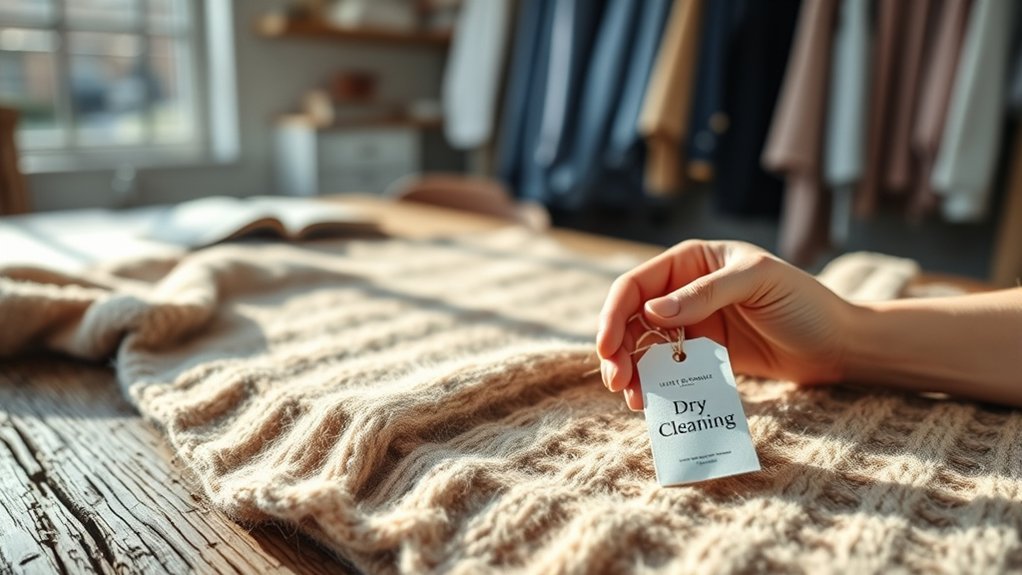
You’ll want to choose dry cleaning for structured alpaca garments like coats and jackets because it helps preserve their shape and details.
It’s definitely the best option when you’re dealing with tough oil-based stains that water just can’t handle. Plus, professional cleaners use gentle solvents that do a better job protecting the fibers than washing at home.
Structured Garments Benefit
When caring for structured alpaca garments like coats and jackets, choosing dry cleaning preserves their shape and tailored details more effectively than hand or machine washing. Dry cleaning protects the alpaca texture and enhances garment durability by preventing stretching or distortion.
You should opt for dry cleaning when your garment has intricate stitching, linings, or complex construction that requires gentle handling. It’s also the best choice if you want to maintain the natural softness and integrity of the alpaca fibers without compromising form.
Plus, preserving the crisp lines and tailored fit is essential for the garment’s long-term appearance and wearability. So, dry cleaning really helps keep your structured alpaca pieces looking their best over time.
Stain Removal Needs
How do you handle tough stains on your alpaca wool garments without risking damage? For stubborn spots like grease, ink, or makeup, dry cleaning is your best bet. Hand washing often falls short, risking incomplete stain removal, color bleeding, or fabric shrinkage.
Dry cleaning uses specialized solvents that tackle oil-based stains effectively while preserving the delicate fibers. If your garment has heavy dirt or is a structured piece like a coat, dry cleaning also helps maintain its shape and tailored fit.
Always inform your cleaner that the fabric is alpaca wool. This ensures they use appropriate methods to protect your garment. Choosing dry cleaning for challenging stains safeguards your alpaca wool against damage and preserves its natural beauty.
Professional Care Advantages
Although alpaca wool is durable, it needs careful handling to keep its shape and texture, especially for structured pieces like coats and jackets. Choosing professional dry cleaning helps preserve the fabric’s softness and the fibers’ resilience, which is key for making your garment last.
Here’s when you should go for dry cleaning: when you’re dealing with tailored items that have linings or intricate details that require gentle, controlled care. It’s also the best way to avoid shrinkage and felting that can happen with hand or machine washing.
Plus, if you want to keep the original shape and structure, dry cleaning uses specialized solvents that protect those delicate fibers. On top of that, eco-friendly dry cleaning options help reduce chemical exposure, which keeps your alpaca wool soft and strong.
Trusting the pros means your garment stays in great shape and keeps its natural qualities intact. It’s definitely worth it for the long-term care of your alpaca wool pieces.
Preparing Alpaca Wool for Dry Cleaning
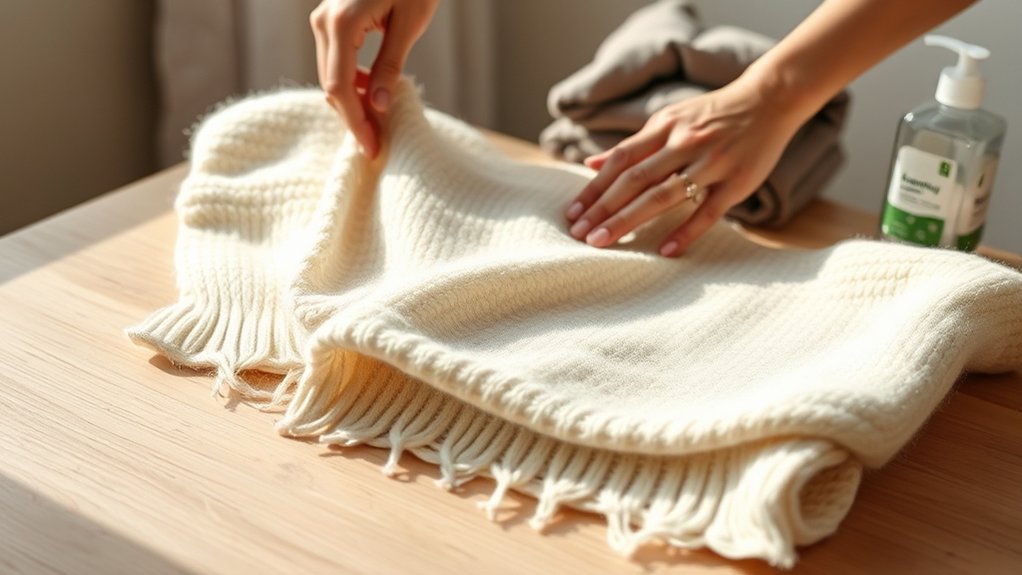
Since alpaca wool requires gentle care, you should clearly specify the fabric type to your dry cleaner to guarantee proper handling and prevent damage.
Always inform your dry cleaner about alpaca wool to ensure gentle and proper care.
Before handing over your garment, pre-treat any visible stains with a gentle, wool-safe stain remover to avoid color bleeding during cleaning.
Check for loose threads or fabric damage and repair them to prevent worsening.
Make sure your alpaca wool item is completely dry and free of dirt to avoid trapping residues.
Let your cleaner know about alpaca’s delicate fibers so they can use low-temperature or eco-friendly processes.
Avoid fabric softeners, as they can affect fiber texture and cause buildup.
Proper preparation protects your alpaca wool’s softness and longevity, making dry cleaning safer and more effective.
Professional Dry Cleaning Methods for Alpaca Wool
When you opt for professional dry cleaning for your alpaca wool, it’s good to know that cleaners use special solvents—these can be traditional or eco-friendly—to protect the delicate fibers.
They don’t just jump straight into cleaning; first, they carefully pre-treat any stains with targeted agents.
After that, your garments go through controlled low-temperature cycles. This step is super important because it helps avoid felting, which can ruin the texture.
Thanks to this precise process, your alpaca wool comes out clean and keeps its shape without any water damage.
Solvent Selection And Usage
To clean alpaca wool effectively without risking damage, you need to choose solvents that remove stains and dirt without immersing the fibers in water.
Professional cleaners often use perchloroethylene or eco-friendly hydrocarbon solvents. These options balance cleaning power with low solvent toxicity and reduced environmental impact.
When selecting solvents for alpaca wool, consider these key points: use solvents that dissolve stains without weakening fibers or causing felting.
It’s also important to maintain proper solvent temperature to preserve alpaca’s delicate structure.
And whenever possible, opt for eco-friendly alternatives to minimize environmental harm.
Stain Treatment Techniques
Choosing the right solvents sets the stage for effective stain treatment on alpaca wool. Professional dry cleaners begin with colorfastness testing to verify solvents won’t alter the garment’s hues.
They then apply specialized chemical agents designed to dissolve oils, dyes, or organic stains without harming the fibers.
This targeted spot treatment preserves fiber strengthening by avoiding harsh water-based methods that cause felting or shrinkage. Throughout the process, cleaners handle the fabric gently to maintain alpaca wool’s softness and structure.
After stain removal, light steaming or gentle pressing restores the garment’s appearance without compromising fiber integrity. By following these professional techniques, you verify your alpaca wool items receive safe, effective care that prolongs their life and beauty.
Controlled Low-Temperature Cycles
Although alpaca wool demands delicate care, professional dry cleaners use controlled low-temperature solvent cycles to clean it effectively without causing felting or fiber damage. These cycles keep temperatures moderate, which helps prevent fiber shrinking and preserves the garment’s natural drape.
When your alpaca wool is cleaned this way, it benefits from reduced fiber agitation. This means less mechanical fabric felting and a softer texture overall.
Plus, eco-friendly solvents like hydrocarbon or silicone-based options are used for gentler cleaning.
The machines have precise temperature control, ensuring the cleaning is thorough while still protecting those delicate fibers.
Common Dry Cleaning Mistakes With Alpaca Wool
When you entrust alpaca wool garments to a dry cleaner, specifying the fiber type is essential to avoid damage. Many dry cleaners overlook this and apply standard methods that aren’t suitable for delicate alpaca fibers.
Improper fiber blending knowledge often leads to aggressive solvents or high heat, causing felting, shrinkage, and loss of softness.
Another common mistake is neglecting color preservation. Traditional chemicals can dull or discolor alpaca wool over time.
Failing to communicate special care instructions or pre-spot stains risks deformation and fiber crushing, especially with structured pieces.
To protect your alpaca garment’s integrity, make sure your cleaner understands its unique properties. They should use gentle, eco-friendly solvents and controlled processes that respect both fiber blending and color preservation.
It really makes all the difference in keeping your garment looking great.
Alternatives to Dry Cleaning Alpaca Wool
If you want to preserve the softness and longevity of your alpaca wool garments, you can explore several effective alternatives to dry cleaning. Proper alpaca care and garment preservation don’t always require professional services. Here are three reliable methods:
First, hand wash your alpaca wool in cold water using a gentle, wool-specific detergent to avoid damage. If you prefer machine washing, place the garment in a mesh laundry bag and select a delicate cycle to protect the fibers.
Then, air dry flat on a clean surface to prevent shrinkage and maintain shape.
Also, spot clean stains promptly with a mild wool-safe remover. Regularly brush and air out your garments to keep them fresh.
These simple steps help reduce your reliance on dry cleaning while making sure your alpaca wool stays in excellent condition.
Maintaining Alpaca Wool After Dry Cleaning
To keep your alpaca wool garments in top condition after dry cleaning, gently reshape them while they’re still damp. This helps maintain their original form and prevents distortion. Since alpaca wool fibers are sensitive, avoid hanging wet or recently cleaned items because this can cause stretching and shape loss.
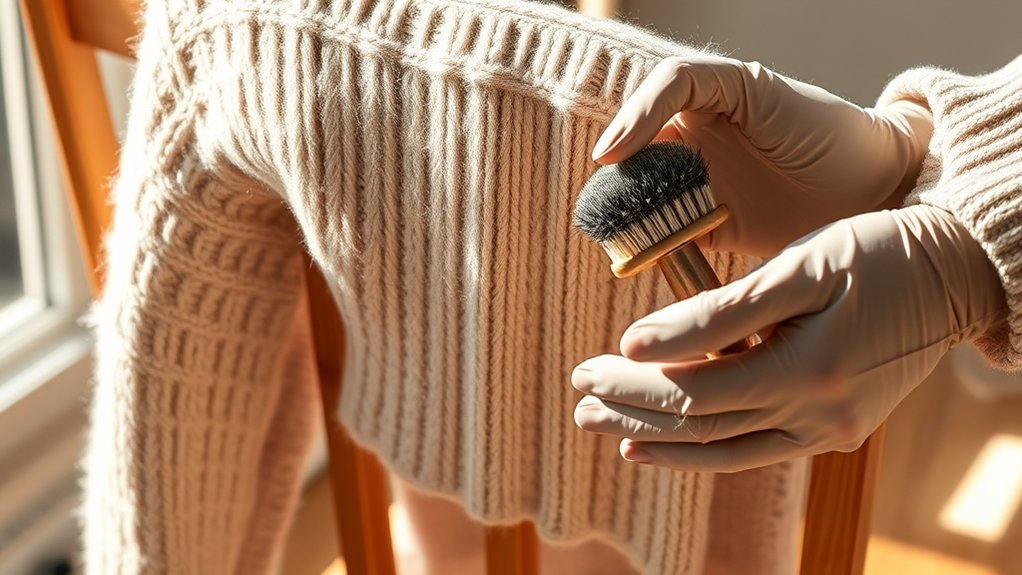
Instead, store your garments flat in breathable containers. This will help uphold alpaca durability and preserve softness. Using a soft-bristled brush, carefully restore the fibers’ natural texture and remove any leftover cleaning agents.
Also, regularly airing out your stored alpaca wool keeps it fresh and reduces how often you need to clean it.
Tips for Long-Term Care of Alpaca Wool Garments
Although alpaca wool is naturally durable, proper long-term care is essential to preserve its softness and shape. Whether your garment features pure alpaca fiber or an alpaca fiber blend, following careful storage and cleaning routines will really help extend its life.
Alpaca wool’s natural durability shines brightest with thoughtful care to maintain softness and shape over time.
Here are some key tips to keep in mind:
- Store your alpaca wool folded in breathable containers like cotton bags. Make sure your garments are fully dry and clean before storing to prevent moth damage. You might also want to consider natural repellents such as cedar chips.
- Keep your items in a cool, dry place away from sunlight and humidity. This helps avoid mold and fiber degradation.
- Use gentle hand washing techniques. Regularly air out and brush your garments to maintain their natural luster without causing any damage.
Frequently Asked Questions
Can I Dry Clean Alpaca Wool at Home With DIY Kits?
You shouldn’t dry clean alpaca wool at home with DIY cleaning methods, as they risk fiber damage.
For proper alpaca wool care, trust professional dry cleaners who preserve softness and shape. They ensure safe, effective results every time.
How Often Should Alpaca Wool Be Dry Cleaned Professionally?
You should dry clean alpaca fiber professionally every 3-6 months, depending on wear. Proper fabric maintenance, including spot cleaning and airing, helps preserve softness and prevents damage from overly frequent dry cleaning.
Taking care of your alpaca wool between cleanings is key. Just a little attention can keep it looking and feeling great for a long time.
Are There Specific Eco-Friendly Solvents Recommended for Alpaca Wool?
Eco-friendly solvents, like liquid carbon dioxide and silicone-based cleaners, act as gentle rain nurturing your alpaca’s fibers. You’ll want to insist on sustainable cleaning methods to protect both your garment and the planet’s delicate balance.
It’s all about keeping things gentle and kind, right? Using these solvents helps maintain the softness and quality of your alpaca wool, while also being mindful of the environment. So, it’s a win-win for you and nature!
Does Dry Cleaning Affect the Hypoallergenic Properties of Alpaca Wool?
Dry cleaning doesn’t affect your alpaca wool’s hypoallergenic maintenance when done properly. It preserves fiber integrity, ensuring the wool remains resistant to allergens and retains its natural properties.
This is especially true when using eco-friendly, gentle solvents. They help keep your wool in great shape without harsh chemicals. So, you can trust dry cleaning to keep your alpaca wool looking and feeling just right.
Can Dry Cleaning Remove Tough Stains Like Oil or Wine From Alpaca Wool?
Like a skilled surgeon, dry cleaning tackles tough stains like oil or wine on alpaca wool with precision. You’ll find stain removal effective using professional cleaning methods, ensuring your garment stays pristine without damaging delicate fibers.
It’s pretty impressive how these methods work. They’re designed to be gentle yet thorough, so your alpaca wool keeps its softness and shape. So, when you’re dealing with those tricky stains, dry cleaning is definitely the way to go.
Conclusion
Think of your alpaca wool garment as a delicate butterfly. Its fibers are fragile wings that need gentle handling. Dry cleaning, when done right, acts like a careful gardener, making sure those wings stay vibrant and intact.
By choosing the proper care and avoiding harsh methods, you preserve its natural beauty and softness. Treat your alpaca wool with this mindful approach. It’ll continue to grace your wardrobe with elegance and warmth for years to come.