Is Downy Fabric Softener Toxic – What Science Says
If you’ve ever wondered whether your laundry products could be affecting your health, you’re not alone. Many people want soft, fresh-smelling clothes without worrying about hidden chemicals, irritation, or poor indoor air quality. That concern is especially common with fabric softeners like Downy, which are used in countless homes every day. It’s natural to want clearer answers before adding something new to your routine.
You might face health risks using Downy fabric softener because it contains quaternary ammonium compounds and synthetic fragrances linked to respiratory issues and skin irritation. Studies show these ingredients release VOCs, including carcinogens, which can degrade indoor air quality and trigger asthma.
The fragrance labels often hide many allergens, making it hard to assess full safety. To protect yourself and better understand these concerns, exploring safer alternatives and ingredient transparency is essential.
Key Ingredients in Downy Fabric Softener
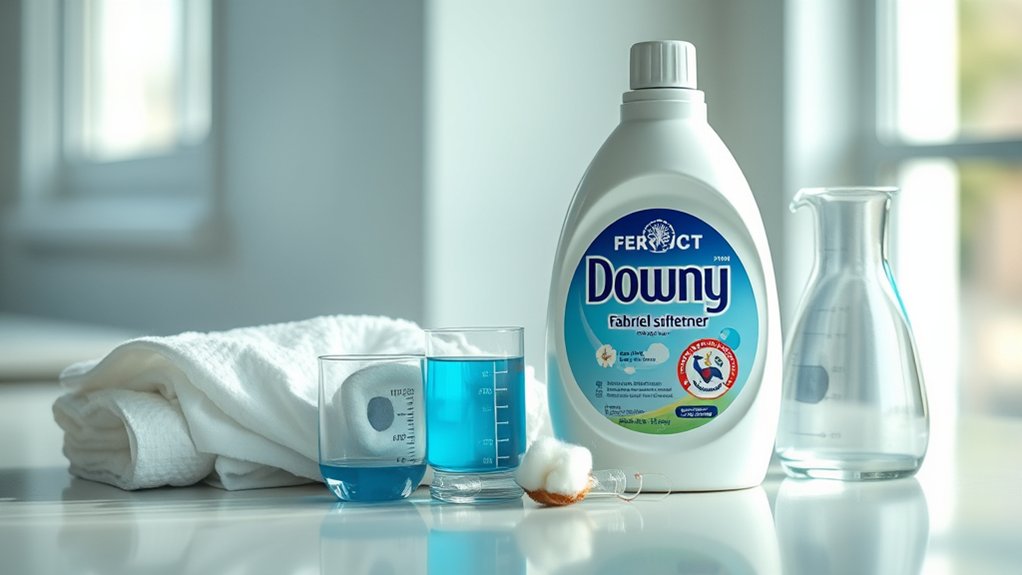
The key ingredients in Downy fabric softener include quaternary ammonium compounds, glutaral, and synthetic fragrances, each playing a distinct role but also raising safety considerations.
Quaternary ammonium compounds, or quats, act as the primary softening agents but have been linked to skin irritation and respiratory problems, especially in sensitive groups like children and asthmatics.
Quaternary ammonium compounds soften fabrics but may cause irritation and respiratory issues, particularly in sensitive individuals.
Glutaral serves as a preservative but is a known skin sensitizer that can trigger allergic reactions and dermatitis in vulnerable individuals.
Synthetic fragrances provide scent but consist of complex mixtures, including phthalates, which some studies associate with endocrine disruption.
Understanding these components helps you critically assess potential risks associated with Downy’s formulations, highlighting the importance of ingredient transparency and the need for informed consumer choices.
How Does Downy Make Sure Its Ingredients Are Safe?
Its ingredients must meet regulatory limits before the product reaches store shelves.
Ingredient Safety Process
Although many products claim safety, Downy guarantees ingredient safety through a rigorous four-step, science-based evaluation process.
First, it questions the initial safety of each ingredient, verifying no harmful substances like heavy metals, alkylphenols, or microbeads are included.
Second, Downy defines safe usage ranges, carefully balancing ingredient concentrations to prevent adverse effects.
Third, it assesses collective safety, analyzing how ingredients interact within the formula.
Finally, the company maintains continuous diligence, monitoring ingredient safety over time.
You can trust that Downy selects ingredients based on their known safety profiles and affirms compliance with or exceeds North American standards.
This transparent, methodical approach builds consumer confidence by prioritizing safety and providing clear ingredient information without compromising efficacy.
Regulatory Collaboration
Because ingredient safety is critical, Downy works closely with regulatory agencies like the FDA, EPA, and WHO to guarantee its fabric softeners meet stringent safety standards.
You’ll find that Downy employs a rigorous four-step, science-based evaluation process, continuously aligning ingredient choices with regulatory guidelines. This collaboration guarantees harmful substances, such as heavy metals and banned chemicals, are strictly excluded.
Downy’s commitment to transparency means every component is assessed not only for safety but also for performance, reinforcing consumer trust.
Furthermore, the company actively monitors ingredient safety through ongoing evaluation, incorporating consumer feedback to maintain compliance.
This regulatory collaboration creates a robust system where you can feel confident that Downy fabric softeners are both safe and effective for your family’s use.
Health Risks Linked to Quats and Synthetic Fragrances
When you use Downy fabric softener, you may unknowingly expose yourself to quaternary ammonium compounds (quats) and synthetic fragrances that carry significant health risks.
Quats are linked to respiratory issues and can trigger asthma attacks, especially in sensitive individuals and children. Synthetic fragrances often contain undisclosed chemicals and allergens, increasing the risk of allergic reactions and skin irritations.
Prolonged exposure to these substances may lead to chronic health problems, including elevated asthma rates and breathing difficulties.
Residues remain on clothing after washing, posing ongoing inhalation risks during daily wear.
Scientific studies confirm that these chemicals contribute to respiratory toxicity, underscoring the need for caution when using products containing quats and synthetic fragrances.
Understanding these risks helps you make informed choices about fabric softener use.
Are VOCS From Downy Fabric Softener Harmful to Your Lungs?
These emissions can affect indoor air, especially during drying and frequent laundry use.
VOC Emissions Overview
How do VOC emissions from Downy fabric softeners impact your lung health? When heated, these softeners release volatile organic compounds (VOCs) like acetaldehyde and benzene, both recognized carcinogens.
A 2011 study found over 25 toxic compounds in dryer vent emissions from fragranced products, including seven hazardous air pollutants identified by the EPA.
These VOCs can degrade indoor air quality and contribute to respiratory irritation. Even “fragrance-free” options may emit trace VOCs, complicating risk assessments for sensitive individuals.
Prolonged exposure increases the likelihood of respiratory issues, with some users reporting worsened asthma and breathing difficulties.
Understanding these emissions helps you evaluate potential lung health risks linked to Downy fabric softener use, highlighting the importance of proper ventilation and cautious use to minimize exposure.
Respiratory Health Risks
Although Downy fabric softener enhances your laundry’s scent and softness, it releases volatile organic compounds (VOCs) like acetaldehyde and benzene that pose serious risks to lung health.
These carcinogenic compounds, identified among over 25 toxic chemicals in dryer vent emissions, degrade indoor air quality considerably.
Prolonged exposure to these VOCs during drying cycles can trigger asthma attacks and breathing difficulties, especially if you have existing respiratory conditions.
Additionally, quaternary ammonium compounds (quats) in Downy can provoke allergic reactions and exacerbate asthma, particularly in children.
Chronic inhalation of residues on clothing further compounds these risks, as harmful chemicals persist even after washing.
Given this evidence, you should carefully consider potential respiratory impacts before using Downy fabric softeners regularly.
What You Need to Know About Fragrance Labels and Allergens
Why do fragrance labels on fabric softeners often leave you guessing about their safety? It’s because manufacturers legally protect their fragrance formulas, hiding hundreds of chemicals, including phthalates and endocrine disruptors, behind vague terms like “fragrance.”
This secrecy complicates your ability to assess risks accurately.
Even “unscented” or “fragrance-free” products may contain masking agents or trace fragrances, which can still affect sensitive individuals.
“Unscented” or “fragrance-free” may still harbor trace scents that impact sensitive users.
Keep these key points in mind:
- Over 3,000 undisclosed fragrance ingredients exist due to labeling laws.
- Fragrance mixtures may include respiratory irritants linked to health issues in 12.5% of adults.
- Quaternary ammonium compounds (quats) in softeners can trigger skin irritation and asthma.
- Lack of full disclosure limits your capacity to identify allergenic or toxic compounds.
Understanding these facts helps you make informed choices despite incomplete labeling.
How Downy Fabric Softener Can Cause Skin Irritation and Allergies
When you use Downy fabric softener, you may unknowingly expose your skin to quaternary ammonium compounds (quats) and glutaral, chemicals known to cause irritation and allergic reactions.
These substances can trigger allergic contact dermatitis, especially if you have conditions like eczema or psoriasis that weaken your skin barrier.
Residues from Downy often remain on clothing after washing, leading to prolonged skin contact with these irritants. This ongoing exposure increases your risk of inflammation and discomfort.
Dermatologists advise that people with sensitive skin avoid fabric softeners containing heavy fragrances and harsh chemicals, as they can exacerbate skin sensitivities.
Additionally, chronic exposure to these compounds may heighten your risk of respiratory issues and allergic responses, so it’s important to reflect on how Downy’s ingredients affect your skin health.
Safer Natural Alternatives to Downy Fabric Softener
Given the potential for skin irritation and allergic reactions caused by chemicals in Downy fabric softener, you might want to contemplate safer alternatives that protect your health without compromising fabric care.
Natural options like white vinegar and baking soda soften fabrics and reduce static without harmful chemicals. Wool dryer balls offer an eco-friendly, reusable solution that cuts drying time and static cling.
Soap nuts act as a gentle, natural softening agent, ideal for sensitive skin and eco-conscious users. These alternatives minimize exposure to synthetic chemicals and volatile organic compounds (VOCs), reducing risks of respiratory and skin issues.
Plus, they’re cost-effective and widely accessible, supporting healthier laundry practices.
- White vinegar and baking soda for softening and static control
- Wool dryer balls to reduce drying time and static
- Soap nuts as a gentle, natural softener
- Reduced chemical exposure for better health and environment
Frequently Asked Questions
Can Downy Fabric Softener Affect the Environment or Aquatic Life?
Yes, Downy fabric softener can affect the environment and aquatic life. Its quaternary ammonium compounds and non-biodegradable ingredients can accumulate in waterways, disrupting ecosystems and threatening fish, while petroleum-based components can worsen ecological damage.
Is Downy Fabric Softener Safe to Use on Baby Clothes?
No, many people avoid using Downy fabric softener on baby clothes because residual compounds can irritate delicate skin and may trigger allergies. Science and dermatologists advise safer, natural alternatives for infants with sensitive skin.
How Should Downy Fabric Softener Be Stored to Maintain Safety?
Store Downy fabric softener in a cool, dry place away from sunlight and heat sources, and keep the cap tightly closed. Keep it out of reach of children and pets to help maintain safety and product integrity.
Does Downy Fabric Softener Impact the Longevity of Fabrics?
Yes, Downy can shorten fabric lifespan by coating fibers, which can reduce resilience and breathability. Over time, that buildup may weaken clothes and lead to quicker wear and tear, along with less effective moisture absorption.
Can Downy Fabric Softener Cause Respiratory Issues in Pets?
Yes, Downy fabric softener can cause respiratory issues in pets. Its quaternary ammonium compounds and volatile organic compounds may irritate sensitive airways, especially in pets with existing respiratory conditions.
This can increase the risk of asthma and allergic reactions, so use extra caution if your pet already has breathing problems.
Conclusion
Considering the evidence on quats, synthetic fragrances, and VOCs in Downy fabric softener, it’s clear some health concerns exist, especially for sensitive skin and respiratory health. While Downy guarantees ingredient safety through testing, the potential for irritation and allergic reactions remains.
So, why risk exposure when safer, natural alternatives are available? Being informed helps you choose products that protect your health without compromising freshness or comfort.