Does Oxiclean Remove Oil Stains – Quick Answer
Oil stains can be frustrating, especially when they seem to settle in and refuse to budge. If you’ve ever stared at a greasy shirt, tablecloth, or towel and wondered what will actually work, you’re not alone. Many people struggle with finding a safe, effective way to remove oil without damaging the fabric.
You can remove oil stains effectively with OxiClean by soaking the item in a warm water solution (one scoop per 16 ounces at about 110°F) for up to six hours. It works well on durable fabrics like cotton and polyester but avoid delicate materials like silk or wool. For tough stains, pre-treat and soak for 30 minutes before laundering. If stains persist, additional steps may help. Keep exploring to understand ideal use and precautions.
How Does OxiClean Work on Oil Stains?
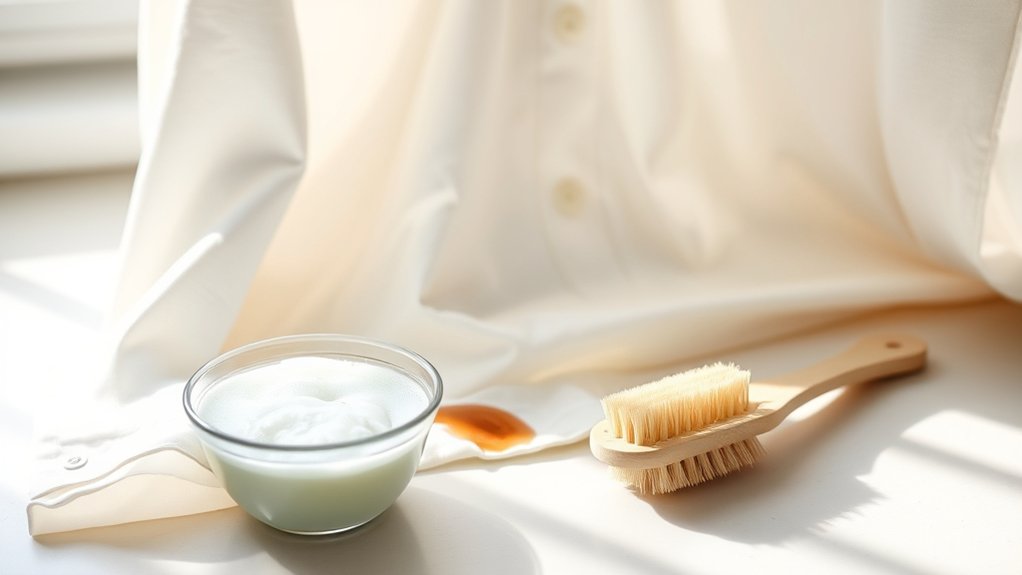
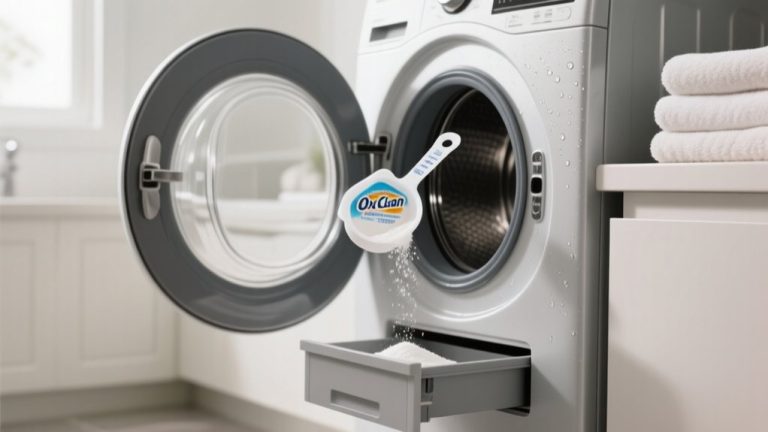
How exactly does OxiClean tackle stubborn oil stains? It contains sodium percarbonate, which releases oxygen when mixed with water. This oxygen actively breaks down the oil molecules, lifting them from the fabric or surface.
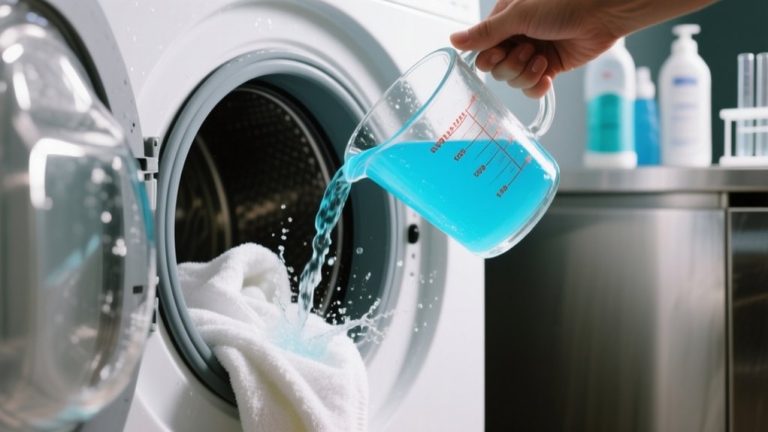
To maximize effectiveness, you should pre-soak the stained item in an OxiClean-water solution for up to six hours before laundering normally. For enhanced stain removal, combining OxiClean with your detergent boosts its power, especially on tough oil stains in clothing.
Pre-soak stains in OxiClean solution up to six hours and combine with detergent for tougher oil removal.
When treating carpets or upholstery, apply the solution directly to the stain and blot with a towel to lift oil without damaging fibers.
Always check care labels beforehand, as OxiClean’s oxidative action may not suit all fabrics. This targeted chemical process allows you to address oil stains efficiently and safely.
Which Fabrics and Surfaces Can You Use OxiClean On for Oil Stains?
Proper surface testing helps prevent discoloration before you treat larger affected areas.
Suitable Fabric Types
Although OxiClean effectively removes oil stains from common fabrics like cotton, polyester, and their blends, it’s important to avoid delicate materials such as silk, wool, or leather, which may suffer damage or discoloration.
To guarantee peak results when treating oil stains, consider these fabric guidelines:
- Use OxiClean on durable fabrics such as cotton, polyester, and synthetic blends.
- Steer clear of delicate fibers. Silk, wool, and leather are prone to damage.
- Apply OxiClean directly to the stain and let it sit for 5–10 minutes before washing.
- For upholstery or carpet, test a hidden spot first to check for colorfastness.
Following these protocols guarantees you leverage OxiClean’s stain-removal power without compromising fabric integrity.
Safe Surface Applications
Extending beyond fabric considerations, OxiClean demonstrates versatility on various surfaces when addressing oil stains. You can safely use it on durable fabrics like cotton, polyester, and blends, but avoid delicate materials such as wool or silk.
For fabrics, soak the stained item in a solution of OxiClean powder and water for up to six hours before laundering.
On hard surfaces like stainless steel, granite, and porcelain, OxiClean effectively removes oil spills without damage.
When treating carpets or upholstery, apply a diluted solution and blot gently to protect fibers.
Always perform a spot test on an inconspicuous area to verify colorfastness and surface compatibility. This approach guarantees effective oil stain removal while preserving the integrity of the treated material.
How to Prepare an OxiClean Solution for Oil Stains
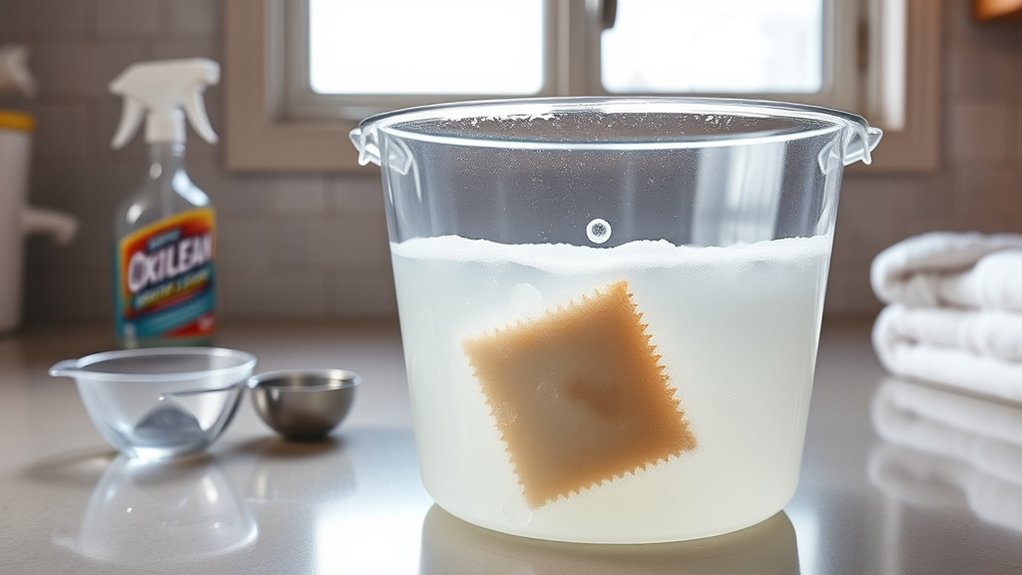
A longer soak may be needed when the stain has already set into fabric.
Mixing Ratio Guidelines
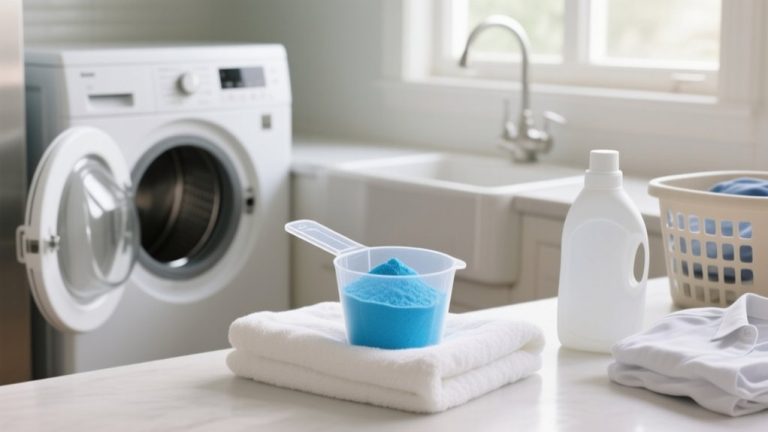
One scoop of OxiClean powder mixed with 16 ounces of warm water creates an effective solution for tackling oil stains. To prepare this solution accurately, follow these guidelines:
- Measure precisely one scoop of OxiClean powder, ensuring no excess to maintain concentration.
- Use warm water at approximately 110°F (43°C) to optimize powder dissolution and stain removal efficiency.
- Stir the mixture thoroughly until the powder fully dissolves, avoiding granules that reduce effectiveness.
- Test the solution on a hidden fabric area to confirm no adverse reactions before full application. This mixing ratio balances cleaning power and fabric safety.
For tougher stains, you can soak treated areas up to 30 minutes before rinsing.
Always follow with regular detergent washing to remove residual oil effectively.
Application Techniques
Having prepared the OxiClean solution with the correct ratio, you’ll want to apply it strategically for maximum oil stain removal. Begin by testing the solution on a hidden fabric area to avoid discoloration. Apply directly to the oil stain, letting it sit for at least 30 minutes.
For stubborn stains, soak the item up to 6 hours before washing. Finally, wash in the hottest water safe for the fabric to remove residue thoroughly.
| Step | Action |
|---|---|
| Test | Apply solution on hidden fabric |
| Apply & Wait | Target stain, wait 30 minutes |
| Soak & Wash | Soak 6 hours if needed, then wash hot |
This approach guarantees ideal stain breakdown without damaging fabric integrity.
How Long Should You Soak Items With Oil Stains in Oxiclean?
An effective soak time for oil-stained items in an OxiClean solution is up to six hours. To maximize stain removal, follow these steps precisely:
- Pre-treat the oil stain with a concentrated OxiClean paste to break down the oil before soaking.
- Prepare the soak solution with 1 scoop of OxiClean powder per 16 ounces of water.
- Soak the item for no longer than six hours to allow the solution to penetrate and lift the oil.
After soaking, launder the item using your regular detergent to remove any residual stain and OxiClean.
Always test a small hidden area for colorfastness before soaking.
How to Remove Oil Stains With Oxiclean: Step-By-Step Guide
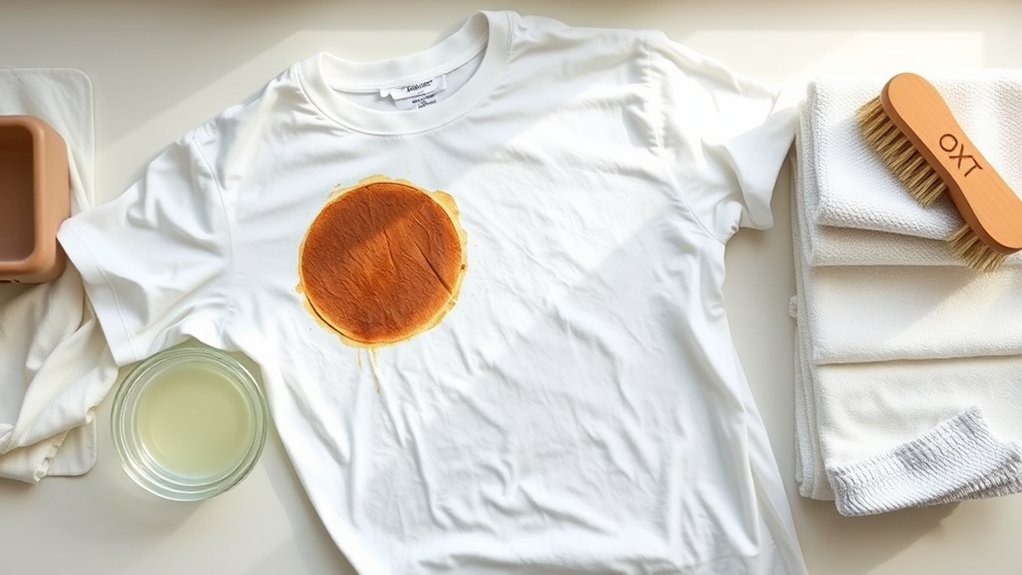
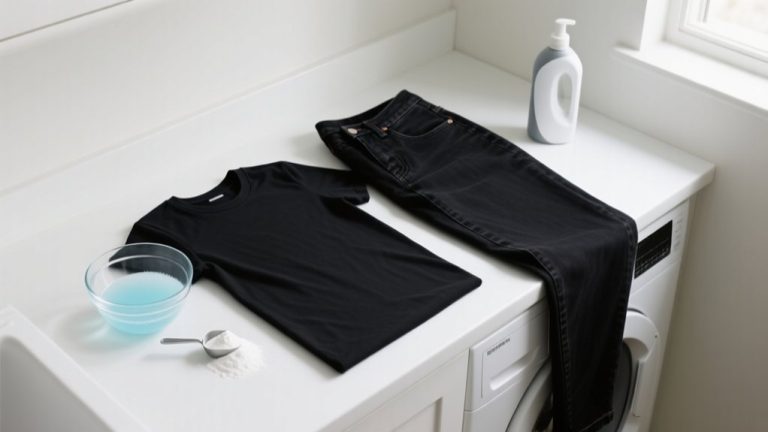
Start by blotting the oil stain with a clean cloth to absorb excess grease without spreading it. Next, prepare a soaking solution by dissolving one scoop of OxiClean powder per 16 ounces of warm water. Confirm the fabric is safe for soaking by checking its care label.
Avoid delicate materials like silk or wool. Submerge the stained item in the solution and soak for up to 6 hours. Finally, wash the fabric in the hottest water safe for it to maximize stain removal.
| Step | Action |
|---|---|
| 1 | Blot stain with clean cloth |
| 2 | Mix 1 scoop OxiClean per 16 oz warm water |
| 3 | Soak fabric up to 6 hours |
| 4 | Wash in hottest safe water |
Special Tips for Cleaning Oil Stains on Carpets and Upholstery
When tackling oil stains on carpets and upholstery, you’ll want to use a carefully prepared OxiClean solution, one scoop per 16 ounces of water, to break down the grease without damaging the fibers.
Follow these special tips for best results:
- Blot excess oil gently with a clean cloth before applying the solution to prevent spreading.
- Apply the OxiClean mixture and let it sit for 5-10 minutes to penetrate and lift the stain.
- For stubborn stains, soak the area up to 30 minutes, then scrub lightly with a soft brush.
- Always test the solution on a hidden spot first to avoid discoloration or fabric damage.
This method balances stain removal efficacy with fabric care. It helps ensure you protect your carpet or upholstery while tackling oil stains effectively.
Easy Ways to Boost OxiClean’s Power on Stubborn Oil Stains
Although OxiClean is effective on its own, you can greatly enhance its power against stubborn oil stains by adjusting application methods and solution strength.
Pre-treat the stain with a concentrated OxiClean paste, mixing the powder with water, and let it sit for up to 30 minutes before washing.
Pre-treat stains using a concentrated OxiClean paste and let it sit for 30 minutes before washing.
For heavily soiled items, soak them in an OxiClean solution for up to 6 hours to improve penetration and break down oil molecules.
Use warm or hot water when mixing OxiClean to increase its activation and stain-fighting capacity.
Combining OxiClean with liquid detergent creates a synergistic effect, targeting oil residues more efficiently during the wash cycle.
Always test on an inconspicuous fabric area to prevent discoloration, especially with delicate materials.
These adjustments optimize OxiClean’s chemical action on persistent oil stains.
What to Do If OxiClean Doesn’t Remove the Stain
If OxiClean doesn’t fully remove the oil stain, you should consider repeating the soaking process to extend the solution’s penetration time.
For stubborn stains, pre-treat the affected area with a specialized grease stain remover before applying OxiClean again. Always test cleaning agents on a hidden fabric section to prevent damage.
If the stain persists, try an alternative method using dish soap and warm water, which targets oil molecules differently.
Here’s what to do next:
- Repeat the OxiClean soak to improve stain breakdown.
- Pre-treat with a grease-specific stain remover.
- Test any new solution on an inconspicuous area.
- Use dish soap and warm water as an alternative treatment.
If the stain remains on delicate fabrics, consult care labels or professionals.
When to Avoid Using OxiClean on Certain Materials
Since OxiClean contains strong cleaning agents, you should avoid using it on delicate materials like wool and silk, which it can damage or discolor. It’s also unsuitable for finished wood, leather, and certain dyed fabrics due to risks of finish stripping, drying, cracking, or color bleeding.
Always consult care labels to verify compatibility before application.
| Material | Risk | Reason |
|---|---|---|
| Wool & Silk | Damage/Discoloration | Strong agents break fibers |
| Finished Wood | Finish stripping/Warpage | Chemical reaction with finish |
| Leather | Drying/Cracking | Removes natural oils |
| Dyed Fabrics | Fading/Bleeding | Color instability |
Avoiding OxiClean on these materials preserves integrity and appearance.
Frequently Asked Questions
Can Oxiclean Be Used With Other Detergents for Oil Stains?
Yes, you can combine OxiClean with other detergents to tackle oil stains. Check both product labels for compatibility and avoid chemical reactions, and pre-treat the stain with OxiClean before washing for best cleaning.
Is Oxiclean Safe for Use on Colored Fabrics With Oil Stains?
Yes, OxiClean is safe for colored fabrics with oil stains if you pre-soak cautiously and test a discreet spot first. Its oxygen-based formula targets stains without fading, so use it with detergent and follow the care label carefully.
How Should I Store Oxiclean Powder After Opening?
Store OxiClean powder in a cool, dry place and keep the container tightly sealed so moisture does not get in. Avoid heat sources and direct sunlight.
Keep it away from children and pets, and check that the container stays closed after each use to help maintain chemical stability and safety.
Does Temperature of Water Affect Oxiclean’s Oil Stain Removal?
Yes. Hot water activates OxiClean’s cleaning agents more efficiently, so it can break down oil molecules better than cold water. Cold water slows the reaction and may reduce stain removal effectiveness, so the water temperature you use can change the result.
Can Oxiclean Remove Oil Stains From Vehicle Engine Parts?
Yes, you can use OxiClean on vehicle engine parts for oil stains, but test compatibility first and avoid electrical components. Apply a concentrated paste, let it sit for up to 30 minutes, then scrub and rinse thoroughly.
Conclusion
When tackling oil stains, OxiClean works like a chemical scalpel, breaking down grease with precision. You can confidently use it on most washable fabrics and hard surfaces, but avoid delicate materials.
Follow proper mixing and soaking times for ideal results. If stains persist, consider boosting OxiClean with additional agents or alternative methods.
With careful application, you’ll cut through stubborn oil marks efficiently, leaving your items refreshed and stain-free.