Is Oxiclean Toxic – Safety Facts
If you’ve ever stared at a cleaning label and wondered whether a product is actually safe to use, you’re not alone. Many people want a stain remover that works well without creating new worries for their family, pets, or home. OxiClean is often seen as a gentler alternative to harsher cleaners, but it’s still important to know what it can and can’t do safely.
You’ll find OxiClean is less toxic than bleach but can still irritate your skin, eyes, and respiratory system if misused. Its main ingredient, sodium percarbonate, releases oxygen to break down stains but may cause mild irritation or discomfort upon direct contact or inhalation. Pets are also at risk if they ingest or inhale it. Proper use, ventilation, and rinsing reduce these risks. Understanding its ingredients and safe practices can help you handle OxiClean wisely.
What Is OxiClean and How Does It Work?
OxiClean is an oxygen-based stain remover that relies on sodium percarbonate to release oxygen when mixed with water, effectively breaking down stains at a molecular level. When you apply it, the released oxygen targets and decomposes organic molecules, facilitating stain breakdown.
It also contains surfactants that emulsify oils, allowing you to lift greasy and oily residues from fabrics and surfaces more efficiently.
Various formulations, powders, liquids, and pretreaters, offer you flexibility depending on the cleaning task. Additionally, OxiClean incorporates polymers that prevent re-soiling by keeping dislodged soils suspended in the wash water, rather than letting them redeposit.
This mechanism guarantees thorough removal of dirt, grease, and organic materials, making OxiClean a scientifically engineered solution for versatile stain removal.
Is OxiClean Toxic to Humans and Pets?
Because exposure risks vary by form, the next section covers safe handling and cleanup.
Human Health Risks
Although sodium percarbonate, the primary component of OxiClean, is less toxic than bleach, it can still cause irritation to the skin, eyes, and respiratory system upon contact or inhalation.
When OxiClean’s powder becomes airborne, it may provoke respiratory discomfort, especially in individuals with preexisting sensitivities. Direct skin or eye exposure can result in mild irritation, making protective gloves and eyewear advisable during use.
Ingesting OxiClean might lead to stomach upset but rarely poses severe toxicity if handled properly.
To minimize health risks, always rinse surfaces thoroughly after application and store the product securely out of reach.
Pet Safety Concerns
How dangerous can cleaning products be for your pets? While OxiClean isn’t highly toxic, it can still cause irritation or mild symptoms if ingested or contacted.
You should consider these key points:
- Pets may drool, experience irritation, or stomach upset after ingestion, but it’s typically not life-threatening.
- Wet OxiClean or exposed powder increases risk; always rinse and dry treated surfaces thoroughly.
- Dry powder can become airborne and irritate pets’ respiratory systems, so use caution during application.
- Store OxiClean securely, out of reach of pets and children, to prevent accidental ingestion.
What’s Inside OxiClean? Safe or Risky Ingredients?
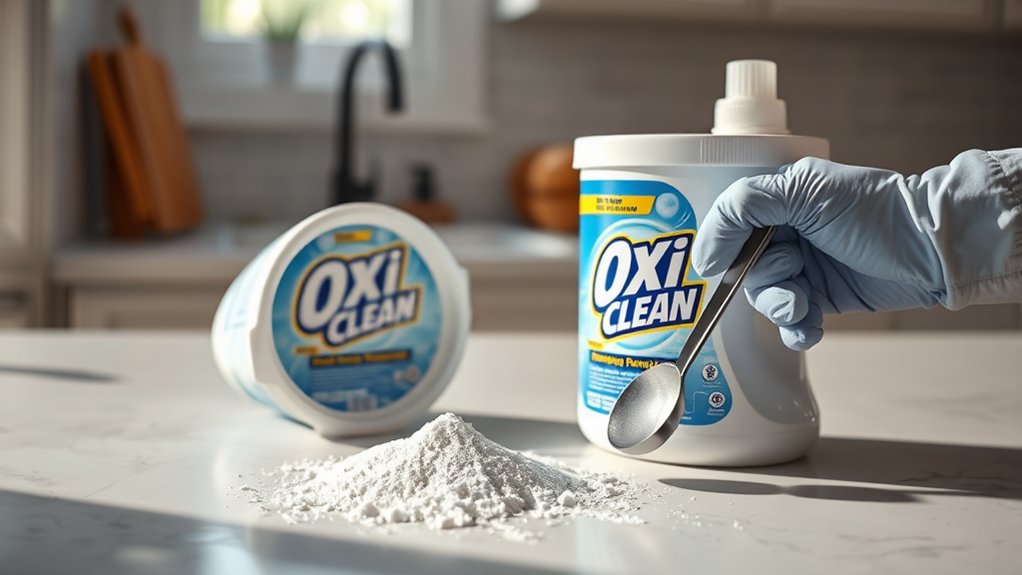
When you activate OxiClean with water, its primary ingredient, sodium percarbonate, releases hydrogen peroxide that effectively breaks down stains. This compound is the core oxidizing agent responsible for OxiClean’s cleaning power.
Alongside sodium percarbonate, OxiClean contains sodium carbonate, which acts as a water softener, and surfactants that emulsify oils and improve stain removal.
While these ingredients aren’t highly toxic, sodium percarbonate can irritate your skin and eyes upon direct contact. The fragrance-free formula reduces exposure to potentially irritating chemicals, making it a safer option for sensitive users.
Sodium percarbonate may irritate skin and eyes, but the fragrance-free formula is gentler for sensitive users.
To minimize risks, you should avoid inhaling the dry powder, use gloves if you have sensitive skin, and rinse treated surfaces thoroughly.
This balanced composition prioritizes effective stain removal while maintaining relative safety when used properly.
How Can Breathing OxiClean Powder Affect Your Health?
People with asthma or other lung conditions may react more strongly to inhaled dust.
Respiratory Irritation Risks
Why does breathing in OxiClean powder pose respiratory risks? When you inhale it, the powder can irritate your respiratory tract, causing coughing, throat irritation, and shortness of breath. This happens because:
- Sodium carbonate, a key ingredient, is a known respiratory irritant.
- Airborne powder particles increase exposure, especially in poorly ventilated spaces.
People with asthma or existing respiratory issues are more vulnerable. Occupational studies link dust from cleaning products to higher asthma risk.
If you use OxiClean, guarantee proper ventilation to reduce inhalation. Avoid excessive powder dispersal to limit respiratory tract irritation.
Understanding these risks helps you use OxiClean safely and protect your respiratory health.
Dust Inhalation Effects
How does breathing in OxiClean powder impact your respiratory health? Inhaling the dry powder can irritate your respiratory tract, causing coughing and throat irritation.
Sodium carbonate, a key ingredient, has been linked to respiratory issues, especially in occupational environments where exposure levels are higher.
Dust from cleaning agents like OxiClean can easily become airborne, increasing your risk of inhalation during use.
Scientific studies associate such exposure with a greater incidence of asthma among cleaning workers. If you have existing respiratory sensitivities, inhaling OxiClean dust may worsen your symptoms.
To minimize risks, always use OxiClean in well-ventilated areas and avoid generating airborne dust. Taking these precautions helps protect your respiratory health from the powder’s irritant effects.
Vulnerable Population Concerns
Although many people use OxiClean safely, breathing in its powder poses significant risks for vulnerable populations. If you have respiratory conditions, inhaling the airborne powder can worsen symptoms. Here’s what you need to know:
- Sodium carbonate, a key ingredient, irritates the respiratory tract, increasing airway sensitivity.
- Studies link dust exposure from cleaning agents like OxiClean to higher respiratory problems, especially in cleaning workers.
The dry powder easily becomes airborne, elevating inhalation risks during use. Proper ventilation and wearing protective masks reduce exposure and potential respiratory irritation.
If you’re asthmatic or have chronic lung issues, taking these precautions is essential to avoid exacerbating your condition when using OxiClean.
How Can OxiClean Irritate or Burn Your Skin?
When you come into direct contact with OxiClean, its main ingredient, sodium percarbonate, can cause skin irritation or even chemical burns, particularly if the powder is concentrated or remains wet on your skin.
The alkaline properties of sodium carbonate in OxiClean can strip away your skin’s natural oils with prolonged exposure, increasing the risk of dermatitis.
If you have sensitive skin or pre-existing conditions like eczema, you’re more susceptible to irritation. Additionally, the powdered form can become airborne, potentially irritating your skin and respiratory tract if inhaled.
To reduce these risks, you should wear gloves when handling OxiClean and rinse your skin thoroughly after exposure.
These precautions help minimize chemical irritation and protect your skin’s barrier function effectively.
Does Fragrance in OxiClean Affect Its Safety?
Why might the fragrance in OxiClean influence its safety profile? Fragrance additives don’t contribute to cleaning but can introduce potential risks.
Here’s what you should consider:
- Fragrance chemicals in scented OxiClean can trigger asthma and skin sensitivities, especially if you have allergies or respiratory issues.
- These ingredients often remain undisclosed due to proprietary claims, which limits transparency about potential allergens.
- Some fragrance components may cause dermatitis or skin irritation, particularly in people with pre-existing skin conditions.
- The fragrance-free OxiClean avoids these risks, offering a safer alternative for sensitive users.
Regulatory efforts like California’s Cleaning Product Right to Know Act highlight the growing need for ingredient transparency.
That helps you make more informed choices about fragranced cleaning products.
Common Mistakes That Increase OxiClean Risks
Since improper use of OxiClean can elevate health and safety risks, it’s vital to understand common mistakes that compromise its safe application.
Using excessive OxiClean powder leaves a chalky residue on fabrics, raising skin and eye irritation risks due to concentrated exposure. Mixing OxiClean with cleaners like vinegar or ammonia produces harmful fumes, posing serious respiratory hazards.
Additionally, failing to rinse surfaces thoroughly after cleaning allows residue buildup, which can irritate skin or lead to accidental ingestion. Leaving dried residue on surfaces attracts dirt and amplifies irritation potential, especially for sensitive individuals.
Improper storage, such as placing OxiClean within children’s reach, greatly increases accidental ingestion risks and associated health complications.
Avoiding these errors guarantees safer use and minimizes potential toxic effects.
How to Use OxiClean Safely Around Kids and Pets
Although OxiClean is an effective cleaning agent, you must handle it carefully around children and pets to prevent accidental exposure. Its components can irritate skin and the respiratory system, and they can also cause harm if ingested.
Follow these steps for safe use:
- Store OxiClean securely in cabinets out of reach to avoid accidental ingestion.
- Use it only in well-ventilated areas to minimize dust inhalation risks.
- Rinse and dry surfaces thoroughly after application to eliminate residue that could irritate sensitive skin.
Wear gloves during handling to protect your skin.
Also, monitor children and pets, keeping them away from treated areas until everything is fully dry.
Adhering to these protocols reduces exposure risk and helps maintain a safe environment for your family and pets.
How OxiClean’s Safety Stacks Up Against Other Cleaners
How does OxiClean’s safety profile compare to other common household cleaners? OxiClean’s primary ingredient, sodium percarbonate, presents lower toxicity than traditional bleach and drain cleaners, making it a safer choice for home use.
Unlike ammonia or vinegar, which can emit harmful fumes when mixed improperly, OxiClean doesn’t produce toxic gases when used correctly.
While it can cause skin and eye irritation, its irritant level is generally less severe than concentrated bleach, which risks chemical burns.
Additionally, fragrance-free OxiClean variants reduce respiratory risks linked to synthetic fragrances found in many cleaners.
Regulatory frameworks like California’s Cleaning Product Right to Know Act mandate clear labeling of allergens, enhancing transparency and consumer safety.
Frequently Asked Questions
Can Oxiclean Damage Certain Fabrics or Materials?
Yes, OxiClean can damage delicate fabrics like silk and wool, and it may weaken synthetic fibers such as polyester if you use too much. Test it on a small area first to check for fading, discoloration, or fiber degradation.
How Should Oxiclean Be Stored to Maintain Effectiveness?
Store OxiClean in a cool, dry place and keep it tightly sealed to help maintain its chemical stability and effectiveness. Keep it away from moisture, direct sunlight, and acids, and store it out of children’s reach.
Is Oxiclean Safe to Use in Septic Systems?
Yes, you can use OxiClean in septic systems if you follow the guidelines. Its sodium percarbonate breaks down into oxygen and water, which helps limit harm to bacteria, but you should avoid overuse so you do not upset the microbial balance and system function.
Can Oxiclean Cause Allergic Reactions in Sensitive Individuals?
Yes. About 20% of people with respiratory sensitivities may experience allergic reactions from OxiClean, and sensitive individuals can develop skin irritation or asthma symptoms. Avoid exposure and use proper ventilation to help reduce the risk.
What Should I Do if Oxiclean Is Accidentally Ingested?
Do not induce vomiting. Rinse your mouth with water, avoid swallowing more, and contact Poison Control or seek medical attention immediately.
Monitor symptoms and give ingredient details so you get the right treatment.
Conclusion
You can confidently clean with OxiClean by carefully considering its composition and potential cautions. While OxiClean contains powerful, peroxide-based ingredients that effectively eliminate stains, exposure may irritate your skin or lungs if mishandled. Avoiding direct contact, inhalation, and fragrance overuse reduces risks.
By respecting recommended use and storage, especially around kids and pets, you’ll guarantee safe, smart sanitation. Stay savvy, stay safe, and scrub with scientific sense.