Does Persil Have Optical Brighteners – Safety Facts
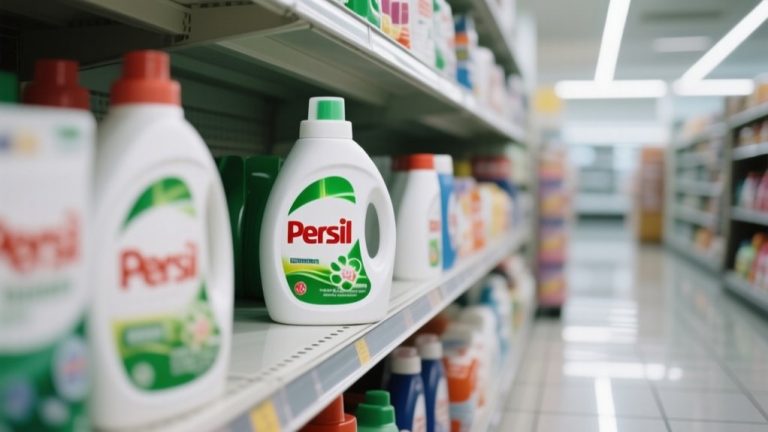
Wondering whether Persil contains optical brighteners? You’re not alone. Many people want laundry that looks clean and bright, but they also want to know what’s actually in the detergent they use on their clothes and skin.
Yes, Persil contains optical brighteners like disodium distyrylbiphenyl disulfonate, which absorb UV light and emit blue light to make fabrics appear whiter without improving cleaning. These brighteners can cause skin irritation, especially for sensitive individuals, and may accumulate in fabrics, posing long-term health and environmental concerns due to their slow biodegradability. If you want to understand how these agents work, their risks, and safer alternatives, there’s more important information ahead.
Optical Brighteners in Persil: What You Need to Know
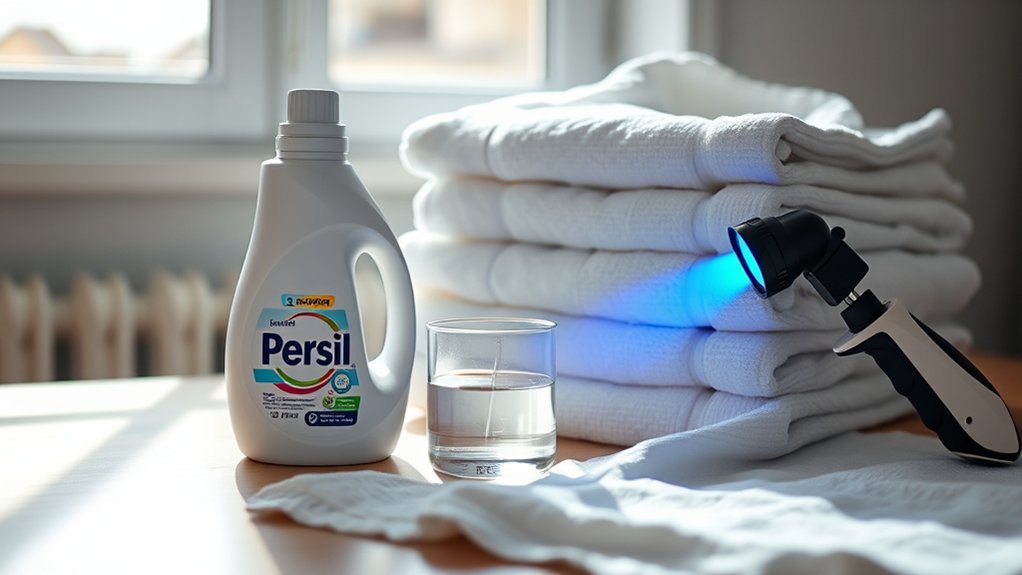
Although Persil laundry detergents commonly include optical brighteners to enhance fabric appearance, you should know these compounds work by absorbing ultraviolet light and re-emitting it as visible blue light, creating a visually whiter effect without improving actual cleaning performance.
The specific brighteners in Persil may not always be explicitly labeled, so you need to examine ingredient lists for terms such as “fluorescent brighteners.”
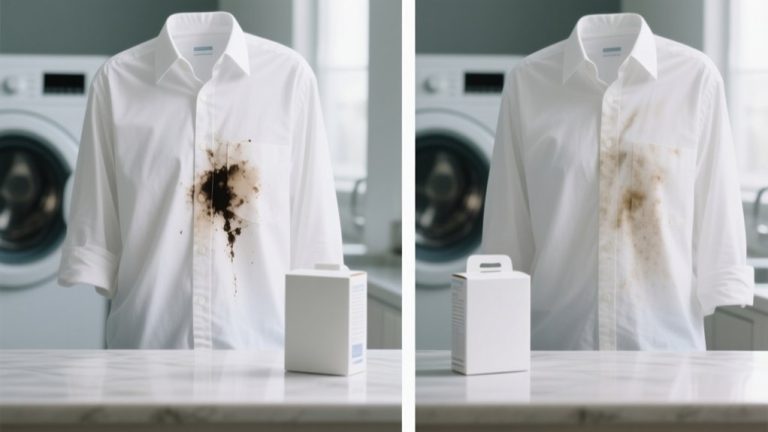
While these additives improve visual whiteness, they don’t aid in stain removal or fabric cleaning. If you have sensitive skin, be aware that optical brighteners can cause irritation.
From an environmental perspective, these compounds degrade slowly and can accumulate in aquatic ecosystems, potentially harming wildlife.
To avoid optical brighteners, select Persil variants labeled “free from optical brighteners” or consult detailed ingredient information before purchase.
How Optical Brighteners Work in Laundry Detergents
Understanding how optical brighteners function helps clarify why they enhance fabric appearance without improving cleaning performance. These synthetic chemicals absorb ultraviolet (UV) light and re-emit it as visible blue light, which offsets yellowing and creates the perception of brighter, whiter fabrics.
Optical brighteners absorb UV light and emit blue light, making fabrics appear brighter without enhancing cleaning.
Introduced in the 1940s as a substitute for blue dyes, optical brighteners don’t remove dirt or stains; instead, they mask fabric dullness by altering light reflection. You’ll find them in many detergents, including Persil.
However, optical brighteners accumulate in fabrics over repeated washes, leading to prolonged exposure. While they improve visual appeal, they don’t contribute to actual cleaning efficacy.
Their environmental persistence is a concern, as they degrade slowly and may negatively impact aquatic ecosystems.
Which Optical Brighteners Are in Persil Products?
Which specific optical brighteners does Persil incorporate to enhance fabric whiteness?
Persil laundry detergents commonly use Disodium distyrylbiphenyl disulfonate as their primary optical brightener. This compound absorbs ultraviolet (UV) light and re-emits it as visible blue light, effectively creating a visual effect that makes fabrics appear whiter and brighter.
While Disodium distyrylbiphenyl disulfonate improves the aesthetic appeal of your laundry, it doesn’t contribute to the detergent’s cleaning efficacy and may leave residues on treated fabrics.
This residue can persist due to the chemical’s slow biodegradability.
Understanding the exact brighteners Persil employs helps you evaluate the product’s performance and potential environmental footprint without conflating these factors with cleaning power or safety concerns, which are addressed separately.
Health Risks of Optical Brighteners in Persil
These effects make ingredient choices and washing performance worth examining in more detail.
Skin Irritation Concerns
Although optical brighteners in Persil detergents enhance fabric appearance, they can cause skin irritation, especially in sensitive individuals and children, due to residue buildup on clothing.
These compounds don’t clean but mask stains, increasing your skin’s contact with potential irritants. Residues accumulate over time, raising the risk of contact dermatitis or exacerbating conditions like eczema.
Conventional washing often fails to fully remove these substances, meaning frequent exposure through everyday garments and bedding is likely.
Additionally, long-term exposure to optical brighteners poses concerns beyond irritation, including potential reproductive toxicity.
If you have sensitive skin or care for children, it’s important to be cautious when using Persil detergents containing optical brighteners, considering their persistent residues and documented skin-related health risks.
Environmental Impact Risks
Beyond skin irritation, optical brighteners in Persil detergents raise significant environmental and health concerns due to their persistence and bioaccumulation potential.
These stilbene-based compounds resist degradation in wastewater treatment, allowing them to enter aquatic ecosystems where they accumulate and disrupt wildlife.
Regulatory assessments highlight their ecological risks, particularly reproductive toxicity observed in aquatic organisms.
When you use Persil, residues of these brighteners can remain in fabrics, increasing prolonged skin exposure and potential irritation.
Their chemical stability means they persist through washing cycles and wastewater processing, contributing to water pollution.
Understanding these environmental impact risks is vital, as they extend beyond immediate human health effects to broader ecological harm, emphasizing the need for cautious evaluation of optical brightener use in laundry detergents.
Environmental Impact of Optical Brighteners in Persil
While optical brighteners in Persil detergents markedly improve fabric appearance by absorbing ultraviolet light and emitting visible blue light, their environmental persistence raises serious concerns.
These compounds resist biodegradation, accumulating in aquatic ecosystems where they can disrupt biological functions. Studies show optical brighteners often bypass wastewater treatment, contaminating water sources and posing risks to aquatic organisms.
Evidence links their presence to potential reproductive toxicity and skin irritation in sensitive populations. Environmental regulations monitor these chemicals, but current assessments emphasize the need for continued scrutiny to mitigate long-term ecological impacts.
When you use Persil, be aware that although it enhances fabric brightness, the optical brighteners it contains contribute to environmental loading, necessitating ongoing evaluation to balance performance with ecological safety.
How to Identify Persil Products Without Optical Brighteners
Anyone seeking Persil detergents without optical brighteners should start by scrutinizing product labels and ingredient lists, though these agents may not always be explicitly named.
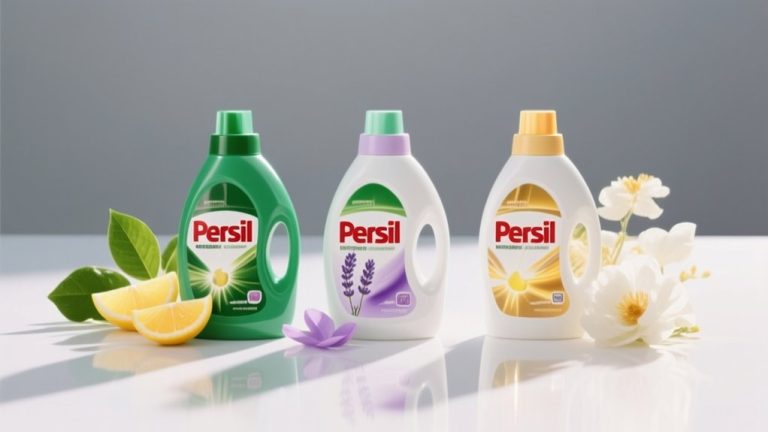
Look for terms like “optical brighteners” or “fluorescent whitening agents,” but note they might be omitted. Persil’s “Free and Clear” line is formulated without dyes and optical brighteners, making it a reliable choice for avoiding these additives.
Packaging that explicitly states “no optical brighteners” also signals their absence.
To confirm, consult Persil’s official website for detailed product specifications and user reviews. Additionally, refer to Environmental Working Group (EWG) ratings, which offer evidence-based safety assessments and help you select Persil products free from harmful optical brighteners.
This multi-step approach guarantees an informed, precise choice.
Safer Optical Brightener Alternatives to Persil
Although optical brighteners enhance fabric whiteness, you can choose safer alternatives that avoid these synthetic chemicals. Products like Branch Basics Oxygen Boost leverage natural agents such as baking soda and sodium percarbonate to brighten fabrics effectively.
Similarly, Topanga Scents formulates detergents without optical brighteners, prioritizing sensitive skin and environmental safety. Brands like Seventh Generation and Ecover focus on biodegradable, plant-based ingredients, ensuring fabric care without harmful residues.
| Brand | Key Ingredients | Benefits |
|---|---|---|
| Branch Basics | Baking soda, sodium percarbonate | Natural brightening, non-toxic |
| Topanga Scents | Plant-based, optical brightener-free | Sensitive skin, eco-friendly |
| Seventh Generation | Biodegradable, sustainable | Effective cleaning, environmental |
These alternatives provide safer, evidence-based options for maintaining fabric brightness without optical brighteners.
Choosing Laundry Detergents Without Optical Brighteners
Choosing laundry detergents without optical brighteners starts with understanding how these additives are labeled and identified.
Look for phrases like “free and clear” or explicit statements such as “no optical brighteners” on ingredient lists. Familiarize yourself with terms like “fluorescent whitening agents,” which indicate the presence of these additives.
Brands like Branch Basics and Topanga Scents provide effective, natural alternatives free from optical brighteners and other harmful chemicals.
Prioritize detergents that maintain ingredient transparency to avoid synthetic additives linked to skin irritation and environmental damage.
If you have sensitive skin or children, switch to optical brightener-free detergents and monitor any skin reactions closely.
This evidence-based approach guarantees safer laundry practices while minimizing exposure to potentially harmful substances.
Frequently Asked Questions
Can Optical Brighteners Affect the Colorfastness of My Clothes?
Yes, optical brighteners can affect colorfastness by masking true colors and causing uneven fading. They can also interact with dyes, which may weaken fabric resilience and alter colors over repeated washes, so the effect can show up over time.
Do Optical Brighteners Wash Out After One Laundry Cycle?
No. Optical brighteners don’t wash out after one laundry cycle; they can embed into fabric fibers and build up over time. Residues may persist even after multiple washes, so standard washing methods are unlikely to remove them completely.
Are Optical Brighteners Harmful to Pets During Laundry Handling?
Yes, optical brighteners can irritate your pet’s skin and may pose toxicity risks if ingested during laundry handling. To reduce exposure, rinse fabrics thoroughly and consider optical brightener-free detergents for safer pet care.
How Do Optical Brighteners Compare to Natural Whitening Methods?
Optical brighteners mask stains by reflecting light, while natural whitening methods chemically break down dirt. Natural methods are often chosen for safer, biodegradable cleaning that preserves fabric integrity and may avoid potential skin irritation from chemical buildup. The best choice depends on whether you want a brighter look from optical brighteners or a cleaner finish from a natural method.
Can Optical Brighteners Cause Allergic Reactions in Babies?
Yes, optical brighteners can cause allergic reactions in babies because their skin is sensitive and their barrier is still immature. Exposure may lead to contact dermatitis, so avoid detergents that contain these chemicals when washing infant clothing to help reduce the risk.
Conclusion
When choosing Persil or any detergent, you might want to contemplate the subtle additives like optical brighteners. While they enhance whiteness and brightness, their presence carries nuanced health and environmental footprints.
By understanding which Persil products contain these agents, you can make an informed choice that aligns with your values. Opting for formulas that skip optical brighteners offers a gentler path, balancing effective cleaning with mindful care for your home and the planet.