Does Oxiclean Sanitize – Quick Answer
If you’ve ever wondered whether OxiClean can actually sanitize your laundry or surfaces, you’re not alone. Many people want a simple cleaner that can remove stains and also help kill germs, especially when keeping clothes and household items truly clean matters. The confusing part is that products like OxiClean can sound powerful, but they don’t always do what “sanitize” suggests.
You shouldn’t rely on OxiClean to sanitize because it targets stains through oxidative reactions rather than killing germs. It contains sodium percarbonate, which breaks down into hydrogen peroxide, aiding stain removal but not meeting EPA standards for disinfectants or sanitizers.
While effective for improving laundry and removing stains, OxiClean doesn’t eliminate 99.9% of bacteria or viruses. If you want to understand how it compares to other cleaners and its best uses, keep exploring the details.
How OxiClean Boosts Laundry Detergent and Removes Stains
Although traditional laundry detergents effectively clean fabrics, they often struggle with tough stains; that’s where OxiClean comes in. You can boost your detergent’s stain-fighting power by adding OxiClean powder, which contains sodium percarbonate. This compound decomposes into hydrogen peroxide when dissolved in water, targeting stains through oxidation without the fabric damage associated with chlorine bleach.
For best results, soak stained garments in an OxiClean solution for 1 to 6 hours before washing. OxiClean works compatibly with various detergents, including its own liquid line, enhancing stain removal without replacing your detergent’s cleaning or freshening functions.
Why Isn’t OxiClean a True Sanitizer?
Since OxiClean contains sodium percarbonate that breaks down into hydrogen peroxide, you might expect it to sanitize surfaces; however, it doesn’t meet the EPA’s standards for a registered disinfectant or sanitizer.
True sanitizers must eliminate at least 99.9% of germs and bacteria, a benchmark OxiClean doesn’t support. Its primary function is stain and dirt removal, leveraging oxidative reactions to break down organic matter rather than reliably inactivate pathogens.
Effective sanitizers kill 99.9% of germs, while OxiClean focuses on stain removal, not pathogen elimination.
The product’s formulation and labeling focus on cleaning efficacy, not pathogen kill rates, which are essential for sanitization claims.
Consequently, while OxiClean can reduce some microbes incidentally, it’s not designed or tested to achieve the microbial reductions mandated for sanitizers.
For effective sanitization, you should use products explicitly registered and labeled as disinfectants or sanitizers.
What Makes OxiClean’s Active Ingredient Work
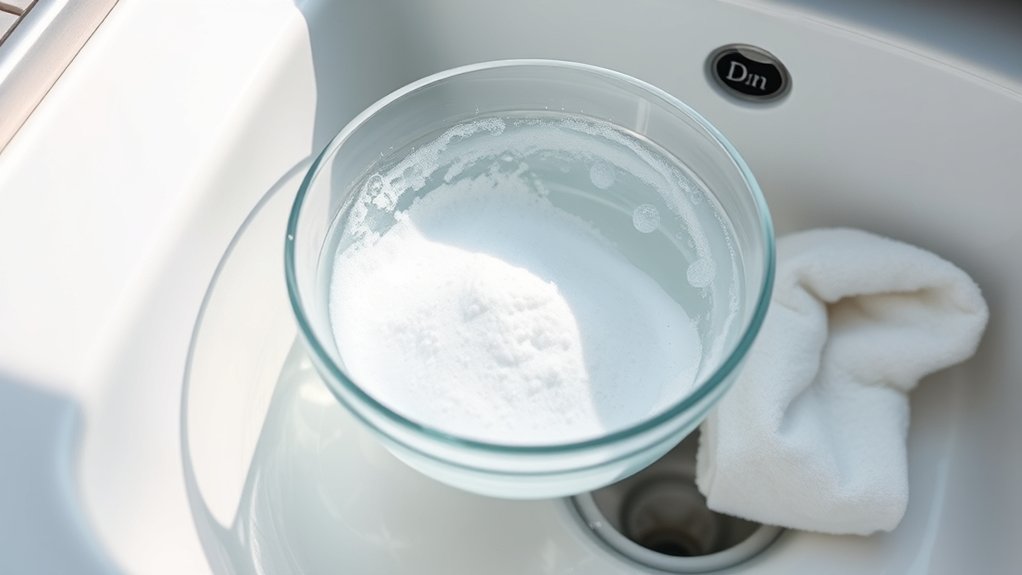
The stain removal process depends on water temperature and proper soaking time.
Sodium Percarbonate Chemistry
Three key factors drive the effectiveness of sodium percarbonate, OxiClean’s active ingredient, in stain removal and sanitization.
First, its chemical decomposition in water produces sodium carbonate and hydrogen peroxide, the latter being a potent oxidizer that breaks down organic stains and neutralizes microbes.
Second, the concentration of sodium percarbonate directly influences the amount of hydrogen peroxide released, dictating cleaning strength.
Third, temperature and contact time critically affect its performance; warmer water accelerates decomposition, enhancing stain removal and sanitizing action.
Unlike chlorine bleach, sodium percarbonate is non-toxic and environmentally friendly, allowing safer use across various surfaces.
Understanding these chemical dynamics helps you optimize OxiClean’s application for effective cleaning and microbial control without harsh chemical exposure.
Hydrogen Peroxide Release
When sodium percarbonate dissolves in water, it initiates a two-step decomposition that releases hydrogen peroxide, the key agent driving OxiClean’s stain removal power.
First, sodium percarbonate breaks down into sodium carbonate and hydrogen peroxide. This reaction maximizes cleaning efficiency by producing a steady supply of hydrogen peroxide in situ.
As a potent oxidizing agent, hydrogen peroxide targets and breaks down organic compounds responsible for stains and discoloration on fabrics and surfaces.
Unlike chlorine bleach, hydrogen peroxide whitens and brightens without harsh chemical damage, preserving fabric integrity.
Additionally, hydrogen peroxide’s non-toxic, eco-friendly profile underpins OxiClean’s safer cleaning credentials.
Understanding this release mechanism clarifies why OxiClean effectively removes stains while maintaining environmental and material safety standards.
Oxygen Bleaching Benefits
Although many cleaning agents rely on harsh chemicals, OxiClean’s oxygen-based bleaching harnesses the power of sodium percarbonate to release hydrogen peroxide, which breaks down organic stains efficiently while preserving fabric integrity.
This active oxygenation process lifts dirt and grime without damaging fibers, unlike chlorine bleach that can weaken materials. You’ll find OxiClean gentler on fabrics and surfaces, minimizing wear and discoloration over time.
Additionally, its non-toxic, eco-friendly formulation reduces health risks, making it suitable for sensitive users or households with allergies. The absence of strong odors and the need for protective gear further simplify handling.
OxiClean vs. Chlorine Bleach: Which Is Better for Cleaning?
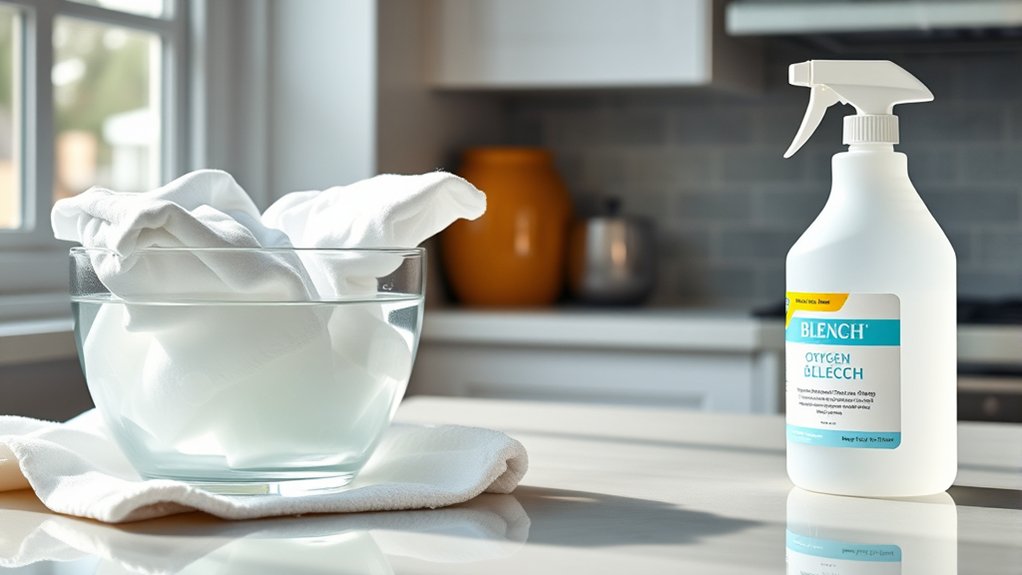
How do OxiClean and chlorine bleach compare when it comes to cleaning effectiveness?
OxiClean, containing sodium percarbonate, excels at stain removal and fabric care without sanitizing properties. It’s non-toxic, eco-friendly, and safe for diverse surfaces, including upholstery and carpets.
Chlorine bleach, a strong oxidizer, effectively kills bacteria and viruses, making it the preferred sanitizer. However, it emits a harsh smell, can irritate skin, and degrades fabric fibers over time.
Bleach suits whites and hard surfaces but is less versatile than OxiClean.
If your goal is powerful disinfection alongside cleaning, chlorine bleach outperforms. For safer, broader fabric and surface cleaning without sanitizing demands, OxiClean is superior.
Your choice depends on whether sanitization or gentle, versatile stain removal is the priority.
When to Use OxiClean for Stains and Laundry Boosting
You can maximize stain removal by soaking fabrics in an OxiClean solution for one to six hours before washing. This pre-treatment allows sodium percarbonate, the active ingredient, to break down into hydrogen peroxide, which effectively lifts stains without harming fabric integrity.
Use OxiClean primarily when you face stubborn stains or want to boost your detergent’s cleaning power. However, don’t rely on it for overall fabric cleaning or freshening, as it lacks the extensive cleaning agents found in standard detergents.
Instead, integrate OxiClean as a targeted supplement for stain-prone laundry loads or heavily soiled items requiring enhanced stain removal. Applying it this way optimizes its chemical action, ensuring thorough stain breakdown while preserving fabric quality during your regular washing routine.
Effective Household Cleaning Uses for OxiClean
Different surfaces require different cleaning methods, especially when stains have set deeply.
Stain Removal Solutions
OxiClean offers multiple effective stain removal solutions for household cleaning, targeting fabrics, carpets, and upholstery with proven versatility. Its active ingredient, sodium percarbonate, releases hydrogen peroxide in water, breaking down stains without damaging fibers. To maximize results, soak stained fabrics 1-6 hours in an OxiClean solution before laundering.
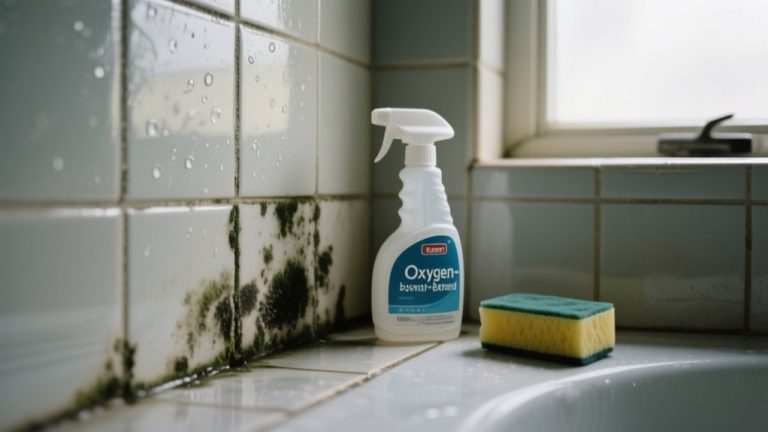
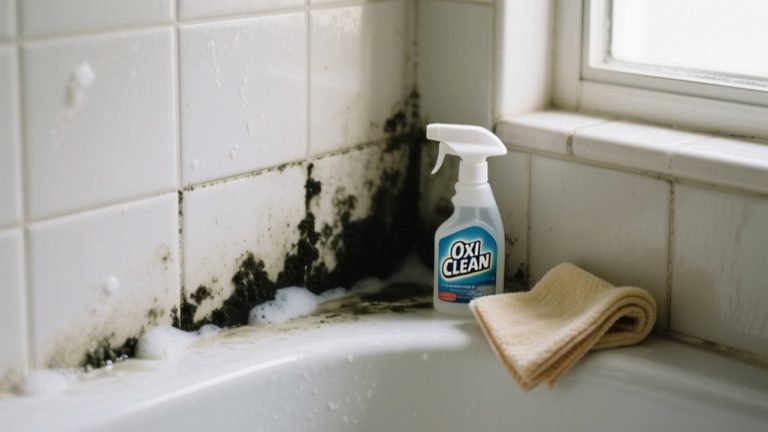
It also removes deep dirt and odors from sports gear and treats grout stains or mold by applying a warm OxiClean solution for 30 minutes.
| Surface | Application Method |
|---|---|
| Fabrics | Soak 1-6 hours, then wash |
| Carpets | Spot clean, blot dry |
| Upholstery | Apply solution, blot |
| Sports Equipment | Soak or scrub |
| Grout/Mold | Apply warm solution, wait 30 min |
This targeted approach guarantees efficient stain removal across various household items.
Versatile Surface Cleaning
Although many cleaning products target specific surfaces, OxiClean’s oxygen-based formula tackles tough stains and odors across a wide range of household items, including carpets, upholstery, and outdoor furniture.
You can dissolve OxiClean in warm water to treat grout stains, mold, and mildew in kitchens and bathrooms; letting it sit for 30 minutes before scrubbing optimizes results. It also effectively removes deep dirt and sweat odors from sports equipment and shoes, enhancing athletic gear maintenance.
Additionally, you can clean garbage bins and pet beds to maintain a fresh, sanitary environment indoors and outdoors.
Always conduct a spot test on fabrics and surfaces before full application to prevent discoloration or damage.
This versatility makes OxiClean a precise, multifunctional cleaning agent for diverse household needs.
Best Safety and Usage Tips for OxiClean
Since OxiClean isn’t registered as a sanitizer or disinfectant, it won’t eliminate germs like traditional products. To enhance its stain-removal effectiveness, always dissolve the powder in warm water and adhere to the recommended soaking time of 1 to 6 hours, especially for heavily soiled fabrics.
OxiClean removes stains effectively when dissolved in warm water and soaked 1 to 6 hours but does not kill germs.
Before full application, perform a spot test on fabric or surfaces to prevent discoloration or damage.
For safety, wear gloves when handling OxiClean, particularly with concentrated formulations, to avoid skin irritation. These precautions guarantee peak cleaning results while minimizing risks.
Remember, OxiClean is designed primarily for stain and dirt removal, not sanitization, so supplement its use with proper disinfectants when germ elimination is necessary.
Following these usage and safety tips helps maintain fabric integrity and user safety.
Frequently Asked Questions
Can Oxiclean Be Used to Clean Baby Clothes Safely?
Yes, you can use OxiClean on baby clothes. Its oxygen-based agents can remove stains without harsh chemicals, but you should follow the instructions and soak the clothes for 1–6 hours to help protect sensitive skin and fabric integrity.
Does Oxiclean Remove Mold and Mildew Stains?
Yes, OxiClean can remove mold and mildew stains. Its oxygen-based bleaching breaks down organic matter when dissolved in warm water, which helps lift the stains.
Use it on the stained area as directed, and check that the material can handle warm water first. This can help you treat the stain and reduce the chance of it coming back.
Is Oxiclean Safe for Use on Colored Fabrics?
Yes, you can use OxiClean on colored fabrics. Its oxygen-based formula lifts stains without fading, but you should test a hidden spot first and follow the instructions carefully. Combining it with detergent can help maintain color vibrancy.
How Long Should Oxiclean Soak Time Be for Tough Stains?
1 to 6 hours. For tough stains, soak the fabric in OxiClean based on how severe the stain is, and keep the item fully submerged so the solution can reach the stain evenly.
Can Oxiclean Be Mixed With Vinegar for Cleaning?
No. Mixing OxiClean with vinegar can neutralize OxiClean’s effectiveness, so you should use them separately rather than together. Follow the manufacturer instructions and use them in sequence if needed to avoid reducing stain removal performance or causing unwanted reactions.
Conclusion
While OxiClean boosts your laundry detergent and tackles stains effectively, it doesn’t qualify as a true sanitizer like chlorine bleach does. Its active ingredient, sodium percarbonate, excels at breaking down organic stains but lacks the germ-killing power you’d expect from a sanitizer.
So, if you want that old-timey “sterilizing power” from the past, you’ll need a product specifically designed for sanitizing. Use OxiClean for stain removal and cleaning, not disinfection.