Does Oxiclean Remove Stains – What to Know
Trying to get stains out of clothes, carpets, or other fabrics can be frustrating, especially when they seem to stick around no matter what you do. If you’ve ever wondered whether OxiClean actually works, you’re not alone—many people struggle with stubborn stains and want a simple fix.
Yes, OxiClean removes stains by releasing oxygen molecules that break down and penetrate stain compounds at a molecular level. It works best on food, grass, blood, grease, and some ink stains, especially when used with warm water or soaking.
You should always spot-test on hidden fabric areas to avoid damage and avoid delicate or non-textile surfaces. Persistent stains may need multiple treatments. For a thorough understanding of its uses, fabric compatibility, and storage, exploring further details will be beneficial.
How OxiClean Removes Stains
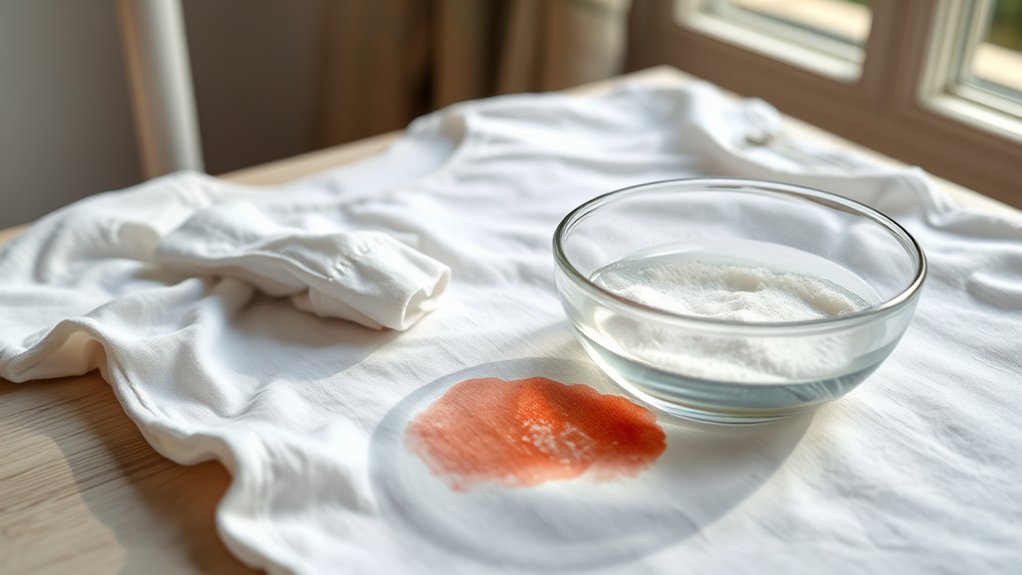
OxiClean removes stains by releasing oxygen molecules when mixed with water, which break down stain compounds at the molecular level. When you activate it, the formula releases oxygen that penetrates fabric fibers, disrupting the chemical bonds that hold stains like dirt and food in place.
OxiClean releases oxygen molecules that penetrate fibers, breaking down stubborn stains at the molecular level.
You’ll get ideal results using warm or hot water, as increased temperature accelerates this oxidative reaction.
To maximize effectiveness, apply OxiClean directly to the stain or prepare a soaking solution, allowing sufficient time for the oxygen molecules to act.
If the stain persists, rinse with clean water before repeating treatment to prevent residue interference. This methodical approach guarantees you efficiently lift stains without damaging fabric integrity, leveraging OxiClean’s molecular stain breakdown capabilities.
Best Stains to Remove With Oxiclean
Several common stains respond exceptionally well to treatment with OxiClean, especially when applied correctly. You’ll find it highly effective on food stains like ketchup, mustard, and coffee, particularly when used as a pre-soak or integrated into laundry cycles.
Grass stains on sports uniforms also respond well; soaking garments for 1 to 6 hours enhances removal.
Blood stains require prompt action, with soaking in OxiClean solution yielding ideal results.
Tough grease stains from kitchen spills are another strong target, as OxiClean breaks down oils efficiently.
Ink stains can be treated as spot applications, but may need repeated treatments for full removal.
Understanding these stain types helps you leverage OxiClean’s chemical properties for maximum efficacy in stain elimination.
How to Use OxiClean for Stain Removal
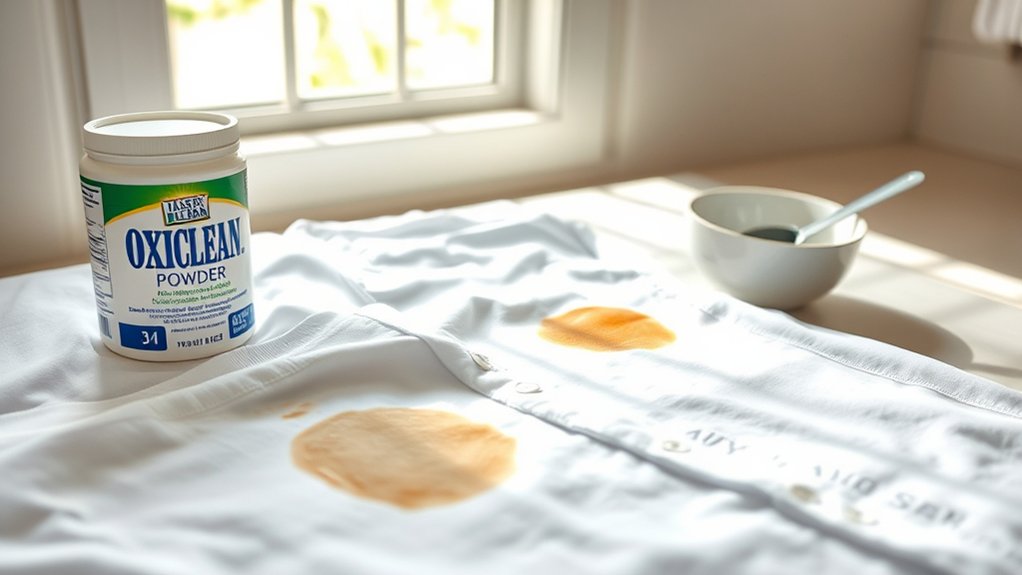
Residue can remain on fibers, so the next step is a thorough rinse.
Preparing OxiClean Solution
When preparing a solution for stain removal, mix half a scoop of powder with one gallon of warm or hot water to guarantee ideal soaking conditions.
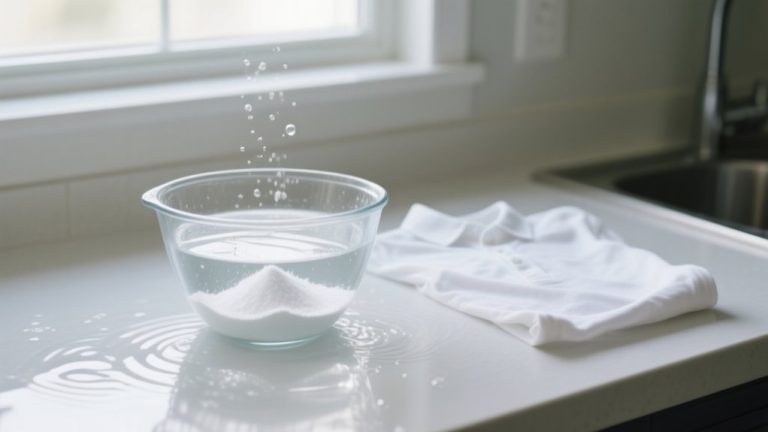
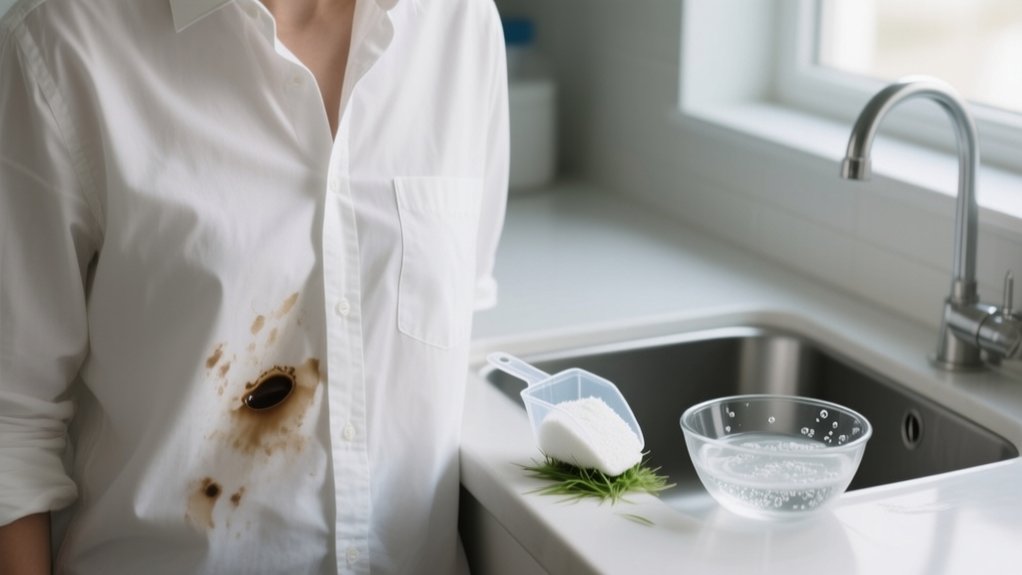
For smaller spot treatments, dissolve one tablespoon of OxiClean powder in a bowl of warm water, allowing you to target stains precisely. The soaking duration varies from 1 to 6 hours depending on stain severity, ensuring optimal stain breakdown.
After soaking, rinse items thoroughly with clean water to eliminate any residual powder, preventing fabric damage or residue buildup.
For carpets or upholstery, apply the solution by dabbing directly on the stain, then blot with a damp cloth for up to five minutes to facilitate stain lift.
These preparation steps maximize OxiClean’s efficacy in breaking down stains efficiently and safely.
Applying To Stains
Once you’ve prepared your OxiClean solution, applying it correctly to the stain is key to effective removal. Start by blotting the stain immediately with a clean cloth to remove excess residue.
Then, apply the OxiClean mixture, dissolved in warm or hot water, directly onto the affected area. Let it sit for up to five minutes to penetrate the stain before blotting with a damp cloth.
Repeat this application and blotting cycle if the stain persists. For more stubborn stains, soak the item in half a scoop of OxiClean per gallon of water for up to six hours prior to normal washing.
Always spot-test first on an inconspicuous area to avoid fabric damage. Finally, rinse thoroughly with clean water to eliminate any residual OxiClean before drying.
Post-Treatment Care
Although applying OxiClean effectively tackles stains, proper post-treatment care guarantees complete removal and fabric preservation.
After treatment, you need to carefully rinse the area to remove any chemical residue that could damage fibers or cause discoloration.
If the stain remains, re-soak the fabric, modifying the time based on stain severity. Always complete the process with a full washing cycle to eliminate residues and maintain fabric integrity.
Follow these steps for ideal results:
- Rinse treated areas thoroughly with clean water immediately after OxiClean application.
- Re-soak stubborn stains as needed, adjusting soak duration based on stain persistence.
- Run a regular wash cycle post-soaking to remove residues and preserve colors.
This methodical post-treatment approach guarantees effective stain removal without compromising fabric quality.
Why You Should Always Spot-Test OxiClean
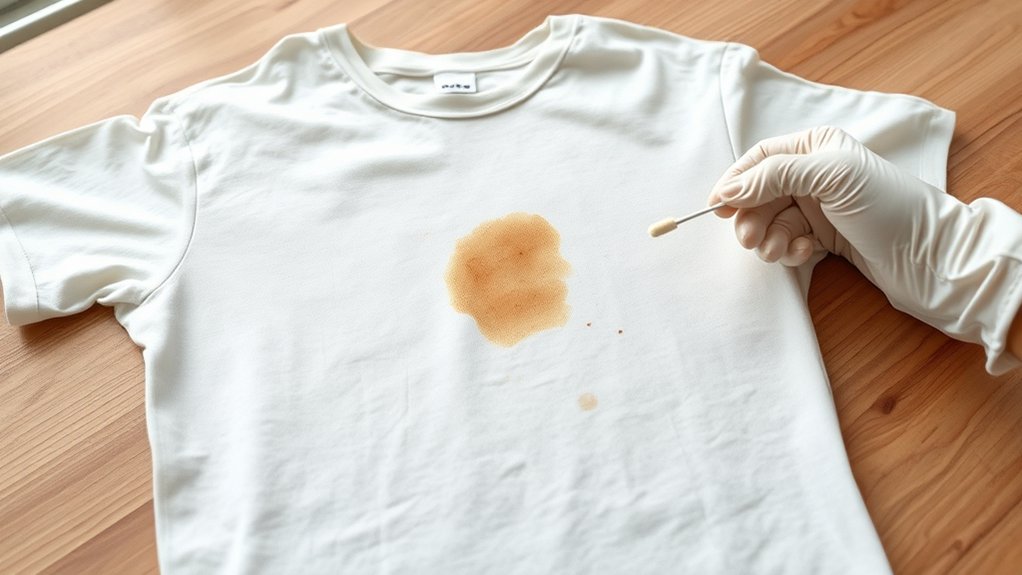
Different fabrics can react unpredictably, so the next step is checking care labels.
Importance Of Spot-Testing
Because OxiClean’s potent formula can alter fabric appearance, always conduct a spot-test on an inconspicuous area before full application. This step is essential to confirm the product’s compatibility with your fabric and avoid irreversible damage.
When you spot-test, you can detect potential discoloration or degradation early, minimizing risk.
To effectively spot-test, follow these steps:
- Select a hidden section of the fabric to apply a small OxiClean solution.
- Protect surrounding areas to prevent unintended exposure.
- Observe the test area for any adverse changes over several minutes to guarantee safety.
Spot-Test Precautions
When dealing with OxiClean, conducting a spot-test is indispensable to prevent unintended alterations in your carpet or upholstery’s appearance. Its potent formula can interact unpredictably with various fabric compositions, risking color shifts or texture damage. Always test in an inconspicuous area, protecting adjacent surfaces from drips or overspray.
This controlled trial helps you detect adverse reactions before full application.
| Fabric Type | Reaction Risk | Spot-Test Location |
|---|---|---|
| Synthetic | Moderate | Under cushion edge |
| Natural Fiber | High | Back of upholstery |
| Blended | Variable | Carpet corner |
Fabrics and Surfaces to Skip With Oxiclean
Although OxiClean offers powerful stain removal, it’s essential to avoid using it on certain fabrics and surfaces that can suffer damage or discoloration.
OxiClean’s strength means it’s crucial to steer clear of fabrics and surfaces prone to damage or discoloration.
Using OxiClean improperly may result in irreversible harm or structural deterioration.
You should specifically skip:
- Delicate fabrics such as wool, silk, and any “dry-clean only” textiles, as their fibers can weaken or discolor.
- Sensitive fabric blends that may chemically react negatively, compromising material integrity.
- Non-textile surfaces like finished wood, unpainted wicker, jute, jewelry, and latex paints, which OxiClean’s oxidizing agents can degrade or stain.
What Not to Mix With Oxiclean
If you combine OxiClean with certain household chemicals, you risk generating hazardous fumes or dangerous reactions that compromise safety. Specifically, never mix OxiClean with ammonia, as this produces toxic fumes harmful to respiratory health.
Similarly, combining it with bleach can generate poisonous gases and may trigger explosive reactions due to incompatible chemical constituents.
Avoid mixing OxiClean with vinegar because this reaction forms peracetic acid, a corrosive and unsafe compound.
To maintain safety, always adhere strictly to product label warnings. Using OxiClean alongside other cleaners without separation can result in unpredictable, toxic chemical interactions.
For safe stain removal, apply OxiClean independently, preventing hazardous reactions and ensuring effective, controlled cleaning without compromising your health or the environment.
Treating Persistent Stains With Oxiclean
Since persistent stains often resist initial cleaning efforts, you’ll need to apply OxiClean multiple times for complete removal.
Begin by rinsing the stained item with clean water to remove loose debris and enhance stain penetration. Then soak the item in an OxiClean solution for up to 6 hours, adjusting based on stain severity.
After soaking, assess the stain’s progress before deciding on further treatment.
Follow these steps for effective persistent stain removal:
- Perform a spot-test on an inconspicuous area to prevent fabric damage.
- Rinse and re-soak the item between treatments to maximize OxiClean’s efficacy.
- Monitor the stain after each soak, repeating as necessary until fully removed.
This methodical approach guarantees thorough, safe stain removal without compromising fabric integrity.
How to Store OxiClean Properly
When you store OxiClean properly, you preserve its chemical potency and prevent clumping caused by moisture exposure.
Always transfer OxiClean from its original cardboard packaging to an airtight, sealed container. This prevents moisture infiltration and protects the powder from air exposure, which can degrade its active ingredients.
Avoid storing OxiClean in humid environments, as elevated moisture levels accelerate clumping and chemical breakdown.
Additionally, keep the container away from direct sunlight and heat sources, since heat can reduce efficacy over time.
By maintaining a stable, dry, and cool storage environment, you guarantee the product retains maximum stain-removing power.
Proper storage techniques directly affect OxiClean’s performance, so adhering to these guidelines will extend its shelf life and maintain consistent cleaning results.
Tips for Using OxiClean on Carpets and Upholstery
Proper storage of OxiClean preserves its chemical potency, which directly impacts its effectiveness on carpets and upholstery. To maximize stain removal, follow these essential steps:
Storing OxiClean correctly ensures its strength, boosting stain removal power on carpets and upholstery.
- Always spot-test on an inconspicuous area to avoid fabric damage or discoloration.
- Mix OxiClean with warm or hot water to guarantee complete dissolution and peak chemical activity.
- Apply the solution by dabbing or spraying onto the stain, then let it sit for up to 5 minutes before blotting with a damp cloth to lift the stain without spreading it.
After treatment, rinse thoroughly with clean water to eliminate residue that could degrade fibers over time.
Immediate blotting is vital to prevent stain setting, enhancing removal efficiency and preserving fabric integrity.
Frequently Asked Questions
Is Oxiclean Safe for Use on Baby Clothes?
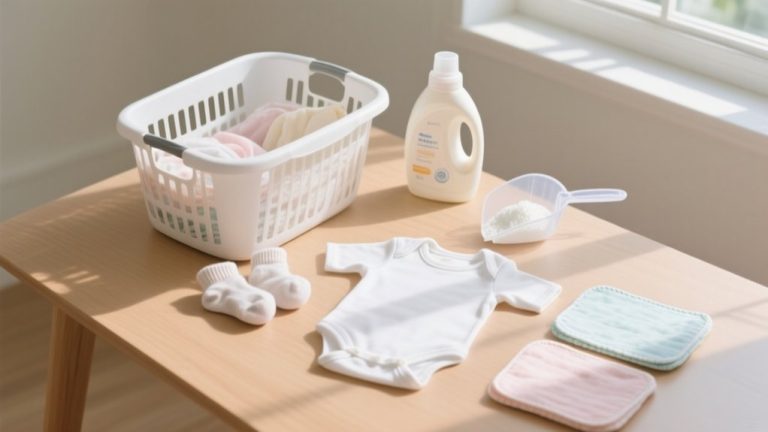
Yes, you can use OxiClean on baby clothes if you dilute it properly, spot test first, avoid delicate fabrics, and rinse thoroughly. Those steps help reduce the chance of residue that could irritate sensitive skin or damage the fabric.
Can Oxiclean Be Used in High-Efficiency Washing Machines?
Yes, you can use OxiClean in HE machines. Put the scoop in the detergent compartment, dissolve it in hot water first, and avoid oversudsing to help protect your washer’s efficiency.
How Long Does Oxiclean Take to Work on Stains?
OxiClean typically takes 1 to 6 hours to work on stains, depending on how severe the stain is. For quick treatment, you can apply it and let it sit up to 5 minutes, but tougher stains may need multiple treatments.
Does Oxiclean Have a Strong Scent or Fragrance?
Yes, OxiClean is fragrance-free and has a mild, clean scent. You usually won’t notice strong odors, so it can be a good choice if you’re sensitive to harsh chemical fragrances.
Can Oxiclean Be Used for Whitening Yellowed Fabrics?
Yes, you can use OxiClean to whiten yellowed fabrics by soaking them in its oxygen-based solution with warm water. Spot-test first, and avoid delicate materials like wool or silk, which can be damaged by the treatment.
Conclusion
To sum up, OxiClean effectively breaks down a variety of stains through oxygen-powered oxidation, but you should always spot-test to avoid damage.
Just like a knight wielding a shining sword, it targets tough stains with precision, yet it’s not suitable for all fabrics or surfaces. Avoid mixing it with harsh chemicals, and store it properly to maintain potency.
Follow these guidelines, and you’ll harness OxiClean’s stain-fighting power with maximum efficiency and safety.