What Do Laundry Balls Do – What It Really Means
Laundry balls work by tumbling between your clothes to separate items, boosting airflow and cutting drying time by up to 25%. Wool versions absorb moisture, soften fabrics, and reduce static. Plastic or rubber balls mainly prevent clumping and improve circulation but may irritate skin.
They’re reusable, eco-friendly, and save money compared to dryer sheets that use chemicals and generate waste. If you want to understand materials, maintenance, and their full environmental impact, there’s more worth exploring.
Key Takeaways
- Laundry balls prevent clothes from clumping, improving air circulation and speeding up drying time by up to 25%.
- Wool balls absorb moisture, enhancing drying efficiency and softening fabrics naturally without chemicals.
- They reduce static cling and wrinkles by keeping fabrics separated during drying.
- Laundry balls are reusable, eco-friendly alternatives to disposable dryer sheets, reducing waste and chemical exposure.
- Regular maintenance and replacement ensure consistent performance and energy savings in laundry drying.
What Laundry Balls Are and How They Work
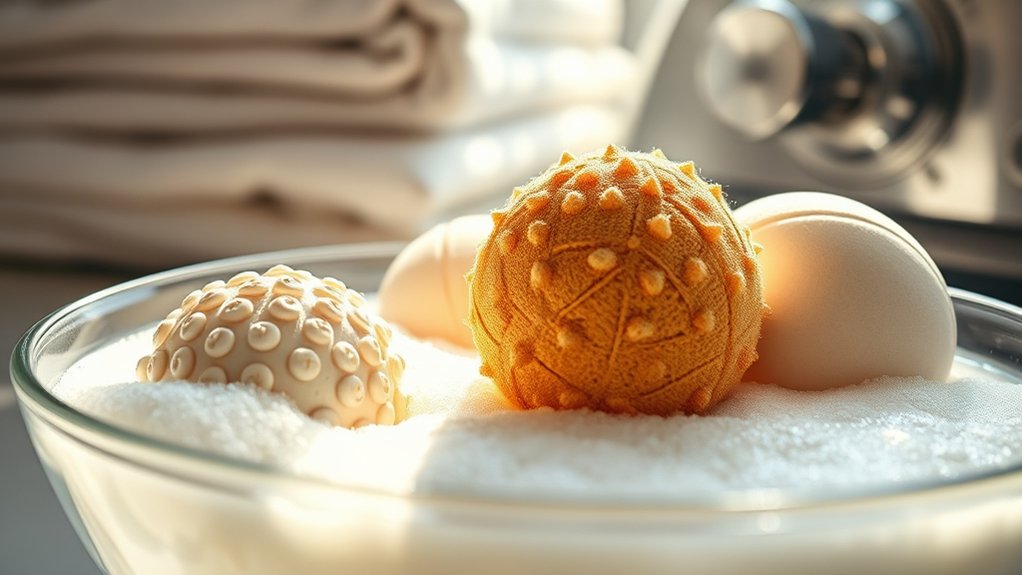
Laundry balls, available in materials like wool, plastic, or rubber, work by tumbling between your laundry items to prevent clumping and boost air circulation within the dryer.
Wool dryer balls, in particular, absorb moisture and create space between fabrics, which helps improve drying efficiency and reduce drying time by 10-25%.
This reduction in drying time also lowers energy use, making wool dryer balls an eco-friendly alternative to disposable dryer sheets. They naturally soften fabrics without chemicals, too.
You can reuse wool dryer balls for hundreds of loads, which makes them cost-effective.
While all laundry balls aim to separate clothes and enhance airflow, the degree to which they reduce drying time and soften fabrics can vary depending on the material.
Comparing Wool, Plastic, and Rubber Laundry Balls: Which Is Best?
How do wool, plastic, and rubber dryer balls stack up against each other?
Wool dryer balls are natural, environmentally friendly, and hypoallergenic, offering fabric softening by loosening fibers and reducing static. They absorb moisture and last about 1,000 loads.
Wool dryer balls soften fabrics naturally, reduce static, absorb moisture, and are eco-friendly with a lifespan of about 1,000 loads.
In contrast, plastic and rubber dryer balls focus on preventing clumping and enhancing airflow with their durable, often spiked surfaces. While they typically have greater longevity than wool, they don’t soften fabrics as effectively.
Plastic variants may include synthetic materials, potentially irritating sensitive skin, and contribute to plastic waste, unlike biodegradable wool.
Rubber dryer balls share similar durability but can lack the softness benefits wool provides.
If you prioritize eco-friendliness and fabric softening, wool stands out; for durability and airflow, plastic or rubber may suit you better.
The Benefits of Laundry Balls: Drying Time, Static, and Wrinkle Reduction
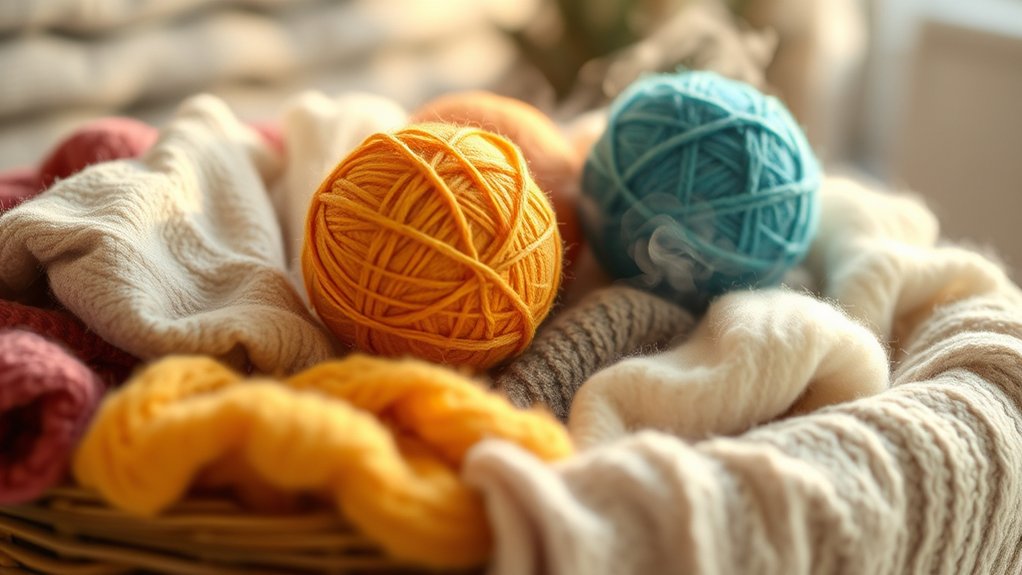
You’ll notice that laundry balls can cut drying time by up to 25% because they improve air flow and stop clothes from clumping together.
Plus, they help reduce static cling by keeping your fabrics separated, so your clothes come out less tangled.
On top of that, they work to minimize wrinkles by naturally softening fabrics with gentle mechanical action.
Drying Time Reduction
Although many factors affect drying efficiency, wool dryer balls can cut drying time by 10-25% by improving heat distribution and airflow within the dryer.
By preventing your laundry from clumping together, these dryer balls enhance airflow, allowing heat to circulate more effectively and reducing overall drying time.
This improved heat distribution not only speeds up drying but also helps soften clothes naturally and minimize wrinkles.
Unlike chemical softeners, dryer balls work mechanically to reduce static and maintain fabric quality.
You can also add essential oils to the balls, which won’t interfere with their ability to reduce drying time or static but will provide a pleasant scent.
Compared to traditional methods, using dryer balls offers a sustainable, cost-effective way to optimize drying performance while caring for your clothes.
Static And Wrinkle Control
When laundry balls tumble with your clothes, they actively reduce static cling by separating items and promoting better air circulation. This helps moisture evaporate more efficiently.
Dryer balls minimize wrinkles by preventing fabric clumping, keeping a smooth surface as clothes dry.
Using multiple dryer balls boosts laundry efficiency even more. They speed up drying time and reduce static.
Here’s how they work:
- They separate laundry items, improving air circulation and reducing static cling.
- They prevent fabrics from bunching, which minimizes wrinkles.
- They accelerate moisture evaporation, cutting drying time by 10-25% and lowering energy costs.
Laundry Balls vs. Dryer Sheets: Pros and Cons
When you’re deciding between laundry balls and dryer sheets, it’s good to think about their impact on the environment and what chemicals they might expose you to.
Wool dryer balls are reusable and eco-friendly, which means they help reduce plastic waste.
On the other hand, dryer sheets often have synthetic fragrances and chemicals that can sometimes irritate sensitive skin.
Knowing these differences can really help you make a smarter, healthier choice for your laundry routine.
Environmental Impact Comparison
Since you want to minimize both environmental impact and household expenses, choosing between wool dryer balls and disposable dryer sheets is essential. Wool dryer balls are reusable, biodegradable, and hypoallergenic. They offer significant cost savings compared to dryer sheets, which contribute to landfill waste.
Consider these points:
- Sustainability: Wool dryer balls last for hundreds of loads, reducing waste. Dryer sheets are single-use and add to plastic pollution.
- Cost-effectiveness: Spending $35 on wool dryer balls saves over $150 annually on disposable dryer sheets and fabric softeners.
- Environmental impact: Wool dryer balls are compostable and maintain dryer efficiency without chemical residue. Dryer sheets can clog vents and harm the environment.
Choosing wool dryer balls supports a more eco-friendly and economical laundry routine.
Chemical Exposure Differences
Beyond environmental and cost benefits, the chemical exposure differences between wool dryer balls and dryer sheets play a big role in choosing your laundry routine.
Wool dryer balls, made from 100% natural wool, offer a hypoallergenic option free from artificial fragrances and harmful chemicals found in many dryer sheets.
Dryer sheets often contain synthetic fabric softeners that can irritate sensitive skin and leave residues affecting moisture-wicking fabrics like towels.
In contrast, wool dryer balls act as a reusable alternative, naturally reducing static cling and softening fabrics without chemical additives.
By choosing wool dryer balls, you minimize chemical exposure while preserving fabric integrity.
This practical difference makes wool dryer balls a safer, long-lasting choice compared to disposable dryer sheets, especially if you prioritize skin sensitivity and fabric care.
How to Use Laundry Balls for Best Results
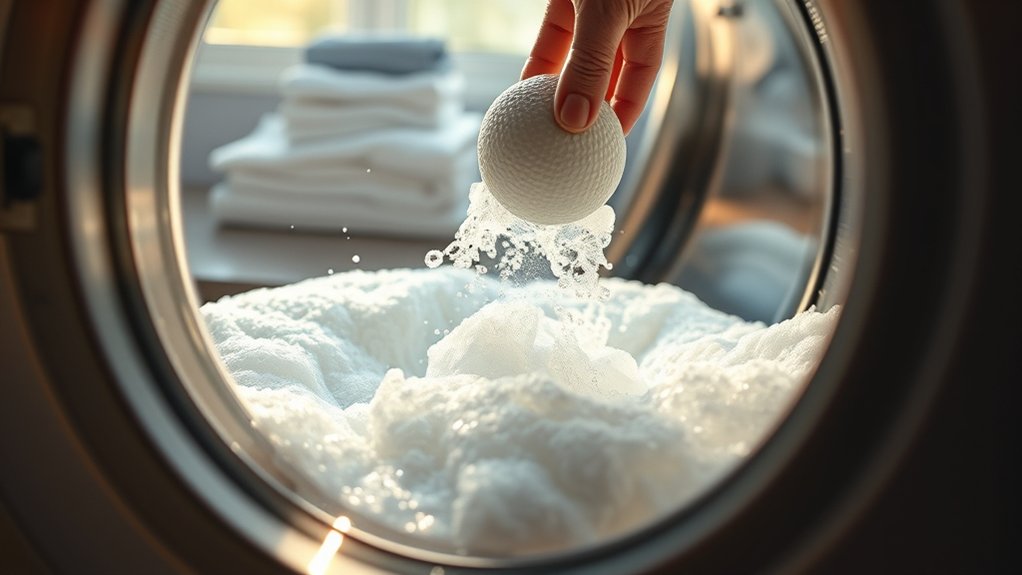
A set of 3 to 12 wool dryer balls can greatly improve your drying efficiency, depending on the size of your laundry load.
Using dryer balls correctly can reduce drying time by 10-25%, helping you save on your energy bill.
To get the best results with your wool dryer balls, follow these steps:
- Choose the number of balls based on your load of laundry. Use fewer for small loads, more for large ones to optimize airflow in the dryer.
- Lightly spray 1-2 wool dryer balls with water before use. This helps soften clothes and reduce static cling.
- Optionally, add a few drops of essential oil per ball for fragrance. Just avoid over-saturation to prevent fire hazards.
These practices guarantee you use your dryer efficiently while maximizing the benefits of dryer balls.
Cleaning and Maintaining Laundry Balls
When you notice lint buildup or reduced performance, it’s important to clean your wool dryer balls regularly to keep them effective. You can wash them gently in a regular laundry cycle, avoiding harsh chemicals. This method effectively removes lint and dirt.
Regular cleaning also helps prevent moisture buildup that could cause mold or mildew. While maintaining dryer balls, always check for signs of wear or damage. Damaged balls reduce effectiveness and should be replaced to guarantee peak performance.
Unlike dryer sheets or fabric softeners, which can shorten dryer balls’ lifespan, proper cleaning preserves their function.
Store your dryer balls in a dry place when not in use to help maintain their condition. By following these steps, you extend your dryer balls’ usefulness and keep your laundry routine efficient.
When to Replace Your Laundry Balls
How do you know it’s time to replace your laundry balls? Over time, their performance declines, affecting drying efficiency and static cling reduction. To keep them working well, watch for these signs:
- Visible Wear and Tear: Fraying, splitting, or loss of density in wool balls reduces their ability to separate laundry effectively.
- Increased Drying Time: If your clothes take longer to dry, the laundry balls may have lost their impact on airflow and moisture absorption.
- Persistent Static Cling: When static cling returns despite using dryer balls, it signals diminished performance.
Wool dryer balls usually last about 1,000 loads, but frequent use or exposure to moisture speeds up wear.
Replacing them ensures your laundry process stays efficient and effective.
Environmental Benefits of Choosing Laundry Balls
Although traditional dryer sheets offer convenience, choosing wool dryer balls provides significant environmental advantages that benefit both your household and the planet. Wool dryer balls serve as a sustainable alternative, reducing plastic waste and disposable product use.
They reduce drying time by 10-25%, helping you save energy and lower greenhouse gas emissions. Being hypoallergenic and made from natural materials, they avoid chemical irritants found in dryer sheets.
Plus, when worn out, they’re compostable, supporting a zero-waste lifestyle.
| Feature | Wool Dryer Balls | Traditional Dryer Sheets |
|---|---|---|
| Reusability | Hundreds of loads | Single-use |
| Drying Time Reduction | 10-25% | None |
| Material | 100% Natural, Compostable | Synthetic, Non-compostable |
| Allergy-Friendly | Hypoallergenic | Often contain fragrances |
Frequently Asked Questions
Can Laundry Balls Be Used With All Types of Fabrics?
You can use laundry balls with most fabrics like cotton, polyester, and blends, but you should avoid delicate materials such as silk and lace to prevent damage.
Wool dryer balls suit moisture-wicking athletic wear, while plastic or rubber balls handle heavy items like towels better.
Be cautious not to overload with balls on lightweight fabrics, or drying might become inefficient.
Always check your garment’s care labels to confirm safe use with dryer balls.
Are Laundry Balls Safe for Use in All Dryer Models?
Yes, you can safely use laundry balls in both gas and electric dryers.
Wool balls are gentle and hypoallergenic, which is great if you have sensitive skin. Plastic and rubber ones handle high heat well without getting damaged.
Just avoid overloading your dryer because restricted airflow can reduce their effectiveness.
Always check the manufacturer’s instructions to make sure the balls suit your dryer model and get the best drying performance.
Do Laundry Balls Cause Any Wear or Damage to Clothing?
Laundry balls, especially wool ones, generally don’t cause wear or damage to your clothing. They’re gentler than plastic or rubber balls, which can sometimes cause pilling or abrasion because of their spiked surfaces.
Using wool dryer balls helps reduce friction by separating garments and improving airflow.
However, you should avoid overstuffing your dryer. Excessive friction from crowded loads, not the balls themselves, can increase wear on your clothes.
Can Laundry Balls Be Used in Washing Machines as Well?
You shouldn’t use laundry balls in washing machines because they don’t improve cleaning and might disrupt the washing cycle.
Unlike in dryers, where they enhance air circulation and reduce drying time, laundry balls don’t provide agitation or cleaning benefits in washers.
Instead, rely on detergents and washing-specific products for effective cleaning.
Using laundry balls in washers could even cause wear on the machine or clothes, so it’s best to keep them strictly for drying.
Are Laundry Balls Effective in Cold Weather or Humid Climates?
Yes, laundry balls remain effective in cold weather and humid climates, though results vary.
In cold weather, they help separate clothes and promote airflow, speeding drying slightly and reducing static if dampened.
In humid areas, their moisture absorption aids drying by reducing dampness, but overloading your dryer can limit airflow, reducing benefits.
Conclusion
Choosing laundry balls is like giving your laundry a gentle, eco-friendly hug. Whether you pick wool, plastic, or rubber, each type offers unique perks. They can cut drying time, reduce static, and minimize wrinkles.
Compared to dryer sheets, laundry balls are reusable and less wasteful. That makes them a smarter choice for your clothes and the planet. Use and maintain them properly, and they’ll keep working their magic until it’s time to replace them.