What Does Biodegradable Mean In Laundry Products? – Guide
Biodegradable laundry products contain ingredients that microorganisms can break down into natural elements like water and carbon dioxide, minimizing environmental harm. These products usually use plant-based surfactants and avoid synthetic additives such as 1,4-dioxane, phthalates, and chlorine bleach. These additives hinder decomposition and can cause health risks.
Genuine biodegradable detergents often carry certifications like EPA Safer Choice or USDA Certified Biobased to verify their claims. Exploring the details will help you choose safer, truly eco-friendly options.
Key Takeaways
- Biodegradable laundry products break down through microorganisms into natural elements, reducing environmental impact without harmful residues.
- Plant-based ingredients are preferred in biodegradable detergents, while synthetic additives can hinder full decomposition.
- Harmful additives like 1,4-dioxane, phthalates, synthetic fragrances, chlorine bleach, and optical brighteners should be avoided.
- Genuine biodegradable detergents feature transparent ingredient lists, avoid harmful chemicals, and often have certifications like EPA Safer Choice or USDA Certified Biobased.
- Eco-certifications ensure product safety, biodegradability, and transparency, helping consumers avoid misleading labels and choose truly eco-friendly detergents.
What Does Biodegradable Mean in Laundry Products?

Although the term “biodegradable” is commonly used in laundry product marketing, it specifically means that the ingredients can be broken down by microorganisms into natural elements over time, minimizing environmental impact.
In laundry products, biodegradable formulations rely primarily on plant-based ingredients that undergo a decomposition process without leaving harmful residues, supporting sustainable and eco-friendly practices.
However, many detergents labeled biodegradable still contain synthetic additives, which can hinder complete breakdown and increase the environmental footprint.
To accurately assess biodegradability, you need to examine the entire formulation, not just marketing claims. Factors such as ingredient type influence how effectively and quickly decomposition occurs.
Choosing laundry products with verified biodegradable, plant-based ingredients guarantees reduced pollution and aligns with sustainable environmental standards.
How Do Biodegradable Ingredients Break Down After Washing?
Understanding the definition of biodegradability in laundry products sets the stage for examining how these ingredients actually break down after washing.
Biodegradable ingredients in effective biodegradable detergents, often plant-derived surfactants, undergo decomposition primarily through the action of microorganisms in wastewater treatment systems.
Biodegradable detergents break down through microorganisms in wastewater, often using plant-based surfactants.
The chemical structure of these ingredients determines their decomposition rate, which varies with water conditions, temperature, and microbial activity.
This process converts complex molecules into carbon dioxide, water, and biomass, leaving minimal natural residues.
Proper wastewater treatment enhances this breakdown, preventing environmental impact by avoiding accumulation in ecosystems.
What Ingredients Should You Avoid in Biodegradable Detergents?
Which ingredients should you steer clear of when choosing biodegradable detergents? Avoid 1,4-Dioxane, a probable carcinogen linked to liver and kidney damage. It’s often hidden in formulations.
Phthalates, endocrine disruptors commonly found under “fragrance,” pose reproductive risks and undermine your detergent’s safety. Synthetic fragrances contain numerous untested chemicals that may cause skin and respiratory irritation, so scrutinize the ingredient list carefully.
Chlorine bleach damages fabrics and can release toxic gases, making it unsuitable for eco-friendly detergent options.
Optical brighteners, while enhancing appearance, are non-biodegradable and can irritate skin and accumulate environmentally.
Prioritize biodegradable formulas that exclude these harmful additives to maintain effective cleaning power without compromising health or ecological integrity.
Always verify ingredient transparency to confirm your detergent genuinely supports sustainable laundering.
Key Biodegradable Surfactants to Look For
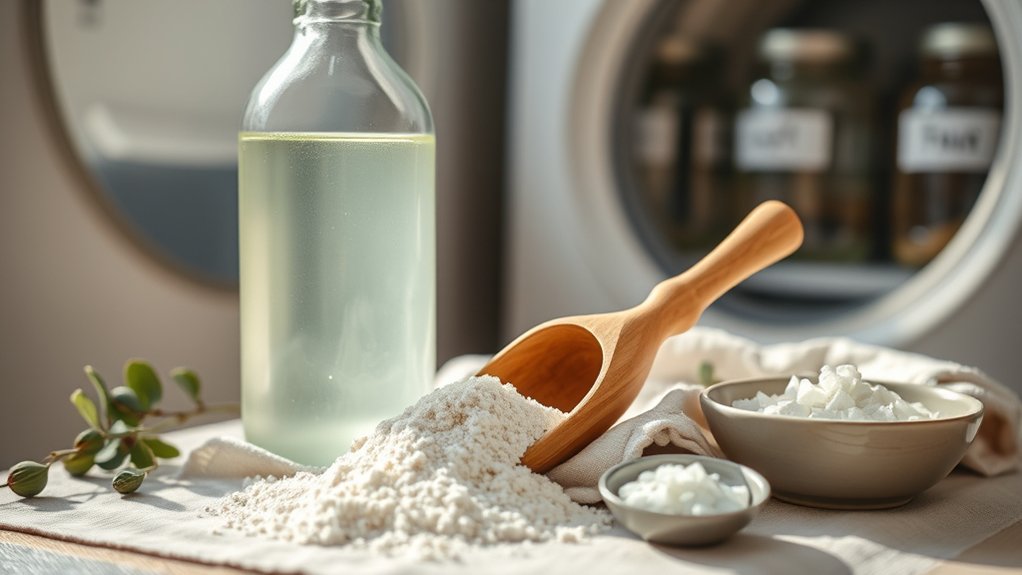
You should focus on plant-based surfactants like coco-glucoside and sodium coco-sulfate. They biodegrade really well and still pack a punch when it comes to cleaning power.
These surfactants also work great with enzymes that boost stain removal without needing harsh chemicals.
Plant-Based Surfactants
Although synthetic surfactants dominate many laundry products, plant-based surfactants offer a biodegradable alternative that effectively lifts dirt and oils while minimizing environmental impact.
Derived from natural sources like coconut oil, these cleaning agents break down naturally, reducing waterway pollution. They are effective at removing stubborn stains without relying on harsh chemicals, making them ideal for eco-friendly laundry detergent formulations.
Plus, plant-based surfactants tend to be gentler on fabrics and sensitive skin, which enhances overall fabric care.
Key benefits of plant-based surfactants include:
- Derived from renewable natural sources such as coconut and palm oil
- Biodegradable surfactants like coco-glucoside and sodium coco-sulfate
- Effective at removing oils and dirt while being environmentally friendly
- Suitable for sensitive skin due to their mild, non-irritating properties
Enzyme-Enhanced Cleaning
Building on the effectiveness of plant-based surfactants, enzyme-enhanced cleaning integrates natural enzymes to target specific stain components. This considerably boosts stain removal without relying on harsh chemicals.
In biodegradable laundry products, enzymes like proteases, amylases, and lipases break down proteins, starches, and fats respectively, improving cleaning efficacy.
These enzymes work synergistically with biodegradable surfactants such as coco-glucoside and sodium coco-sulfate, both derived from plant ingredients.
This combination optimizes stain removal while maintaining eco-friendly detergents’ commitment to sustainability.
Importantly, enzyme-enhanced cleaning formulations degrade into non-toxic substances, minimizing adverse effects on aquatic ecosystems.
When selecting biodegradable laundry products, look for this carefully balanced blend that enhances performance without compromising environmental integrity or safety.
Comparing Biodegradable and Conventional Laundry Detergents
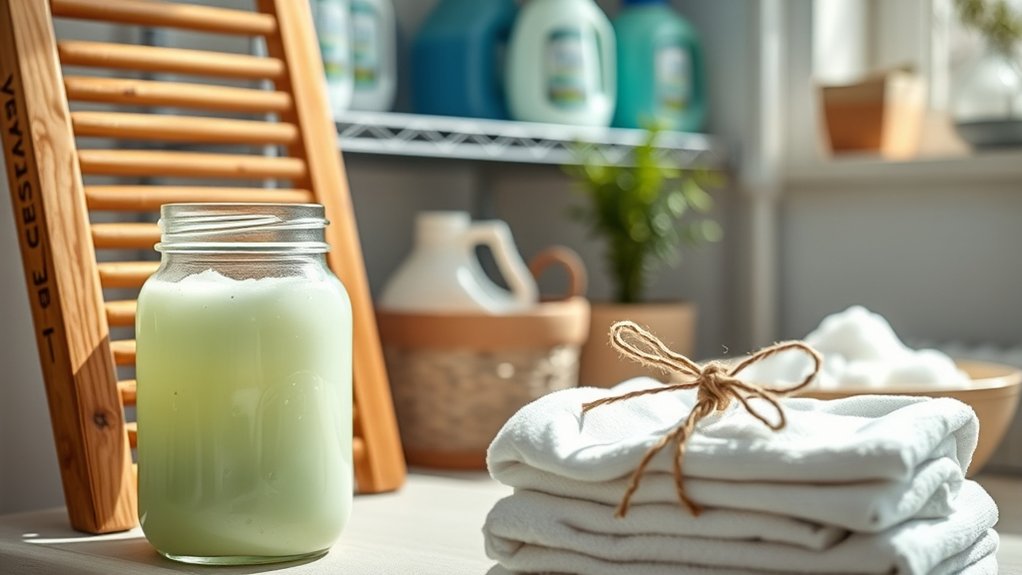
When selecting laundry detergents, understanding the differences between biodegradable and conventional formulations can guide more environmentally responsible choices.
Biodegradable detergents break down naturally through microbial action into harmless substances like carbon dioxide and water.
Biodegradable detergents naturally decompose into harmless elements through microbial processes.
Conventional laundry detergents often contain synthetic chemicals and additives such as phosphates that persist and pollute ecosystems.
Biodegradable cleaning products also typically use eco-friendly materials, reducing plastic waste.
Moreover, they tend to be effective in cold water, supporting energy conservation, whereas conventional detergents may require warmer temperatures.
Key distinctions include:
- Biodegradable ingredients vs. synthetic chemicals
- Environmentally safe alternatives vs. persistent pollutants
- Packaging with eco-friendly materials vs. conventional plastic containers
- Effective cold-water cleaning promoting energy conservation
How to Identify Genuine Biodegradable Laundry Detergents
How can you confidently distinguish genuine biodegradable laundry detergents from misleading claims? Start by examining the ingredients to verify they contain plant-based surfactants, enzymes, and other components that microorganisms can break down within six months.
Avoid products with harmful additives like phosphates and optical brighteners, which hinder biodegradation and compromise environmental safety.
Be skeptical of vague marketing claims. Instead, seek transparency about how and when the ingredients degrade.
While certifications are discussed elsewhere, focus on laundry detergents that openly list biodegradable ingredients without synthetic chemicals that resist decomposition.
Certifications for Biodegradable Detergents
You should look for recognized eco-certifications like USDA Certified Biobased, EPA Safer Choice, and EWG Verified to confirm a detergent’s biodegradability and safety.
These certifications follow strict criteria that evaluate ingredient sources, environmental impact, and health risks.
Knowing what these standards mean can really help you avoid misleading labels.
That way, you can feel confident you’re choosing products that are truly sustainable.
Recognized Eco Certifications
Although many products claim to be environmentally friendly, only those bearing recognized eco certifications provide verifiable confirmation of biodegradability and safety.
When selecting a sustainable detergent, you should look for certifications that affirm chemical safety and minimize risks to human health.
Key recognized eco certifications include:
- EWG Verified: Guarantees products are free from harmful contaminants like 1,4-dioxane.
- EPA Safer Choice: Confirms ingredients are safer for human health and the environment.
- USDA Certified Biobased: Verifies renewable biological content in the product.
- Leaping Bunny: Assures no animal testing throughout product development.
These eco certifications validate that a detergent meets stringent standards, distinguishing truly biodegradable and sustainable options from unregulated claims.
Certification Criteria Explained
Recognized eco certifications serve as a reliable foundation for identifying truly biodegradable detergents, but understanding the specific criteria behind these certifications can help you make more informed choices.
Certifications like EWG Verified require strict adherence to health and transparency standards, ensuring ingredients lack harmful additives.
EPA Safer Choice confirms that detergent components meet rigorous environmental safety benchmarks.
USDA Certified Biobased mandates a defined percentage of renewable biological ingredients, emphasizing sustainability.
For compostability, the Biodegradable Products Institute verifies compliance with ASTM D6400 or D6868 standards for industrial composting.
Furthermore, Leaping Bunny certification guarantees no animal testing in product development.
Transparency in labeling is essential, as unregulated terms like “natural” may mislead you about true biodegradability or environmental impact.
These certifications collectively help you assess detergent claims with technical accuracy and confidence.
Avoiding Misleading Labels
When evaluating biodegradable laundry detergents, it’s essential to scrutinize product labels carefully. Terms like “natural” or “green” often lack standardized definitions and can mislead consumers about true environmental impact.
Misleading labels may conceal synthetic chemicals that resist biodegradation, compromising environmentally friendly claims. To avoid this, focus on certifications and transparency.
Look for EWG Verified or USDA Certified Biobased seals to guarantee verified biodegradability and safety standards. Also, examine ingredient composition disclosures to detect potentially harmful additives.
Check the biodegradation timeline to understand how quickly the product decomposes under natural conditions.
And be cautious of vague terms; “natural” doesn’t guarantee complete biodegradability or absence of synthetic chemicals.
This approach helps you choose genuinely biodegradable detergents with proven environmental benefits.
Choosing the Right Biodegradable Detergent for Your Laundry Needs
Since choosing the right biodegradable detergent directly affects both your laundry results and environmental impact, you should prioritize products formulated with plant-based surfactants and enzymes.
These plant-based alternatives enhance cleaning performance while ensuring the formula remains eco-friendly and breaks down naturally.
Opt for sustainable laundry detergent options that avoid harmful additives like phosphates and synthetic fragrances, as these can impede biodegradability and contribute to pollution.
Concentrated formulas are preferable since they reduce packaging waste and require less product per load, supporting sustainability.
Furthermore, verify certifications such as EWG Verified or USDA Certified Biobased to confirm the detergent meets rigorous biodegradability and safety standards.
Frequently Asked Questions
Are Biodegradable Detergents Safe for Septic Systems?
Yes, biodegradable detergents are generally safe for septic systems because they break down naturally, minimizing chemical buildup.
You’ll want to choose products labeled septic-safe, as they contain plant-based surfactants that won’t disrupt the essential bacteria in your system.
However, even biodegradable detergents can overload your septic tank if you use them excessively.
Can Biodegradable Laundry Products Clean Heavily Soiled Clothes Effectively?
Yes, you can clean heavily soiled clothes effectively with biodegradable laundry products. These detergents use plant-based surfactants and enzymes that target tough stains efficiently.
However, you might need to adjust your wash settings, like increasing dosage or extending wash time, to optimize performance, especially on stubborn soils.
Keep in mind water hardness and soil type affect cleaning outcomes, so selecting the right biodegradable formula for your conditions guarantees the best results.
Do Biodegradable Detergents Work Well in Cold Water?
Yes, biodegradable detergents work well in cold water. They use plant-based surfactants and enzymes specially designed to break down stains effectively without needing heat.
When you wash in cold water, these detergents maintain cleaning power comparable to conventional ones, while also conserving energy and reducing emissions.
Plus, they help preserve fabric integrity by minimizing wear during cold washes, so you can keep your clothes clean and eco-friendly without sacrificing performance.
Are Biodegradable Laundry Products More Expensive Than Conventional Ones?
Biodegradable laundry products usually cost a bit more, like paying a green premium.
You’ll find they run about 10-30% higher than conventional detergents because they use sustainable, non-toxic ingredients and eco-friendly processes.
While this might stretch your budget, you’re investing in reduced environmental impact.
To manage costs, consider bulk purchases or refill options. This approach helps you protect the planet without breaking the bank.
How Long Does It Take for Biodegradable Detergents to Break Down in Water?
Biodegradable detergents typically break down in water within a few weeks to several months, depending on their formulation and environmental conditions.
If you have plant-based surfactants, they often degrade within 28 days under ideal conditions like warm temperatures, ample oxygen, and active microbial presence.
However, some components may take longer due to chemical complexity.
You should note that testing verifies these products meet standards for effective and timely biodegradation.
Conclusion
Choosing biodegradable laundry products means you’re actively reducing environmental impact by opting for ingredients that break down safely after use. Remember, not all “green” labels are equal. Always check for trusted certifications and avoid harmful additives.
As the saying goes, “The proof of the pudding is in the eating.” So, prioritize detergents with validated biodegradable surfactants to guarantee effective cleaning without compromising ecological health. Your informed choice makes a measurable difference.