Are Laundry Pods Bad For The Environment – Fact Check
Laundry pods use biodegradable PVA film that dissolves completely, avoiding microplastic pollution. Their concentrated formulas reduce water use and packaging waste, offering some environmental benefits.
However, certain chemicals inside pods can harm aquatic ecosystems, and plastic packaging still contributes to pollution. There are health risks if ingested, especially by children.
While generally safer than traditional detergents, laundry pods aren’t without environmental concerns. Exploring their composition and alternatives will help you make informed choices.
Key Takeaways
- Laundry pods use biodegradable PVA film that dissolves completely and does not contribute to microplastic pollution.
- Ingredients like phosphates and bleach in pods can cause water pollution and harm aquatic ecosystems.
- Plastic packaging from laundry pods adds to overall plastic pollution despite the film’s biodegradability.
- Pods’ pre-measured doses reduce detergent overuse and packaging volume, lowering their carbon footprint.
- Eco-friendly alternatives like detergent sheets and soap nuts offer biodegradable, chemical-free cleaning options.
What Are Laundry Pods Made Of and How Do They Work?
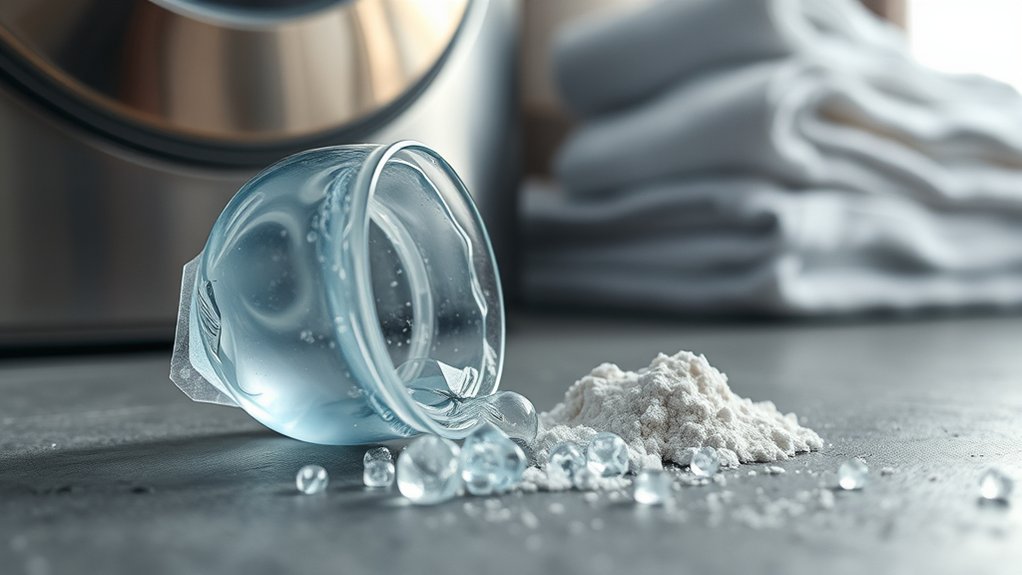
Laundry pods combine several components into a single, easy-to-use capsule, typically enclosed in a water-soluble polyvinyl alcohol (PVA) film. When you place a pod in the wash, the PVA film dissolves completely, even in cold water, releasing concentrated detergent.
Laundry pods dissolve fully in cold water, releasing concentrated detergent within a convenient, water-soluble PVA film.
This detergent contains a mix of cleaning agents such as surfactants and enzymes designed to clean effectively. Unlike traditional plastics, PVA is biodegradable and breaks down during wastewater treatment processes, reducing environmental persistence.
The film’s engineered solubility guarantees no solid residues remain after washing. By integrating detergent and water-soluble film, laundry pods offer a compact and convenient alternative to powder and liquid detergents.
You can trust that the biodegradable PVA supports wastewater treatment plants in minimizing plastic waste impact.
Are Laundry Pods’ Chemicals Harmful to the Environment?
How do the chemicals in laundry pods impact the environment?
Laundry pods contain various chemicals that can affect the environment in different ways. Some ingredients like phosphates, bleach, and dioxane contribute to water pollution and promote harmful algae blooms.
However, the polyvinyl alcohol (PVA) film encasing the pods is designed to biodegrade and doesn’t add to microplastic pollution.
Key points to contemplate include:
Harmful chemicals in pods can disrupt aquatic ecosystems through water contamination.
Detergent-grade PVA is biodegradable and non-toxic, as confirmed by the EPA.
Microplastic pollution mainly arises from synthetic fibers in clothing, not from PVA films in laundry pods.
Understanding these distinctions helps you evaluate the environmental impact of laundry pods more accurately.
Do Laundry Pods Cause Plastic Pollution in Waterways?

You might be wondering if laundry pods contribute to plastic pollution in waterways.
The good news is that the polyvinyl alcohol (PVA) film they use actually dissolves completely in water. Plus, it biodegrades during wastewater treatment.
So, unlike traditional microplastics, PVA doesn’t stick around or build up in aquatic environments.
Knowing this really helps clear up why laundry pods have a minimal impact on microplastic pollution.
PVA Dissolution Behavior
Although concerns about plastic pollution in waterways are valid, the polyvinyl alcohol (PVA) film used in laundry pods dissolves completely during the wash cycle. This prevents solid plastic residues from entering the environment.
PVA is highly water-soluble and breaks down into polymer molecules that don’t persist as microplastics. These microplastics are solid, non-biodegradable particles.
Scientific studies and EPA findings show that PVA biodegrades rapidly, typically within hours, during wastewater treatment.
Secondary biological treatment effectively removes most PVA, which reduces environmental impact.
The main microplastic sources in waterways are synthetic fibers from clothing, not PVA.
Microplastics Versus PVA
While many worry about microplastic pollution from laundry pods, scientific evidence shows that PVA, the water-soluble polymer these pods use, dissolves completely during washing and breaks down rapidly in wastewater treatment.
PVA is biodegradable and doesn’t persist as microplastics in the environment. Studies confirm that synthetic fibers from clothing, not PVA from laundry pods, are the primary source of microplastic pollution in waterways.
Regulatory bodies like the EPA and the EU exclude PVA from the microplastic category due to its solubility and rapid biodegradation. This distinction highlights the environmental safety of laundry pods regarding plastic pollution.
Wastewater Treatment Impact
Understanding PVA’s behavior during laundry cycles leads naturally to examining its fate in wastewater treatment systems. When you use pods, the PVA film fully dissolves and enters wastewater treatment facilities, where it rapidly biodegrades. This process prevents PVA from contributing to microplastic pollution in waterways.
Key points to evaluate:
- PVA breaks down within hours during secondary biological treatment, ensuring effective removal.
- The EPA classifies detergent-grade PVA as non-toxic and biodegradable, confirming its environmental safety.
- Research identifies synthetic fibers from clothing, not PVA from pods, as the main source of microplastic pollution.
Therefore, wastewater treatment effectively mitigates any potential environmental impact of PVA from laundry pods, supporting their safer profile compared to persistent microplastics.
What Are the Health Risks Linked to Laundry Pods?
Since laundry pods contain concentrated chemicals like phosphates, bleach, and dioxane, you should be aware of their potential health risks. Over 7,000 cases of young children ingesting pods were reported in 2012-2013, highlighting safety concerns.
Synthetic fragrances and artificial dyes in pods can cause skin irritation, particularly for sensitive individuals. Additionally, ingredient disclosure often lacks transparency, leaving you uninformed about all components.
While marketed as eco-friendly, the plastic packaging still contributes to plastic pollution, affecting environmental impact.
| Health Risk | Explanation |
|---|---|
| Ingestion | Toxic if swallowed, especially by children |
| Skin Irritation | Caused by synthetic fragrances and dyes |
| Environmental Impact | Chemicals harm aquatic life and ecosystems |
| Plastic Pollution | Non-biodegradable packaging contributes |
Being informed helps you minimize health and environmental risks linked to laundry pods.
Does PVA in Laundry Pods Cause Microplastic Pollution?
Although concerns about microplastic pollution are widespread, the polyvinyl alcohol (PVA) in laundry pods doesn’t contribute to this problem. Environmental research shows that PVA is highly water-soluble and dissolves completely during use. This means it doesn’t persist as microplastics in the environment.
Studies confirm PVA biodegrades effectively, preventing aquatic toxicity linked to solid microplastic particles.
Key points include:
- PVA breaks down rapidly in wastewater treatment, unlike traditional microplastics.
- The EPA confirms PVA in detergent pods doesn’t remain as solid microplastic waste.
- Microplastics mainly come from synthetic fibers and hard plastics, not dissolved PVA.
How Does PVA in Laundry Pods Behave in Wastewater Treatment?
When you use laundry pods, the polyvinyl alcohol (PVA) film dissolves completely in water, allowing wastewater treatment systems to process it effectively.
Detergent-grade PVA biodegrades rapidly within hours during wastewater treatment, preventing its persistence or accumulation.
Unlike microplastics, dissolved PVA exists as individual polymer molecules. This enhances its biodegradability and minimizes environmental risks.
Scientific studies and EPA assessments confirm that PVA doesn’t bioaccumulate or transport harmful organic pollutants, distinguishing it from traditional plastic contaminants.
This rapid biodegradation guarantees that PVA poses low toxicity to aquatic ecosystems, supporting its classification as environmentally safe.
Laundry Pods: Convenience vs. Environmental Impact
You’ll really appreciate laundry pods for how convenient they are—they make dosing super simple and help cut down on mess.
But it’s also worth thinking about the environmental side of things. For example, the plastic packaging and the chemicals inside can sometimes harm ecosystems.
Convenience Benefits Explained
Since laundry pods come pre-measured, they help you avoid overusing detergent, which often happens with liquid forms.
These pods use a water-soluble film made from polyvinyl alcohol (PVA), which dissolves completely, providing a mess-free laundry experience.
The ultra-concentrated formula means less water content, about 10% compared to over 50% in liquids. This reduces packaging waste and potentially lowers environmental impact.
Scientific studies suggest PVA biodegradability occurs effectively in wastewater treatment, addressing some environmental concerns.
You’ll notice these convenience benefits:
- Precise dosing eliminates detergent waste and simplifies laundry.
- Compact pods are easier to store and handle, especially for those with limited dexterity.
- Reduced packaging volume helps decrease the carbon footprint of cleaning products.
Environmental Concerns Highlighted
Although laundry pods offer undeniable convenience, they raise significant environmental and health concerns that you should consider. The detergent ingredients in many pods, including phosphates and bleach, contribute to water pollution, harming aquatic ecosystems.
Furthermore, undisclosed chemicals in some brands have led to increased poisonings among children. However, the PVA film encasing pods dissolves fully in wastewater treatment and doesn’t contribute to microplastic pollution, which primarily stems from synthetic clothing fibers.
Still, the overall environmental impact of laundry pods remains concerning due to their chemical content. If you want to reduce harm, eco-friendly alternatives like laundry sheets or soap nuts provide effective cleaning without these negative effects.
Being aware of these factors helps you make more informed, environmentally responsible choices.
What Eco-Friendly Alternatives to Laundry Pods Are Available?
How can you reduce your environmental impact while keeping your laundry clean? Eco-friendly alternatives to traditional laundry pods offer effective cleaning with less harm to the environment. Consider these options:
Reduce environmental impact with effective, eco-friendly laundry alternatives that keep your clothes clean and the planet healthier.
- Laundry detergent sheets: Compostable and free from harsh chemicals, these sheets use naturally derived ingredients, minimizing environmental impact without sacrificing cleaning power.
- Soap nuts: Biodegradable and chemical-free, soap nuts release natural surfactants in water, providing a sustainable alternative that reduces plastic waste.
- Eco pods like Dropps: Packaged in biodegradable film and containing responsibly sourced palm oil, they balance convenience with eco-consciousness.
These alternatives avoid the harsh chemicals and plastic packaging typical of many laundry pods. They help you maintain cleanliness while supporting a healthier planet.
What Does Science Say About Laundry Pods and the Environment?
What impact do laundry pods truly have on the environment? Environmental research confirms that the polyvinyl alcohol (PVA) in laundry pods dissolves completely and biodegrades in wastewater, posing no threat as microplastics.
Regulatory agencies such as the EPA and EU classify detergent-grade PVA as non-toxic and exclude it from microplastic definitions due to its solubility and biodegradability. Studies show that microplastics in waterways primarily originate from synthetic fibers shed by clothing, not from laundry pods.
In addition, PVA biodegrades efficiently in wastewater treatment plants, with no evidence linking it to solid microplastic accumulation. Consequently, scientific evidence suggests that laundry pods, through their PVA content, have minimal environmental impact compared to synthetic fibers.
This aligns with regulatory evaluations on safety for aquatic life and human health.
Frequently Asked Questions
How Do Laundry Pods Compare Cost-Wise to Traditional Detergents?
Laundry pods usually cost more per load upfront compared to traditional detergents, but you’ll often use less detergent per wash because they’re more concentrated.
Over time, this can balance out or even save you money.
Plus, the pre-measured pods reduce waste from overuse, which might make them more efficient overall.
Can Laundry Pods Be Recycled or Composted Safely?
Think of laundry pods like a sealed treasure chest: their plastic containers might be recyclable, but only if your local program accepts that type.
The pods’ water-soluble film, made from PVA, won’t compost in your backyard. It needs special conditions to break down.
While it dissolves in wastewater, that doesn’t mean it’s harmless.
Do Laundry Pods Affect Washing Machine Longevity or Performance?
Yes, laundry pods can affect your washing machine’s longevity and performance.
Low-quality pods often leave residue, clogging detergent drawers and drums, which promotes mold and maintenance issues.
Excess sudsing from some pods disrupts rinse cycles, especially in high-efficiency machines, risking costly repairs.
Using high-quality pods that dissolve completely helps prevent buildup, ensuring your machine runs efficiently and lasts longer while maintaining peak cleaning performance.
Are Laundry Pods Effective in Cold Water Washes?
Yes, laundry pods can be effective in cold water washes, especially if you choose high-quality brands formulated for that purpose.
These pods dissolve well and release concentrated detergent, ensuring good cleaning without residue.
However, some lower-quality pods may not fully dissolve, leading to leftover film.
Using cold water with the right pods helps save energy and lowers your carbon footprint, making it a practical and eco-friendly laundry choice.
How Do Laundry Pods Impact Water Usage During Laundry Cycles?
Laundry pods act like tiny water-saving superheroes during your laundry cycles. They reduce water use by dissolving fully and concentrating cleaning power, so you don’t need extra water to dilute detergent.
Because they require fewer rinse cycles, you’ll use even less water overall.
Their compact formula cuts down on water waste compared to traditional liquids, making your laundry routine more efficient and environmentally considerate without sacrificing cleaning power.
Conclusion
Laundry pods, like a double-edged sword, offer convenience but raise environmental concerns. While their chemicals can impact ecosystems and PVA might contribute to microplastic pollution, wastewater treatment often reduces these effects.
Understanding the balance between ease and ecological harm helps you make informed choices. Considering eco-friendly alternatives can lessen your footprint.
Scientific evidence encourages you to weigh the benefits against potential risks, ensuring your laundry routine supports a healthier planet.