How Much Dr Bronners To Use For Laundry – The Real Answer
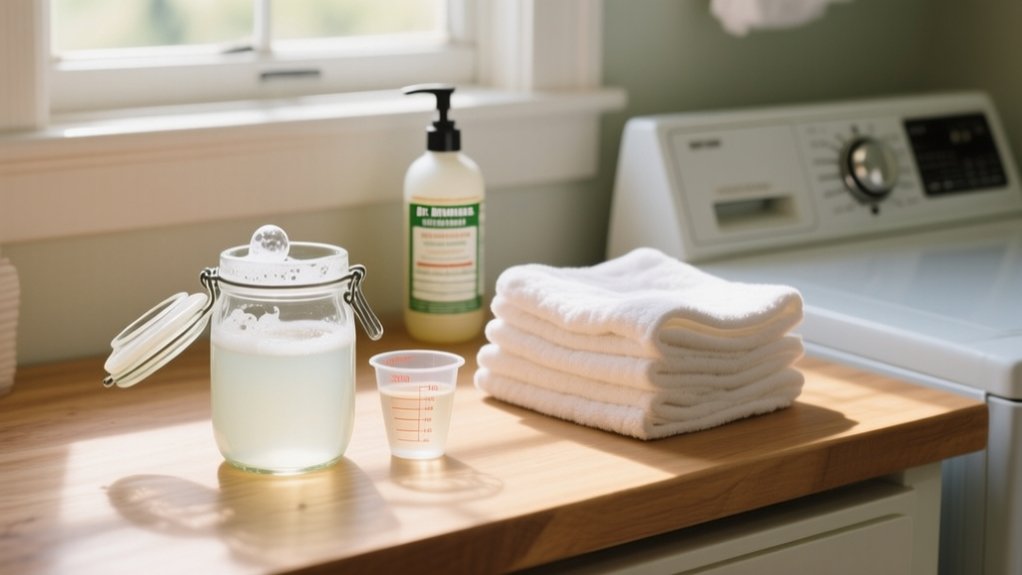
For laundry, use 1 to 1½ tablespoons of Dr. Bronner’s Sal Suds in HE machines and 2 to 3 tablespoons in standard washers. Adjust the amount based on how dirty your clothes are and the hardness of your water.
Pre-treat tough stains with a 1:1 mix of Sal Suds and water, and add vinegar during rinsing to boost cleaning and soften fabrics. Keep these tips in mind to avoid common dosing mistakes, and there’s more useful advice to help you get the best results.
Key Takeaways
- Use 1 to 1½ tablespoons of Dr. Bronner’s Sal Suds for HE machines, and 2 to 3 tablespoons for standard washers per load.
- Adjust soap amount based on soil level: 1 to 1½ tablespoons for light soil, up to 2½ tablespoons for heavy soil.
- Pre-treat tough stains with a 1:1 mix of Sal Suds and water, letting it sit for 10-15 minutes before washing.
- Add ½ cup vinegar during the rinse cycle to soften water, reduce static, and maintain fabric color vibrancy.
- Avoid overuse to prevent suds lock and residue; store diluted soap in a cool, dark place and use within two weeks.
How Much Dr. Bronner’s Soap To Use Per Laundry Load
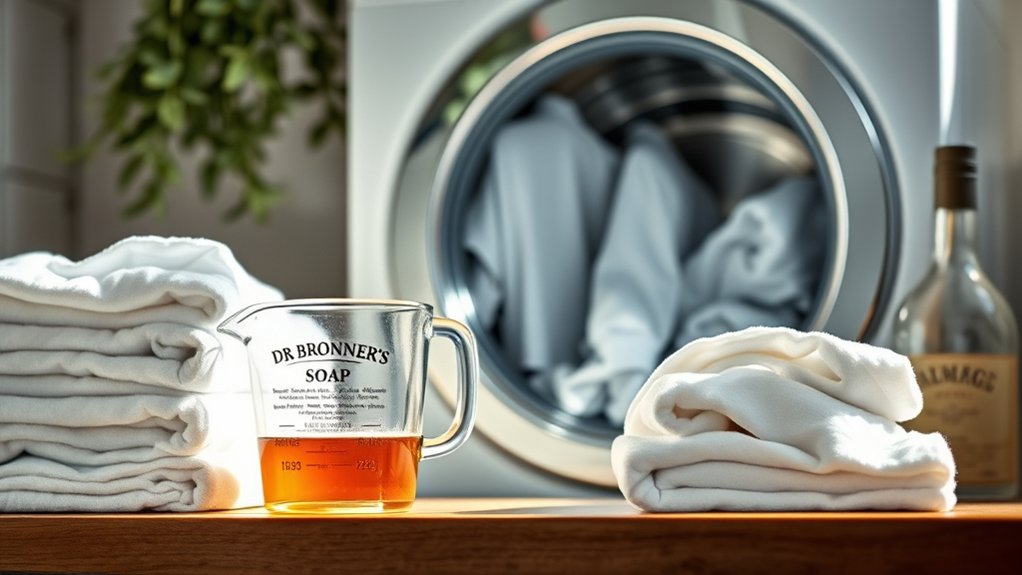
How much Dr. Bronner’s soap should you use per laundry load? For high-efficiency (HE) machines, 1 to 1½ tablespoons (15-22 mL) of Dr. Bronner’s Sal Suds is enough for effective cleaning.
In standard machines, double that amount to 2 to 3 tablespoons for ideal results.
Always tailor the dosage depending on your laundry load’s dirtiness and water hardness to maximize cleaning power and avoid waste.
Adjust soap amounts based on soil level and water hardness for optimal cleaning and minimal waste.
For tough stains, pre-treat with a 1:1 mix of Sal Suds and water or add ¼ cup baking soda to the load.
Adjusting your soap dosage helps maintain fabric quality while ensuring clothes come out fresh and clean, making Dr. Bronner’s an efficient, trusted choice for eco-friendly laundry care.
Adjust Dr. Bronner’s Soap Dosage For HE Vs. Standard Machines
You’ll want to use less Dr. Bronner’s soap in high-efficiency (HE) machines—about 1 to 1½ tablespoons per load. This helps prevent excess suds, which can cause problems.
On the other hand, standard machines need roughly double that amount, around 2 to 3 tablespoons, to get your laundry thoroughly clean.
Following these guidelines makes sure you avoid issues like suds lock while still getting your clothes properly cleaned.
Dosage Differences Explained
Although Dr. Bronner’s Sal Suds is effective for all laundry types, the dosage varies between HE machines and standard washers. For HE machines, use 1 to 1½ tablespoons (15-22 mL) per load to maintain low suds and optimize cleaning performance. Larger HE loads may require 1/3 to ½ cup, guaranteeing thorough cleaning without excess foam.
In contrast, standard machines need double the amount, 2 to 3 tablespoons (30-45 mL), to achieve similar results.
Always adjust the dosage based on soil levels; heavily soiled clothes might need a bit more soap. Following these guidelines helps prevent issues like suds lock and assures your laundry gets cleaned efficiently while preserving your machine’s function.
HE Machine Guidelines
When using Dr. Bronner’s in HE machines, it’s important to adjust the soap dosage for ideal cleaning performance. HE machines require only 1 to 1½ tablespoons (15-22 mL) of Dr. Bronner’s Sal Suds. This guarantees effective cleaning without creating excessive suds.
Unlike standard machines that might need twice that amount, HE washers are designed to use less soap to avoid reaching the suds level beyond 1/3 of the window. Excess sudsing can trigger suds lock errors and reduce efficiency.
Always consult your machine guidelines to confirm compatibility and proper use.
For heavily soiled items, pre-treat stains with a 1:1 dilution of Sal Suds to boost stain removal. Following these tips helps maintain your HE machine’s performance while using Dr. Bronner’s effectively.
Adjust Dr. Bronner’s Soap Dosage For Soil Levels
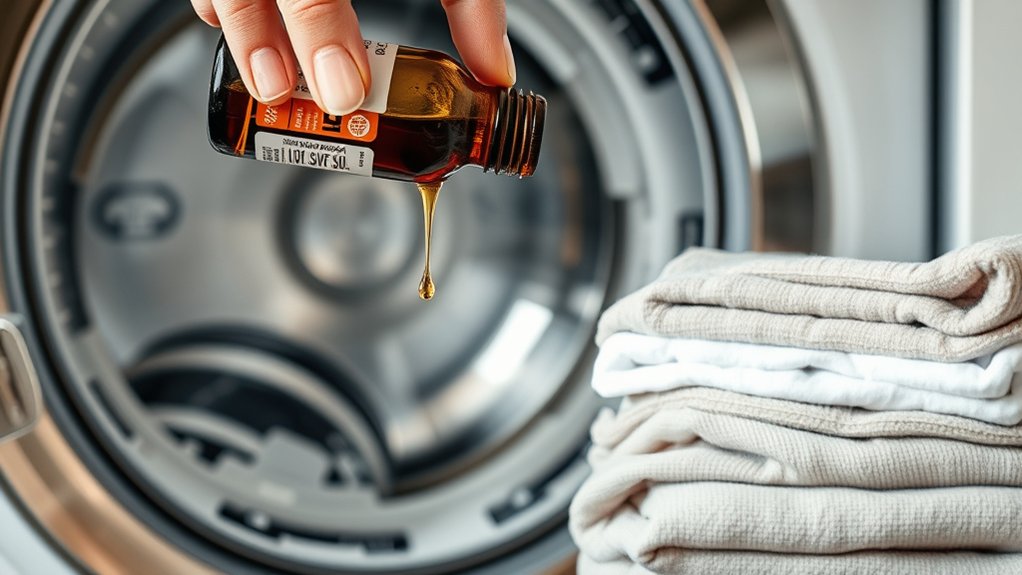
You’ll want to adjust the amount of Dr. Bronner’s soap depending on how dirty your laundry is to get the best cleaning results.
If your clothes are just lightly soiled, you can use less soap. But when you’re dealing with heavily soiled items, you’ll need to use more—and sometimes it helps to pre-treat those tough spots first.
Also, remember that the hardness of your water plays a role in how much soap you should use to get your clothes really clean.
Soil Level Considerations
Soil level plays an essential role in determining how much Dr. Bronner’s Sal Suds you should use for laundry. For lightly soiled clothes, 1 to 1½ tablespoons work well in high-efficiency machines, while standard washers may require a bit more detergent quantity.
When dealing with medium soil levels, increase the dosage to 1½ to 2 tablespoons to maintain cleaning effectiveness.
Heavily soiled garments need 2 to 2½ tablespoons, and pre-treating stubborn stains with a 1:1 Sal Suds dilution helps.
Keep in mind that water hardness impacts how well your detergent cleans, so adjusting the amount based on your water quality is important.
Regularly evaluating soil level guarantees you optimize soap use and prevent over-sudsing, especially in HE machines.
Dosage Adjustment Guidelines
Although dosage needs vary, adjusting Dr. Bronner’s Sal Suds for your laundry guarantees peak cleaning effectiveness.
Here’s how you can make precise dosage adjustments based on soil levels and water conditions:
Use 1 to 1½ tablespoons of Sal Suds for lightly soiled loads.
Increase to 2-3 tablespoons for heavily soiled items.
For hard water, add ½ cup vinegar during the rinse cycle to boost cleaning effectiveness.
Pre-treat tough stains with a 1:1 dilution of Sal Suds or add ¼ cup baking soda for extra power.
For delicate fabrics, use 1 capful of Castile Magic Soap and lay flat to dry.
Scale dosage with load size to maintain thorough cleaning.
Pre-Treat Stains With Dr. Bronner’s For Best Results
Boost your laundry’s stain-fighting power by pre-treating spots with a 1:1 mix of Dr. Bronner’s Sal Suds and water. Apply this dilution directly to stains, let it sit for 10-15 minutes, then rinse thoroughly before washing.
For tougher stains, add ¼ cup of baking soda to boost stain-fighting power. Use the appropriate amount of Sal Suds based on your machine type, typically 1 to 1½ tablespoons for HE washers.
| Step | Details |
|---|---|
| Mix Ratio | 1:1 Sal Suds and water |
| Baking Soda Addition | ¼ cup for tough stains |
| Application Time | 10-15 minutes before washing |
| Rinse | Thoroughly after pre-treating |
| Sal Suds Amount | 1-1½ Tbsp for HE machines |
This method guarantees effective stain removal without residue.
Add Vinegar To Boost Dr. Bronner’s Laundry Cleaning And Rinse
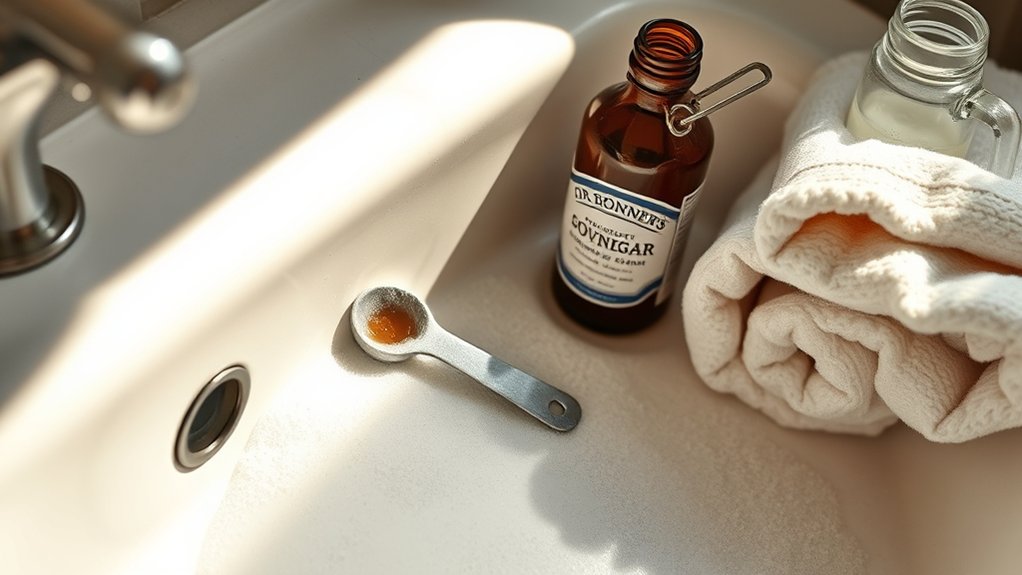
When you add ½ cup of vinegar during the rinse cycle alongside Dr. Bronner’s, you boost your laundry’s cleanliness and softness naturally.
Vinegar acts as an effective fabric softener and helps remove any soap residue left by Dr. Bronner’s.
This simple addition enhances your laundry routine without synthetic chemicals, making it eco-friendly.
Here’s what vinegar does for your laundry with Dr. Bronner’s:
- Softens fabrics gently
- Reduces static cling
- Breaks down mineral deposits in hard water
- Helps maintain color vibrancy
- Supports an eco-friendly alternative to commercial softeners
Using vinegar this way guarantees your clothes come out fresher, cleaner, and softer, maximizing the benefits of Dr. Bronner’s soap while keeping your laundry routine natural and sustainable.
Handwash Delicates With Dr. Bronner’s: Proper Amounts And Tips
Adding vinegar during the rinse cycle complements the gentle cleaning power of Dr. Bronner’s when hand washing delicates. Use 1 capful of Dr. Bronner’s soap in 1 gallon of cold water to clean without damaging fabrics.
Soak items 10-15 minutes, gently agitate to lift dirt, then rinse thoroughly with cold water to remove soap residue. Always test a small area first for colorfastness. After rinsing, press out excess water with a towel and lay flat to dry, preserving fabric shape and integrity.
| Step | Amount/Time | Tips |
|---|---|---|
| Soap | 1 capful per gallon | Use cold water |
| Soak | 10-15 minutes | Avoid scrubbing |
| Agitate | Gentle | Lift dirt without damage |
| Rinse | Thoroughly with cold | Remove all soap residue |
| Dry | Lay flat | Press water out with towel |
Avoid These Common Dosing Mistakes With Dr. Bronner’s
You might think that using more Dr. Bronner’s soap will give you a better clean, but actually, overdoing it can cause suds lock errors in your HE machine.
Plus, it won’t make your laundry any cleaner. Just stick to the recommended 1 to 1½ tablespoons for HE washers. If you have a standard machine, go ahead and use double that amount.
Getting your measurements right is key. It helps you avoid common dosing mistakes and keeps your laundry fresh without any leftover residue.
Typical Overuse Problems
Although Dr. Bronner’s products are effective, overusing them can cause typical problems you want to avoid.
Using too much Sal or soap creates excessive suds, which may lead to residue buildup and suds lock errors, especially in HE machines designed for low-sudsing detergents.
Excess water can’t rinse out all the soap, resulting in mechanical issues and less clean laundry.
To prevent common dosing mistakes:
- Use only 1 to 1½ tablespoons of Sal Suds in HE machines
- Double the amount for standard washers
- Dilute soap for handwashing delicates (1 part soap to 10 parts water)
- Adjust amounts based on fabric type and water hardness
- Avoid pouring soap directly on clothes to reduce buildup
Stick to these guidelines to guarantee efficient washing and protect your machine.
Correct Soap Measurements
When measuring Dr. Bronner’s Sal Suds for laundry, stick to the recommended soap measurements to avoid issues like excessive sudsing or residue.
For high-efficiency (HE) machines, use 1 to 1½ tablespoons (15-22 mL) per load; double this amount for standard washers.
Large or heavily soiled loads require ⅓ to ½ cup, but adjust based on dirtiness and water hardness.
In hard water conditions, always add ½ cup (120 mL) of vinegar during the rinse cycle to prevent soap buildup, especially if using Castile Magic Soap.
For tough stains, pre-treat with a 1:1 Sal Suds and water solution or add ¼ cup baking soda to the wash.
Don’t overdo it. Too much soap can leave fabric residue and affect cleaning performance.
Store And Handle Diluted Dr. Bronner’s Soap Safely
How should you store diluted Dr. Bronner’s soap to maintain its power and safety? Proper storage and handling are essential to keep your diluted soap effective and safe.
Always label diluted soap containers clearly to avoid mix-ups.
Store your diluted soap in a cool, dark place away from direct sunlight and extreme temperatures. These conditions can degrade its ingredients.
Use your pre-diluted soap within a couple of weeks for the best results.
Keep all cleaning products, including diluted soap, out of reach of children and pets to prevent accidents.
Remember these key points to handle diluted soap safely:
- Store in a cool, dark location
- Label containers clearly
- Use within two weeks
- Avoid direct sunlight and heat
- Keep out of reach of children and pets
Tips For Getting The Best Clean Without Overusing Soap
Proper storage and handling of diluted Dr. Bronner’s soap sets the stage for ideal cleaning.
When doing laundry, use 1 to 1½ tablespoons of Dr. Bronner’s Sal Suds for large loads in HE machines to avoid over-sudsing while ensuring effective cleaning.
For standard machines, increase the amount to 2-3 tablespoons for thorough dirt removal.
Pre-treat tough stains by applying a 1:1 dilution of Sal Suds with ¼ cup of baking soda to boost stain-fighting power.
Adjust the soap amount based on how dirty your laundry is to prevent residue buildup, which can reduce cleaning efficacy.
Following these tips helps you get the best clean without wasting soap or compromising your laundry’s freshness and fabric quality.
How Water Hardness Affects Dr. Bronner’s Soap Dosage
Since water hardness affects soap performance, you’ll need to adjust the amount of Dr. Bronner’s soap for the best cleaning results. Hard water contains minerals that interfere with soap’s ability to clean, often causing soap scum and reducing effectiveness.
Water hardness impacts soap performance, so adjusting Dr. Bronner’s soap amount ensures optimal cleaning results.
To optimize soap dosage, consider these points:
- Test your water hardness to understand its impact.
- Increase Dr. Bronner’s soap dosage by 1½ to 2 times in hard water areas.
- Minerals in hard water react with soap, requiring more soap for thorough cleaning.
- Add ½ cup of vinegar during the rinse cycle to soften water.
- Adjust dosage based on cleaning results to avoid under or overuse.
Frequently Asked Questions
Can Dr. Bronner’s Soap Cause Fabric Fading Over Time?
Yes, Dr. Bronner’s soap can cause fabric fading over time if you don’t use it properly.
Using too much soap, washing in hot water, or not rinsing thoroughly can leave residues that dull colors.
To protect your clothes, dilute the soap correctly, wash in cold or lukewarm water, and consider adding vinegar as a rinse aid.
Following care labels and recommended usage helps keep your fabrics vibrant longer.
Is Dr. Bronner’s Soap Safe for Washing Baby Clothes?
Yes, Dr. Bronner’s soap is safe for washing baby clothes.
You’ll appreciate that it’s made from organic, fair-trade ingredients and contains no artificial fragrances, dyes, or preservatives, which helps prevent skin irritation.
Its gentle formula effectively cleans fabrics while being eco-friendly and biodegradable.
Many parents trust it for their little ones’ laundry because it’s both natural and reliable, giving you peace of mind when caring for sensitive baby skin.
How Does Dr. Bronner’s Soap Affect Washing Machine Longevity?
Think of Dr. Bronner’s soap as a gentle breeze for your washing machine. It cleans without causing buildup.
You’ll find that using its low-foaming, biodegradable formula helps prevent residue accumulation that can clog parts and lead to mechanical issues.
By choosing Dr. Bronner’s, you’re protecting your machine’s components and promoting smoother operation.
This also helps extend its lifespan. It’s a smart, eco-friendly choice that keeps your washer running efficiently for years.
Can Dr. Bronner’s Soap Be Used With Fabric Softeners?
Yes, you can use Dr. Bronner’s soap with fabric softeners, but it’s best to choose natural ones to keep things eco-friendly.
Since Dr. Bronner’s already leaves clothes soft, you mightn’t need much softener.
If you do use one, add it during the rinse cycle to avoid reducing cleaning power.
Many people prefer vinegar as a natural softener alternative. It maintains softness without harmful chemicals or residue.
What Is the Environmental Impact of Using Dr. Bronner’s Soap?
When you use Dr. Bronner’s soap, you’re minimizing environmental impact because it’s made from organic, biodegradable, and plant-based ingredients.
It breaks down naturally, avoiding water pollution and protecting ecosystems.
You’re also supporting sustainable farming and reducing plastic waste thanks to their eco-friendly packaging.
Conclusion
Now that you know how much Dr. Bronner’s soap to use per load, you can skip the guesswork and avoid overdoing it. The idea that more soap means cleaner clothes doesn’t hold up. Too much can leave residue and waste product.
Instead, tailor the amount based on your machine type, soil level, and water hardness. With these adjustments, you’ll get fresh, clean laundry while saving soap and protecting your fabrics.