How To Get Stains Out Of Dry Clean Only – Easy Guide
To get stains out of dry clean only garments, always first check the care label. Test spot treatments like a vinegar and baking soda mix on a hidden area.
For liquid stains, gently blot with cold water and mild detergent. For oily spots, use baking soda to absorb oil before dabbing with a citrus-based cleaner. Avoid soaking or scrubbing.
If stains persist or the fabric is delicate, professional cleaning is best. Keep following for detailed tips on safe, effective stain removal.
How To Read Dry Clean Only Labels
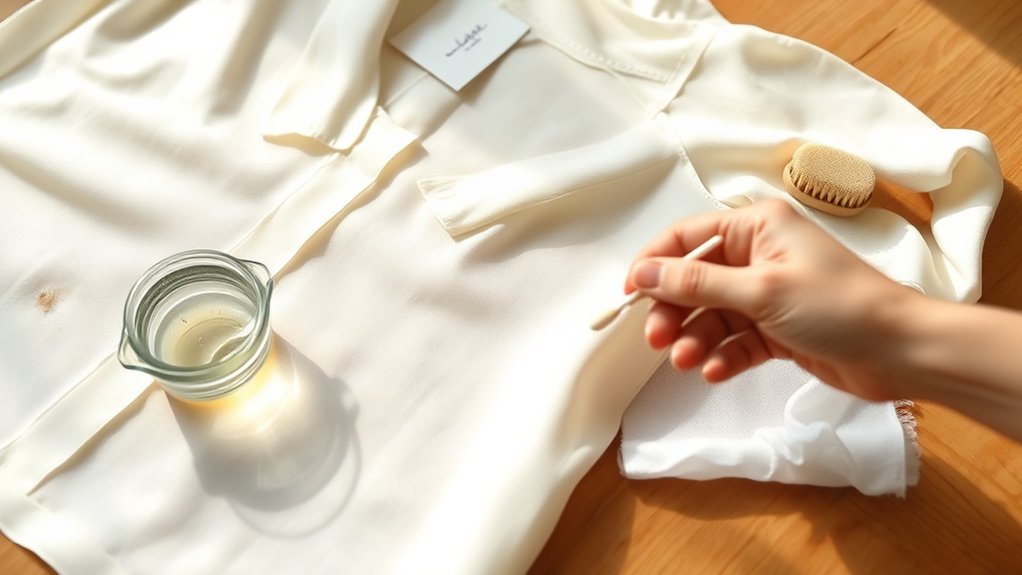
When you see a dry clean only label, it’s important to know that these garments need professional cleaning to avoid damage. Start by checking the care label closely. It gives you essential washing instructions and cleaning symbols that show how to take care of your clothes properly.
Dry clean only labels mean professional cleaning is essential to prevent damage—always check care instructions carefully.
Pay attention to the fabric type. Materials like rayon, suede, leather, and cashmere need professional cleaning to keep them safe from damage. The label might also tell you which cleaning solvent or method to use.
Use the stain guide on the care label to figure out the right stain removal techniques, but don’t try washing or bleaching at home. Reading the whole label helps you follow the exact instructions and protects your garment’s quality.
When you understand dry clean only labels, you can keep your clothes looking great and avoid costly mistakes.
Getting Dry Clean Only Clothes Ready For Stain Removal
Before you tackle stain removal on dry clean only garments, you need to prepare carefully to prevent damage. Start by confirming the care label’s instructions to make sure the fabric truly requires dry cleaning. Then, focus on gentle cleaning techniques to minimize fabric damage.
Follow this methodical approach: Perform a spot cleaning test on an inconspicuous area using minimal moisture. This helps avoid shrinkage or misshaping.
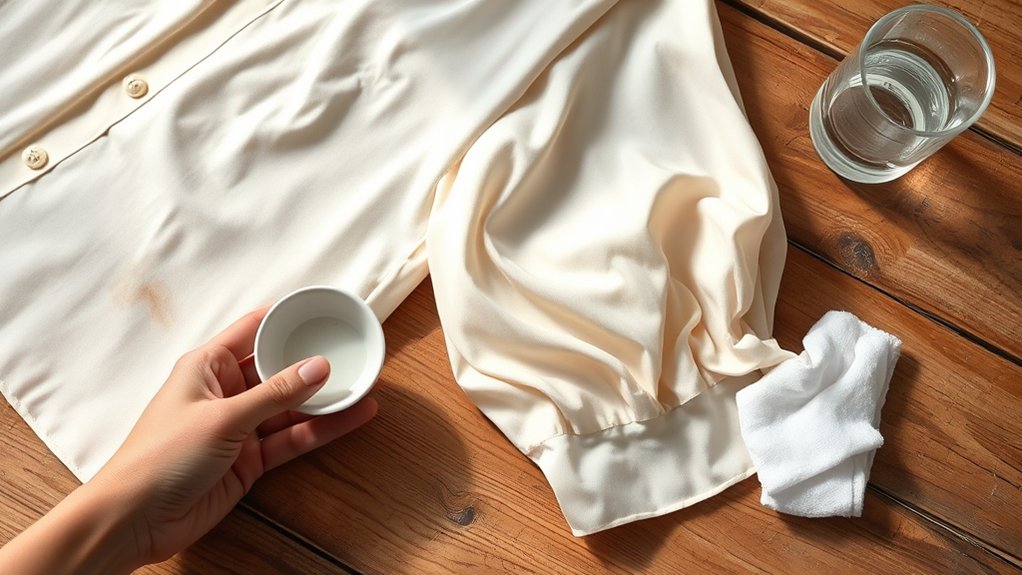
Next, apply a gentle pre-treatment with a soft cloth and cold water. Be careful to avoid any vigorous scrubbing that can harm delicate fabrics.
Keep moisture strictly controlled. Never soak the garment because excess water weakens fibers and changes the texture.
If you’re unsure, always seek professional dry cleaning. Proper preparation helps protect your garment and improves your chances of removing stains successfully.
Removing Liquid Stains From Dry Clean Only Fabrics
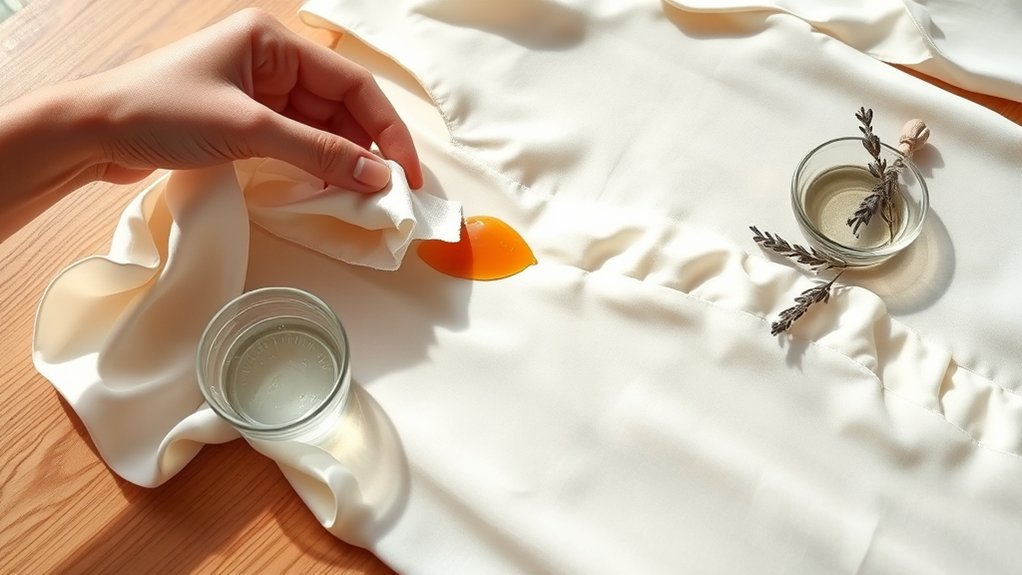
How exactly should you tackle liquid stains on dry clean only fabrics without causing damage? Start by placing the stained area on a white towel or over a sink to control the mess and prevent spreading.
Pour cold water directly onto the liquid stain to dilute and lift it gently.
Pour cold water on the stain to gently dilute and lift it without damaging the fabric.
If this doesn’t fully remove the stain, prepare a spot cleaning solution of equal parts white vinegar and dish detergent. Dab this mixture carefully onto the stain and let it sit for about 20 minutes to break down the residue.
Afterward, rinse the area with cold water.
For proper fabric care, dry the garment flat or hang it up to avoid misshaping.
This gentle cleaning method ensures effective stain removal while preserving the integrity of your dry clean only item.
Treating Oily Stains On Dry Clean Only Clothes
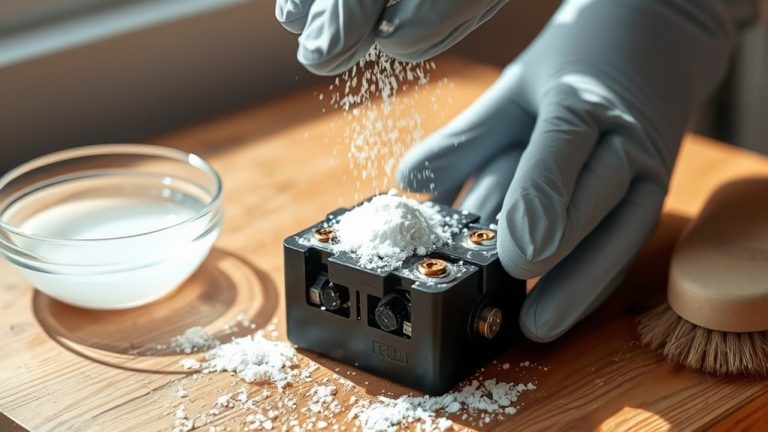
Start by sprinkling baking soda generously over the oily stain to absorb the excess oil.
Then, take a citrus-based degreasing detergent and gently work it into the area using a white cloth or a small brush.
Let it sit for a little while before dabbing the spot with cold water.
This helps lift the stain effectively without damaging your dry clean only clothes.
Baking Soda Absorption
Although dry clean only garments require special care, you can effectively treat oily stains using baking soda absorption. Baking soda acts as a natural absorbent, drawing out excess oil without harsh chemicals.
Follow these cleaning tips for best stain removal: Sprinkle a generous layer of baking soda directly onto the oily stain to absorb the oil thoroughly. Gently work the baking soda into the fabric with a white cloth or a soft brush, promoting gentle cleaning and deeper stain absorption.
Let it sit for several minutes, then shake off or brush away the baking soda residue. This method minimizes fabric damage and enhances stain absorption, making it ideal for dry clean only items.
Baking soda’s effectiveness in treating oily stains ensures a safe, precise approach to fabric care.
Citrus Detergent Application
When you encounter an oily stain on a dry clean only garment, applying a citrus-based degreasing detergent can effectively break down the oil without damaging the fabric. Start by applying a small amount of detergent directly to the oily stain. Gently work it in with a soft cloth or small brush, practicing gentle cleaning to avoid fabric damage.
Let it sit for a few minutes, then dab with a cold, damp cloth. Follow with a cold water rinse to remove residue. Finally, air dry the garment flat or hung to maintain shape.
| Step | Action | Purpose |
|---|---|---|
| Apply | Citrus-based degreasing detergent | Target oily stain |
| Work in | Soft cloth or brush | Gentle cleaning |
| Rinse | Cold water rinse | Remove detergent residue |
| Dry | Air dry | Preserve garment care |
Using Vinegar And Baking Soda For Dry Clean Only Stains
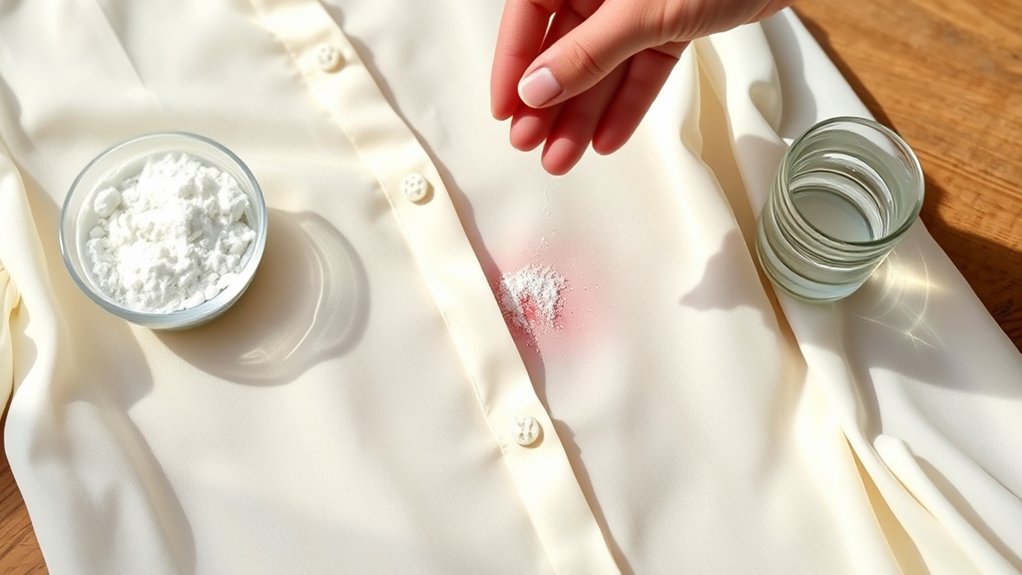
How exactly can you tackle stains on dry clean only fabrics without risking damage? Vinegar and baking soda offer a gentle cleaning solution for DIY stain removal. Vinegar acts as a natural degreaser and odor neutralizer, especially effective on oily stains.
Baking soda absorbs oils and grease, lifting stubborn marks from delicate fabric.
Follow this methodical approach:
- Test vinegar and baking soda on a hidden fabric spot to avoid discoloration.
- Sprinkle baking soda on the stain, let it sit briefly, then brush off the residue.
- Dab an equal parts mixture of white vinegar and dish detergent onto the stain gently with a clean cloth.
This combination targets tough stains while preserving your dry clean only garment’s integrity.
Give it a try—you might be surprised how well it works!
Using At-Home Dry Cleaning Kits For Dry Clean Only Clothes
Wondering if you can safely refresh your dry clean only clothes at home? At-home cleaning with a dry cleaning kit offers a practical solution.
Start by inspecting and pretreating stains using the included stain remover and cold water to minimize fabric damage.
Next, place the garment inside the provided drying bag with the cleaning cloth soaked in the kit’s solvent. Run a 20-minute medium-heat drying cycle. This allows the solvent to gently clean your dry clean only fabric.
After that, remove the garment and air dry it completely by laying it flat or hanging it up.
Always test the kit on a hidden area first to check for color fading or damage. Follow the instructions carefully to keep your clothes looking great while enjoying the convenience of cleaning at home.
When To Choose Professional Dry Cleaning
You should go for professional dry cleaning when you’re dealing with delicate fabrics like silk or cashmere. These materials need expert handling to make sure they don’t get damaged.
Also, if you have tough stains that have set in or just won’t come out, it’s best to leave them to the pros. They’ve the special chemicals and techniques needed to tackle those stubborn spots.
In the end, choosing experts helps your garment keep its shape and look great, without any risk of ruining it.
Fabrics Requiring Experts
Although some stains might tempt you to try home remedies, certain fabrics like rayon, suede, leather, and cashmere demand professional dry cleaning to avoid damage. These delicate fabrics labeled “dry clean only” require expert cleaning using specialized solvents that prevent fabric damage and guarantee effective stain removal.
When you choose a dry cleaner for high-end clothing, you benefit from garment preservation through careful handling that maintains shape, texture, and color. They also use professional cleaning methods tailored to delicate fabrics.
Plus, you get access to stain removal agents unavailable for home use, which are critical for stubborn or oil-based stains.
Trying to clean these items yourself risks shrinkage, distortion, or permanent damage. So, trusting a dry cleaner assures the best care and longevity for your valuable garments.
Complex Stain Situations
When stains are large, deeply set, or made up of stubborn substances like oil or protein-based materials, professional dry cleaning becomes essential. You’ll find that set-in stains and those with deep penetration resist typical stain removal techniques, especially on delicate fabrics.
Protein stains such as blood and sweat, as well as oil-based stains, need specialized cleaning to break down their composition without damaging the fabric.
If your garment has intricate embellishments or delicate beading, professional removal ensures these details stay intact.
Trying to treat complex stains at home can make things worse or even change the fabric’s structure. So, when your first attempts don’t work or the label says “Dry Clean Only,” it’s best to trust trained pros.
They know how to preserve your garment’s integrity with expert stain removal methods.
Air Dry And Store Dry Clean Only Clothes
Since dry clean only garments require careful handling, air drying them properly is essential to preserve their fabric and shape. To air dry effectively, follow these steps:
- Hang your dry clean only garments on hangers or lay them flat on a clean towel in a well-ventilated area. This prevents fabric damage and helps with shape maintenance.
- Use outdoor drying on sunny days to naturally refresh and deodorize clothes. But avoid direct sunlight for delicate fabrics like silk or wool to prevent fading.
- Make sure your garments are completely dry before storing them. This helps avoid mold, mildew, and fabric deterioration, keeping your clothes in top condition.
Frequently Asked Questions
Can Dry Clean Only Clothes Be Washed in Cold Water at Home?
Yes, you can wash some dry clean only clothes in cold water at home if they’re made from delicate fabrics like wool or silk. Always check the care label first, test a small hidden area, and use a gentle detergent designed for delicates.
Soak the garment for 10-20 minutes, then gently press out water without wringing to avoid damage. This method helps protect your clothes while safely removing stains.
Just take your time and treat your clothes gently.
How Long Should Dry Clean Only Stains Be Treated Before Washing?
Like catching a train, you’ve got only a short window. Treat dry clean only stains within a few hours. The sooner you act, the better your chances of stopping the stain from settling in.
Spot clean gently right away using the right solution, but don’t wait beyond 24 hours. Delays make stains stubborn, especially oily or protein-based ones.
Always follow fabric care instructions carefully to avoid damage.
Are There Specific Stain Removers to Avoid on Dry Clean Only Fabrics?
You should avoid bleach, harsh chemical stain removers, and commercial products with solvents not approved for delicate fabrics on dry clean only items.
Don’t use hot water or heat-based treatments, as they can shrink or warp fibers like silk or wool.
Also, stay away from abrasive scrubbing agents that cause pilling or damage.
Always test any cleaner on a hidden spot first to make certain it won’t fade or weaken the fabric.
It’s better to be safe than sorry when dealing with delicate materials.
Can Sunlight Damage Dry Clean Only Clothes During Drying?
They say, “Don’t put all your eggs in one basket,” and the same goes for drying your dry clean only clothes. You really shouldn’t rely on direct sunlight for drying them.
Sunlight can damage your clothes by fading colors and weakening fibers. This is especially true for delicate fabrics like silk or wool.
Instead, try drying your garments in indirect light or shade. This helps keep their texture and vibrancy intact.
Doing this preserves your clothes’ quality and extends their lifespan effectively.
How to Handle Color Bleeding on Dry Clean Only Garments?
When you spot color bleeding on dry clean only garments, act fast. Rinse the area with cold water to dilute the dye without rubbing. Test a color-safe detergent on a hidden spot first.
Gently blot the stain using a cloth dipped in a mild detergent solution. If bleeding is severe, soak the garment in a vinegar and cold water mix.
Always air dry afterward. Never use heat, as it sets stains permanently.
Conclusion
Think of your dry clean only clothes as delicate paintings. Each stain is like a smudge that needs careful attention. By understanding labels, prepping properly, and using gentle methods like vinegar, baking soda, or at-home kits, you’re acting as a careful restorer, preserving their beauty.
But when stains run deep, don’t hesitate to call in the experts. With patience and precision, you’ll keep your garments looking fresh, like timeless art ready to wear again.