Can You Dry Clean A Hat – What To Know
You generally shouldn’t dry clean hats because the chemicals and heat can warp their shape and damage delicate materials like straw, silk, or leather.
Felt and wool hats may be safer if the care label allows it, but glued or structured parts often won’t hold up. Improper cleaning risks shrinking or deforming your hat, so gentle spot cleaning and air drying are better.
Keep exploring to learn how to care for your hats properly and safely.
Risks of Dry Cleaning Hats
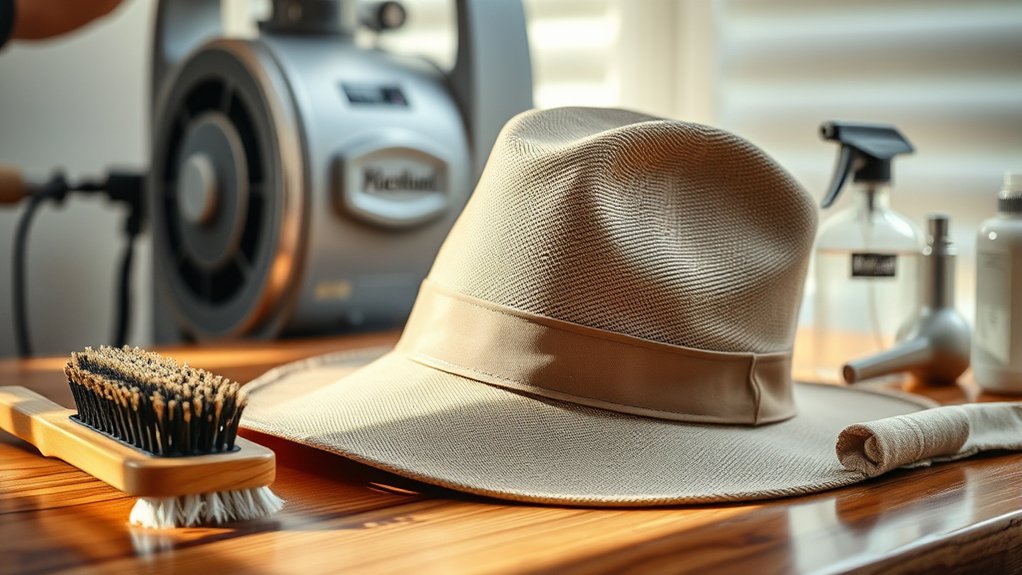
Although dry cleaning might seem like a convenient way to refresh your hat, you should be aware that the solvents used can damage materials like straw, silk, and leather. These chemicals may cause warping or distortion, especially if your hat has cardboard or plastic structural components.
Dry cleaning can also lead to fading or cracking of logos, embroidery, and delicate stitching, reducing your hat’s visual appeal. Over time, the process can strip natural fibers or finishes, weakening the material’s durability.
If your hat is vintage or antique, dry cleaning poses even greater risks due to fragile construction.
Understanding these risks helps you avoid unintended damage and make sure you choose the safest cleaning method for your hat materials. It’s always better to be cautious when dealing with your favorite hats!
Hat Materials Safe and Unsafe for Dry Cleaning
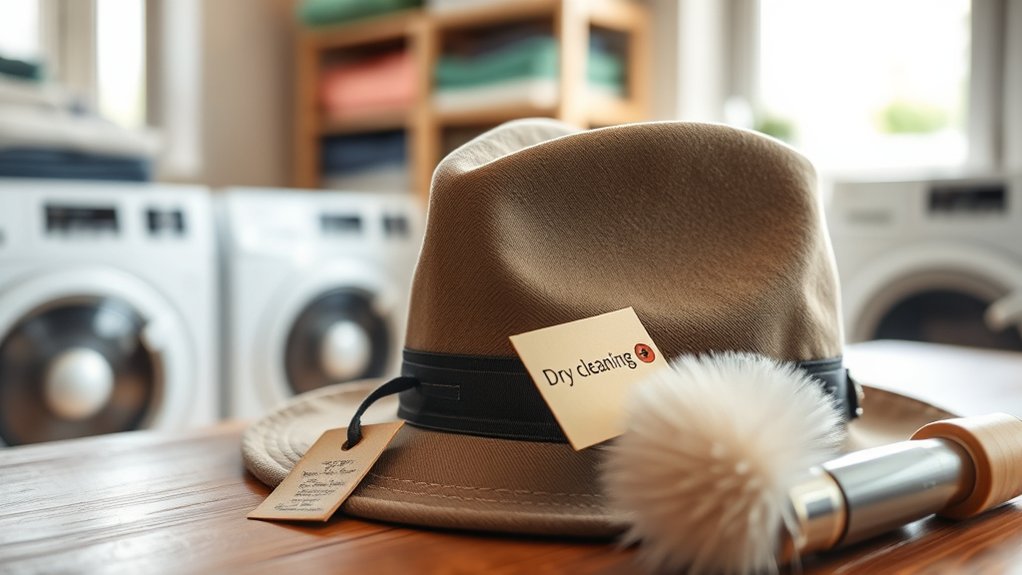
You can dry clean some hats made from felt or wool, but it’s always best to check the care label first.
When it comes to straw hats with fine weaves, silk hats, or those with plastic, glue, or embroidery, you’ll want to avoid dry cleaning. The chemicals used can really damage these materials.
Leather hats are a different story—they’re especially vulnerable. It’s a good idea to never dry clean leather hats because it can cause cracking and deterioration over time.
Hats Suitable For Dry Cleaning
When determining whether a hat can be dry cleaned, the material plays a crucial role in protecting its shape and integrity. Felt and wool hats are generally safe to dry clean, but you should always check the care label to confirm.
Delicate fabrics like silk and hats with glued or plastic components are not suitable for dry cleaning. Proper identification helps avoid damage and maintains the hat’s longevity.
| Hat Material | Dry Cleaning Suitability |
|---|---|
| Felt & Wool | Safe, if care label permits |
| Straw (fine weave) | Unsafe, solvents cause warping |
| Silk & Delicate Fabrics | Not recommended for dry clean |
Materials To Avoid
Why should you steer clear of dry cleaning certain hat materials? Dry cleaning can harm delicate materials like straw, silk, and leather because of the harsh solvents involved.
Straw hats with fine weaves risk fabric damage since the chemicals can weaken their structure.
Silk hats might fade in color and deteriorate, while leather can dry out, crack, or lose its shape.
Cotton hats with stiff brims, especially those containing cardboard, can warp or split when exposed to solvents.
Synthetic blends with glued features also risk adhesive failure during dry cleaning.
It’s really important to understand these material care concerns to avoid irreparable damage. To protect your hats, always check the fabric type before choosing dry cleaning, as some materials just aren’t compatible with the solvents used in this process.
Hat Types That Should Never Be Dry Cleaned
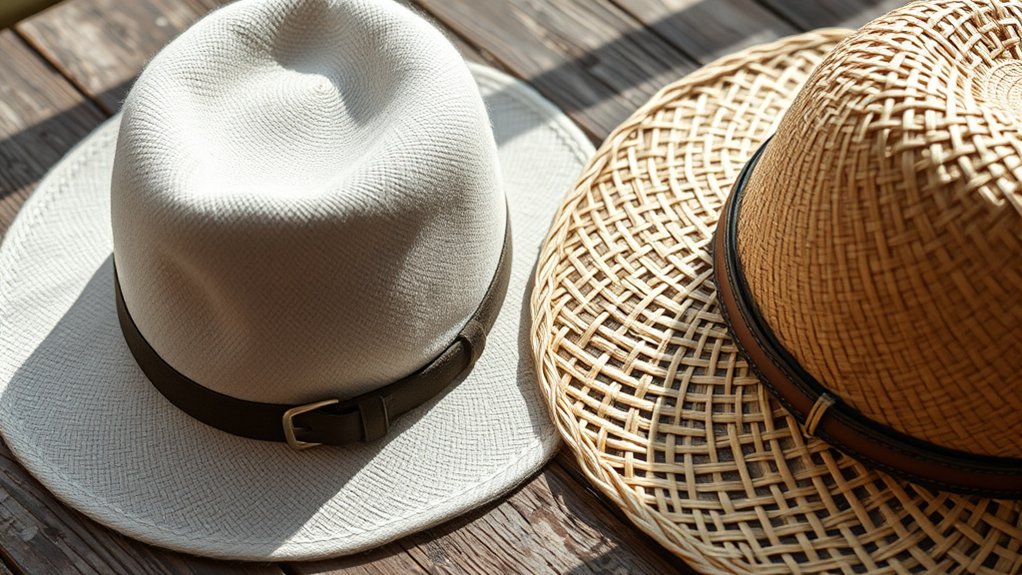
You’ll want to steer clear of dry cleaning hats made from materials like straw, silk, leather, and some cotton blends. The solvents used can really mess with them—think warping, cracking, or losing their shape altogether.
Also, if your hat has glued parts or a stiff brim with cardboard inside, dry cleaning is especially risky. Those components don’t hold up well and can get damaged pretty easily.
Knowing these risks can save your favorite hats from some serious, irreversible damage. So, it’s definitely worth taking a little extra care!
Materials To Avoid
Although dry cleaning offers a convenient solution for many garments, certain hat materials should never undergo this process. Straw hats with fine weaves can easily suffer material damage from dry cleaning solvents, and this can alter their shape.
Cotton hats with stiff brims, especially those containing cardboard, risk warping when exposed to dry cleaning chemicals.
Delicate fabrics like silk lose their luster and may even stain when treated with these chemicals.
Synthetic blends with glued components can deteriorate or delaminate, which compromises the hat’s structure.
And most importantly, leather hats should never be dry cleaned. Solvents cause the leather to crack, stiffen, or discolor in ways that can’t be fixed.
To keep your hats looking their best, avoid dry cleaning these sensitive materials. Instead, go for safer, specialized care methods that are made just for them.
Risks Of Dry Cleaning
When you consider dry cleaning a hat, it’s crucial to recognize the risks certain materials face during the process.
Straw hats with fine weaves can crack or lose shape due to harsh solvents. Cotton hats with stiff brims, especially those containing cardboard, risk warping or splitting.
Delicate fabrics like silk are highly vulnerable to chemical damage, which can lead to discoloration or weakening of fibers.
Synthetic blends with glued components may deteriorate or separate when exposed to dry cleaning solutions.
Leather hats should never be dry cleaned because the process strips natural oils, causing stiffness and cracking.
To keep your hats in good shape, avoid dry cleaning these sensitive types. Instead, opt for gentler cleaning methods that suit the material’s needs.
It’s all about treating your hats with care so they last longer.
How Dry Cleaning Affects Hat Shape and Structure
Because dry cleaning machines use agitation and strong chemicals, they can easily distort a hat’s shape, especially if it has a structured form or is vintage. The dry cleaning process involves heat and solvents that may weaken or warp the brim and crown, risking permanent damage.
Dry cleaning’s heat and chemicals can easily warp or weaken structured or vintage hats, causing lasting damage.
Hats with cardboard brims are particularly vulnerable to warping or splitting due to moisture and chemical exposure. Maintaining material integrity during cleaning is critical for structural preservation.
While some materials like felt and wool might hold their shape better, this really depends on expert handling. If the dry cleaning process isn’t carefully managed, you risk irreversible deformation.
Understanding these effects helps you protect your hat’s shape and longevity when considering dry cleaning.
Safe Alternatives to Dry Cleaning Hats
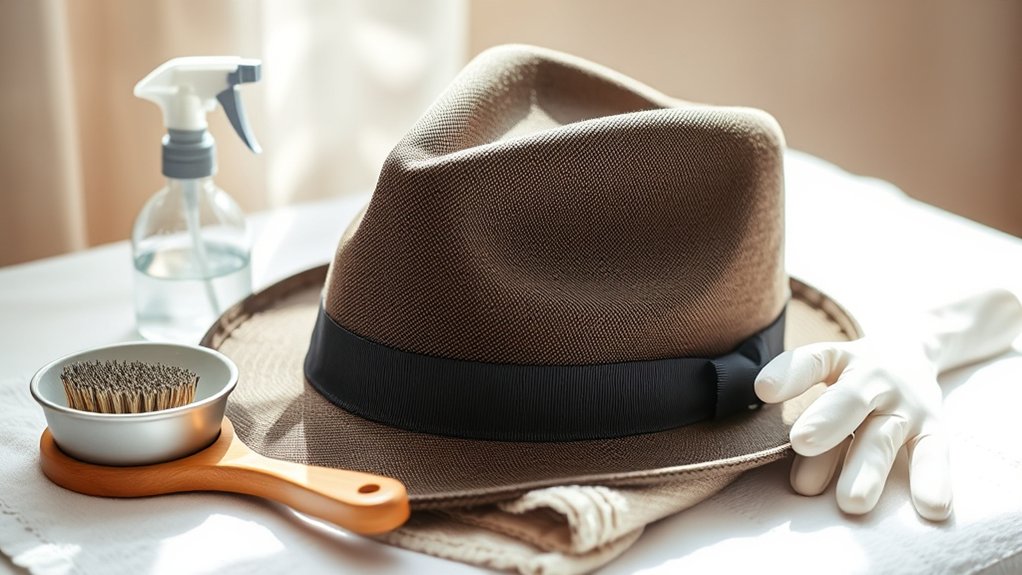
How can you keep your hats clean without risking damage from dry cleaning? Opt for hand wash with mild soap and water, especially for delicate materials like wool or felt. Use spot cleaning for stains with diluted detergent or baking soda.
Regularly brush off dust with a soft brush to maintain appearance. Always air dry hats on a rounded object to keep their shape, avoiding heat sources. If you’re thinking about using a washing machine, choose the gentle cycle and place hats in a protective bag.
| Method | Tip |
|---|---|
| Hand Wash | Use mild soap, lukewarm water |
| Spot Cleaning | Diluted detergent or baking soda |
| Dust Removal | Soft-bristled brush |
| Drying | Air dry on a rounded object |
| Machine Washing | Gentle cycle, protective bag |
Removing Dust and Stains From Hats at Home
Although hats are often made from delicate materials, you can effectively remove dust and stains at home using simple techniques. Start by regularly cleaning hats with a soft-bristled brush or lint roller to remove surface dust and loose dirt.
Regularly use a soft brush or lint roller to gently remove dust and dirt from delicate hats.
For stain removal, gently dab a diluted laundry detergent or mild soap solution onto the affected area using a soft cloth. Avoid harsh scrubbing to prevent damage.
Spot cleaning with a damp cloth is safer than putting your hat in the washing machine on a delicate cycle because that can distort its shape.
You can also use steam briefly to loosen dirt and refresh the material.
After cleaning, always air dry your hat completely. While it’s still damp, carefully reshape it to keep its original form.
How to Wash Hats Without Losing Their Shape
After removing dust and stains, washing your hat properly is key to keeping its shape intact. Start with hand washing using a gentle detergent to avoid damaging delicate materials.
Avoid twisting or wringing the hat, as this distorts both the crown and brim, compromising shape preservation.
Once cleaned, reshape the hat while it’s still damp to maintain its original form. You can use a rounded object like a ball or bowl to support the crown during air drying.
Air drying flat or over a curved surface guarantees the hat retains its natural contour and prevents deformation.
Quick and careful reshaping after washing locks in the structure, so don’t skip this step if you want your hat to look like new. It really makes a difference, and your hat will thank you for it!
Drying and Reshaping Hats After Cleaning
When you finish cleaning your hat, reshape it immediately while it’s still damp to preserve its original form. Insert a rounded object like a ball or rolled towel inside to support the crown and maintain shape.
Reshape your hat while damp, using a ball or towel inside to keep its crown perfectly formed.
Air dry your hat in a cool, shaded area, avoiding direct sunlight or heat sources that can warp or shrink the material. Never use a hairdryer or direct heat for drying, as it risks damaging the hat’s structure.
Check your hat regularly during drying and gently reshape the brim or crown if needed to keep its form intact. Proper reshaping and air drying also help prevent mold growth by ensuring the hat dries evenly and thoroughly.
This way, you’re not just keeping it looking good, but also making it last longer. Just a little care goes a long way!
Frequently Asked Questions
How Often Should I Clean My Hat to Maintain Its Condition?
You should clean your hat every 1 to 3 months if you wear it regularly, but this depends on how much sweat and dirt it gets.
If you don’t wear it that often, cleaning it every 6 to 12 months is usually fine.
Try not to over-clean your hat because that can damage the material and mess up its shape.
Instead, use regular brushing and spot cleaning between washes to keep it fresh.
This way, you’ll extend the time between full cleanings and keep your hat in great condition.
It’s a simple approach that really works!
Can Dry Cleaning Remove Odors From Hats Effectively?
Imagine you’ve got a favorite baseball cap soaked in smoke odor after a concert. Dry cleaning can effectively remove such stubborn smells by penetrating deep into the fabric and neutralizing odor-causing bacteria.
However, if the odor’s really persistent, you might need additional treatments like ozone cleaning. Just remember, delicate materials may require special care to guarantee odors don’t linger.
Proper dry cleaning leaves your hat smelling fresh and clean.
Are There Special Storage Tips to Keep Hats Fresh After Cleaning?
Yes, you should store hats in a cool, dry place away from sunlight to keep them fresh after cleaning.
Use a hat box or a breathable fabric bag to maintain shape and protect from dust.
Don’t stack hats to avoid crushing.
Stuff the inside with tissue paper or a soft cloth to help retain their shape.
Avoid humidity and moisture because they can cause mold or warping over time.
Taking these steps will really help your hats stay looking great longer.
Can I Use a Hat Cleaning Spray Instead of Washing or Dry Cleaning?
You can use a hat cleaning spray instead of washing or dry cleaning for light freshening and minor stains. These sprays quickly deodorize and disinfect, but they won’t remove heavy dirt or sweat buildup.
Be cautious, though. Overusing sprays may leave residues that harm delicate fabrics or cause discoloration.
Always test the spray on a hidden spot first to make sure it won’t damage your hat’s material or design before you use it regularly.
How Do Professional Hat Cleaners Differ From Regular Dry Cleaners?
Professional hat cleaners treat your hat like a sculptor with clay. They carefully preserve its shape using specialized blocks and steamers. Unlike regular dry cleaners, they manually inspect your hat and use gentle, tailored solvents to prevent damage.
You’ll get expert stain treatments plus reshaping and finishing touches that standard cleaners simply don’t offer. This precise care guarantees your hat stays pristine and perfectly structured, no matter the material.
It’s all about keeping your hat looking its best for longer.
Conclusion
Dry cleaning your hat can be a double-edged sword. While it might seem like a quick fix, it risks warping its shape or damaging delicate materials.
Think of your hat as a fragile treasure. Treating it with gentle, at-home care helps preserve its charm.
Opt for spot cleaning, gentle hand washing, and careful drying to keep your hat looking sharp. With the right touch, your hat will stay as fresh and sturdy as the day you bought it.