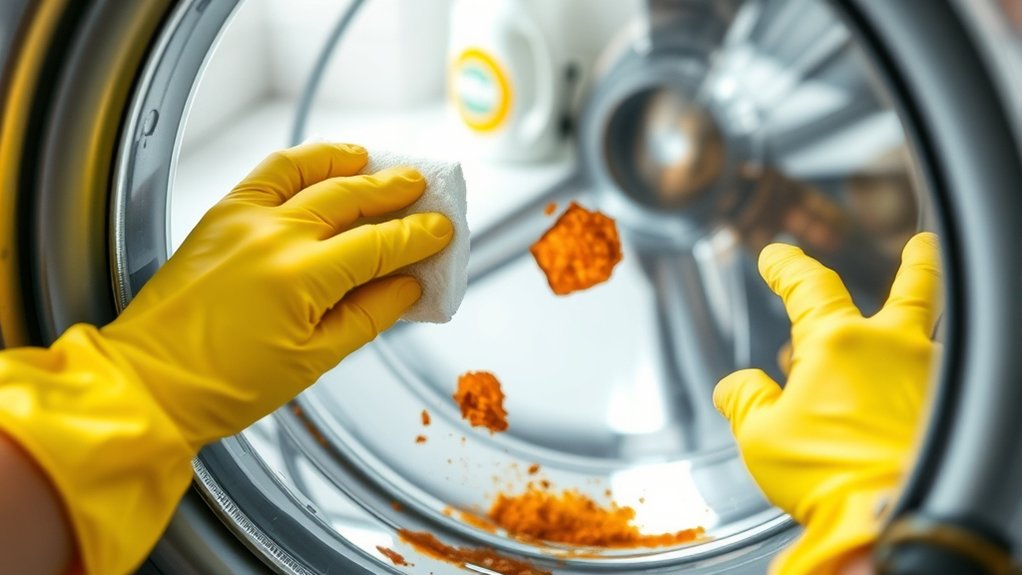
How To Clean Rust From Washing Machine – Guide
To clean rust from your washing machine, first inspect the drum, gasket, and metal parts for rust or stains. Use natural acids like vinegar or lemon juice to dissolve rust by running a hot cycle with 2 cups of vinegar or applying lemon juice and salt on spots.
For tougher rust, carefully apply CLR following product guidelines. Regularly wipe moisture and consider water filtration to prevent rust. Knowing when to repair or call a pro guarantees lasting results.
Further details will help you manage rust effectively. Just take it step by step, and your washing machine will stay rust-free for longer.
How To Identify Rust In Your Washing Machine
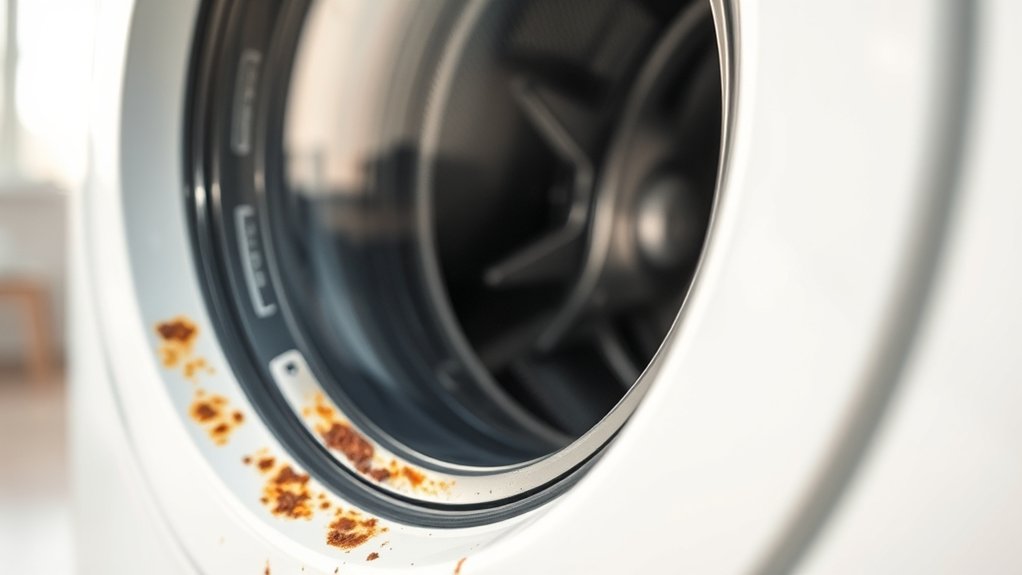
How can you tell if your washing machine has rust? Start by inspecting the drum, door gasket, detergent dispenser, and other metal components for visible rust buildup or discoloration.
Internal rust often shows up as reddish-brown or orange stains inside the machine.
Also, check your clothes after washing. If you notice persistent rust stains, it’s a good sign there’s rust inside the machine. These stains might also come from rusted water pipes or high iron content in your water supply.
To accurately identify rust, look over all accessible areas for corrosion or discoloration. Repeated discoloration inside the washer usually means rust is building up.
Easy Home Remedies To Remove Rust Inside Your Washer
You can use vinegar or lemon juice to dissolve rust inside your washer because they’re naturally acidic. Just pour some in and let it work its magic.
If you’ve got stubborn rust spots, try making a paste with baking soda and water. Apply it directly to the rust, and it’ll help lift that buildup right off.
These simple remedies are great because they keep your machine in good shape without any harsh chemicals. Easy and effective!
Vinegar And Lemon Juice
Although rust stains can be stubborn, using vinegar and lemon juice provides an effective, natural solution to remove rust inside your washing machine. Add 2 cups of vinegar to the drum and run a hot cleaning cycle. The acetic acid dissolves rust stains and loosens buildup on internal components.
Alternatively, lemon juice’s citric acid breaks down iron oxide deposits efficiently. For targeted rust removal, apply lemon juice mixed with salt directly to rust spots and let it sit before running the cleaning cycle.
Regularly using vinegar or lemon juice in your cleaning routine prevents rust formation and extends your washer’s lifespan. This method offers a safe, chemical-free approach to maintaining rust-free surfaces and ensuring ideal washer performance.
Give it a try—you’ll be surprised how well it works!
Baking Soda Paste
When rust forms inside your washing machine, applying a baking soda paste offers a straightforward and effective cleaning solution. Mix equal parts baking soda and water to create a thick baking soda paste suitable for rust removal.
Apply the paste directly onto rust stains on the drum or other affected surfaces.
Let it sit for 15-20 minutes to loosen rust particles.
Next, gently scrub the rusted areas using a soft cloth or brush, making sure you don’t damage the surface.
After scrubbing, rinse thoroughly with clean water to get rid of any leftover baking soda and rust debris.
Try to use this baking soda paste regularly as part of your cleaning routine. It helps prevent future rust buildup inside your washing machine, keeping it working well and looking good.
How To Use CLR To Remove Washing Machine Rust
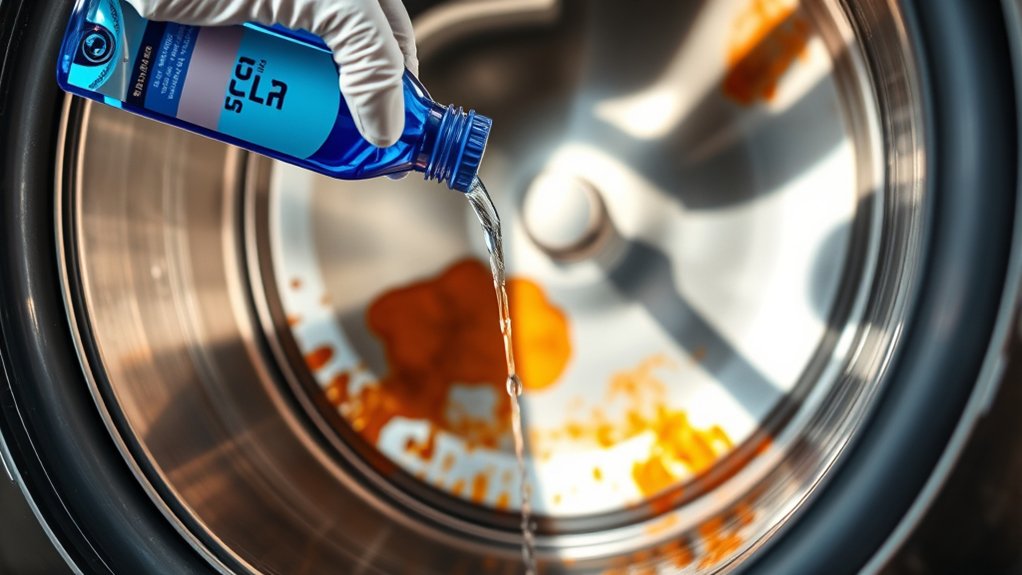
Start by pouring ½ cup of CLR directly into the washing machine tub or the detergent compartment. Then, run a full hot cycle to help dissolve those stubborn rust deposits.
If you have a front-loader, it’s a bit different—you’ll want to add ¼ cup of CLR mid-cycle. After that, make sure to follow up with an extra rinse to ensure all the rust and cleaner are completely washed away.
Using CLR regularly can really help keep your machine rust-free. Just remember, never mix it with other cleaners to avoid any unwanted reactions.
CLR Application Steps
To remove rust from your washing machine using CLR, you’ll need to run a cleaning cycle with the right amount of the product based on your machine type. For top-loading machines, add ½ cup of CLR directly into the tub and run the hottest empty cycle.
Front-loaders require ½ cup of CLR in the detergent compartment. Then, run a standard cycle plus an extra rinse. High-efficiency models only need ¼ cup to avoid damage.
Always make sure the machine is empty before starting. Follow the product contact time instructions to effectively dissolve interior buildup and rust.
| Machine Type | CLR Amount | Cycle Instructions |
|---|---|---|
| Top-Loading | ½ cup | Hot empty cycle |
| Front-Loading | ½ cup | Standard + rinse cycle |
| High-Efficiency | ¼ cup | Hot empty cycle |
Cleaning Frequency Recommendations
Maintaining a consistent cleaning schedule with CLR prevents rust buildup and preserves your washing machine’s internal components. For effective rust removal and maintenance, clean your machine every 1 to 3 months.
If your washing machine is prone to rust, monthly cleaning with CLR is advisable to extend its lifespan.
Always follow manufacturer instructions when using CLR. Typically, run a full cycle with ½ to 1 cup of CLR. For high-efficiency or water-saving models, limit CLR to ¼ cup per cycle.
This cleaning frequency dissolves mineral deposits and rust, ensuring peak performance.
Sticking to this schedule not only prevents corrosion but also keeps your washing machine running efficiently and lasting longer.
How To Clean Top Loading Washing Machines
How often do you clean the inside of your top-loading washing machine to prevent rust buildup? To effectively remove rust stains, run an empty cycle on the hottest setting and add ½ cup of rust remover, such as CLR Calcium, Lime & Rust Remover, just before agitation begins.
Clean your top-loading washer monthly by running a hot cycle with rust remover before agitation.
Stop the cycle right before agitation to allow the remover to dissolve mineral deposits and rust inside the drum.
This cleaning method targets rust stains directly and helps maintain your machine’s peak performance. For regular maintenance, repeat this process monthly or as needed based on your water quality and machine age.
Always follow the rust remover’s manufacturer instructions to ensure safe, effective cleaning of your top-loading washing machine and prevent further rust accumulation.
How To Clean Front Loading Washing Machines
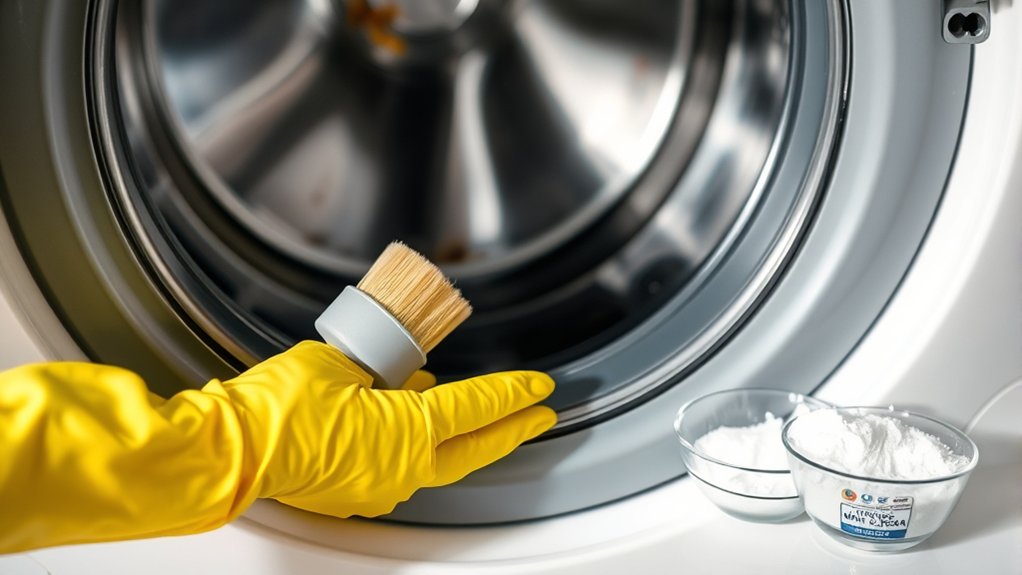
Although front-loading washing machines are designed to minimize water usage, rust can still accumulate inside the drum over time. To effectively remove rust buildup, add ½ cup of CLR Calcium, Lime & Rust Remover to the detergent dispenser or softener compartment.
For high-efficiency or water-saving models, reduce the amount to ¼ cup to avoid damage.
Run a standard cleaning cycle on the hottest water setting to dissolve rust stains and mineral deposits. After the cleaning cycle, initiate a full rinse cycle to guarantee all rust remover residues are flushed out.
Repeat this process every 1-3 months to maintain your front-loading washing machine’s performance and prevent further rust buildup. This routine prevents rust stains and extends your machine’s lifespan.
How To Remove Rust Stains From Clothes Washed In Your Machine
Cleaning rust from the washing machine drum helps reduce the risk of rust stains transferring onto your clothes. To remove rust stains effectively, follow these steps:
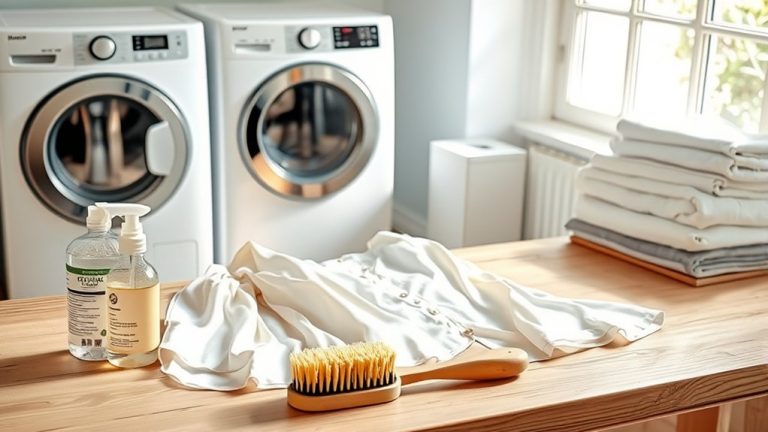
- Apply a commercial rust remover or a vinegar and salt paste directly to the rust stains on the fabric. Let the treatment sit briefly, then gently scrub with a soft brush if the stain is stubborn.
- Wash the clothes in cold or lukewarm water to prevent setting the rust stains. Avoid drying the garments until the rust stains are completely removed, as heat can set them permanently.
Promptly treating rust stains and maintaining your washing machine guarantees better stain removal and preserves your clothes’ appearance. It’s definitely worth the effort to keep your clothes looking their best!
How To Repair Exterior Rust Spots On Your Washer
When you notice rust spots forming on your washer’s exterior, it’s a good idea to tackle them right away. Doing so will stop the rust from spreading and causing more damage. Start by sanding the rusty areas with 150-grit wet/dry sandpaper. This helps remove loose rust and smooths out the surface.
If you come across deep rust spots, go ahead and apply some auto body filler. Once it’s dry, sand it down until it’s nice and smooth. After that, put on a rust-inhibiting primer to the areas you’ve prepared.
Finally, finish up by painting over the primed spots with enamel paint that matches your appliance. This will make the repair look seamless and keep your washer looking great.
| Step | Action |
|---|---|
| Sanding | Remove rust with 150-grit sandpaper |
| Filling (if needed) | Apply and smooth auto body filler |
| Priming & Painting | Use rust-inhibiting primer and enamel paint |
Keep an eye on your washing machine regularly to catch rust early. That way, you can keep its exterior rust-free for the long haul.
How To Prevent Rust Buildup In Your Washing Machine
Since rust buildup in your washing machine mainly comes from iron in your water and moisture hanging around, it’s really important to take some steps to stop it.
Rust in your washing machine often comes from iron in water and lingering moisture, so prevention is key.
Here are some key things you can do to keep rust at bay:
- Install a whole-house water filtration system, like Culligan’s Smart HE Iron-Cleer® or Iron-OX5. These help cut down the iron in your water and reduce rust stains.
- Make it a habit to test your water quality regularly. That way, you can catch high iron levels early and tweak your filtration if needed.
- Wipe down both the inside and outside of your washer often. This stops moisture from sticking around and speeding up rust.
- Don’t forget to schedule professional maintenance once a year. A pro can check inside your machine and catch any rust problems before they get serious.
When To Call A Professional For Rust Repairs
Although minor rust spots can often be managed with routine cleaning, you should call a professional if you notice structural damage or internal components failing due to rust.
Persistent rust stains or spreading rust indicate underlying issues that require professional repair services.
Extensive rust, especially around the drum or internal parts, often signals the need for expert assessment. If you detect water leaks or corrosion compromising your washing machine’s safety or performance, don’t delay contacting a technician.
Rust damage involving repainting or replacement of internal parts demands specialized tools and expertise only professionals possess.
Addressing internal component failure promptly can prevent further deterioration and costly repairs.
Trust professional repair services to accurately diagnose and resolve rust-related problems, ensuring your washing machine functions safely and efficiently.
Frequently Asked Questions
Can Rust in Washing Machines Cause Health Issues?
Yes, rust in washing machines can cause health issues. When rust forms, it harbors bacteria and mold, which can trigger skin irritations or allergic reactions.
Iron oxide particles may contaminate your clothes, posing risks for sensitive skin or respiratory problems.
Prolonged exposure increases corrosion, leading to leaks and water contamination.
To protect your health, you should regularly inspect and remove rust. This helps prevent harmful microorganisms from thriving in your machine.
Are Rust Removers Safe for All Washing Machine Materials?
Rust removers aren’t a one-size-fits-all solution; think of them as specialized tools in a toolbox. You can safely use acid-based removers like CLR on stainless steel and porcelain, but they may harm sensitive plastics or rubber parts inside your machine.
Always check your manufacturer’s guidelines and test a small, hidden area first.
Use the correct concentration and rinse thoroughly to prevent damage or corrosion to your washing machine components. It’s better to be cautious than to risk ruining parts of your machine.
Just take your time and follow the instructions carefully.
How Long Does Rust Removal Usually Take?
Rust removal usually takes between 30 minutes to a few hours, depending on rust severity and treatment method.
Light surface rust you can remove within 30 to 60 minutes using vinegar or baking soda.
For heavier rust, expect multiple sessions over several days. Chemical rust removers typically need 10-20 minutes to work before scrubbing.
Always assess the affected area size and rust type to estimate your total cleaning time accurately.
It really helps to know what you’re dealing with before you start.
Can Rust Affect Washing Machine Performance?
Rust can definitely throw a wrench in your washing machine’s performance. It clogs valves and hoses, restricting water flow and reducing wash efficiency. Rust particles can stain your clothes, and corrosion might lead to leaks, risking water damage.
Over time, this wear shortens your machine’s lifespan. To keep your washer running smoothly, you need to regularly inspect and remove any rust buildup before it causes serious damage.
It’s all about catching the problem early and staying on top of maintenance.
Is It Possible to Recycle Parts From a Rusty Washing Machine?
Yes, you can recycle parts from a rusty washing machine. You’ll need to remove corrosion and any flaking paint to meet recycling facility standards. Focus on steel and ferrous metals, as they’re highly recyclable.
Before recycling, check local regulations for appliance disposal guidelines.
Properly cleaned parts reduce environmental waste and conserve resources by allowing metal to be melted down for new products.
Follow these steps carefully to guarantee compliance and maximize recycling efficiency. It’s worth the effort to help the environment and give old materials a new life.
Conclusion
So, you’ve battled rust in your washing machine and lived to tell the tale. Congratulations! It’s kind of ironic how something that cleans your clothes can get so dirty itself.
But now, armed with home remedies, CLR, and prevention tips, you’re more than ready to keep rust at bay. Just remember, if rust claims victory despite your efforts, calling a professional isn’t admitting defeat—it’s smart maintenance.
After all, even machines need a little TLC.