Does Downy Clean Clothes – Quick Answer
No, Downy won’t clean your clothes on its own. You need laundry detergent to remove dirt, sweat, oils, and stains. Downy is a fabric softener, not a detergent substitute.
It conditions fibers after washing, helping clothes feel softer, smell fresh, and resist static and wrinkles. Add detergent to its designated dispenser or the drum, then pour Downy into the softener compartment.
If you washed with Downy alone, run another cycle with detergent. You’ll also find out when softener may be best avoided.
Does Downy Clean Clothes on Its Own?
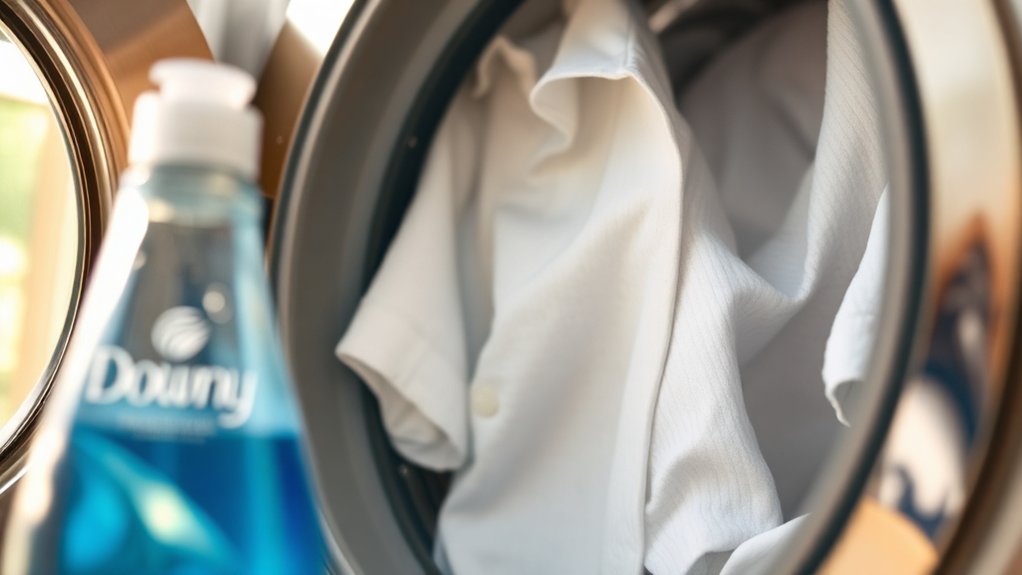
No, Downy doesn’t clean clothes on its own. You need detergent to remove dirt, sweat, oils, and everyday stains from your laundry.
Downy is a fabric softener, not a substitute for laundry detergent, so adding it alone won’t wash your clothes clean.
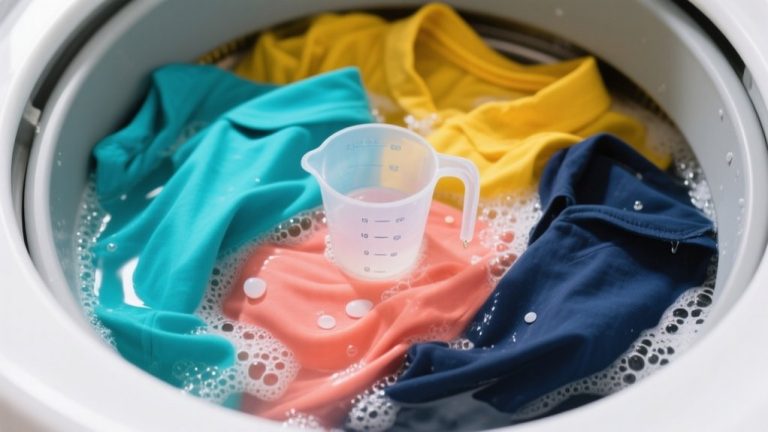
For a proper wash, measure detergent according to the product label and your load size. Add it to the washer’s detergent compartment or drum, following your machine’s instructions.
If you choose to use Downy too, add it only as directed on its label, usually in the fabric-softener dispenser.
Don’t pour Downy into the detergent compartment or mix it with detergent unless the product instructions say you can.
If you’ve already washed clothes with Downy alone, run another cycle with detergent to clean them.
What Does Downy Softener Actually Do?
While detergent cleans your clothes, Downy softener conditions the fabric after washing. It coats fibers with conditioning ingredients, changing how they feel and behave.
You’ll notice several practical effects:
Downy softener can make laundry feel softer, reduce static and wrinkles, and leave behind a fresh scent.
- Softer feel: Your towels, shirts, and bedding can feel smoother against your skin.
- Less static: Softener helps reduce cling, so garments separate more easily after drying.
- Fewer wrinkles: Treated fabrics may crease less, making some items easier to wear or care for.
- Added fragrance: Downy can leave a scent on your laundry, with options ranging from light to long-lasting.
You don’t need softener for every load. Check garment labels first, since some fabrics, such as moisture-wicking athletic wear, can lose performance when coated.
Use the amount listed on the product label; adding extra won’t necessarily improve results.
What Actually Removes Dirt and Stains?
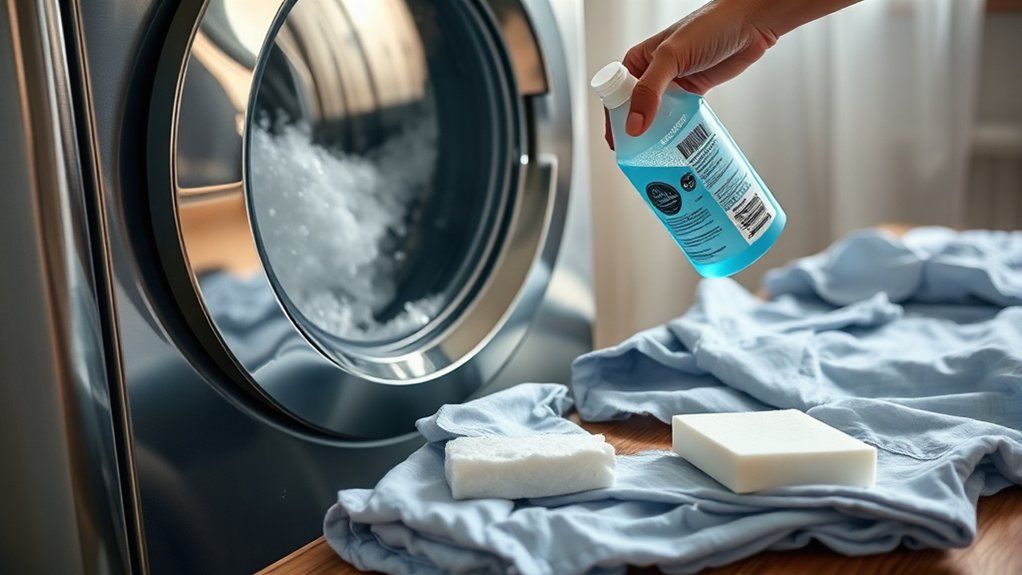
Detergent does the main work of removing dirt and stains: its cleaning agents loosen soils and help lift them from fabric so they can rinse away. Surfactants surround oily grime, while enzymes target specific stains, such as food, grass, or sweat.
Water carries the loosened residue out during rinsing, and the wash action helps free particles trapped between fibers.
For best results, choose a detergent suited to your laundry and follow its label directions. Treat stubborn marks promptly with a stain remover or a small amount of detergent, checking that the product is safe for the fabric.
Don’t overload the washer; clothes need room to move so water and detergent can reach them.
Check stained items before drying, since heat can set some marks. Downy may soften fabric or add fragrance, but it isn’t a substitute for detergent or stain treatment.
How to Use Downy With Detergent
To use Downy with detergent, add detergent to the washer’s designated dispenser or drum. Then pour Downy fabric softener into the softener compartment. Follow these steps for a smooth wash:
Add detergent to its designated spot, then pour Downy into the softener compartment for a smooth wash.
- Check your washer’s manual to confirm where each product goes.
- Measure detergent and Downy according to their labels and your load size.
- Pour detergent into its dispenser, or add it directly to the drum if your washer’s instructions allow.
- Add Downy to the marked softener compartment. Don’t pour it directly onto clothes, as it may leave spots.
Start the cycle and let the washer release each product at the right time.
If your machine lacks a softener dispenser, follow its manual for the correct method.
Keep products in their original containers and avoid exceeding the recommended amounts for your load.
When Should You Skip Fabric Softener?
When should you skip fabric softener? Skip it whenever it could reduce a garment’s performance or damage its fibers.
Fabric softener can coat moisture-wicking workout clothes, waterproof outerwear, and flame-resistant sleepwear, making them less effective. Check each item’s care label and follow its instructions.
You should also avoid softener on towels if you want them to stay absorbent. The coating can reduce how well they soak up water.
For the same reason, skip it on microfiber cloths, which rely on their fibers to trap dust and absorb spills.
If you have sensitive skin, fragrance or other ingredients may irritate you. Try an unscented alternative or leave softener out.
When in doubt, use detergent alone; it cleans your clothes, while softener is optional.
Frequently Asked Questions
Can Downy Cause Skin Irritation or Allergic Reactions?
Yes, Downy can cause skin irritation or an allergic reaction in some people.
Fragrances, preservatives, or other ingredients may trigger itching, redness, rash, or hives, especially if you have sensitive skin.
If you notice symptoms, stop using the product and rewash affected clothing with a fragrance-free detergent.
Seek urgent medical care for trouble breathing or facial swelling.
For persistent or severe skin symptoms, contact a healthcare professional and check the product label for ingredients.
Is Downy Safe for Septic Systems?
Yes, Downy is generally safe for septic systems when you use it as directed. Your septic tank won’t explode into a laundry-scented volcano.
Use the recommended amount since excessive fabric softener can add unnecessary chemicals and contribute to buildup.
Don’t pour concentrated product directly into a drain, and avoid flushing wipes or other solids.
If your system’s manufacturer or service professional gives specific guidance, follow it to protect your tank and drain field.
Can Downy Expire or Lose Effectiveness Over Time?
Yes, Downy can lose effectiveness over time, though it typically doesn’t have a strict expiration date.
You’ll get the best results if you store it tightly closed in a cool, dry place, away from direct sunlight and extreme temperatures.
Over time, ingredients may separate, thicken, or develop an unusual smell.
Shake the bottle if separation looks minor, but discard the product if it stays lumpy, smells off, or no longer works as expected.
Does Downy Leave Residue in Washing Machines?
Yes, Downy can leave residue in your washing machine, especially if you use too much, pour it directly onto clothes, or wash mostly in cold water.
You may notice a waxy film, buildup in the dispenser, or lingering odors.
Use the measured amount, add it to the dispenser, and clean that compartment regularly.
Run an empty hot-water cycle or use your washer’s cleaning cycle to remove buildup and help keep your machine fresh.
Is Downy Safe to Use on Baby Clothes?
Yes, you can use Downy on baby clothes, but check the product label and your baby’s skin sensitivity first.
Fragrances and other ingredients may irritate sensitive skin, especially in newborns or babies with eczema.
You’ll often do best with a fragrance-free detergent and no fabric softener.
If you choose Downy, use the recommended amount, rinse clothes thoroughly, and stop using it if you notice redness, itching, or a rash.
Conclusion
Downy doesn’t clean clothes on its own: it softens fabric, reduces static, and adds fragrance. Detergent does the cleaning, lifting dirt and stains during the wash.
Think of laundry as a simple team: detergent = clean; Downy = soft and fresh****. Add Downy only as directed, and skip it for towels, moisture-wicking gear, or fabrics whose care labels advise against softener.
For cleaner clothes, choose the right detergent, dose, and wash cycle.