Can You Mix Oxiclean And Vinegar In Washing Machine – Guide
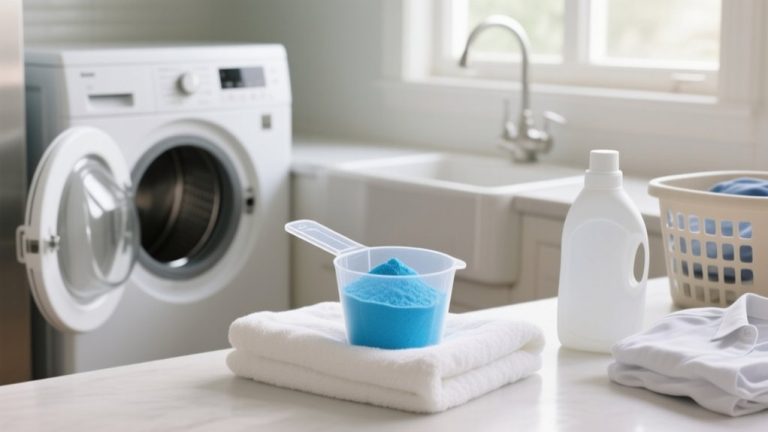
No, you shouldn’t mix OxiClean and vinegar in your washing machine. OxiClean releases hydrogen peroxide, while vinegar contains acetic acid. Combining them can reduce cleaning effectiveness and cause excess foaming or unpredictable effects on fabrics and washer parts.
Use OxiClean as directed for stains, then add plain white vinegar separately during the rinse cycle only if your care labels and machine allow it. If you’ve already mixed them, stop the cycle, ventilate, and rinse the washer thoroughly. The steps below explain how to use each safely.
Can You Mix OxiClean and Vinegar?
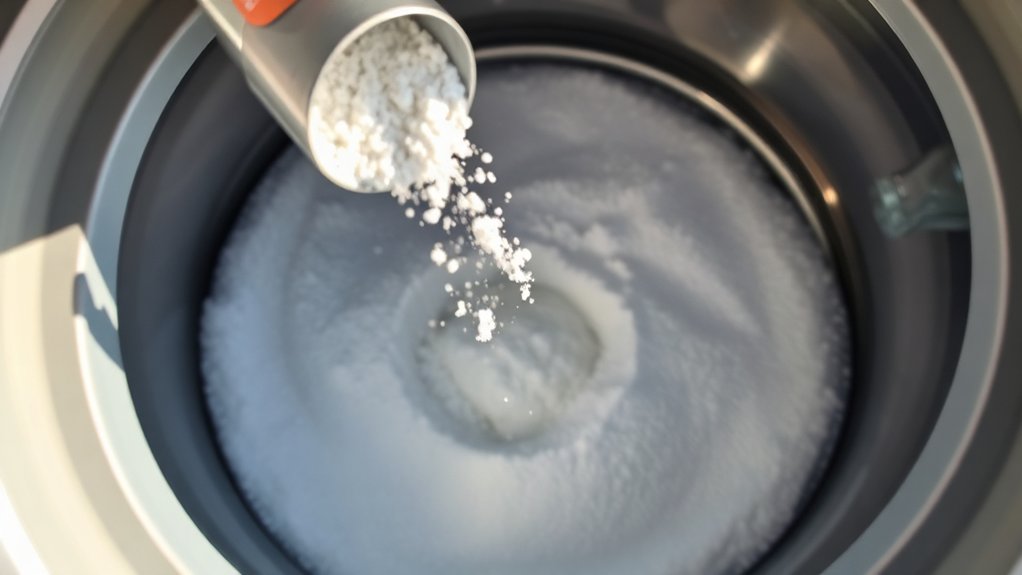
Can you mix OxiClean and vinegar? You can use both products in your laundry routine, but don’t combine them in the same wash or container.
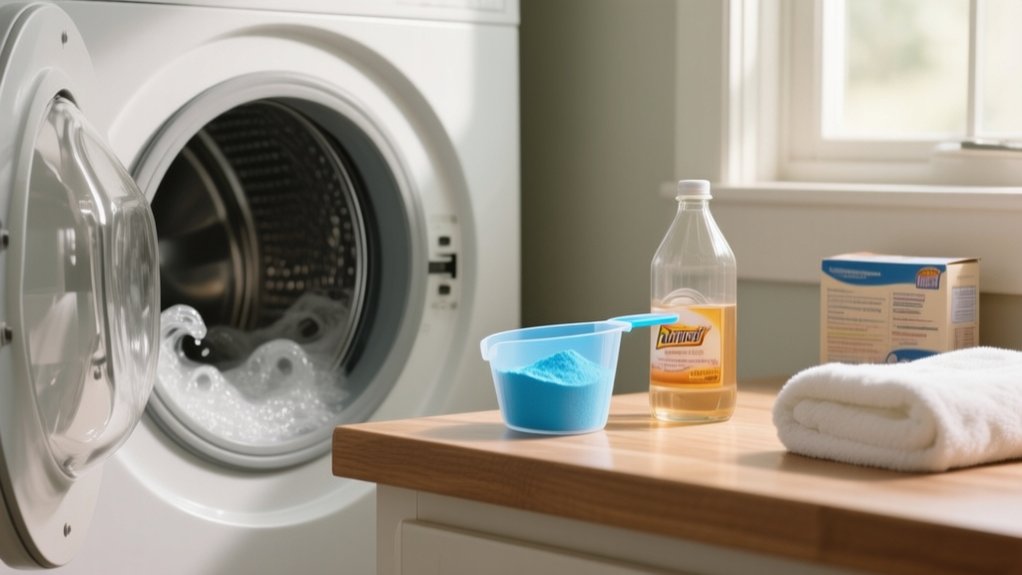
OxiClean is an oxygen-based stain remover that you add according to its label directions. Vinegar is an acidic laundry additive commonly used in the rinse cycle. If you want to use each, apply them separately and follow the instructions on both labels.
For example, you can pretreat a stain with a properly diluted OxiClean solution, then wash the garment as directed.
If you choose to use vinegar, add it later in the rinse cycle rather than pouring it into the detergent compartment with OxiClean.
Check your fabric’s care label first, and test products on an inconspicuous area when you’re unsure. Don’t exceed recommended amounts.
Why OxiClean and Vinegar Should Stay Separate
Keeping OxiClean and vinegar separate helps each product work as intended and avoids unwanted reactions. OxiClean contains sodium percarbonate, which releases hydrogen peroxide in water. Vinegar contains acetic acid.
When you combine them, the acid can break down peroxide, reducing the cleaning power you expect from OxiClean. You may also create extra bubbling or foam, which can make a washer overflow or leave residue behind.
Mixing cleaners can also make it harder to predict how they’ll affect fabrics, seals, and other washer parts. Although this combination doesn’t typically produce the same dangerous gas as bleach and vinegar, you shouldn’t treat it as a useful shortcut.
Use one product at a time, follow its label, and don’t pour vinegar into a load that still contains OxiClean.
Separate use keeps results more predictable.
How to Use OxiClean for Laundry Stains and Odors
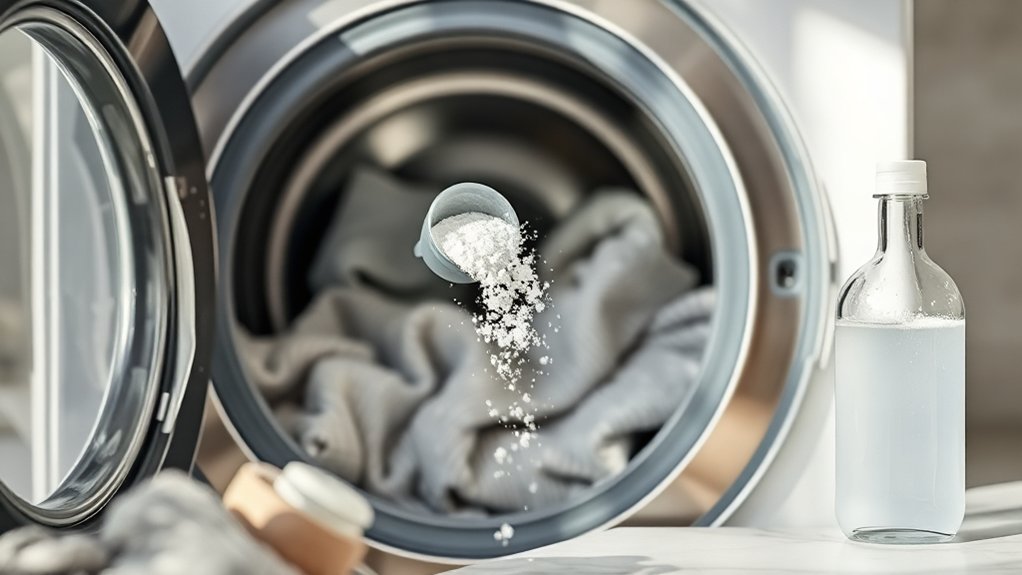
For stains and odors, use OxiClean on its own and follow the package directions for the product you have. Check the care label first, then choose a suitable OxiClean formula for your fabric and washing method.
Use OxiClean alone, follow its package directions, and check the care label before choosing a formula for your fabric and washing method.
Don’t use it on wool, silk, leather, or other materials the label excludes.
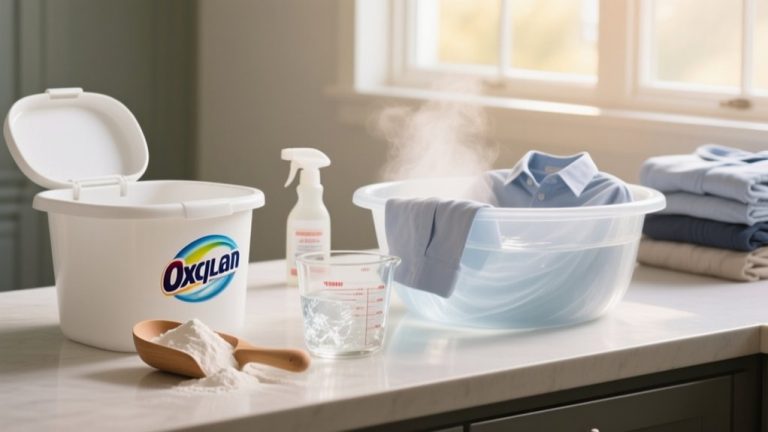
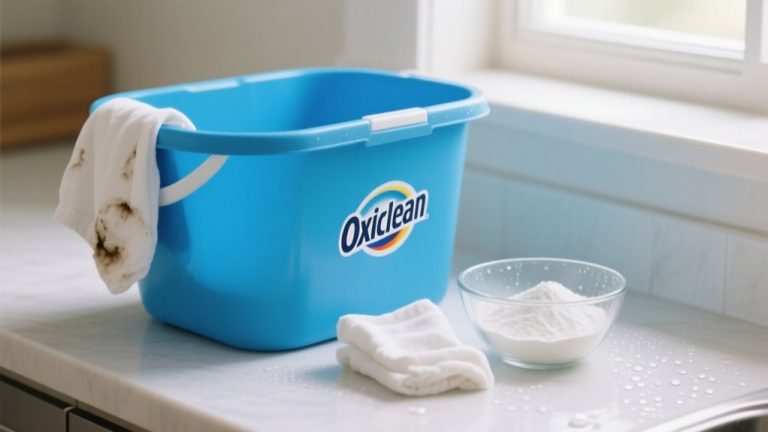
For a tough stain, dissolve the recommended amount in water and soak the item for the time stated on the package. Rinse or wash it afterward.
For routine laundry, add the directed dose to the washer’s designated dispenser or drum, as the product instructions specify. Don’t pour concentrated powder directly onto fabric.
Use the recommended water temperature and avoid overdosing. Keep the product away from children, and don’t mix it with other cleaners.
Check the stain before drying. Heat can set remaining marks.
How to Add White Vinegar to Laundry
If you use white vinegar in laundry, add it separately from OxiClean rather than mixing the two. Use plain distilled white vinegar, not colored or specialty vinegar, and follow your washer’s manual. Add it to the fabric-softener dispenser or during the rinse cycle so it won’t meet detergent or oxygen bleach in the wash.
| Goal | Where to add | Amount |
|---|---|---|
| Freshen clothes | Rinse dispenser | ½ cup |
| Soften fabrics | Rinse dispenser | ½ cup |
| Reduce detergent residue | Rinse cycle | ½ cup |
| Clean washer | Empty cycle | Check manual |
Use less for small loads and don’t exceed your machine’s recommendations. Never pour vinegar into the detergent compartment with OxiClean. Vinegar’s acidity can affect some fabrics and washer parts, so check care labels and manufacturer guidance before regular use. Skip it on delicate items that require special care.
What to Do If You Mixed Them in the Washer
If you accidentally added OxiClean and vinegar to the same wash, don’t panic. Stop the cycle and ventilate the room. Don’t lean over the washer or inhale fumes.
If you notice strong odors, coughing, breathing trouble, or eye irritation, leave the area and contact emergency services or poison control.
Once the air clears, avoid adding more products. Drain the washer if you can do so safely, then run an empty rinse cycle with cool water to flush out the mixture.
Don’t mix in bleach, ammonia, or another cleaner. If the washer still smells, repeat the rinse and check its manual before cleaning further.
Wash affected clothing separately with detergent after rinsing it thoroughly. If anyone develops symptoms, seek medical advice promptly.
For persistent odor or machine concerns, contact the manufacturer or a qualified appliance technician.
Frequently Asked Questions
Is Oxiclean Safe for Septic Systems?
Yes, OxiClean is generally safe for septic systems when you use it as directed.
Its oxygen-based cleaner breaks down into substances that are less harmful to septic bacteria than chlorine bleach. But excessive amounts can still disrupt your system.
Follow the product label, avoid dumping concentrated cleaner into drains, and don’t use it more often or in larger quantities than needed.
If your septic system is sensitive, check with its manufacturer or a professional.
Can Oxiclean Damage Colored or Delicate Fabrics?
Yes, OxiClean can damage colored or delicate fabrics if you use it incorrectly. You may see fading, color bleeding, or weakened fibers, especially on wool, silk, leather, or garments labeled dry-clean only.
Check the care label and test a hidden spot first. Use the recommended amount, follow package directions, and avoid soaking delicate items.
When you’re unsure, choose a fabric-safe detergent or ask the garment’s manufacturer for guidance.
How Should Oxiclean Be Stored Safely?
Store OxiClean in a cool, dry place, because your laundry booster shouldn’t audition for a swamp’s next resident.
Keep it tightly sealed in its original container, away from moisture, heat, and direct sunlight.
Put it somewhere children and pets can’t reach, and don’t transfer it into food or drink containers.
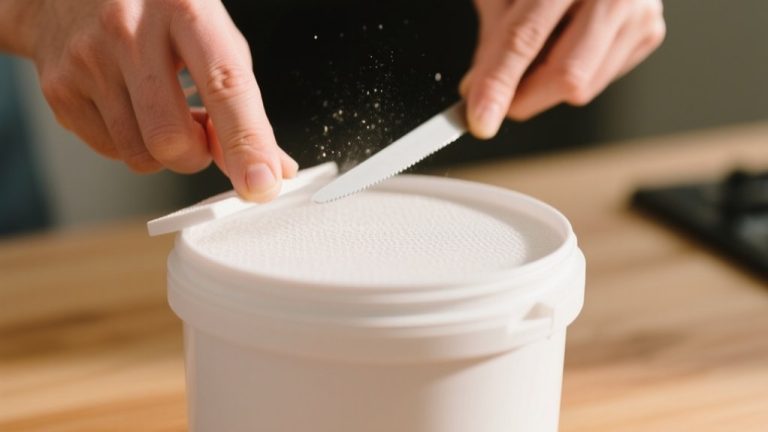
Use a dry scoop, close the lid promptly, and follow the package directions.
If it gets wet, discard it safely.
Can Vinegar Damage a Washing Machine Over Time?
Yes, vinegar can damage your washing machine over time if you use it frequently or in large amounts. Its acidity may weaken rubber seals, hoses, and other components, potentially causing leaks.
An occasional small amount is less likely to cause harm, but don’t make vinegar a routine cleaner or fabric softener.
Instead, follow your washer’s manual and use a cleaner designed for your machine. You’ll help protect its parts and extend its lifespan.
What Laundry Products Should Never Be Mixed With Bleach?
Never mix chlorine bleach with ammonia, vinegar, or other acids, including acidic toilet cleaners and some stain removers.
These combinations can release toxic gases that harm your lungs and eyes.
Don’t combine bleach with hydrogen peroxide or products containing rubbing alcohol, either; dangerous reactions may occur.
Check each label before washing, and use only bleach-compatible products.
If you’ve already mixed them and notice fumes, leave the area immediately, get fresh air, and contact emergency services.
Conclusion
Keep OxiClean and vinegar separate in your laundry routine. Mixing them can reduce their effectiveness, and the combination may release irritating fumes.
Use OxiClean according to its label for stains and odors, then add white vinegar separately during the rinse if your washer’s manual allows it. Already mixed them? Stop the cycle, ventilate the room, and avoid breathing in fumes.
A stitch in time saves nine. Careful, separate use helps protect your clothes, washer, and comfort.