Is Oxiclean Safe For Dogs – Fact Check
OxiClean isn’t safe for your dog to lick or swallow, and concentrated products can irritate skin and eyes. Keep your dog away while you mix or use it, follow the label, and let treated surfaces and fabrics dry fully before allowing access.
If contact occurs, rinse the affected area with lukewarm water. If your dog swallows any product or shows symptoms such as drooling, vomiting, or coughing, contact a veterinarian promptly. Learn how to reduce risks and respond to exposure below.
Is OxiClean Safe for Dogs?
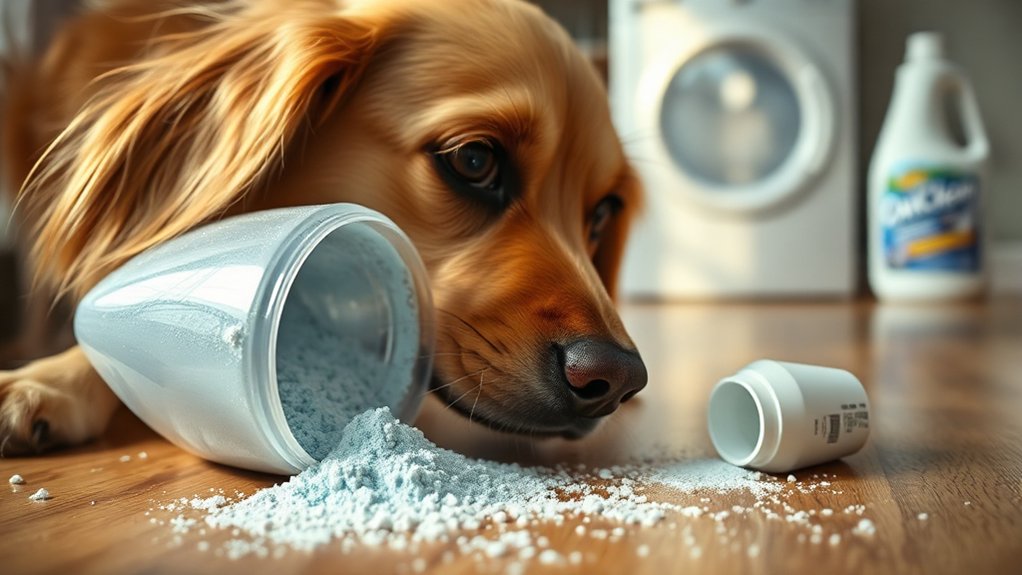
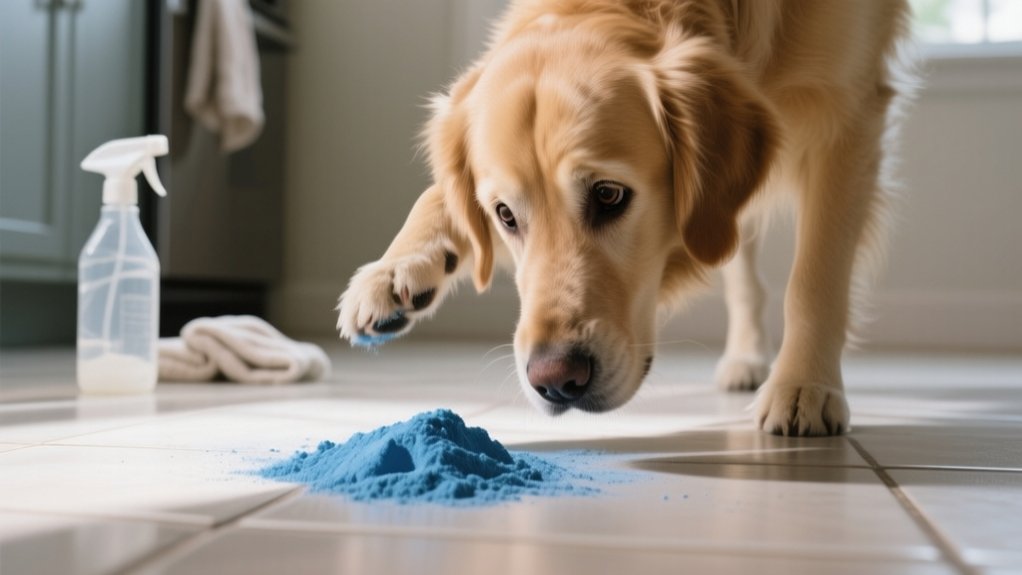
OxiClean isn’t safe for dogs to eat or lick. Its cleaning products contain ingredients that can irritate or harm your dog’s mouth, throat, stomach, or skin. The risk depends on the specific formula, concentration, and amount involved, so don’t assume a product is harmless just because it’s labeled as a household cleaner.
OxiClean can harm dogs if eaten or licked; the risk depends on the formula, concentration, and amount involved.
Keep OxiClean powders, sprays, and treated fabrics out of your dog’s reach. Even residue on a freshly cleaned surface or damp laundry may expose your pet through licking or chewing.
Follow the product label and let treated items dry fully before allowing your dog near them.
Never use OxiClean to clean your dog, its bedding while occupied, or food and water bowls unless the label explicitly permits that use.
If you’re unsure whether a product is pet-safe, choose a cleaner specifically labeled for use around pets.
What Should You Do After Exposure?
If your dog gets OxiClean on its fur, in its eyes, or in its mouth, act promptly and keep the product packaging handy.
Put on gloves, move your dog away from the spill, and prevent licking or further contact.
For skin or fur exposure, rinse thoroughly with lukewarm water. Use mild pet shampoo if needed, then rinse again.
For eye exposure, gently flush with clean, lukewarm water for 15 to 20 minutes, holding the eyelids open without forcing them.
If your dog swallowed any product, don’t induce vomiting or give food, milk, or home remedies unless a veterinary professional directs you.
Wipe away residue around the mouth and offer small amounts of water only if your dog is alert and swallowing normally.
Note the product name, ingredients, and estimated exposure.
When Should You Call a Veterinarian?
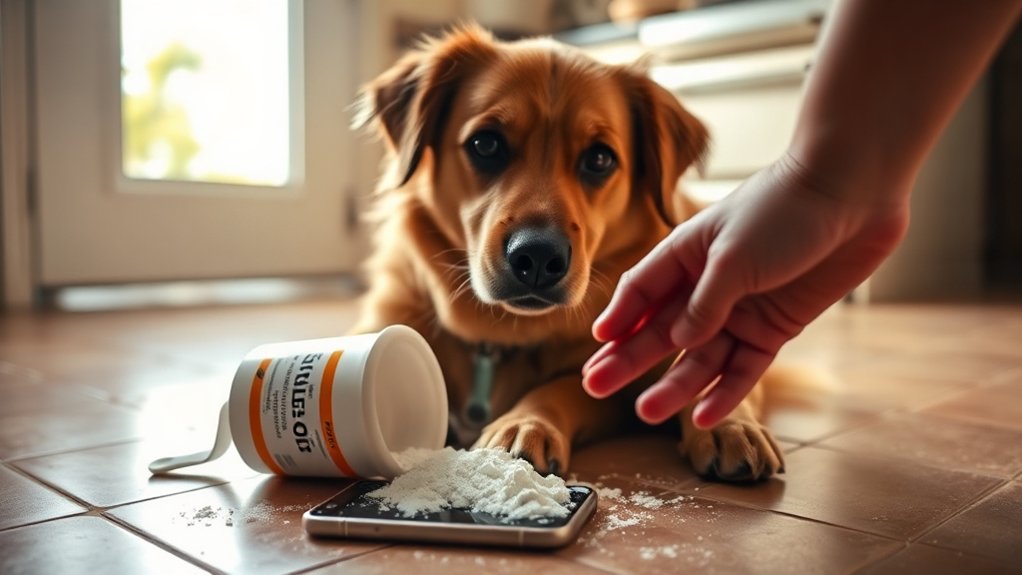
If your dog is having trouble breathing, collapses, vomits repeatedly, or develops severe irritation, you should call your veterinarian right away.
Don’t wait until the symptoms get worse.
And if you’re not sure how much Oxiclean your dog has come into contact with or swallowed, it’s best to call your vet or an emergency animal hospital for advice.
They can guide you on what to do next.
Emergency Warning Signs
Seek emergency veterinary care if your dog has trouble breathing, collapses, has seizures, or becomes difficult to wake after contact with OxiClean. These signs may signal a life-threatening reaction or serious exposure. Don’t wait to see whether your dog improves; call an emergency clinic while you prepare to leave.
Watch for other urgent symptoms, too:
- Repeated vomiting or severe diarrhea
- Excessive drooling or difficulty swallowing
- Burns, swelling, or intense pain around the mouth
- Sudden weakness, staggering, or disorientation
- Persistent coughing, choking, or noisy breathing
If the product touched your dog’s eyes or skin, rinse the area with plenty of lukewarm water while arranging care.
Bring the container or a photo of its label, and tell the veterinary team how exposure happened and when.
Don’t induce vomiting or give home remedies unless a veterinarian directs you.
When to Call Your Vet
Contact your veterinarian after any suspected OxiClean exposure, even if your dog seems fine.
Call promptly if your dog licked, swallowed, or inhaled the product, or if it touched their skin or eyes.
Tell the clinic which OxiClean product was involved, how much your dog may have encountered, when it happened, and what symptoms you’ve noticed.
Keep the package or take a photo of its label so your veterinarian can check the ingredients.
Don’t wait for signs to appear, since irritation or injury may worsen over time.
If your dog is struggling to breathe, collapsing, having seizures, or showing severe pain, go to an emergency veterinary clinic immediately and call ahead.
Don’t induce vomiting or give home remedies unless a veterinarian or poison-control expert instructs you to.
What Happens if a Dog Swallows OxiClean?
If your dog swallows OxiClean, the effects can range from mouth and stomach irritation to vomiting, drooling, or difficulty swallowing, depending on the product and amount.
You may also notice changes in your dog’s behavior or appetite. Watch for these signs:
- Pawing at the mouth or lip-smacking
- Coughing, gagging, or repeated swallowing
- Vomiting or diarrhea
- Weakness, restlessness, or unusual sleepiness
- Trouble breathing or swallowing
Symptoms may appear quickly, but don’t wait for them to worsen before seeking advice.
Keep your dog away from the product. Don’t induce vomiting or give home remedies unless a veterinary professional directs you.
If your dog has trouble breathing, collapses, or can’t swallow, seek emergency veterinary care.
Bring the package or a photo of its label so your vet can assess the exposure and recommend next steps.
Which OxiClean Ingredients Can Harm Dogs?
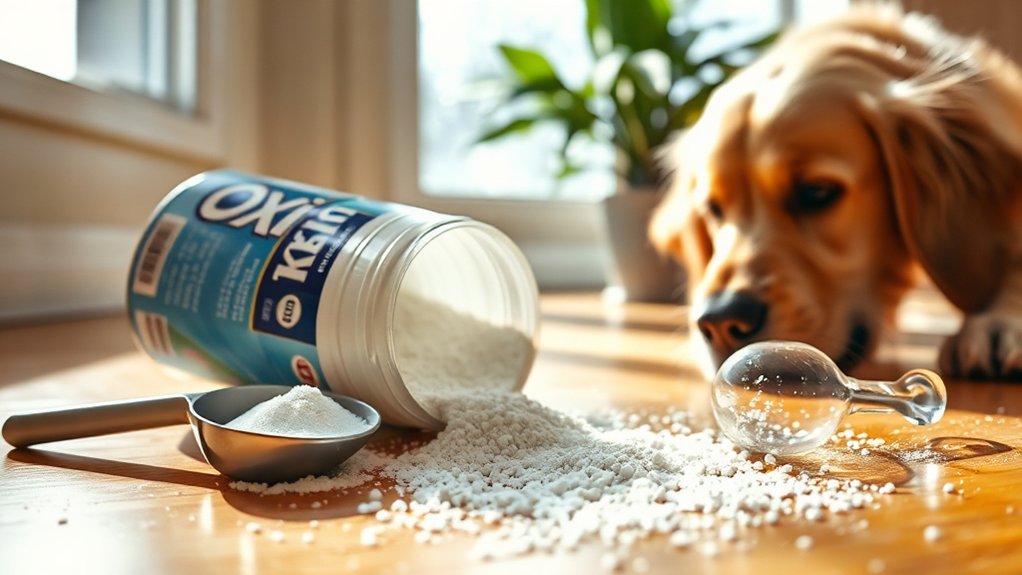
Which OxiClean ingredients can harm dogs depends on the formula, but oxygen-based bleaches such as sodium percarbonate can irritate the mouth, throat, and stomach when swallowed.
These compounds release hydrogen peroxide in water, which may cause foaming and irritation.
You should also watch for surfactants, the cleaning agents that loosen dirt and grease. They can upset your dog’s digestive tract and irritate skin or eyes after contact.
Some formulas contain alkaline builders, such as sodium carbonate, which can cause further irritation or burns, especially in concentrated form.
Fragrances and dyes may trigger sensitivity in some dogs, though reactions vary.
Check the product label rather than assuming every formula has the same ingredients.
If your dog licks or contacts a cleaner, keep the packaging handy and contact your veterinarian for advice.
Are Some OxiClean Products Riskier for Dogs?
Some OxiClean products might be riskier for your dog than others.
For example, the powder can irritate their eyes or airways if it gets into the air. Plus, if your dog swallows it, that could be harmful.
On top of that, some scented formulas have fragrances that might irritate your dog or even trigger a reaction.
Powdered OxiClean Risks
Powdered OxiClean can pose a greater risk than diluted cleaning solution because dogs may inhale the dust or lick concentrated granules. If you use the powder, keep your dog out of the area and prevent access to the container.
Contact with the product may irritate your dog’s mouth, eyes, skin, or airways; swallowing it can cause stomach upset or more serious harm.
Measure carefully to limit airborne dust. Don’t let your dog near spilled powder. Store the container closed and out of reach. Keep your dog away while you mix or apply the product.
Follow the label’s directions for dilution and cleanup.
If exposure occurs, move your dog to fresh air and rinse affected skin or eyes with clean water. If your dog swallows powder or shows symptoms, contact a veterinarian or pet poison service promptly.
Scented Product Concerns
Scented OxiClean products aren’t automatically more dangerous to dogs, but added fragrances and other ingredients may irritate sensitive skin or airways. Your dog might sneeze, cough, or develop redness after contact with a scented solution or freshly treated fabric.
Fragrance doesn’t necessarily mean a product is toxic, and unscented formulas aren’t automatically harmless; the full ingredient list and concentration matter.
Keep dogs away while you mix or use any cleaner, and follow the label’s directions. Rinse treated surfaces or fabrics as directed, then let them dry completely before your dog returns.
Store containers securely, since concentrated products can harm your dog if swallowed or splashed into the eyes. If your dog licks a product or shows symptoms, contact your veterinarian or a pet poison service. Have the label available.
How Can You Use OxiClean Safely Around Dogs?
To use OxiClean safely around dogs, keep them out of the area while you mix or apply it, and follow the product label’s directions. Don’t let your dog lick the powder, solution, or treated surfaces.
Use these precautions:
Store the product in its original, closed container, out of your dog’s reach.
Mix only the amount you need, and avoid creating dust or splashes.
Wear gloves, and ventilate the area while you work.
Rinse treated surfaces thoroughly when the label calls for rinsing.
Keep your dog away until surfaces are fully dry and the area’s aired out.
Never mix OxiClean with other cleaners, especially bleach or ammonia.
If your dog swallows it or develops drooling, vomiting, or irritation, contact your veterinarian or an animal poison-control service promptly.
Keep the package handy so you can share its ingredients.
Frequently Asked Questions
Can Oxiclean Fumes Irritate a Dog’s Respiratory System?
Yes, OxiClean fumes can irritate your dog’s respiratory system, especially in a poorly ventilated space or after a spill.
Move your dog into fresh air, open windows, and keep them away while you use or clean up the product.
Watch for coughing, sneezing, wheezing, or trouble breathing. If symptoms persist or your dog struggles to breathe, contact your veterinarian or an emergency clinic promptly.
Don’t mix OxiClean with other cleaners.
Is Dried Oxiclean Residue on Carpets Harmful to Dogs?
Dried OxiClean residue on carpets can irritate your dog’s paws, skin, or mouth, especially if your dog licks or chews the fibers.
You can reduce risk by following the product label, rinsing the carpet thoroughly, and keeping your dog away until it’s completely dry.
If you notice drooling, vomiting, redness, or unusual behavior, contact your veterinarian or a pet poison helpline.
Have the product packaging ready when you call.
Can Dogs Have an Allergic Reaction to Oxiclean?
Yes, your dog can have an allergic reaction to OxiClean, though irritation or poisoning is more likely than a true allergy.
Could you mistake itchy, red skin for a simple carpet irritation?
Watch for redness, itching, hives, swelling, coughing, vomiting, or trouble breathing after exposure.
Rinse affected skin or paws with plenty of water, prevent licking, and contact your veterinarian or a pet poison helpline.
Seek emergency care for breathing trouble or facial swelling.
How Should Oxiclean Be Stored to Prevent Pet Access?
Store OxiClean in its original, tightly sealed container.
Keep it in a locked cabinet or on a high, secure shelf your pet can’t reach.
Don’t leave scoops, opened packages, or diluted solution where your dog can investigate them.
Clean up spills promptly, and close the storage area after each use.
Keep the product away from food and water bowls.
If your dog gets into it, contact your veterinarian or a pet poison hotline.
Are Pet-Safe Alternatives Available for Cleaning Dog Bedding?
Yes, pet-safe alternatives can clean your dog’s bedding. As you lift the blanket, a muddy paw print appears just as you reach for the detergent.
Choose fragrance-free, dye-free laundry products labeled safe for pets instead.
Wash bedding with the recommended amount, then rinse thoroughly to remove residue. For odors, add a little white vinegar to the rinse cycle, but never mix vinegar with bleach.
Check care labels, and keep cleaners out of your dog’s reach.
Conclusion
OxiClean isn’t automatically safe for dogs just because it’s a household cleaner. The real risk depends on the product, how much your dog contacts or swallows, and how quickly you act.
If exposure happens, move your dog away, follow the label, and contact your veterinarian or an animal poison-control service. Don’t wait for symptoms.
You can still use OxiClean, but store it securely and keep your dog away until treated surfaces are fully rinsed and dry.